

[image]
[title]At 395 feet tall (that’s 120.45 metres for us metric lot), Phra Pathom Chedi is the tallest stupa in Thailand – and possibly the world. It’s also one of the oldest and is often quoted as being where Buddhism first took root in Thailand.
Even topping the world-famous Shwedagon Pagoda in neighbouring Myanmar, Phra Pathom Chedi (‘pathom’ means ‘first’ and ‘chedi’ means ‘stupa’) in Nakhon Pathom is just an hour’s ride west of Bangkok. Often overlooked on the usual tourist trail (although a popular waypoint on the way to Kanchanaburi), we think it’s worth more attention.
So much so, we visited once again to bring you the latest updates on the tallest, and arguably most beautiful, chedi in all of Thailand. Oh, and take a tip: go by train to appreciate the view of the colossal structure as it looms into view along the five-minute walk from the station.
What is Phra Pathom Chedi?
The stupa has a long history, but the short version goes as follows. Around 2,300 years ago, emissaries from Emperor Ashoka in India arrive in Nakhon Pathom with a relic of the Buddha, and the pious locals construct a dome-shaped stupa to enshrine it.
About 1,300 years later, the stupa is rebuilt with a Khmer-style prang (corncob-shaped spire), after which it falls into disrepair. In 1853, King Mongkut (Rama IV) initiates the Sri Lankan-style, bell-shaped structure enclosing the older stupas that we see today, and the enormous edifice is completed in 1870. All up to speed? Great.
What can you do at Phra Pathom Chedi?
To delve deeper into the stupa’s history, duck into the air conditioned National Museum (Wed-Sun, 9am-4pm, B100) on the south side of the monument before starting a circumambulation of the stupa (daily 6am-7pm, B60) from the north. Dress respectfully and tune in to the locals’ reverential bearing.
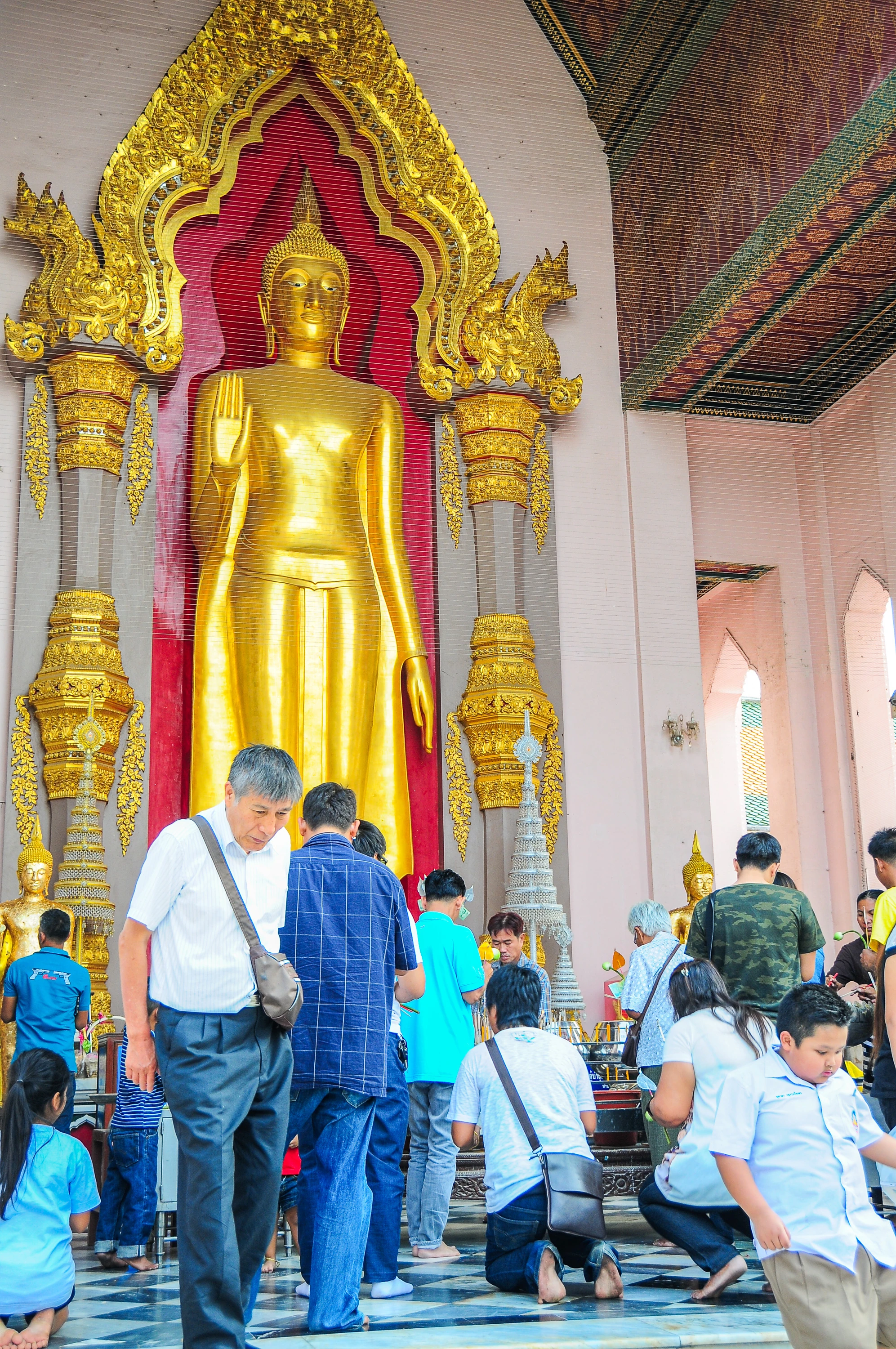
Greeting all visitors at the northern entrance is the Phra Ruang Rojanarit, a seven-metre, standing Buddha image with the right palm raised and left hand by his side. The right hand signifies the abhaya mudra, a pacifying gesture usually translated as ‘stopping relatives from fighting’. This area is usually busy with devotees offering flowers and incense; feel free to join them, and even if you’re unsure of how to offer, follow their lead.
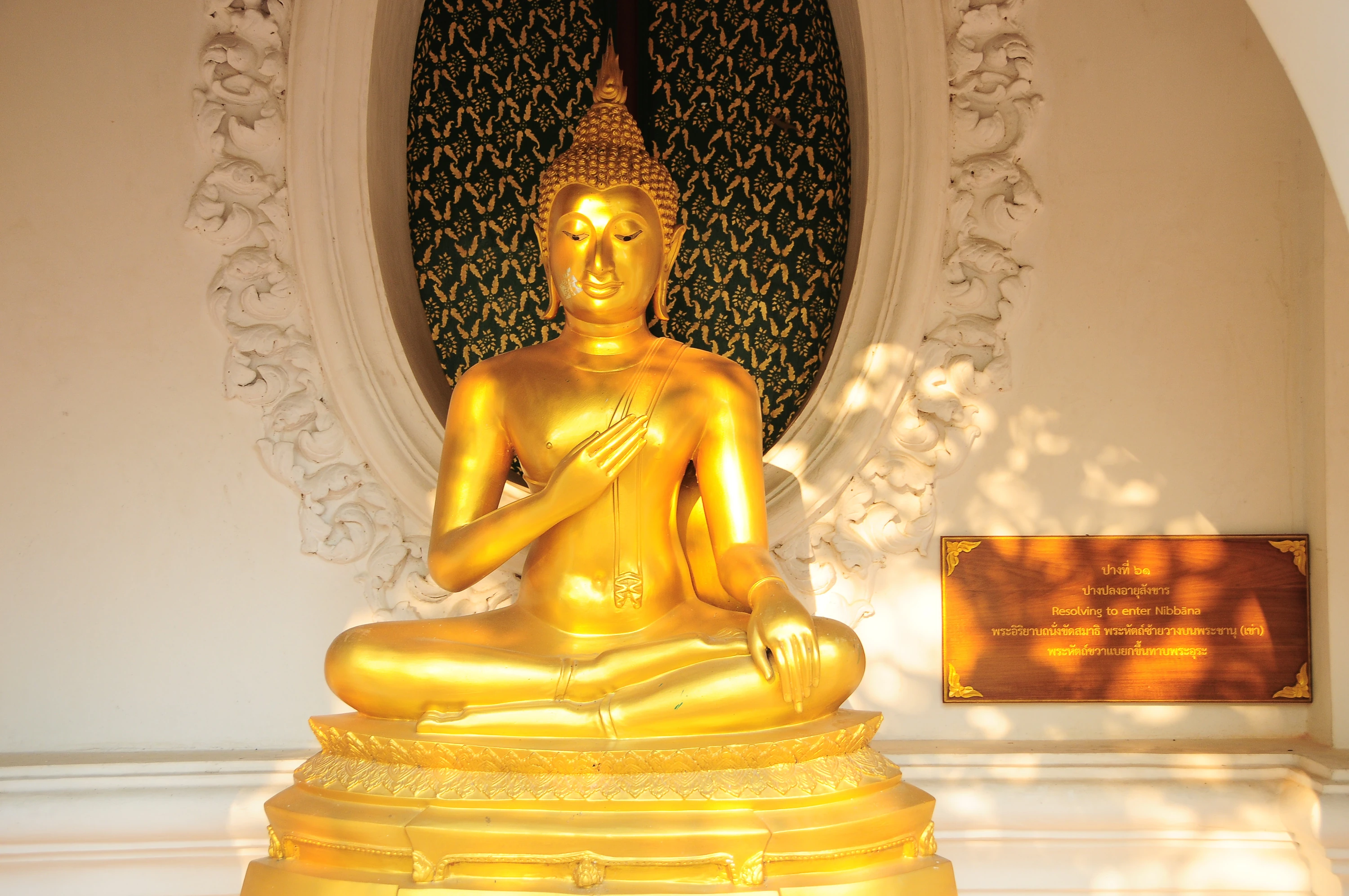
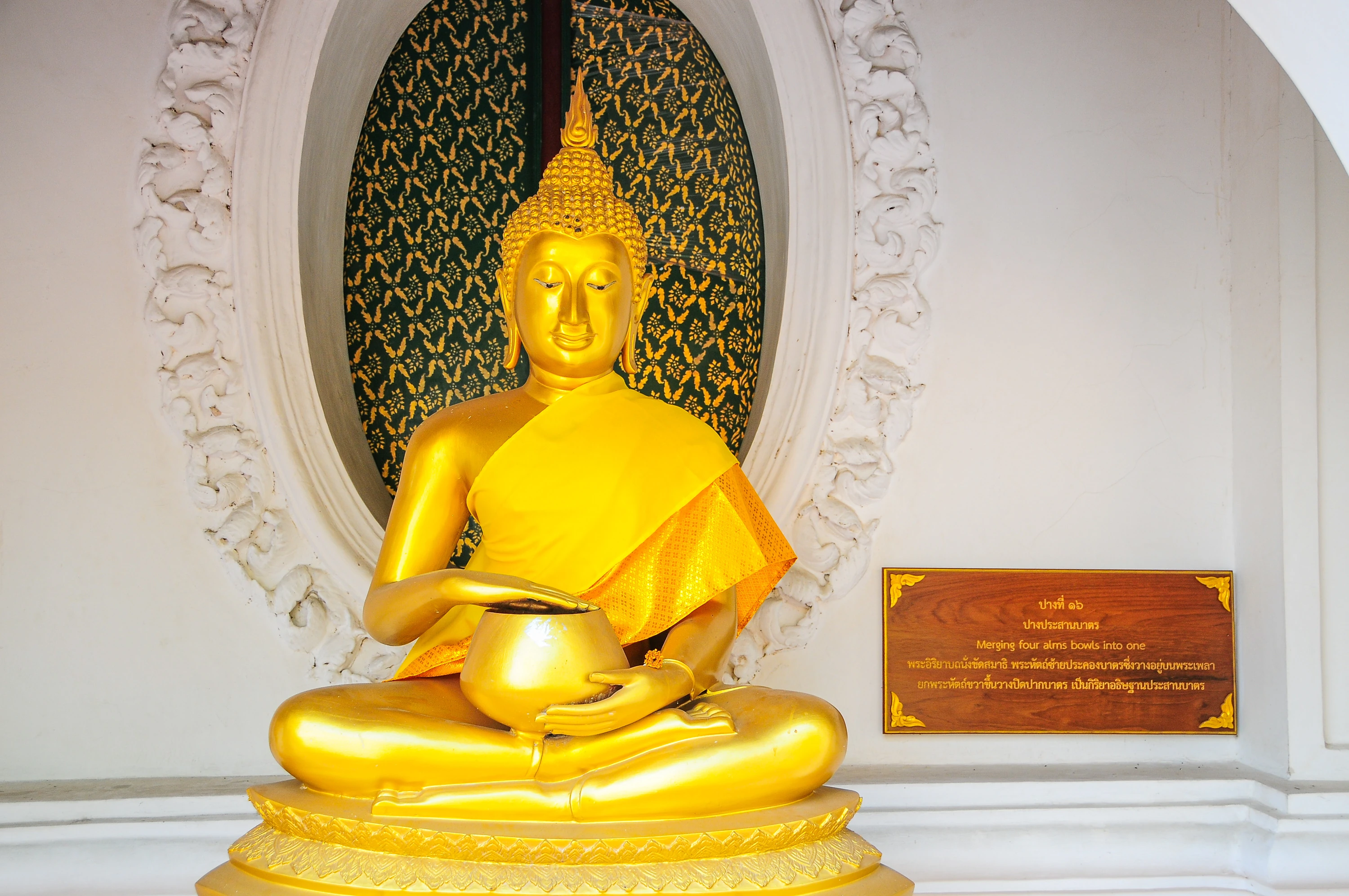
For a bit more context, a ‘mudra’ is what Buddhists name the hand gestures, and the galleries around the stupa provide a treasure trove of unusual mudras, such as ‘merging four alms bowls into one’ and ‘resolving to enter Nibbana’.
While you’re there, you’ll see people walking around the stupa clockwise. From the standing Buddha, take a deep breath, clear your mind and join them in the walk. Walking clockwise, or ‘sunwise’ as it’s also known, keeps the sacred object on the right and follows the movement of the universe.
To keep in step with good Buddhists, go round three times – one for the Buddha, the others for the Dhamma and the Sangha.
On the top level are four viharn or assembly halls – one in each cardinal direction. Look out for a diagrammatic cross-section of the stupa showing the encased original in the eastern assembly hall, and a laid-back reclining Buddha in the western hall. An ordination hall, museum and reconstruction of the previous stupa are on a lower level.
What else is nearby Phra Pathom Chedi?
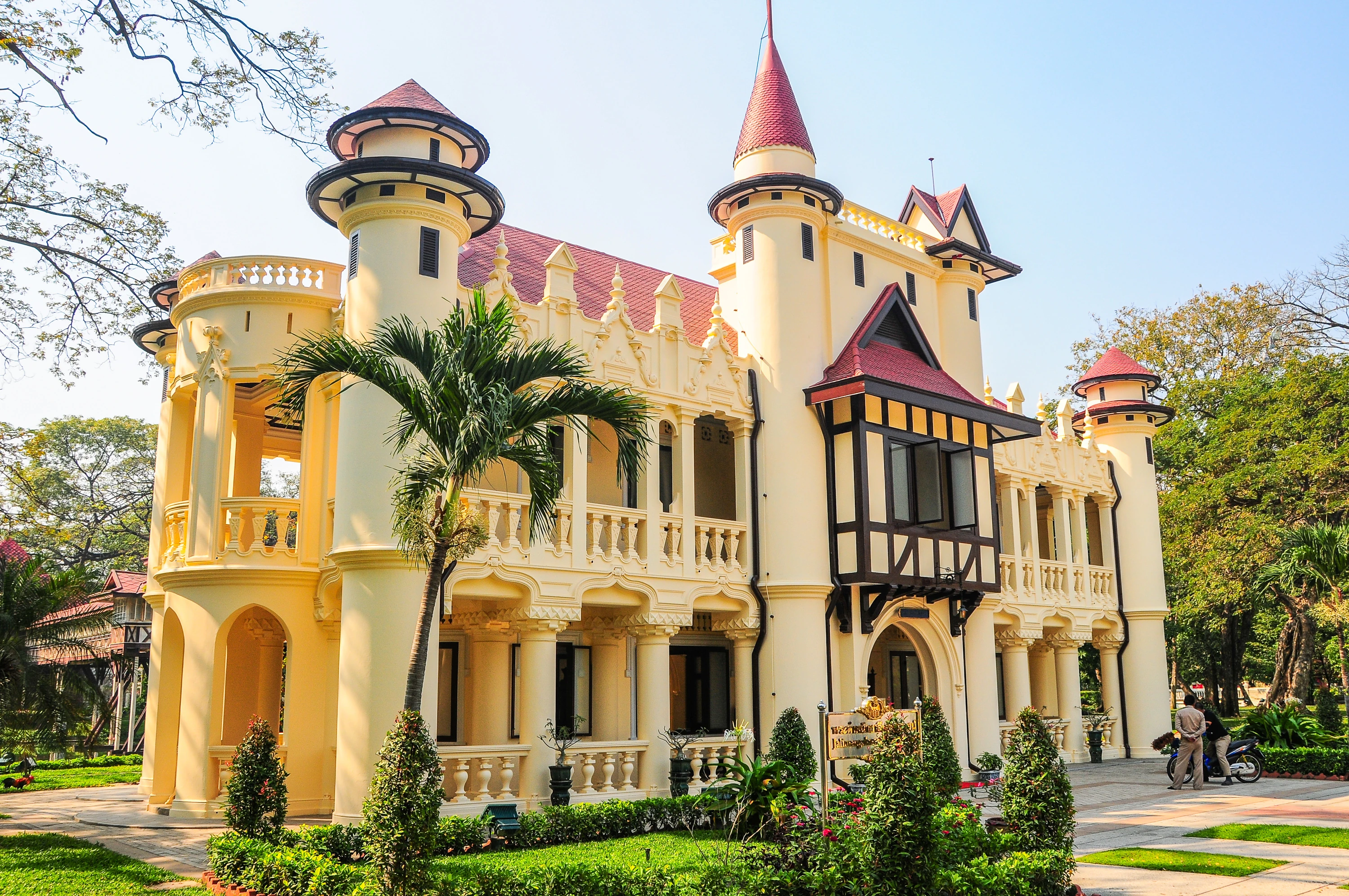
Since this day out has an architectural theme, when you’re ready to move on, walk about 10 minutes west of the stupa to the Sanam Chandra Palace, a fantastic collection of early 20th century architectural styles built by King Vajiravudh (Rama VI), including traditional Thai houses, colonial mansions and a Disneyesque castle called the Chaliemongkolasana Residence. Unfortunately, the buildings are currently closed to the public, but the walkways around them are open in the morning and evening (roughly 5am-8am and 4pm-8pm).
Before heading back to the city, stop off at the street market that sets up in the late afternoon on the west side of the stupa and indulge in a phad thai, som tam or khao moo daeng (rice with red pork, a local speciality). As dusk falls, the stupa lights up, assuming a different dimension.
Though rarely noted in history books, the Thai government’s Fine Arts Department failed in a 2009 attempt to have Thailand’s super stupa listed as a World Heritage site, but not because of why you might think.
Local people, especially market stall owners around the temple, objected on the basis that they would have to move and lose their livelihood, and the proposal was voted out at a public hearing.
Ironically, another contender for the title of oldest stupa in Thailand, Phra Mahathat Chedi in Nakhon Si Thammarat, joined UNESCO’s list of World Heritage sites in July 2026.
What else is nearby Phra Pathom Chedi?
An annual temple fair at Phra Pathom Chedi takes place in the twelfth month of the lunar calendar, which usually falls in November.
Tour companies often combine a visit to Nakhon Pathom with a visit to a floating market or to Kanchanaburi, but if the Phra Pathom Chedi casts its spell, be prepared to spend a full day mesmerised by its heavenward-soaring structure.