


[image]
[title]Light casts shadows through the glass, falling across a vinyl record spinning at a steady 33 rpm. The crackle of the needle settling into the grooves awakens analogue sound – imperfect, but that's why people love it.
In our fast-paced world, where almost everything can be commanded with the touch of a fingertip, sinking into a chair and listening to an entire record has become a rare and almost exquisite act. A ritual, even, for those who appreciate sound.
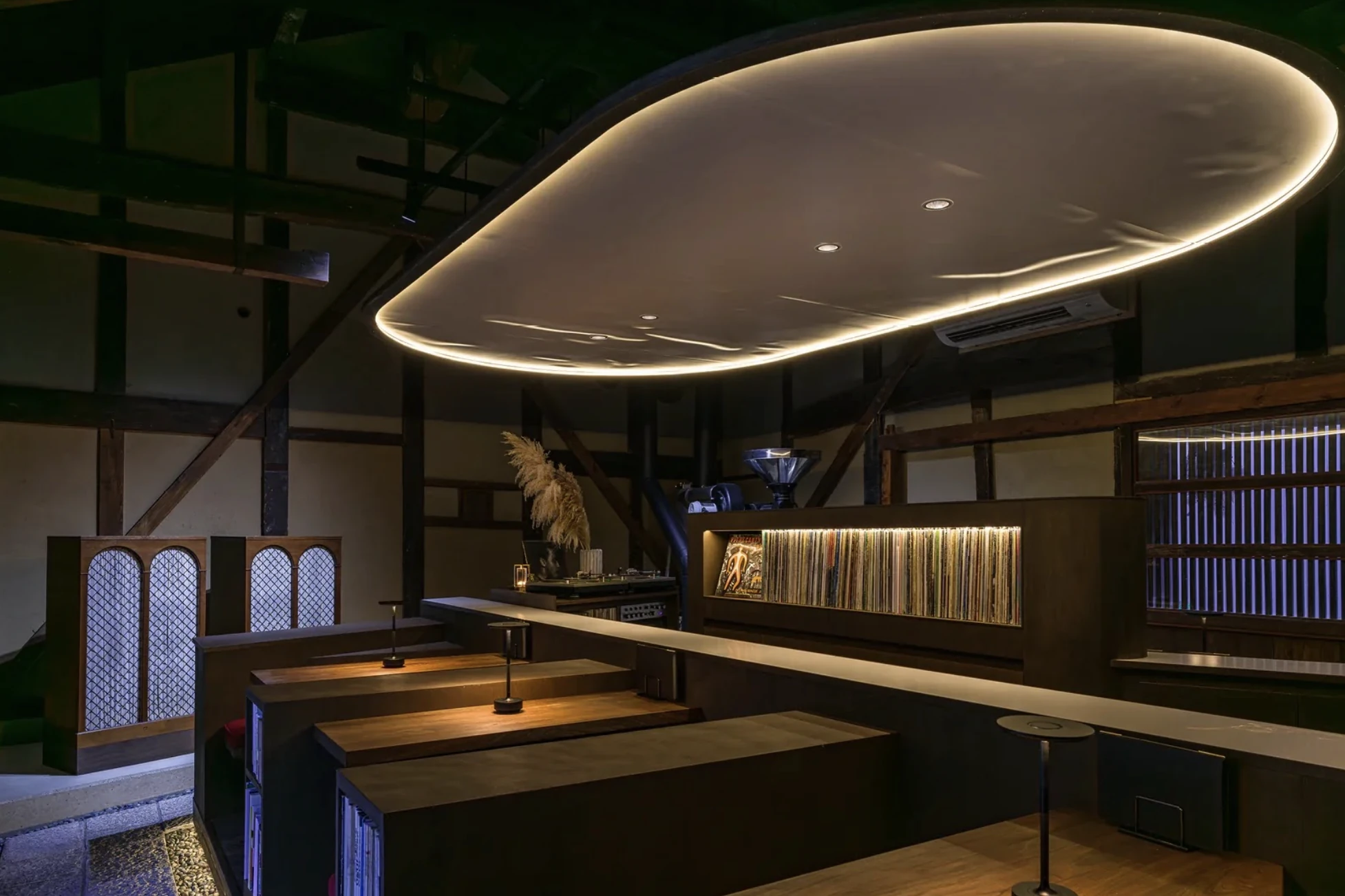
Japan’s traditional jazz cafés, known as Jazz Kissa, remain among the few places where you can walk in, leave the outside world behind and simply immerse yourself in the music – unbothered and uninterrupted, with no ads to skip and no algorithm deciding what you listen to next. In Bangkok, we have similar spots – usually referred to as listening bars – although they’re usually a little more connected than the social Faraday cages of Japan.
The Japanese sense of nostalgia is captured in the pages of Jazz Kissa: The Soul of Japanese Listening Culture, a photographic exploration of Japan’s iconic cafés and the culture of deep listening that surrounds them.
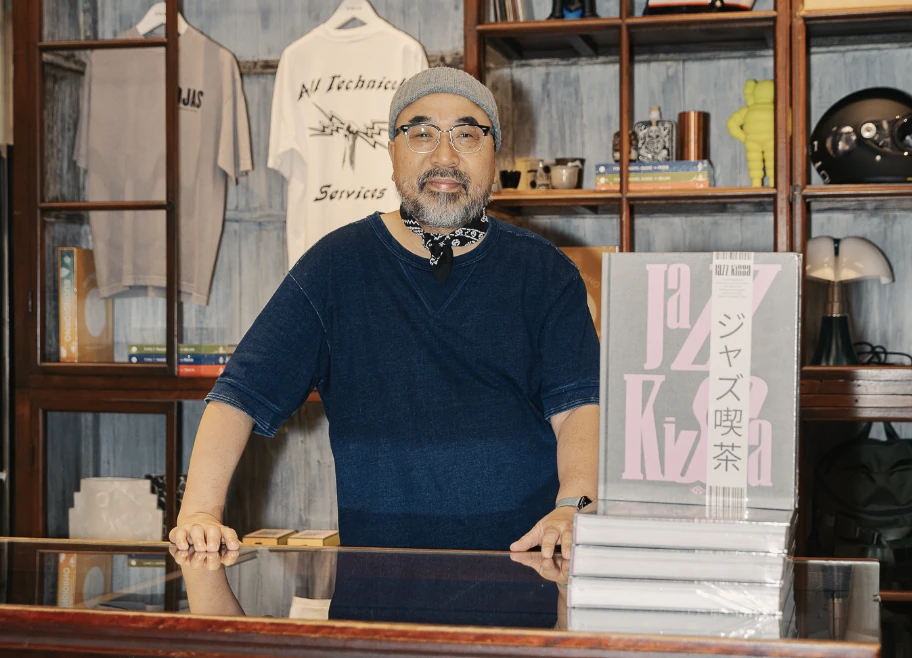
Behind the book are three people who appreciate the art of listening in their own way: Katsumasa Kusunose, a music historian and photographer who has spent nearly half his life immersed in jazz cafés; Ted Gushue of ERG Media, a publisher with a belief in the enduring power of print; and Devon Turnbull, a sound architect who turns loudspeakers into sculptural works of art.
On our side of Asia, the spirit of Jazz Kissa is coming to Bangkok in a big way, mostly through the influences of Katsumasa Kusunose himself. But more on that later. Let’s set the scene first.
The sound that started it all
Kusunose’s first encounter with jazz came when he was just six or seven, while watching a science programme about the future of humanity. As Take Five by the Dave Brubeck Quartet played in the background, an unlikely pairing became an epiphany: ‘Oh… so this is what jazz is.’ At 10 years old, while other kids were spending their pocket money on lollipops, he bought his first record, a 7-inch single of Tell Me by The Rolling Stones. The Beatles and Bob Dylan would soon follow, continuing to shape his life. Although he was born roughly a decade after the Woodstock generation, he resonated with the artists’ yearning for a sense of freedom and found that through music.
Fast-forward to 1979, when Kusunose turned 20 and visited his first jazz kissa, Rakko. There, he sat listening to Eric Dolphy through Altec A7 speakers with a cat curled up on his lap as he stroked its head. Everything about the scene seemed to suit his temperament perfectly. The experience stayed with him, eventually leading him to Mozu in Tokyo, where he became a regular, returning almost every day from his twentieth birthday until the owner passed away in 1996.
At a Jazz Kissa, music isn’t background noise. Listening becomes an active experience. The carefully calibrated sound quality and volume invite you to slow down and pay attention. For Kusunose, Jazz Kissa represents the ultimate expression of individualism – a third space outside the home where you can leave your social roles at the door, sit quietly and simply be yourself.
‘Music, no matter the genre, is like a piece of architecture. The deeper you listen to the details of the saxophone, piano, bass and drums, the more you begin to see its intricate structure.’
Preserving memories through photography
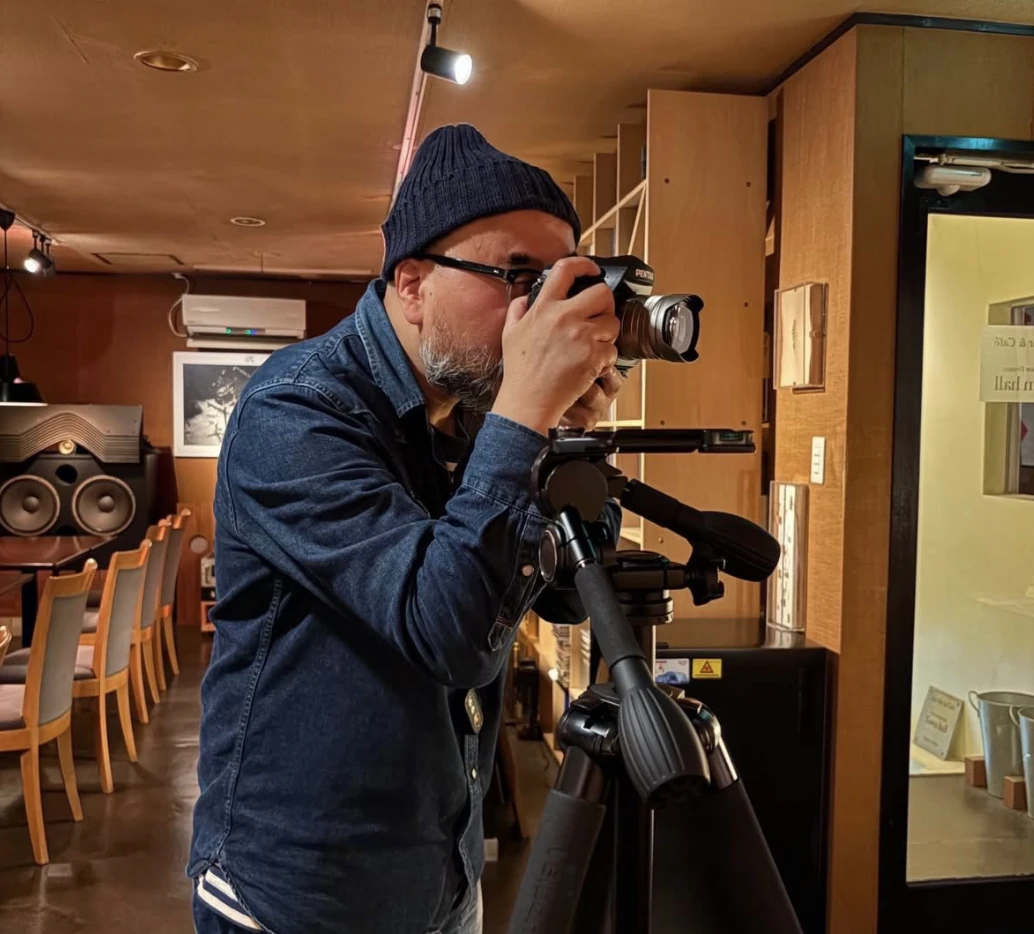
In 2014, Kusunose set out to document and introduce Japan’s Jazz Kissa culture, photographing more than 140 cafés across eastern Japan before illness led to the project being cancelled. But the work didn’t disappear. In 2016, he launched the magazine ‘Gateway To Jazz Kissa’, turning his archive into a growing record of a culture with nearly a century of history.
From archive to cultural record
The concept for Jazz Kissa: The Soul of Japanese Listening Culture actually originated with Ted Gushue of ERG Media. Gushue felt Kusunose’s photographs captured the scene with an unfiltered authenticity and wanted to preserve the world of Jazz Kissa.
‘Katsumasa wasn’t documenting Jazz Kissa as an outsider looking in. He had earned the trust of the people who built this culture.’
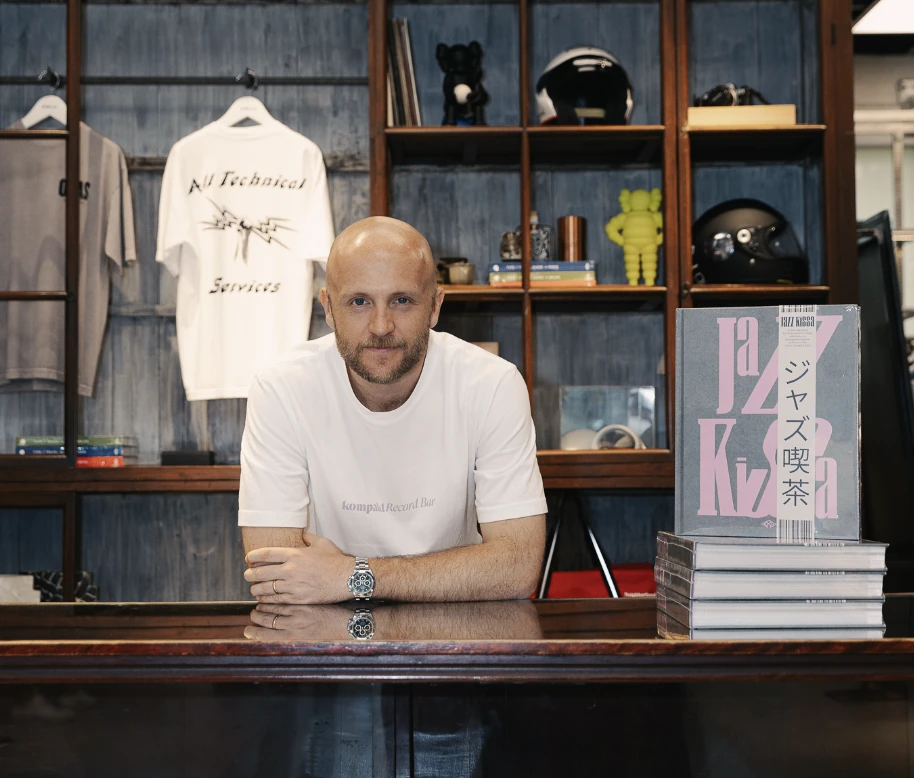
So, onto the book. This exquisite collaboration with ERG Media, designer Bernardo Berga, turns Kusunose’s photographs into a book that traces Jazz Kissa beyond the post-war café culture often associated with Jazz Kissa in the West, back to the Swing Era of the 1930s, when jazz had already taken deep root in Japanese society.
In an age of fleeting digital content, Gushue sees the physical book as something that asks us to slow down and sit with it – a lasting record that can preserve the culture for generations to come.
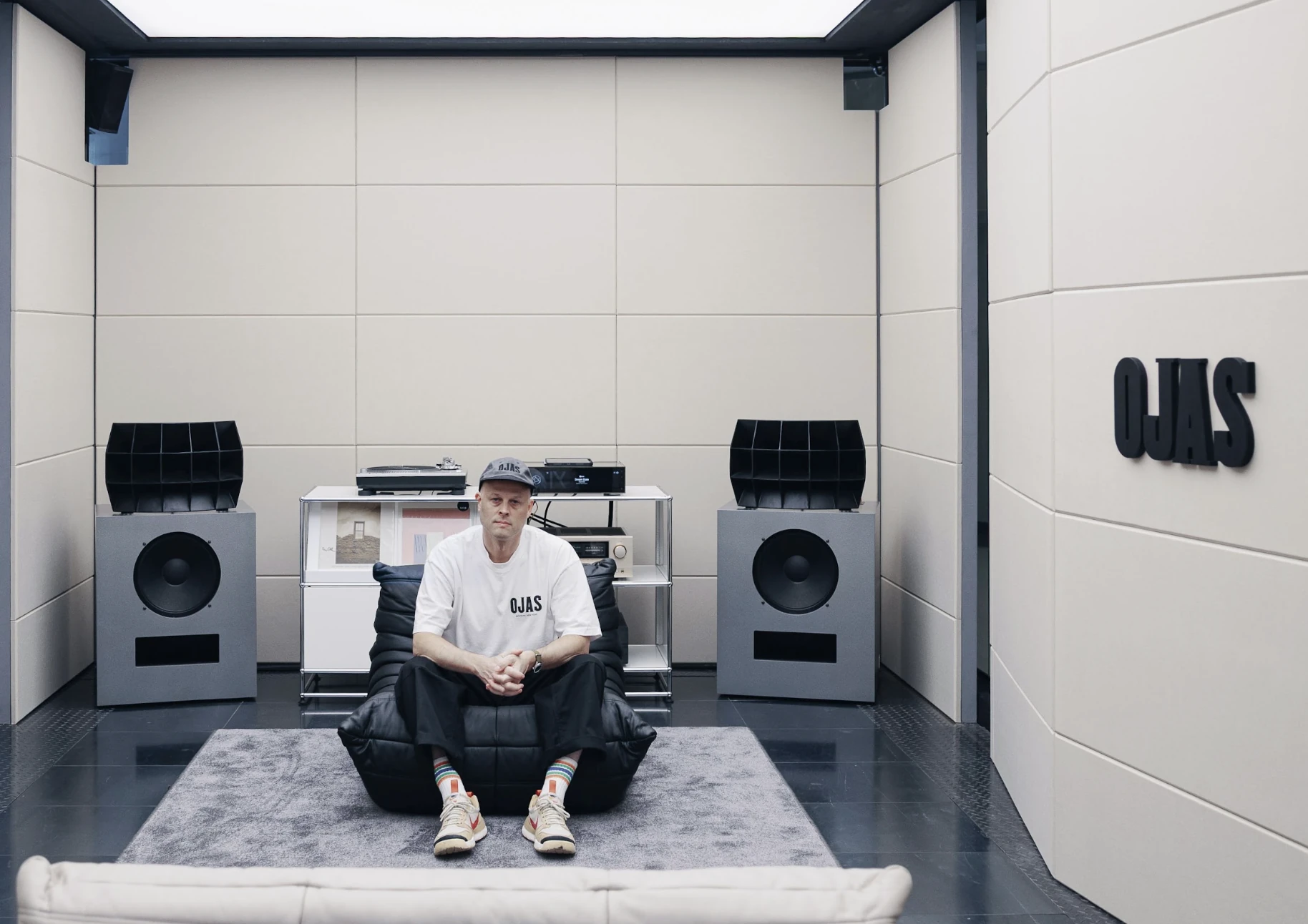
Sound… made to be felt
In the first page, a foreword by Devon Turnbull, the New York-based artist and sound designer behind OJAS, known for its sculptural high-fidelity sound systems, completed the cultural bridge. Though not Japanese himself, Turnbull has developed a deep understanding of the spirit of Jazz Kissa.
Turnbull, who has shaped the listening experience of cultural spaces around the world, defines music simply yet powerfully as:
‘Music is something to be felt, not analysed.’
When listeners experience a carefully designed sound system for the first time, what happens is more than simply hearing in greater clarity. It opens a door to the emotional intent the artist carefully captured in the record. Devon explains that slowing down enough to truly listen begins with choosing great music, shutting out the distractions around you and willingly stepping into the experience.
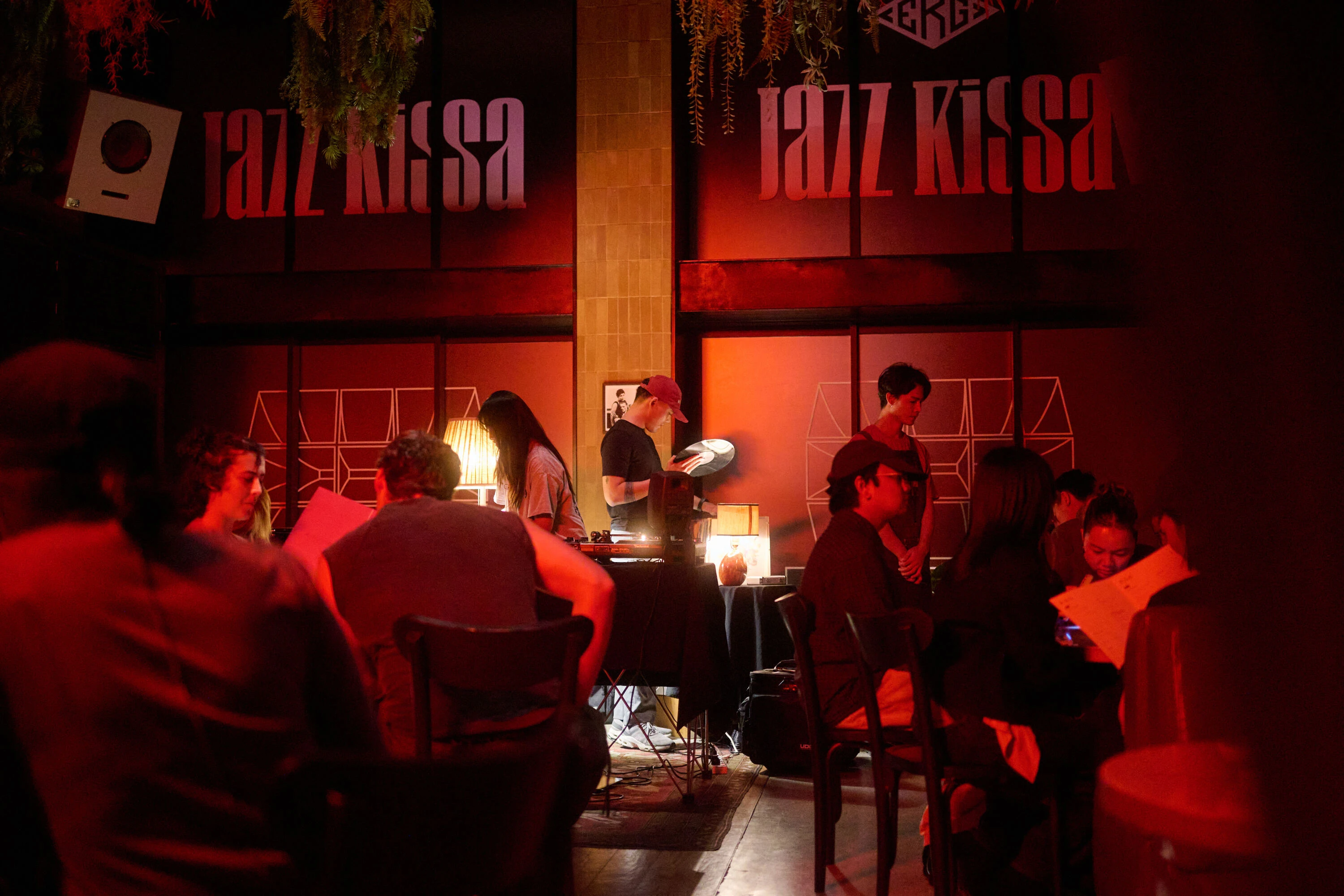
Bringing the spirit of Jazz Kissa to Bangkok
At SIWILAI Sound Club in Charoenkrung, vinyl, high-fidelity sound and attentive listening take centre stage, echoing the philosophy of Japan’s Jazz Kissa without attempting to replicate it.
The key to why Jazz Kissa culture continues to resonate with listeners around the world from Tokyo and Amsterdam to Bangkok is: respect.
Kusunose emphasises that while every Jazz Kissa may have its own rules and rituals, there is one golden rule they all share: the cover of the record currently playing must always be clearly visible to customers. Because in these spaces, music isn’t just there to fill the silence – the songs and the artists behind them are the heart of the experience. Respect for the music, and for the people who make it, is what gives listening its depth and value.
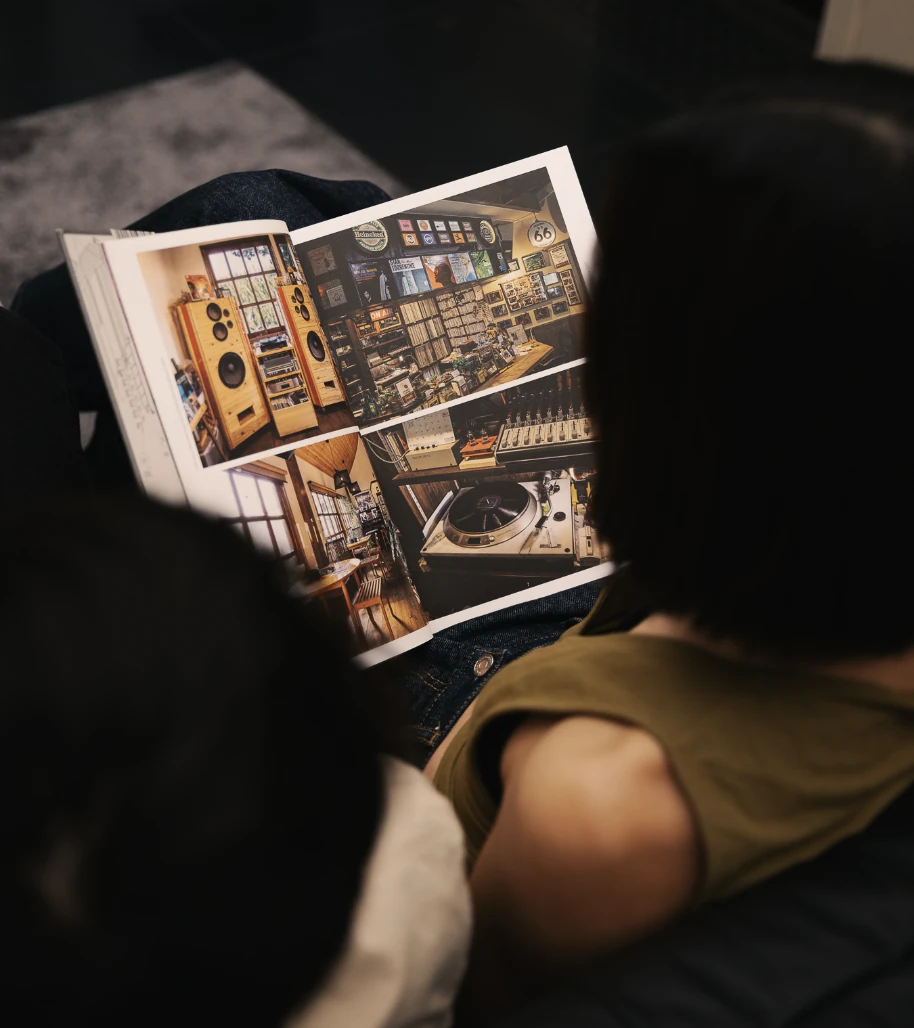
Decades from now, this book may serve as a lasting record of a remarkable culture – one in which people devoted their entire lives to the pursuit of beautiful sound. For us in Bangkok, the new-old-wave is just getting started.