
[category]
[title]
A first-person journey into the Chiang Dao wilderness, where 150 people build a temporary village defined by cold streams, hot music and zero phone reception


I first heard about Double Dick Tiger the way people hear about urban legends. Someone described it as a hike deep into the middle of nowhere on the outskirts of Chiang Dao. Someone else said the festival didn’t even have music in the early years. Another warned me I would be off-grid for three nights but could get one bar if I climbed up a nearby hill. Even the official guide felt vague: basic living, leave no trace, bring a tent, expect cold nights. It read like a riddle rather than a roadmap.
The mystery only grew as the weekend approached. The music lineup dropped just days before, and only in a group chat. The meeting point arrived even later, a single pin shared the day before departure. Everything felt intentionally withheld, as if the organisers wanted you to commit with curiosity rather than comfort.
I bought a ticket after some friends said they were going. I felt anchored in the pod. Then those same friends dropped out at the last minute. Thankfully I’m dialed into the Chiang Dao scene and had other friends, seasoned DDT-goers, already making the trip. Without them, I’m not sure I would have pushed through the nerves and the unknowns.
So I went in. Blind, but not alone.
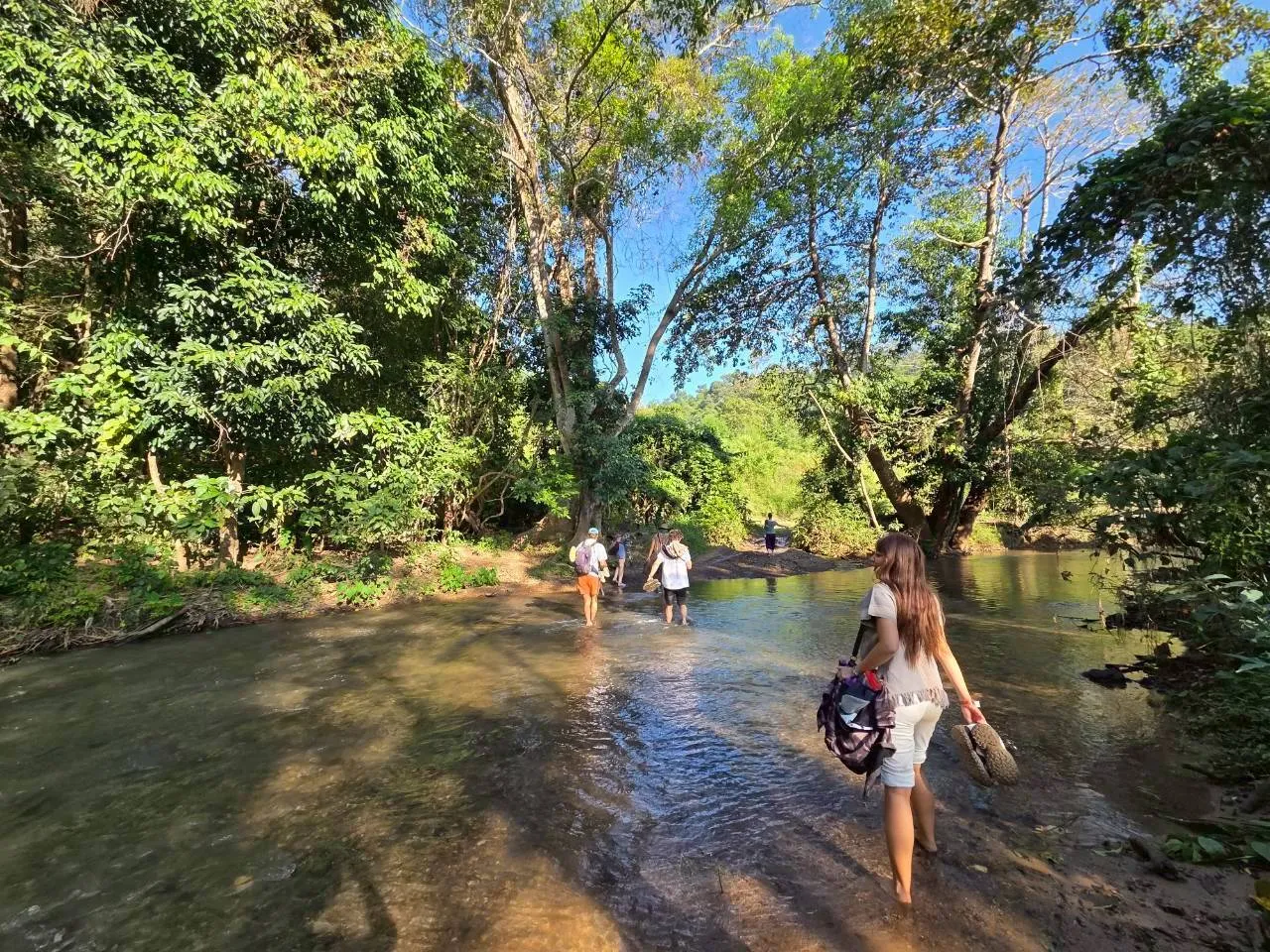
Getting to DDT means losing reception long before you reach the entrance. Everyone is dropped off at a muddy trail and from there it’s just you, the elements, your gear and whatever faith you managed to pack. The festival does not ease you in. You wade through water seven separate times before you see anything resembling camp. No one warned us about that.
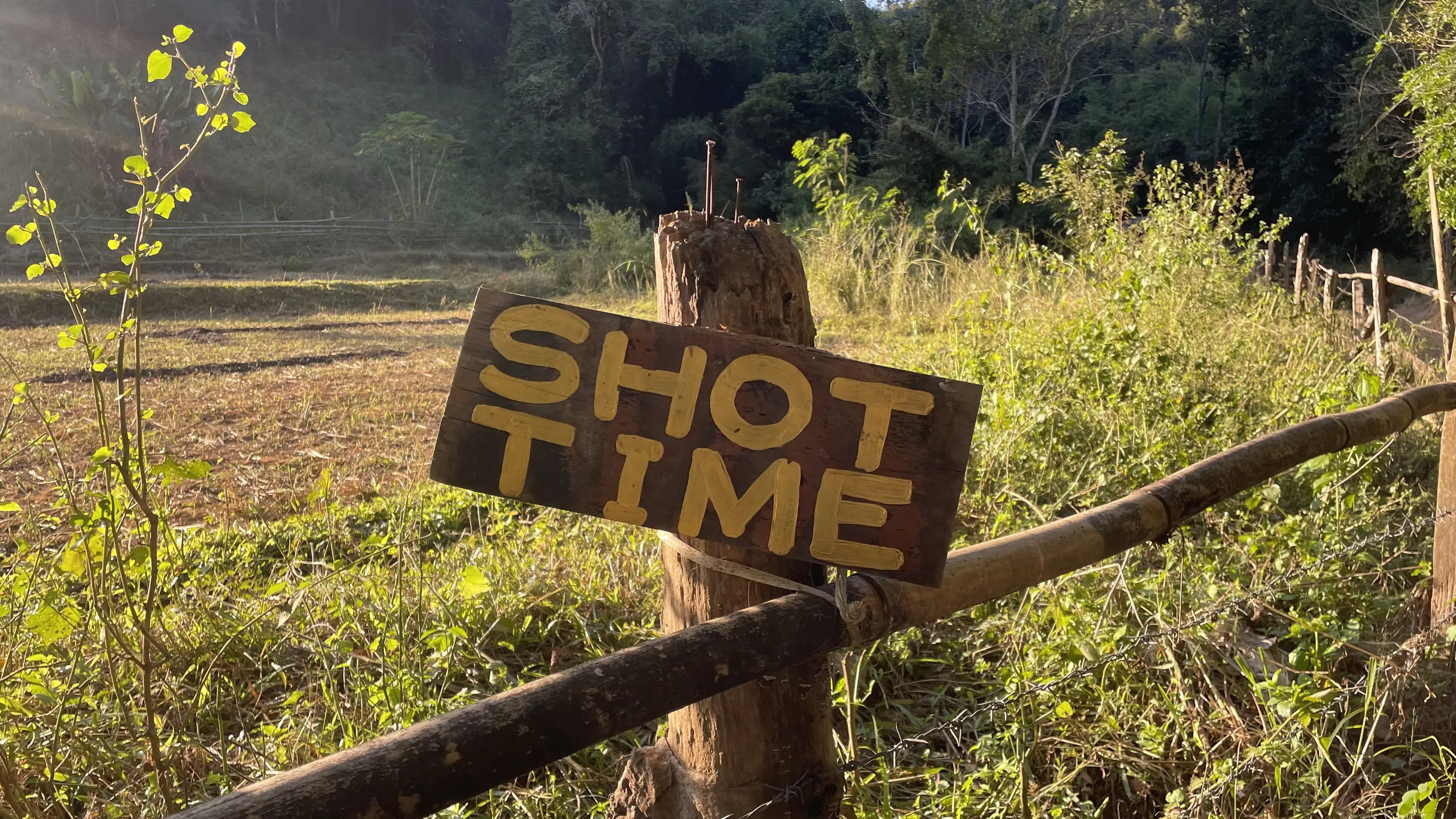
The river crossings worked like an initiation. The deeper we went, the more the landscape opened up: dense green closing in around us, cold water sliding past our feet, spattered light filtering through the canopy. Then the signs started appearing.
‘Shot time.’
Eventually we reached a small station beside the path where we were served shots of local moonshine. No tasting notes, no explanation. Just a clean burn that hit like a punch and carried us into the jungle with renewed determination.
Leopold Hutter, a longtime attendee and international festival aficionado, says the arrival is 'like stepping through a portal into another world'. He was right. Something about the silence and the mountain air made the whole journey feel surreal and strangely inviting.
Most festivals start with a blueprint. This one started with a barbecue and a bamboo pole. Will Le Masurier, festival co-founder and head of tribal relations, remembers the first year in 2020 clearly. 'There was no stage, no infrastructure and barely any music,' he says. 'We stuck a phone on top of a bamboo pole and it died sometime in the night.'
Artist-designer Purin Phanichphant, who attended that first edition, described it as 'rough, chaotic and completely unprepared'. He didn’t know they would need to wade through water. There were no facilities. 20 people camped wherever they felt like. At one point Will and his brother Benny shot fireworks at each other. It felt experimental and a little unhinged. More like a prototype than a festival.
And yet it kept going and growing. Not in size, but in intention.
One day a Bangkok sound engineer named Poom Ratakanok heard about DDT. He visited, camped with Will for a week and simply said, 'You need sound.' He did not mean volume. He meant a sonic environment worthy of the land.
Poom believes music at DDT should reconnect people to something elemental. He says, 'People go 200 miles-per-hour toward future technology. I’m not anti-technology, but I don’t want people to forget that a basic lifestyle can give you a lot of joy.' His approach is simple: the music should enhance the forest, not drown it.
The lineup reflects that. DDT brings a sweeping mix of international and regional DJs, each shaping the valley in a different way. DJ Robbie Akbal returned for his second year, alongside artists from Bangkok, Singapore and DJ Cha, who grew up in the local Karen village
The DJ booth itself is framed by two towering carved phalluses, a tongue-in-cheek nod to the festival’s mythology. Robbie says, 'We’re surrounded by an amazing community, blending into a natural and organic way of life', praising the mystical location and the homemade tribal food before mentioning what every DJ eventually does: the speakers.
The Funktion-One system hits with a clarity that seems impossible this far off-grid. As Robbie put it, 'What else could you ask for? What a trip!'
The philosophy: nature first, community first, everything else second
DDT runs on a mix of mythology, ecology and DIY grit. The festival’s fable of a tiger raised in a golden palace who escapes to the jungle is absurd and symbolic, but surprisingly accurate in capturing the ethos.
Konstantin Zwissler, the festival’s evangelist, says the creature represents our shared wildness. 'We are human and we have the unique gift of reasoning, but we also have this visceral animalistic energy inside all of us. And if we do not connect with that, we are only half alive.'
Will focuses on the relationship with the local Karen community. He explains their animist worldview, saying, 'There are big trees in the forest that they consider mother trees. If you cut that tree down, everything else disappears.' For him, DDT is not an event but a collaboration with an existing ecosystem.
Poom echoes this. 'Everything we use is provided by the land. The food we eat, every moment we experience here, comes from this place.’ His philosophy: nature leads, humans follow.
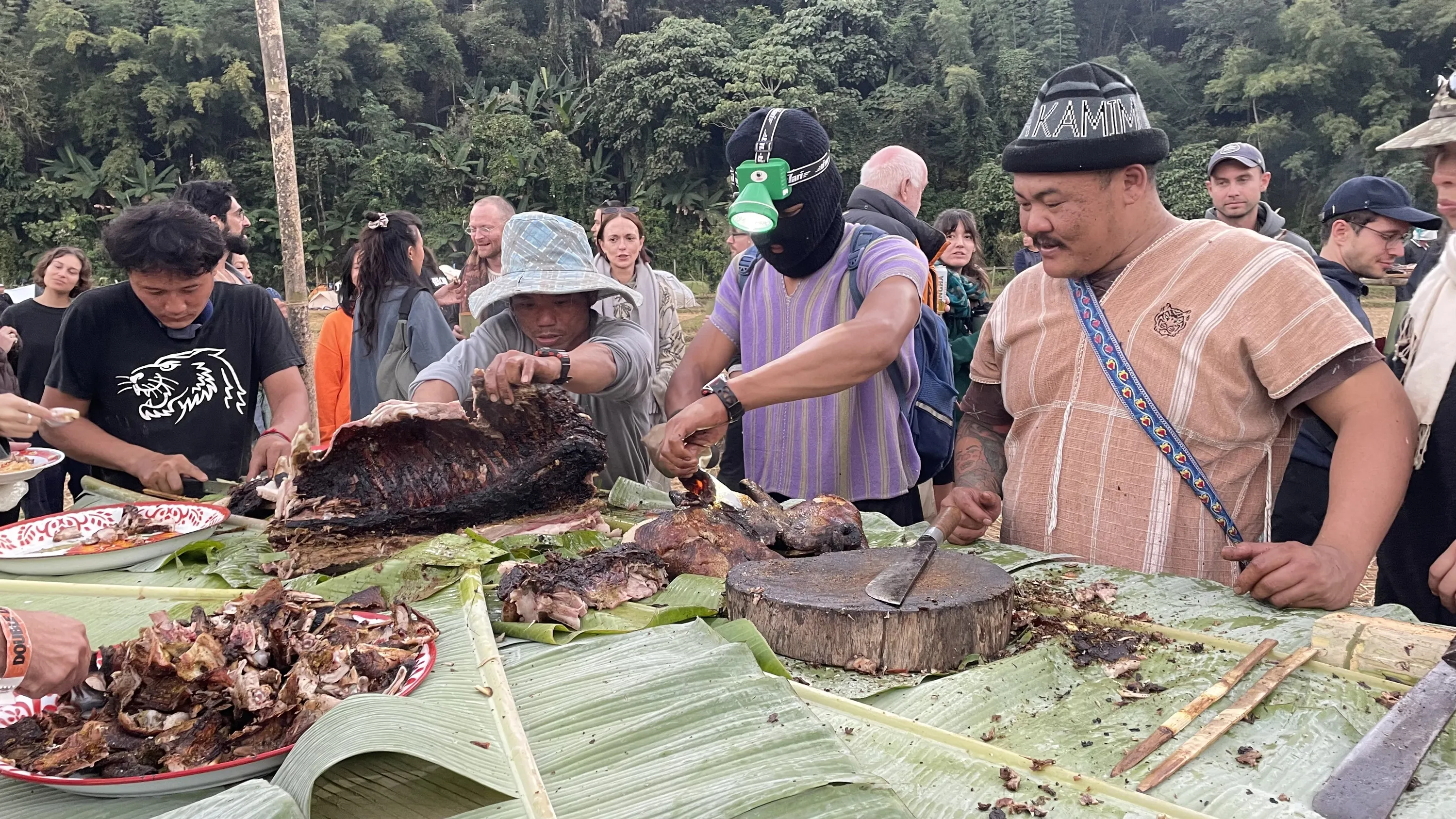
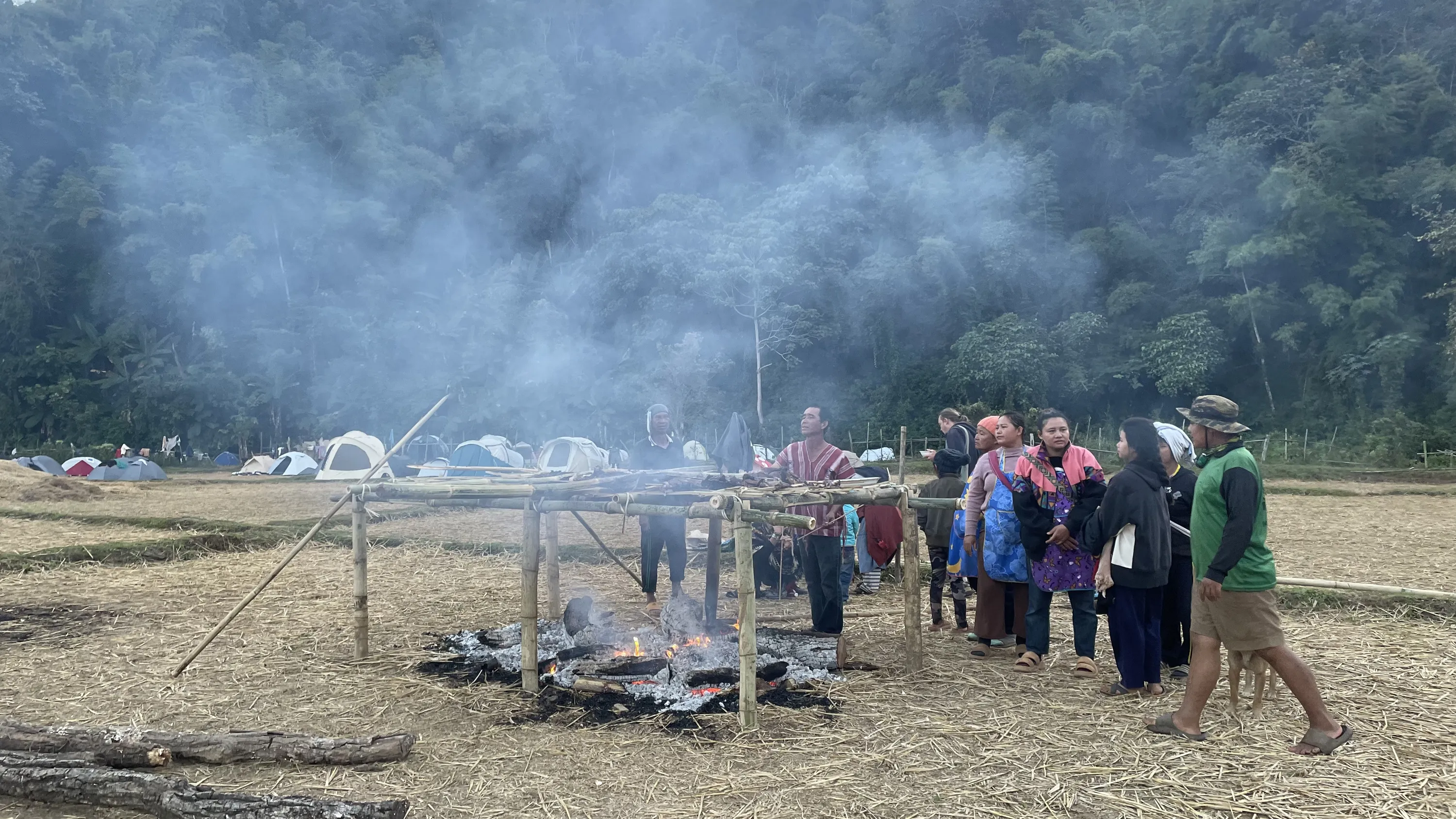
Then there is Cha, the village liaison and one of the festival’s most unforgettable presences. In the span of a single afternoon he went from slaughtering our dinner (which he raised), to orchestrating the largest field barbecue I’ve ever seen, to then hacking and serving meat for the crowd, to stepping behind the decks and igniting the party.
Creative Director Dohee Kwon shapes the festival’s visual atmosphere and set up a screen-printing station where anyone could add the tiger logo to their clothes, bags or scraps of fabric. It was hands-on, communal and beautifully imperfect, reinforcing the belief that everyone should contribute something.
The guide tells you to bring a tent, a sleeping bag and a flashlight. Temperatures drop sharply at night. The stream is your bath. Toilets are basic. Everyone is responsible for their own trash. None of this prepares you for how it feels.
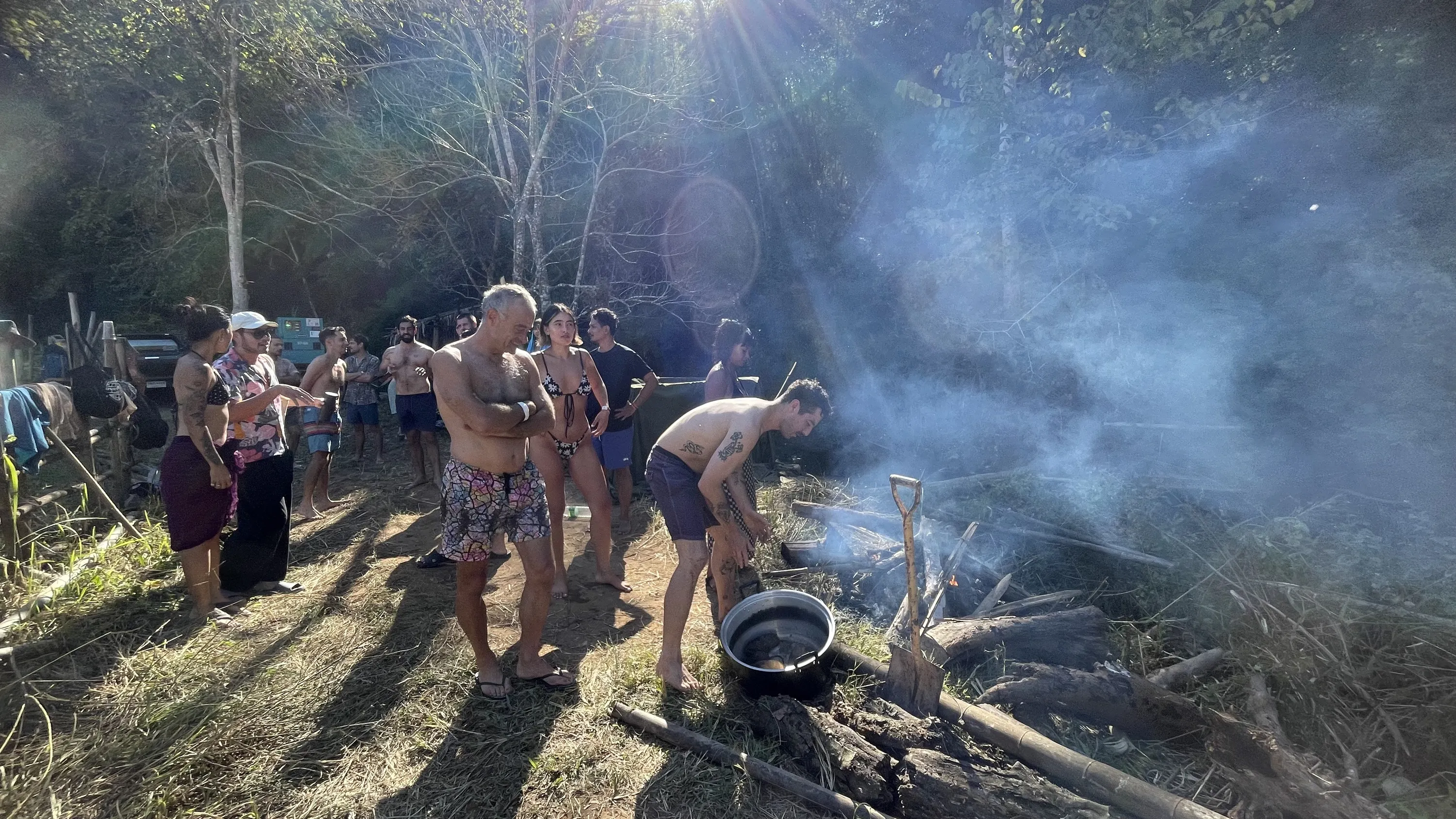
The food is cooked by villagers and everything is included: two meals a day plus fruit, coffee, Thai moonshine, mulberry wine and beer. The flavours are honest and elemental. People share whatever they bring. Strangers invite you to sit with them. Someone offers you a sip of something mysterious. Someone else fixes your broken tent pole with bamboo while you’re still nursing your hangover.
Leo, who now lives in Chiang Dao, says DDT is a place where 'transformation can happen. It’s a temporary bubble where people meet themselves more intensely. The openness of the space and the lack of structure mean you lean into whatever the moment asks of you.’
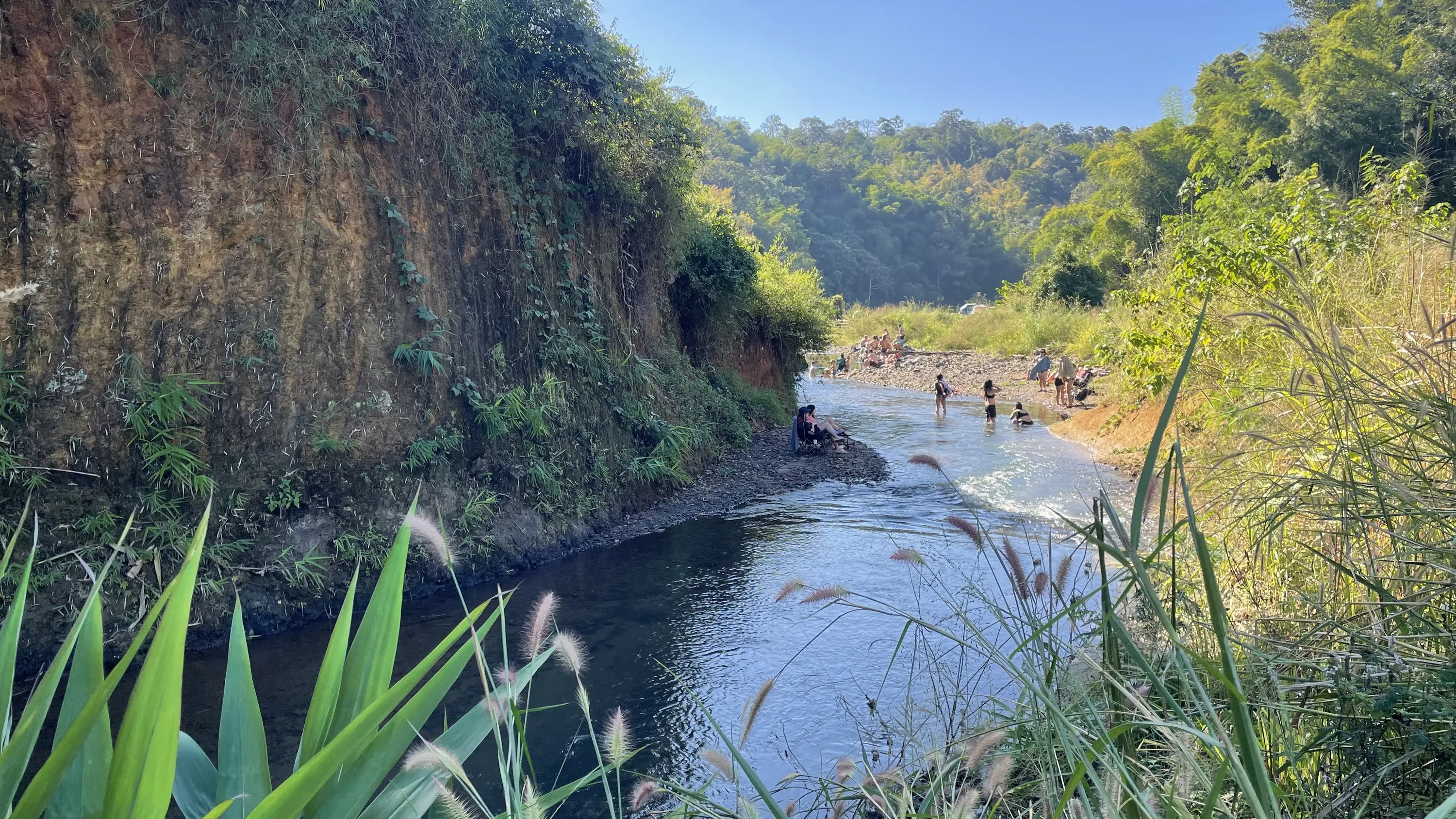
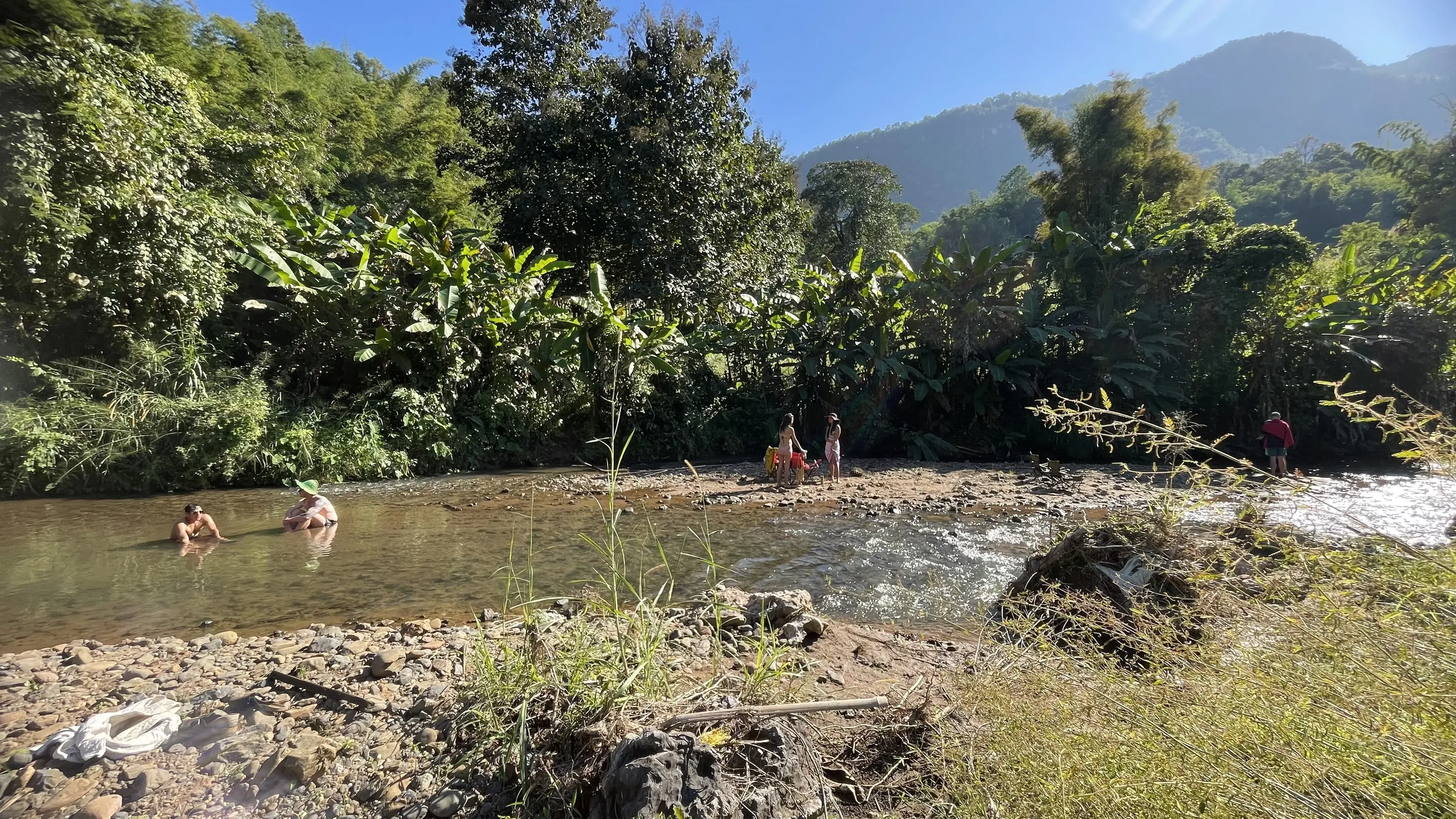
The music is not constant. The festival breathes. You wander into quiet forest pockets, wake up with the sun, dip into the stream to wash off or cool down. Purin said he loved the stream in the early years but was too tense to enjoy it. This year he finally did, feeling he was more prepared.
Leo laughed when he explained the contrasts: 'Cows and the sound system.' That mismatch is exactly how it feels. High-quality production blended with village rhythms, farmland and people drinking from bamboo cups. Nothing fits neatly, yet everything clicks.
‘There is no hierarchy,’ he adds. ‘DJs dance alongside everyone else. Artists attend as participants. There is no VIP anything.’ If you want the festival to be better, you bring something. Art. Food. A workshop. A skill.
Daytime at DDT moves slowly. Most people spend the late morning nursing hangovers, emerging from tents in stages, wrapped in blankets, heading for coffee or the stream. The festival does not push you toward anything. It lets you recover at your own pace.
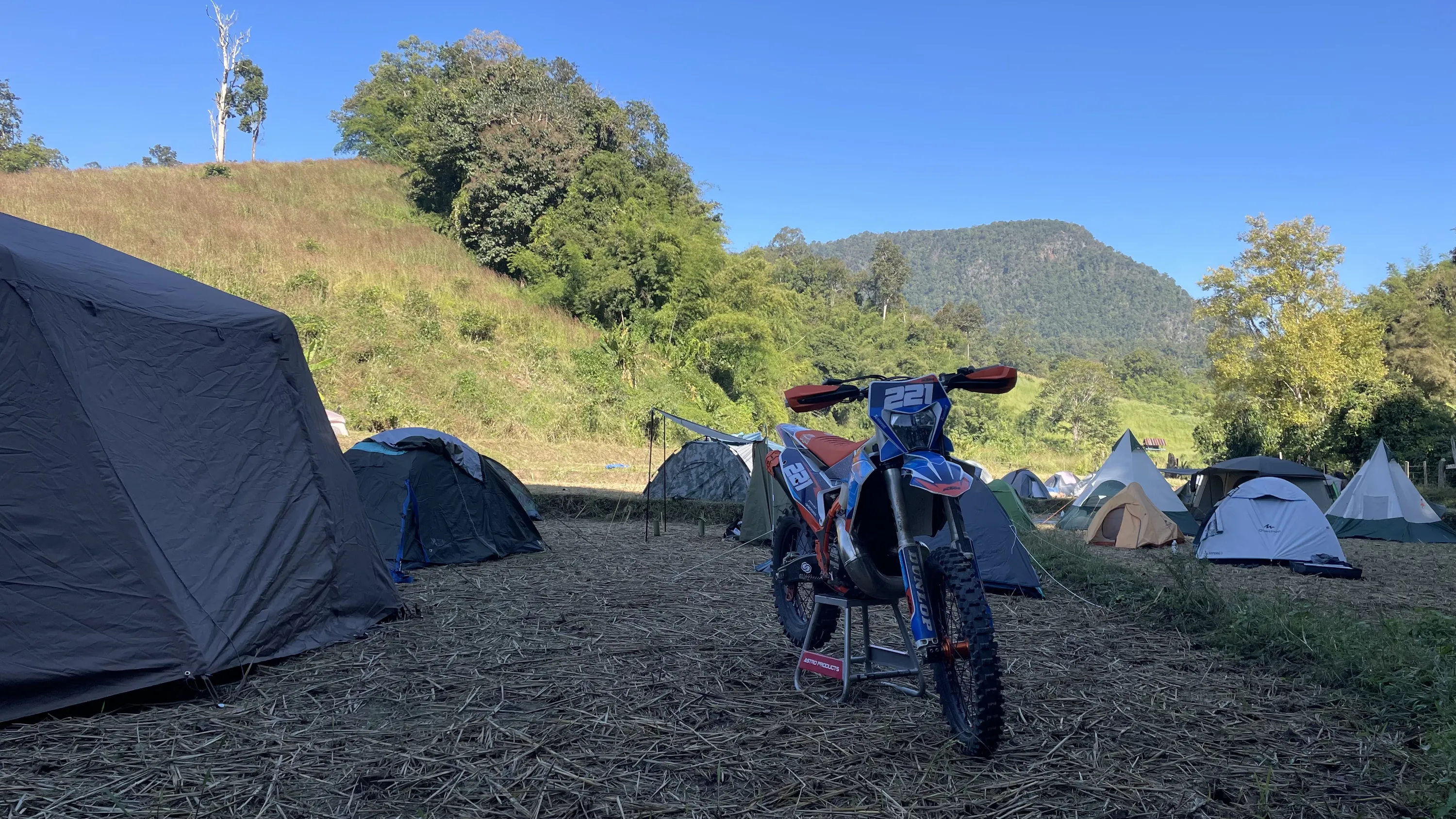
A few activities appear each afternoon. One that stands out is called 'Formula Fuck You', a DIY dirt bike session where daring riders take turns blasting through the fields with equal amounts of enthusiasm, recklessness and questionable balance. I saw women join just as confidently as men.
Then there’s Will's Hike, described as a rugged, pathless climb through steep jungle, up to a peak and down the other side. I opted out. Between the heat, the incline and the residue of the previous night, I decided the stream and a shaded rock were adventure enough for me.
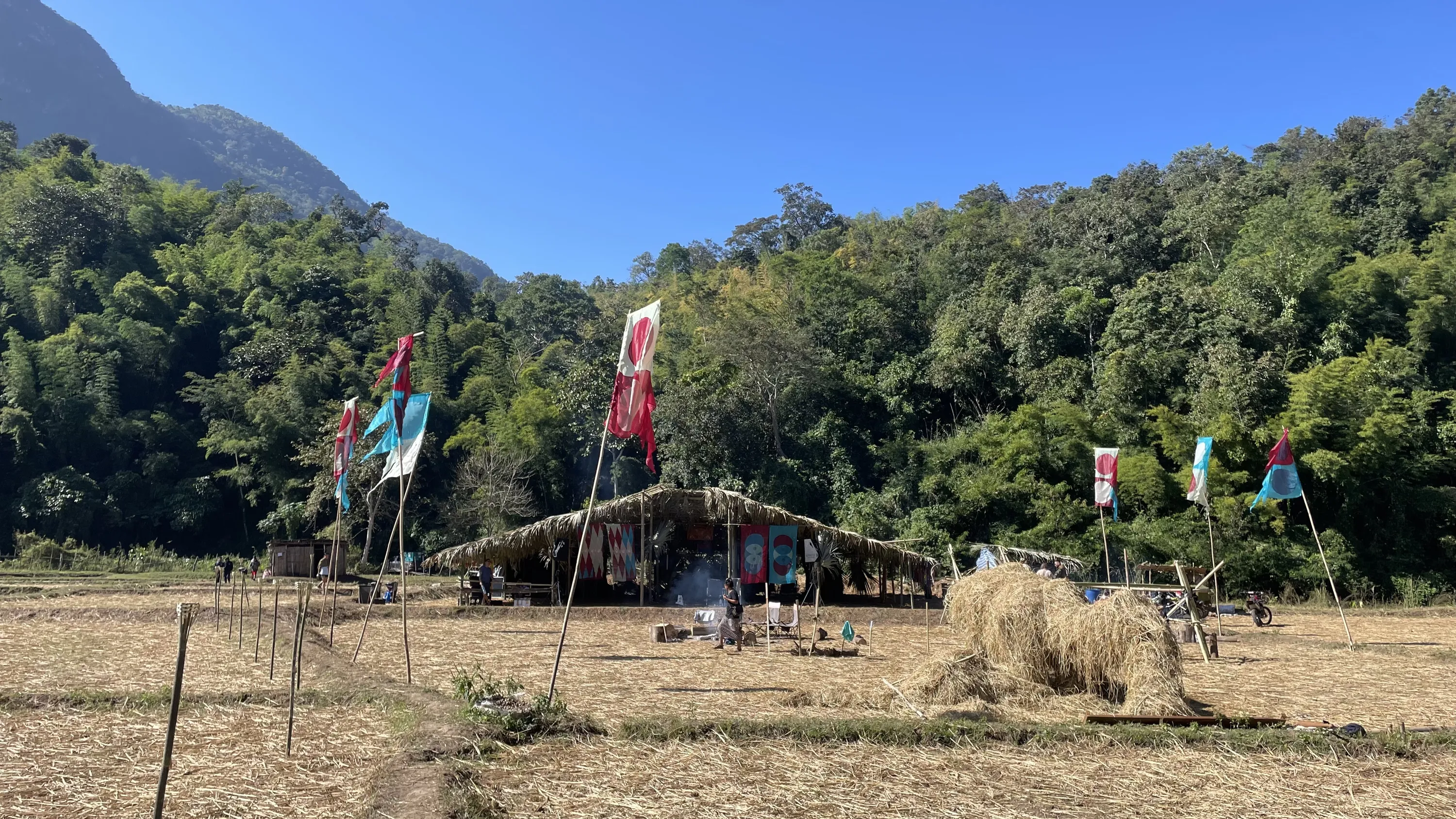
It isn’t the stage or the programming that makes it special. It’s the way the festival dissolves distance. With only 150 people, you stop being a spectator and start feeling like part of a temporary village. You recognise everyone by day two. You share tools, snacks, stories and whatever else the jungle demands.
Everything at DDT is intertwined with the Karen community who supports it. They handle logistics, transport, cooking and the build. They understand the terrain and the spirits of the land in ways outsiders simply do not, and the festival moves according to that knowledge.
Then there are the contrasts that shouldn’t work but do: village dogs roughhousing in the hay just in front of the Funktion-One system, miscellaneous moonshine for breakfast, villagers and DJs dancing in the same clearing. As Purin told me, it stays special because it hasn’t been over-commercialised. ‘It remains a living experiment.’
Leaving the jungle and looking ahead
No one involved wants DDT to get big. Growth here means depth, not scale. Purin hopes future editions will bring more creative contributions from attendees. 'More people contributing would enhance the community vibe. Small things like portraits, workshops, skill-sharing.' The challenge is holding onto that purity as interest grows. More people want in. More myths circulate.
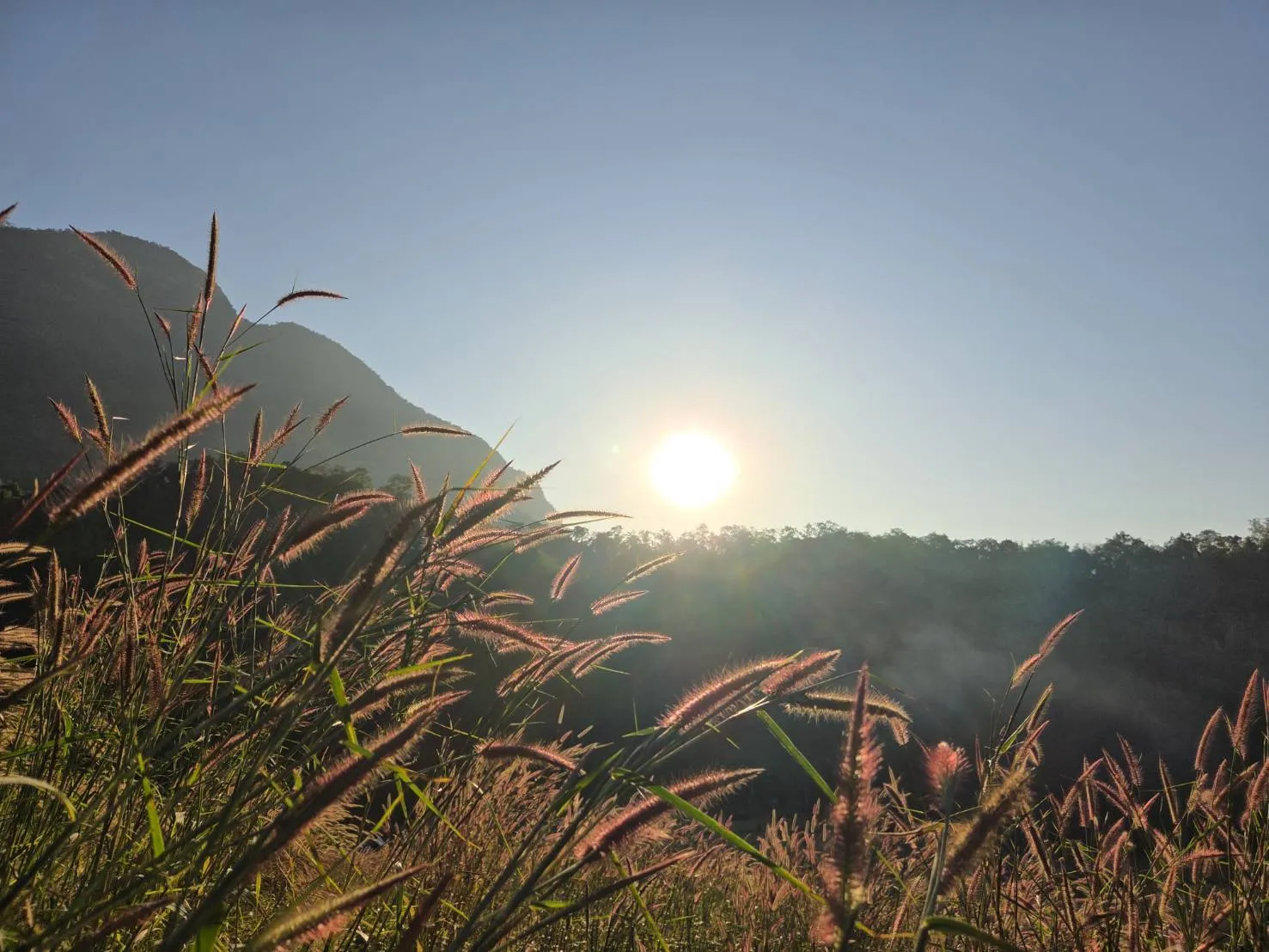
We all left DDT the way we arrived, a lot dirtier and this time piled into the back of a pickup truck instead of wading through water. But something about the place stays with you. Maybe it’s the silence at night, the brightness of the stars or the shock of cold stream water. Maybe it’s the way strangers become quick friends. Maybe it’s the absurdity of a festival built around a mythical tiger with two dicks, or the sincerity of the people who believe in what it represents.
I arrived nervous and left lighter. Something shifted. That might be the real magic of Double Dick Tiger. It reminds you that the world can still surprise you. And without hesitation, I’ll be back.
Discover Time Out original video