

[image]
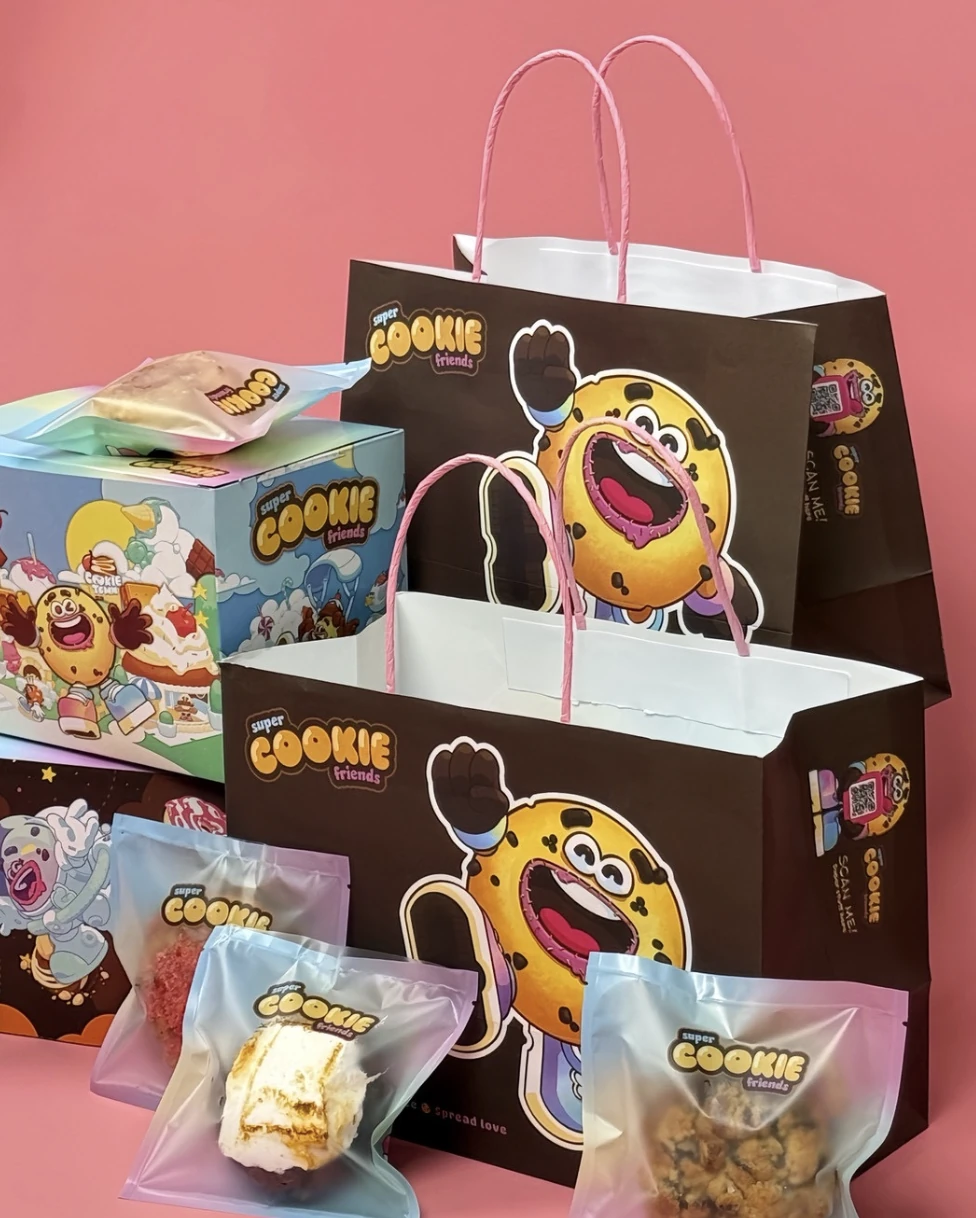
[title]Cookies, comics and collectibles collide one evening at the Time Out Bangkok office. The Super Cookie Friends boxes materialise. Peeking into the bag, the first thing we saw was the top of the box: 'Out here, just trying to be the best cookie I can be.' We went – who said that?
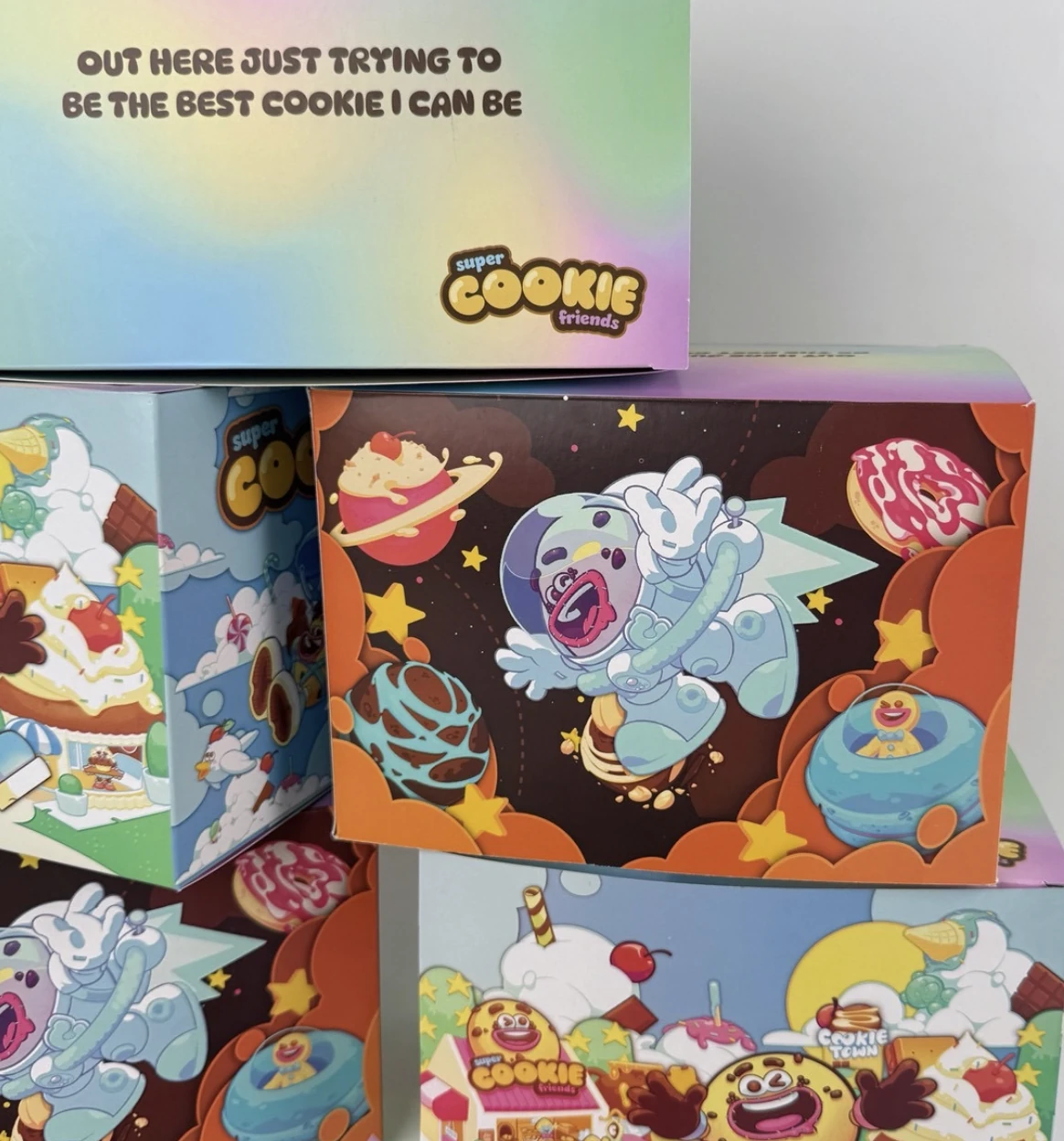
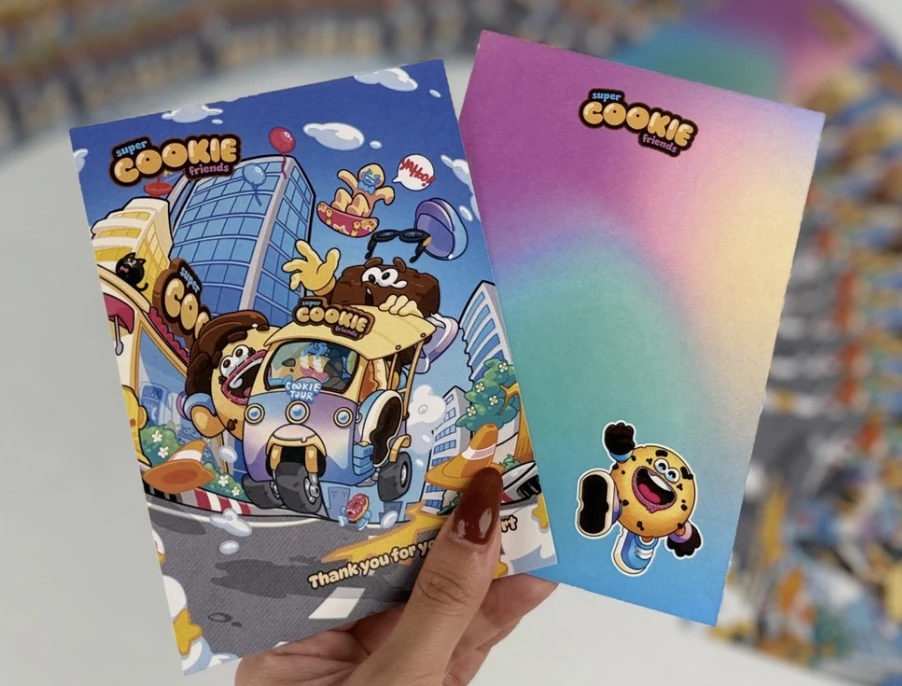
We took the box out and followed the artwork around. Then this round, beaming Chunk guy showed himself. Oh, it's Chunk. Cookie Town below him.
And if you look closely there are clues – products and lines not yet out, hiding in plain sight. Then Chunk again, flying back through space with his gingerbread friend.
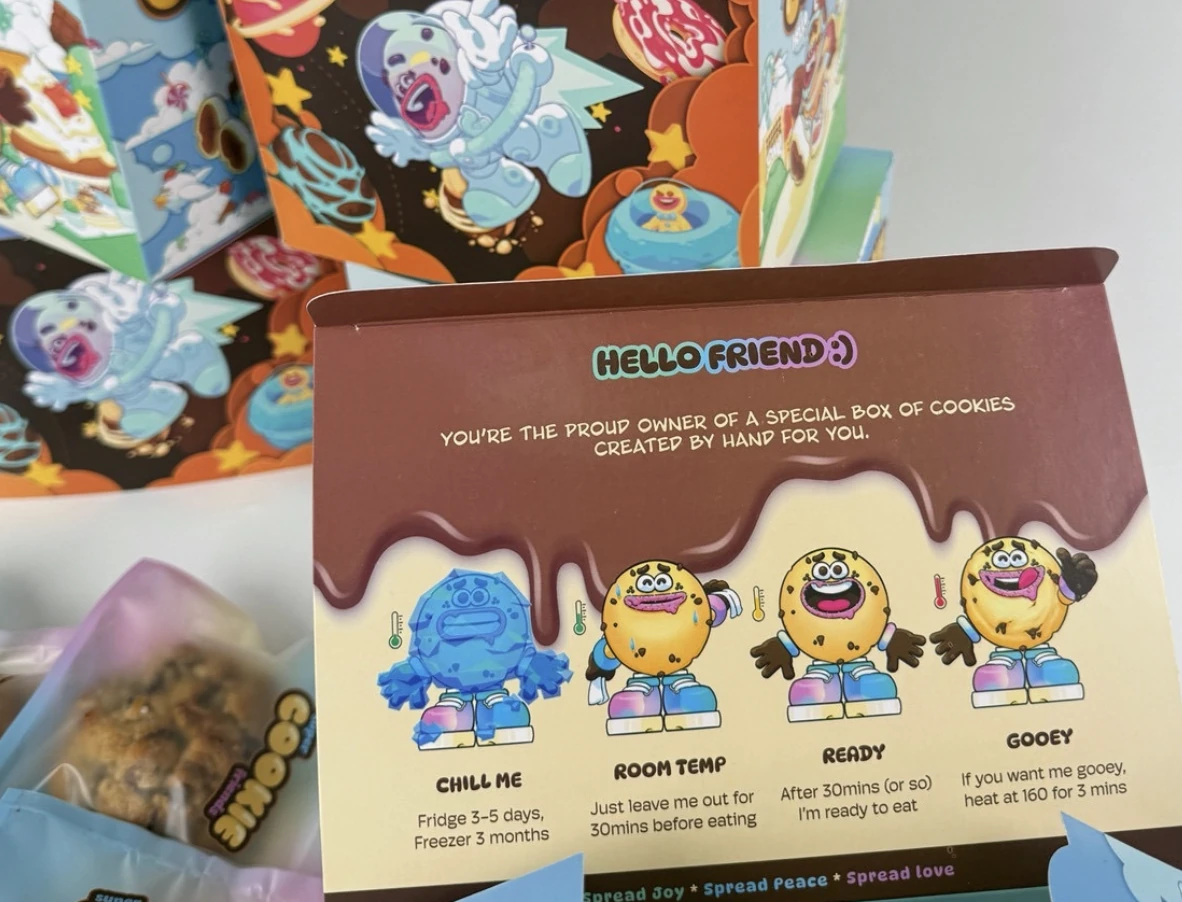
Open it up and you're back with Chunk(s). 'Hello, Friend. You're the proud owner of a special box of cookies, created by hand for you.' Illustrated instructions for getting the most out of them. Then you notice the side flaps – open those and the scene keeps going, extending outward, which is a fun thing to find. Look inside the box itself: Take Me Down To Cookie Town and the link to the rewards community – Super Cookie Friends Friends. We'll get to that.
Then the cookies. Lined up left to right at a very deliberate angle, what their creator calls 'tasty soldiers.'
Reader, we demolished them. Chuck got early access to our February 19 to 25 edition of Table Talk in Bangkok, our weekly roundup of the capital’s must-know culinary happenings.
But here’s how deep the Chuck cosmos really goes.
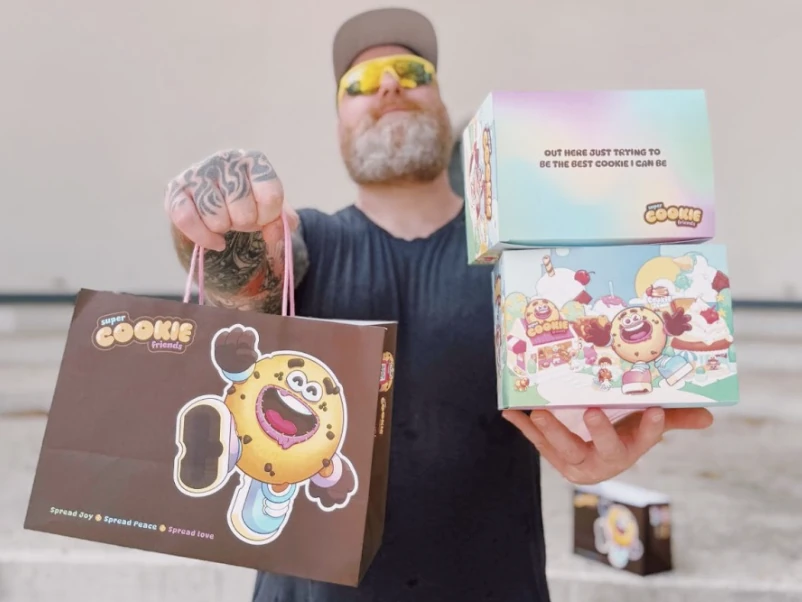
The man responsible for all of this is David Fine – London-born, with the kind of restless creative energy that has a habit of pulling him sideways off whatever path he thought he was on. He has been, at various points in his life, a graphic designer, a tailor's assistant with a Royal Warrant to the Queen, a house and techno DJ, a record label founder, a fashion buyer and a brand strategist. He now makes cookies in Bangkok. But to call it simply that feels like describing Kubrick as a photographer.
'I've always been very detail obsessed,' he says. 'I can become fixated with details and doing things properly and seeing them through to the best version of themselves.'
The origin story begins, as many good ones do, somewhere completely unrelated. David was running his creative agency out of Greece, helping a pair of American twins who sold gingerbread cookies each Christmas from their bakery. The cookies were popular. Customers kept asking for them year-round. The twins wanted marketing help – funnels, that sort of thing – but David found himself drawn instead to something else entirely: gingerbread characters, mascots, animations, a whole world built around the product. The working relationship ended somewhat abruptly. But something had been unlocked. 'The experience had fulfilled its role as a stimulus for me to change paths,' he says.
He was walking around a golf course with his wife, Koalie – his nickname for her, used so constantly that, he admits with a laugh, it's basically what she hears all day – when it came to him. He wanted to make his own cookie brand. He wanted to call it Super Cookie Friends. He didn't know exactly where the name came from but he understood what it meant the moment it arrived: 'my love of comics and collectibles and the idea of a group of characters that are positive and friendly with good energy – also on their own path of development. I thought we could use the characters to inspire and also create deeper meanings in a fun way.'
'Let's go to Thailand,' he told Koalie. They had been coming since 2013, always having to leave each time, always planning to return. 'We said, let's go and make a go of this.' They packed up and got on a plane.
Bangkok, as it turns out, was not short of cookies. What it lacked was David's persistence. He spent months trying to find a baking partner, someone whose product he could feel comfortable putting the Super Cookie Friends name on. He tried hundreds of cookies across the city. He did demo tests with three or four different bakers. None of them convinced him. 'The cookies were kind of soft and maybe overly gooey and floppy, or just no interesting textures, not using the finest ingredients. It just fell flat for me.'
View this post on Instagram
Money, he says, is one thing. Soul is another. And soul has always come first – the record labels, the design work, everything has been about the art before the commerce. He was not prepared to compromise on that now.
Then, one afternoon, Koalie was browsing a Japanese bookstore and pulled a Scandinavian cookbook from the shelf. They took it to a nearby cafe, ordered coffees and David started flicking through the recipes. Somewhere between the pages, the familiar feeling arrived – one of the ones Kaolie knows to brace for, because they come all day, every day, announced with the same opener: 'Hey, Koalie, I've had an idea.'
'Let's figure out how to make the ultimate cookie,' he said. A pale pink countertop mixer in a homeware shop. They bought it on the spot and carried it home. 'I used to mix vinyl,' David says, 'now I mix dough.'
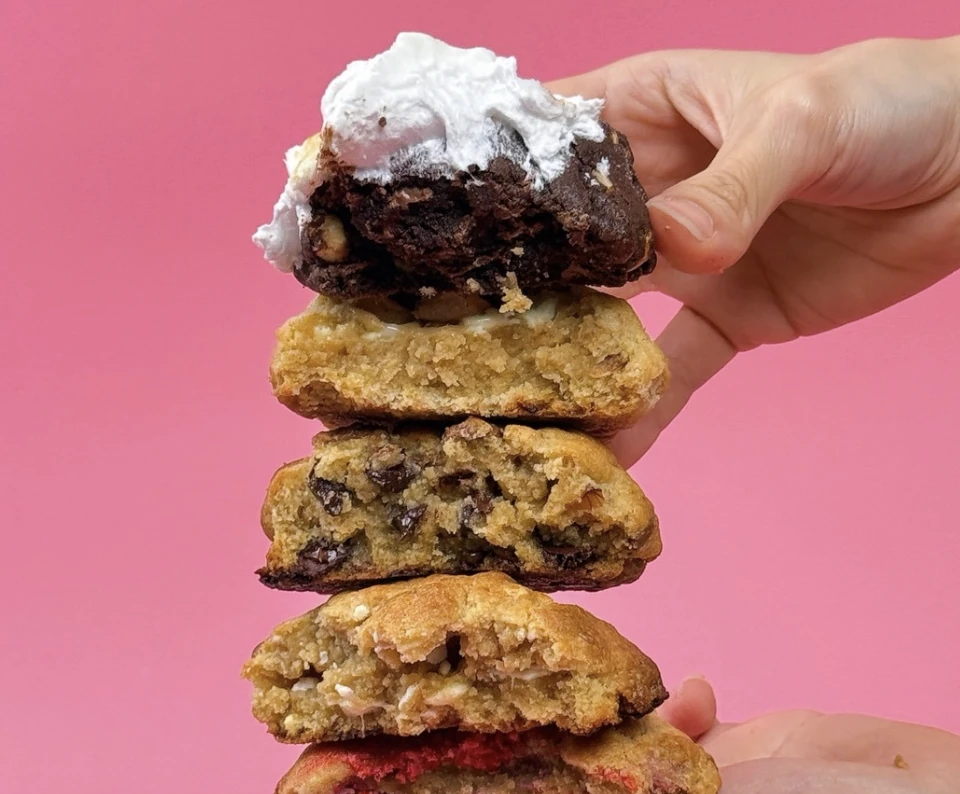
That first batch, he walked straight down to Tarns coffee in Suan Phlu. The owner had been eating every iteration of his cookies since the beginning – which is why the flagship is named after her. The Atomic Choc Chunk.
'She loved them, told me I was a great baker and I thought I've got it locked.' He pauses. 'But there's a graph, I think.'
– The one David points to, the emotional cycle of change.
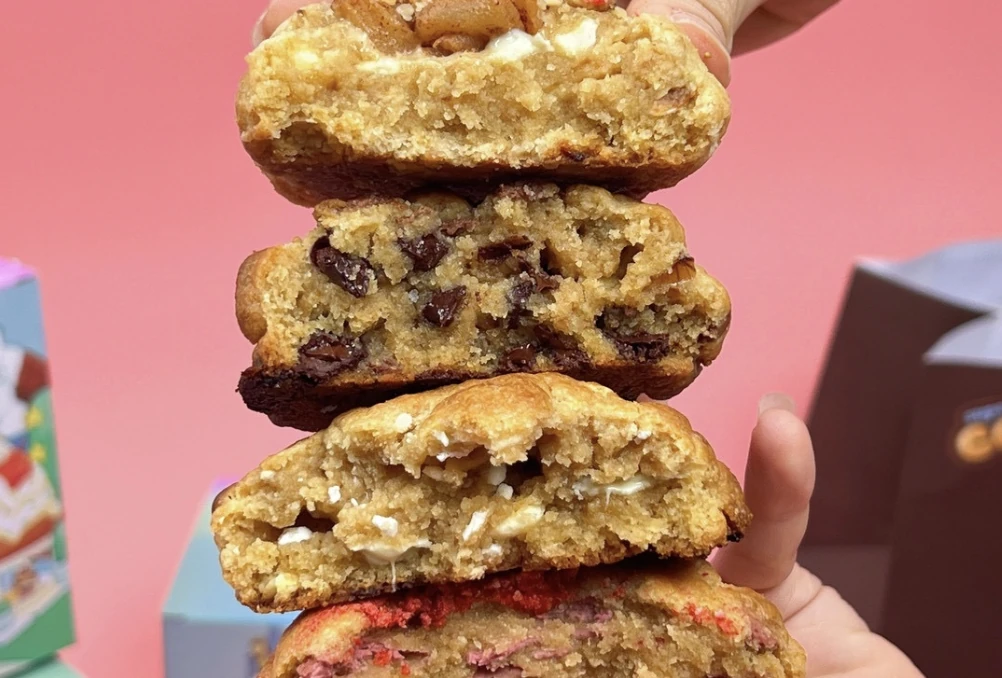
What followed was months of baking. Testing, throwing things away, giving everything to anyone willing to eat it, adjusting and adjusting again. He knew the cookie he was chasing: the New York style, specifically the kind made famous by Levain Bakery in Manhattan. Biscuity and quite crispy on the outside, chewy in the middle, heavy on the mix-ins. Not the soft, yielding things that had started appearing across Southeast Asia under the New York label. 'There are a lot of people claiming to make New York cookies, but they're not New York cookies. A lot of people calling soft cookies New York cookies – but they're different things.' He didn't want to compete with those. He wanted to bring something that people who had eaten the real thing and couldn't find it anywhere in Southeast Asia would actually recognise.
View this post on Instagram
David is particular about ingredients. Belgian chocolate, French butter, free-range organic eggs. Sugar dialled back as far as structurally possible whilst maintaining flavour and integrity. He makes the marshmallow by hand. He makes the meringue by hand. 'Personally I don't like sickly, soggy, over-sweet cookies,' he says. 'I want it to be sophisticated.'
View this post on Instagram
Each recipe follows a process. It starts with balance across the box – a solid mix of flavour profiles: nutty, salty, fruity, chocolatey. Then the season and the calendar come in. Then, crucially, personal inspiration: 'we think about flavours that have touched us personally and are inspired by our backgrounds.' David was born in London. Koalie has Japanese roots. Their childhoods and travels move through every recipe, even when that's not immediately obvious. He'll only say 'watch this space' about what the British pudding classics series will bring.
Once a direction is clear, he sketches the composition – mix-ins, fillings, toppers – and thinks about how it will look and how it will feel to eat before a single gram of flour is weighed. Then the baking begins. 'We will bake a lot of them and make sure they're repeatably good and the flavour and texture is balanced.'
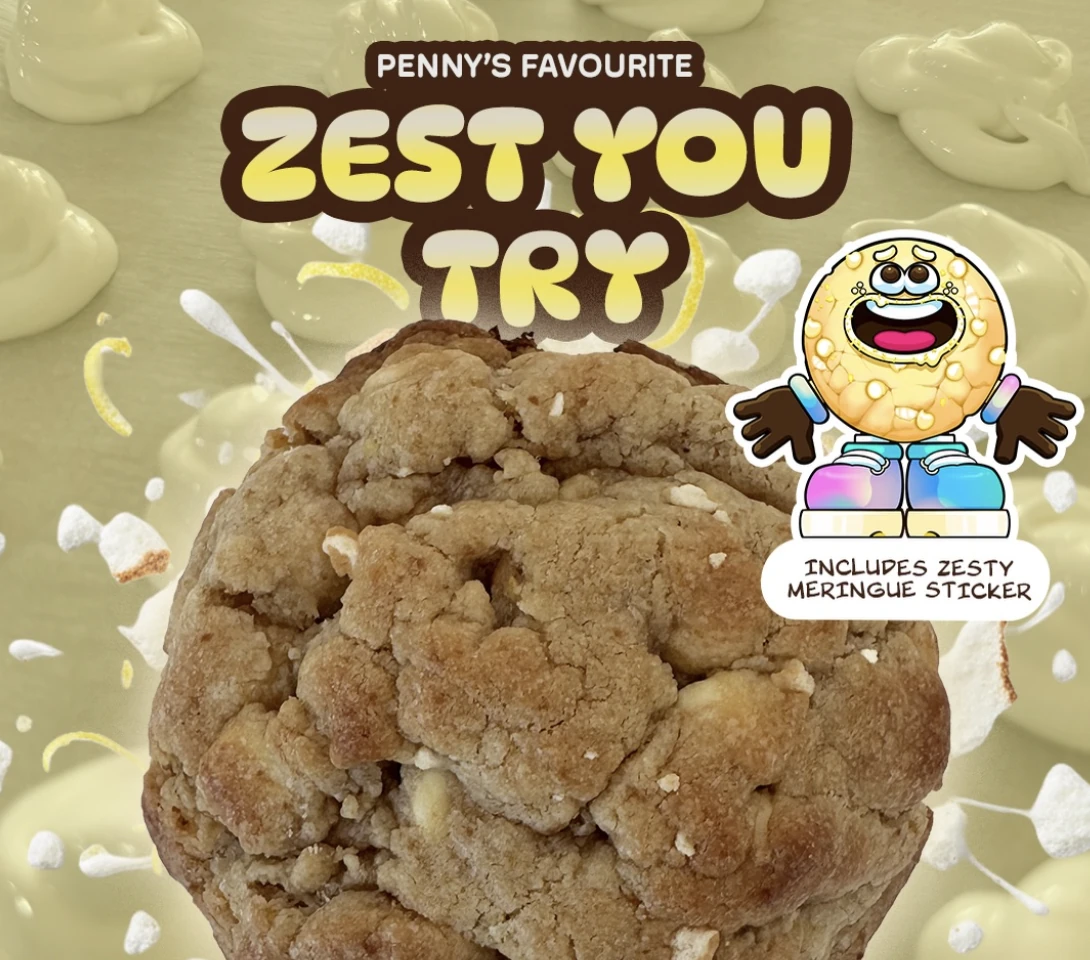
A recipe is done, he says, 'when it's consistently delicious.' But even then it isn't necessarily finished. He's currently playing around with adding a lemon drizzle to the lemon meringue cookie, which goes by the name 'Zest You Try' – if the tweak works, the recipe updates.
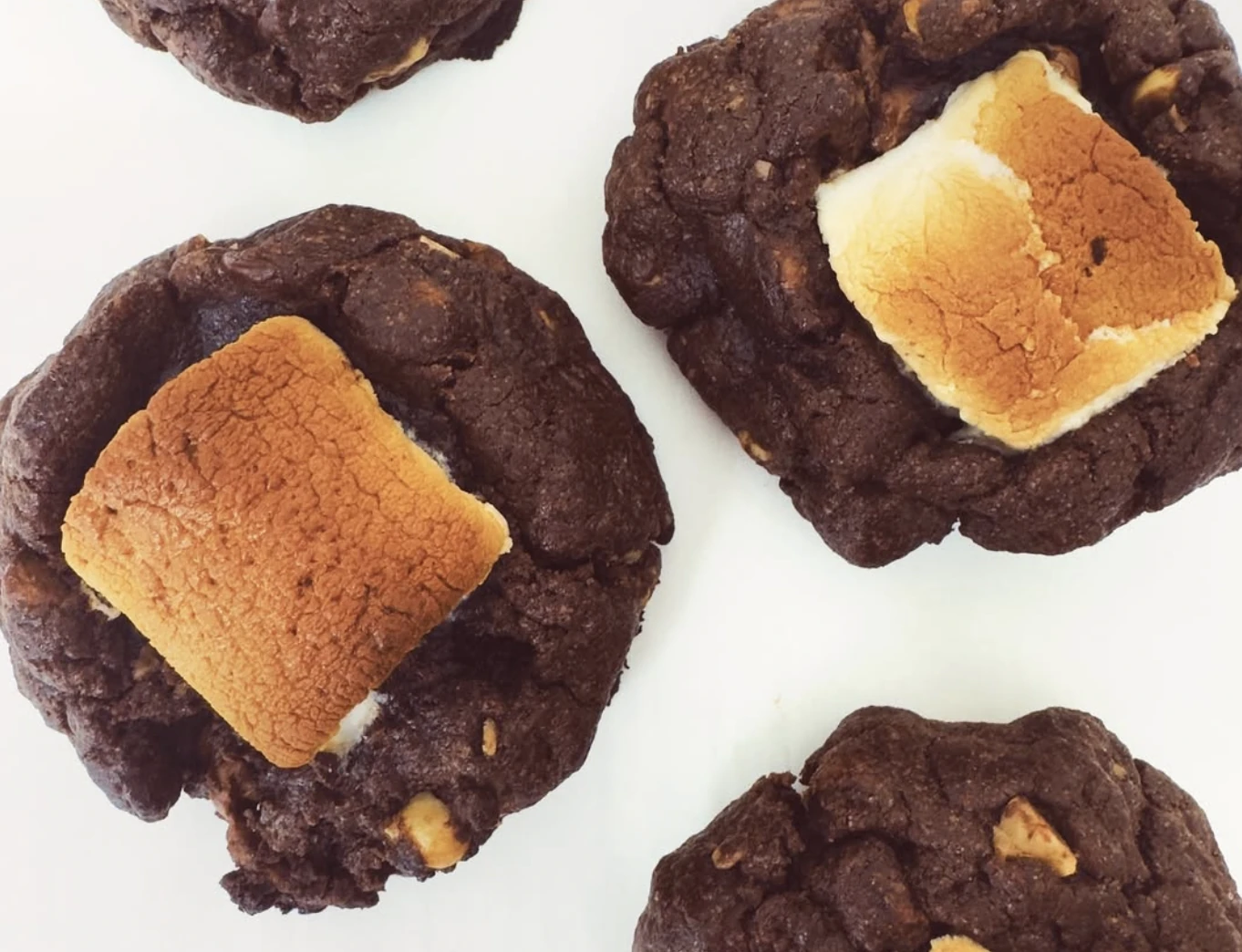
The marshmallow saga is the best illustration of how his mind works. He started by buying shop-made marshmallows for the double chocolate and hazelnut cookie, but when he read the ingredients list he didn't feel good about it. So he made his own. Home-made marshmallow, it emerged, does not survive the oven – it melts into something 'super chewy and stretchy and fun' but becomes, essentially, extra sugary caramel. The cookie was ruined. He went back to shop-bought for a week. Still didn't feel right.
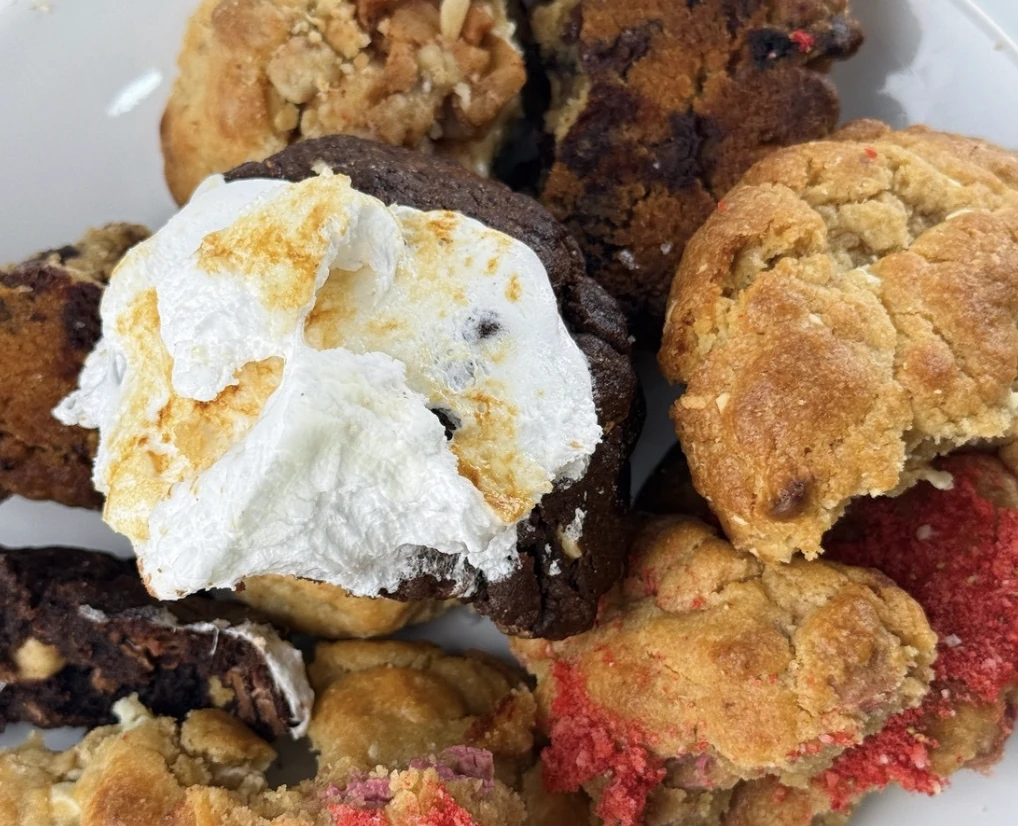
'I said, there must be another way.' Eventually he landed on the solution: bake the cookie, finish it with sea salt the moment it comes out of the oven, lay the marshmallow on top while the heat is still coming off it, let it begin to melt naturally, then torch it. Campfire effect. Structural integrity maintained.
There is also a cookie that hasn't made it yet. In Britain, ice cream vans – known as Mr Whippy – serve soft serve in a wafer moulded into the shape of an oyster shell, filled with marshmallow, chocolate and hazelnuts. It's a childhood thing. David has been trying to translate it into cookie form but the buttercream, stable enough to survive a day or so of delivery, has evaded him. 'But we won't forget it,' he says, in a tone that suggests the Oyster cookie is less a failed experiment and more an unfinished argument.
The whole process takes two days. He is fairly confident – his phrasing is 'almost 100% conviction' – that nobody else is using the same recipes or the same method. 'These are not your auntie's cookies!'
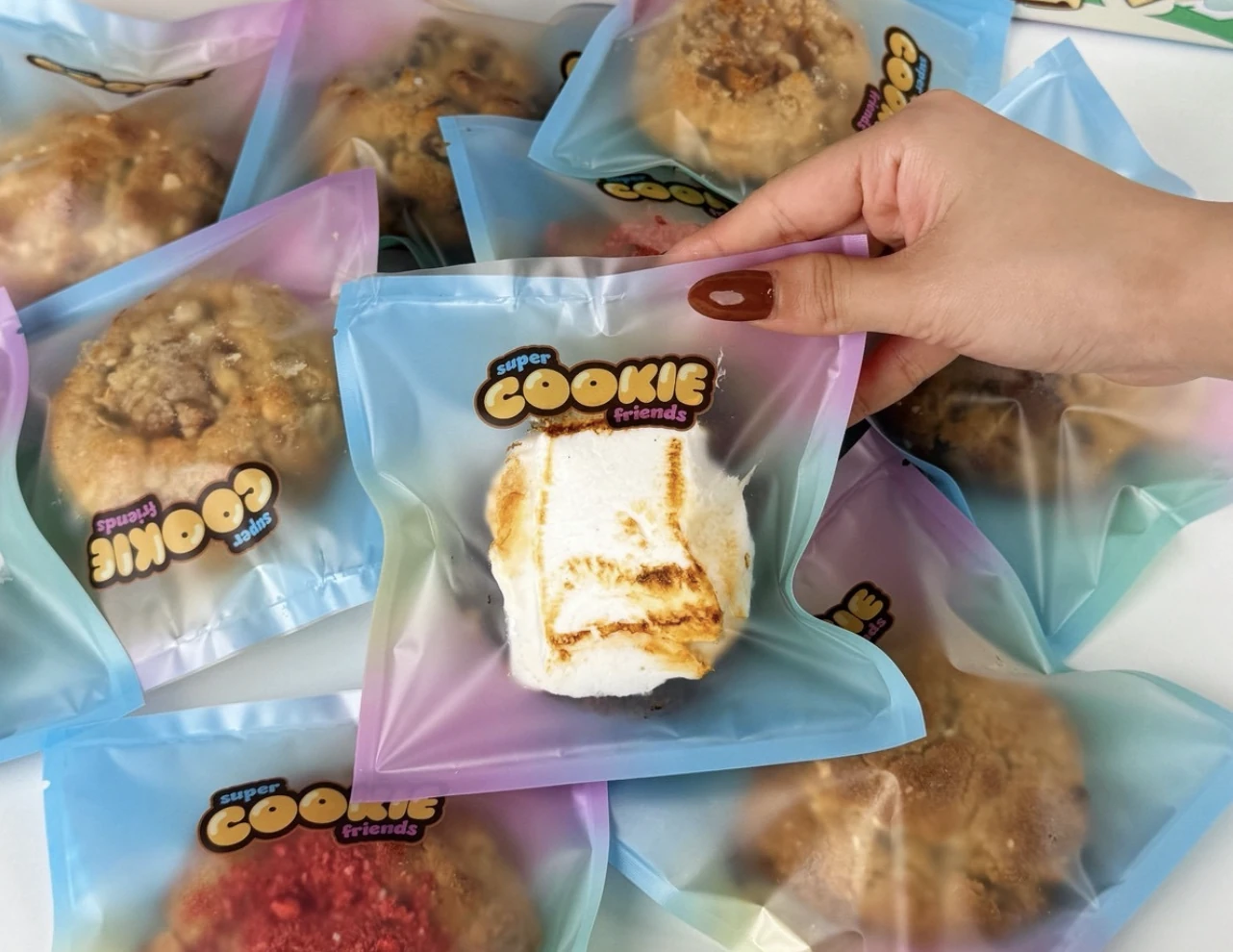
Super Cookie Friends launched this year with five flavours – Atomic Choc Chunk (choc chunk and walnuts), Double Choc Marsh (double choc marshmallow), Adults Only (double choc granola), Zest You Try (lemon meringue) and Apple Crumble – capped at 100 cookies a week, with a whole lot of creative infrastructure built around the whole thing.
View this post on Instagram
The hundred-cookie limit is not a gimmick. It's a philosophy. He watched what happened to brands that blew up – a flood of orders, fulfilment under pressure, quality slipping and then a week later nobody remembers them.
He wants the opposite: slow roots, word of mouth, a community that grows with the brand rather than briefly consuming it. 'We want to ensure a high level of quality control and consistency,' he says. 'And let people tell their friends about them, share the cookies on social, buy for other people as gifts. You will grow steadily, with strong foundations, with people that really care.'
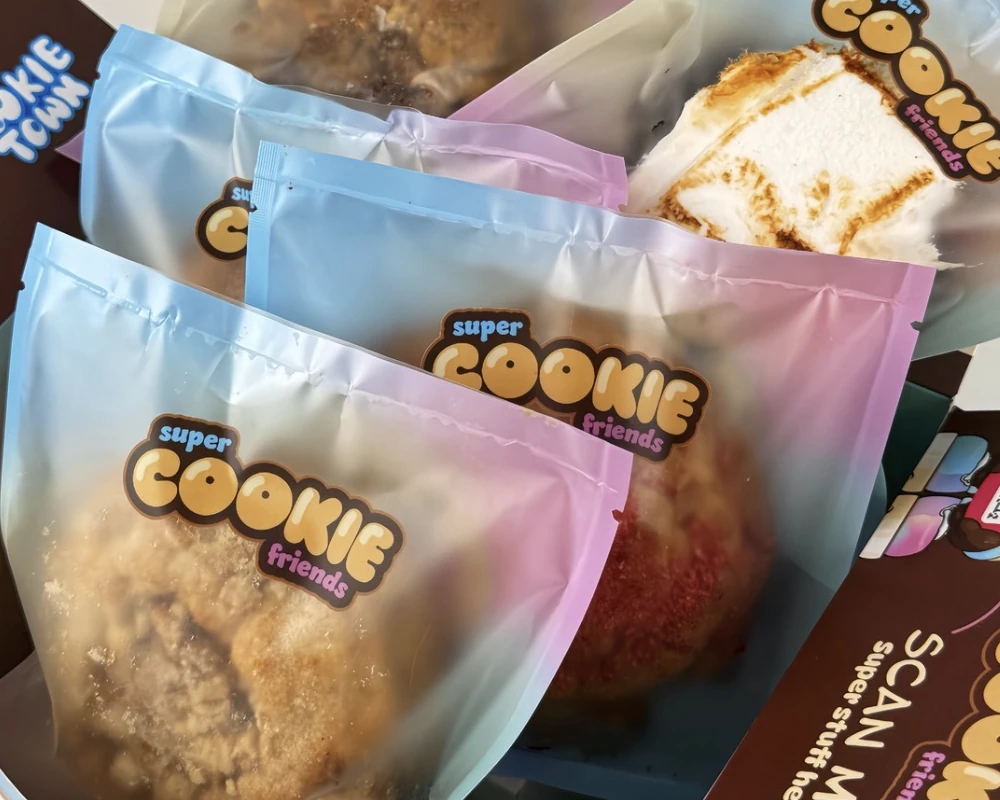
The weekly line-up is curated for balance: nutty, salty, fruity, chocolatey and something with a sense of fun. It shifts with the season and the calendar – last Valentine's brought Ruby chocolate, made from a rare natural pink cocoa bean.
View this post on Instagram
The Chinese New Year special is the Fortune Cup. Finding Reese's Cups in Bangkok is a bit of a treasure hunt – David's words, not ours, but he did claim to have bought them all!
Easter will hinge on finding a reliable supply of Cadbury Mini Eggs. Flavours earn their place week by week; at some point the five-flavour line-up will grow, because David knows that cutting a cookie customer’s love is not a decision taken lightly.
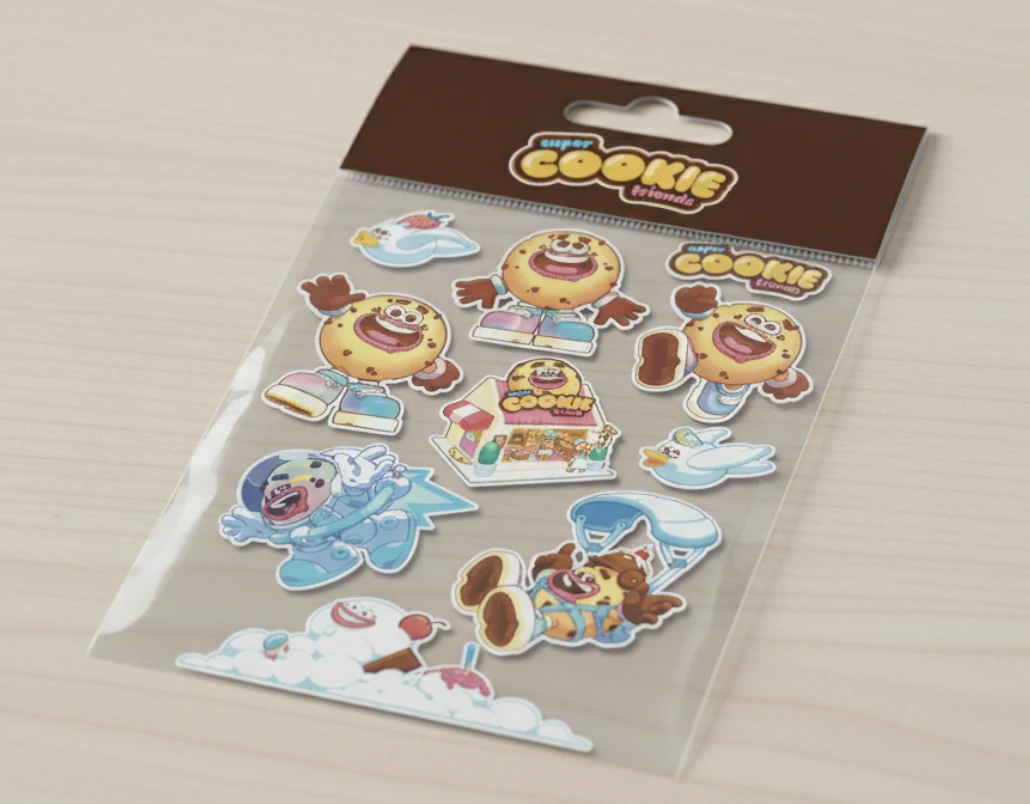
Coming soon and occupying a different register entirely, is the Doughpamine series – bigger cookies, more indulgent, pushing in the opposite direction from the studied restraint of the main range. 'Doughpamine is to Chunk,' he says, 'what Venom is to Spider-Man.'
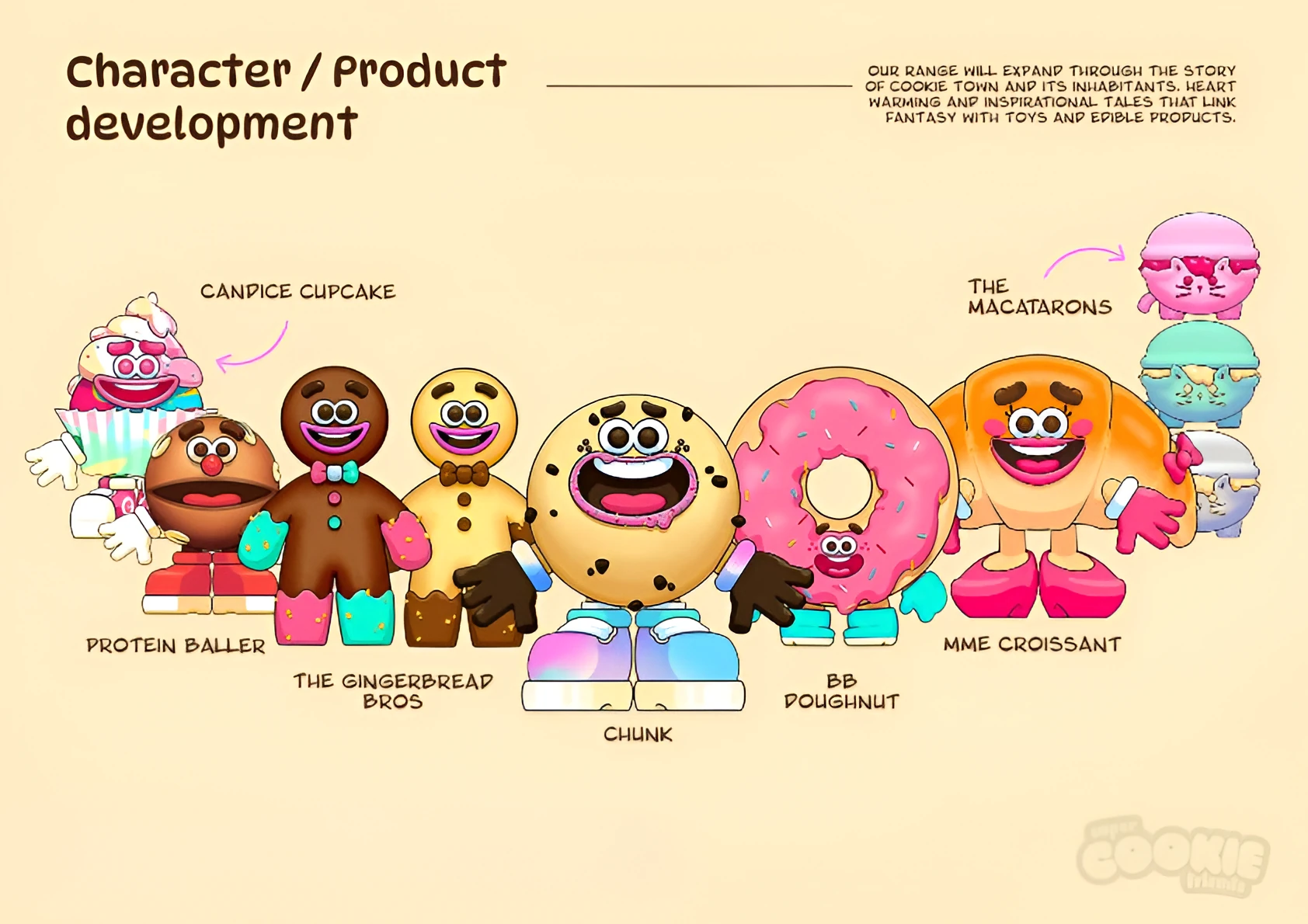
The characters deserve their own section, because this is where Super Cookie Friends stops being a bakery and becomes something harder to categorise. David grew up the son of a man who held licences for Thundercats, Transformers, Care Bears and He-Man – waking up to new toys by his bedside, helping his dad decide which characters to back. At 15 he was already designing sticker storybooks for Power Rangers and G.I. Joe for publishers stocked in WHSmiths. The love of characters, of storytelling through mascots and worlds, has been there since before he can really remember.
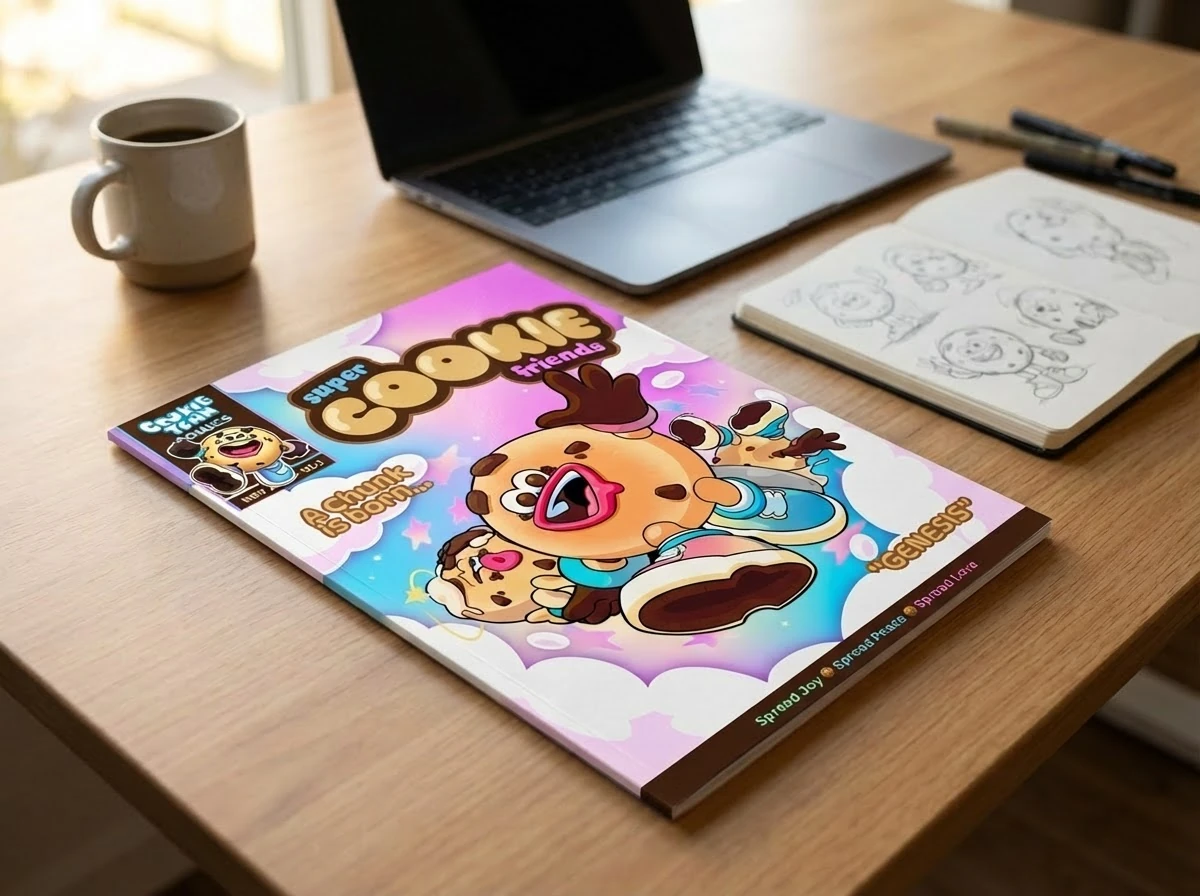
Chunk – the cheerful, spherical mascot – was, David says, 'born from love and hope for a better future.' His genesis story will be told in a limited-edition comic arriving in the coming weeks, volume one of what is clearly intended to be a much longer run.
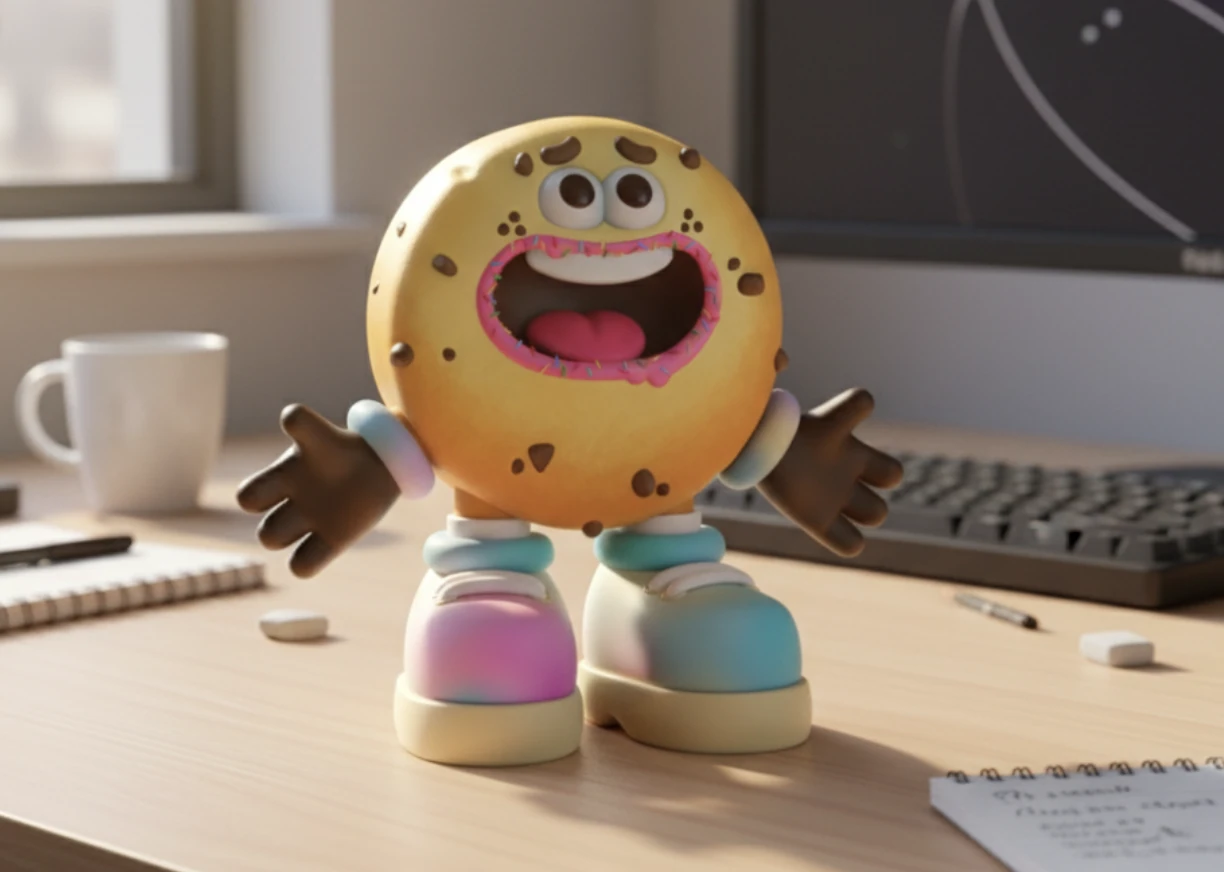
Chunk is, technically, Master Chunk – the cookies you eat are his clones, a detail David delivers with barely concealed delight. He is upbeat, positive, happy and 'he wants you to eat him.' His story will follow his progression, his development, his attempt to be the best cookie he can be. The gingerbread characters who appear on the packaging are the workers of Cookie Town. 'They're a bit downtrodden at the beginning,' David says, 'but their time comes when they're recognised for their hard work and can-do attitude.'
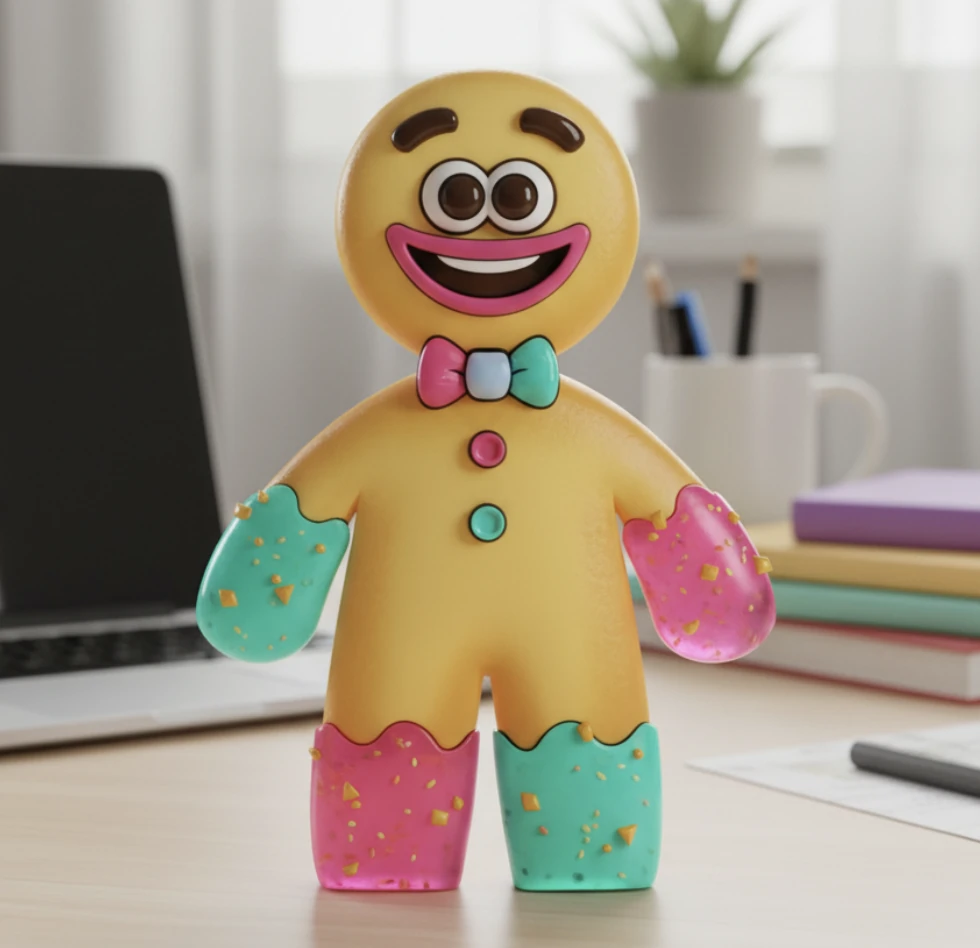
Next in line for an origin story is Biggie Brownie, about whom David has revealed precisely nothing (yet!).
View this post on Instagram
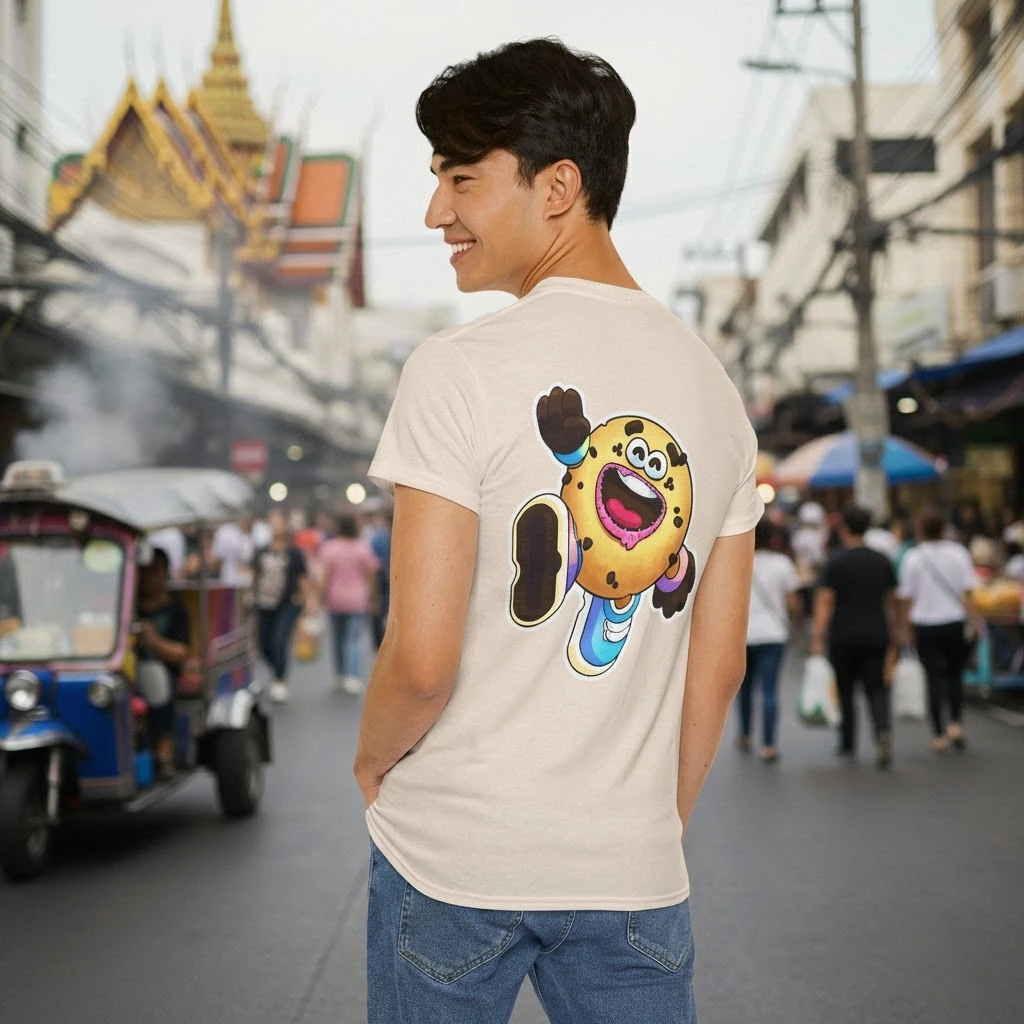
After that: T-shirts. A limited toy run. Bag charms. Keyrings. He has also written the Gingerbread characters' comic and a backstory for the forthcoming brownie range. The universe, as he puts it, is already written – it's just being released slowly.
The last thing he talks about is what comes next: a cafe, eventually, a proper Super Cookie Friends experience. Pop-ups. Collaborations. Hong Kong already in conversation. Japan on the horizon. UK and Australia circling. A community rewards programme called Super Cookie Friends Friends, where the highest-earning action is buying a box for someone else – and not a review or a social share.
'I think that's a lovely gesture,' he says. 'And a lovely way to introduce new people to the brand.'
Some people just care like that. And it turns out a cookie can hold quite a lot of soul.
Super Cookie Friends ships out of Bangkok every week. You can catch them on Instagram for now, while their website is still in the oven.