[category]
[title]
The initiative is the result of a €15 million municipal investment planned over the next six years, covering both restorations and new constructions.


With 18 venues already, Cascais’s Museum Quarter provides plenty to explore for residents and visitors alike. However, by 2032, the municipality promises to add six new museums to spaces like the Casa das Histórias Paula Rego, the Cascais Cultural Center, the Cidadela Art District, and the Santa Marta Lighthouse. The news was announced in the July edition of the municipal newspaper C, which notes that the project represents a €15 million investment that also includes the revitalization of existing cultural facilities.
Among the announced additions is the Theater Museum, set to be located at the 19th-century Palacete Belmonte in Quinta da Alagoa. The space will house the collection of the Experimental Theater of Cascais, featuring props, costumes, stage designs, and posters documenting over six decades of activity by the company founded by Carlos Avilez and João Vasco—a company tied to figures such as Natália Correia, Carlos Paredes, Almada Negreiros, Júlio Resende, Nadir Afonso, Michel Giacometti, and Eunice Muñoz.
Plans also include a News Museum "in the heart of the town of Cascais," aimed at recalling pivotal moments in the history of journalism and freedom in Portugal; and a Language Museum, housed in one of two coastal defense fortifications that will finally open to visitors: the Luz Fortress and the Santo António da Barra Fort (which has been hosting the second edition of the Cascais Atlantic Sunsets electronic music festival since last weekend).
Outdoors and open-air, the Stone and Stonemasonry Museum will showcase, along the Ribeira das Vinhas trail, the importance of stone extracted in Cascais for Lisbon's reconstruction following the 1755 earthquake. “The region's old quarries will be restored, and the hollows left by extraction transformed into natural settings and auditoriums,” describes the municipal publication. Also outdoors, the Roman Settlement of Casais Velhos is preparing to open to the public. Overlooking Guincho and the Cresmina Dune, it is one of the most significant traces of Roman presence in Portuguese territory, revealing the ancient purple dye factory (the ancient world's most costly, coveted, and luxurious dye, reserved for emperors, kings, and noble elites) that once operated there.
Similar to what took place at the Casal Saloio in Outeiro de Polima, a rural museum will also be established in Alapraia. The Casal Saloio and Neolithic Necropolis of Alapraia will highlight the area’s prehistoric caves, with its opening scheduled for later this year.
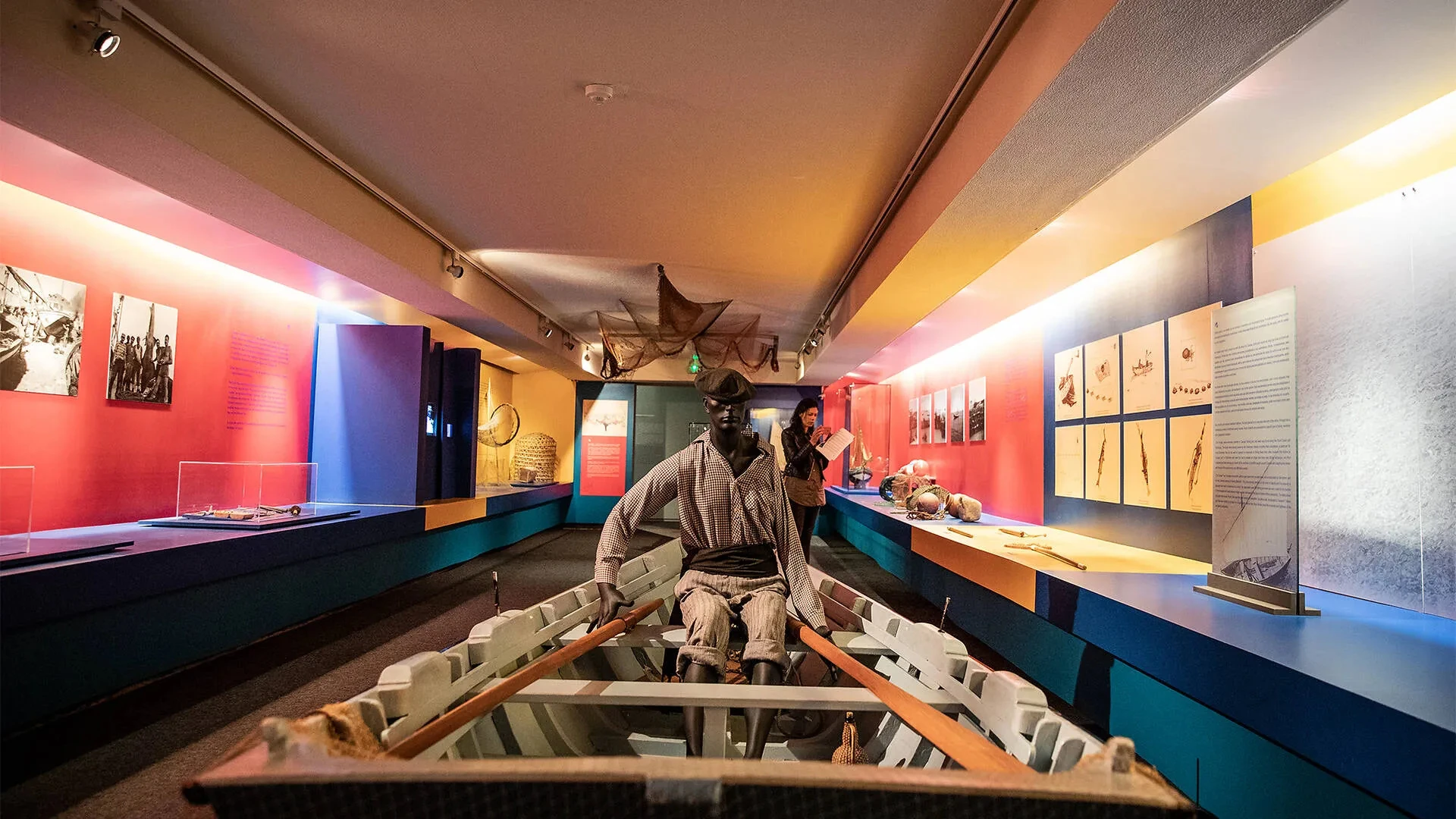
While not new—having opened in June 1992—the King D. Carlos Sea Museum is included in this plan. The overhaul of the space, formerly home to the Sporting Club de Cascais (founded in 1879 by then-Prince D. Carlos), promises to deepen the town's relationship with the sea and stands as “one of the most anticipated projects.”
“Culture continues to be a priority for this Executive,” writes Cascais Mayor Nuno Piteira Lopes in the municipal newspaper's editorial. “We are investing in the restoration of historical heritage, the enhancement of our museums, municipal archives, and research that allows us to better understand Cascais’s history. Because preserving collective memory is also preserving our municipality's identity.”
Currently, renovation work is underway across four existing facilities: Casa de Santa Maria, the Condes de Castro Guimarães Museum, the Museum of Portuguese Music - Casa Verdades de Faria, and the S. Jorge de Oitavos Fort.
More news: keep up with the latest news from Cascais
Discover Time Out original video