[category]
[title]
The long-debated project just released new station designs and a fresh plan for getting trains running.


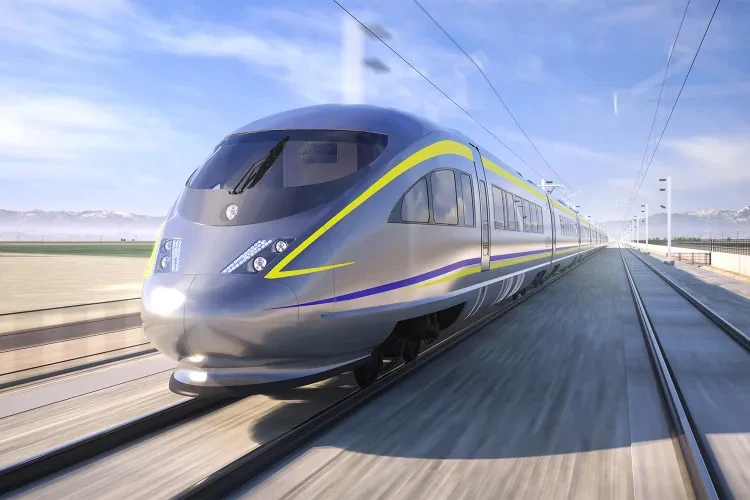
California’s long-awaited bullet train has spent years stuck somewhere between ambition and a construction site. But new renderings released alongside the state’s latest business plan offer a fresh look at what the future of high-speed travel between Los Angeles and San Francisco could actually look like.
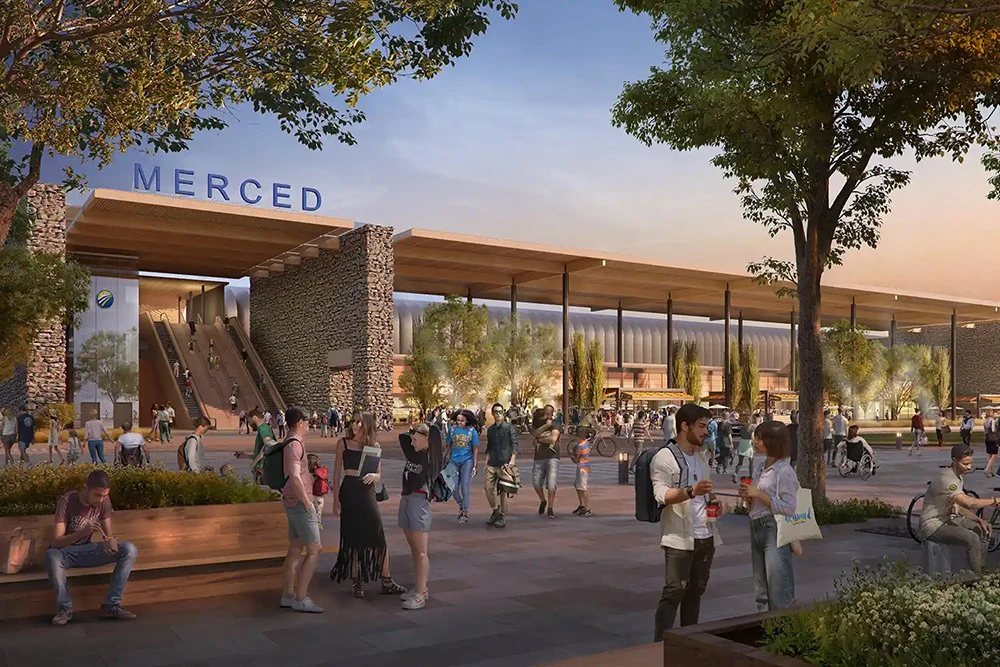
The images show sleek train stations planned for cities like Fresno and Merced and arrive as part of the California High-Speed Rail Authority’s Draft 2026 Business Plan, which outlines how the long-debated project could finally move toward operation. The ultimate goal is simple (at least on paper): whisk passengers between L.A. and San Francisco in under three hours.
If that sounds fast, it is. Today, that trip by car can easily take six hours or more, depending on traffic, and even the current Amtrak option requires a lengthy train-and-bus combination that can stretch well past eight hours.
The high-speed rail system, first approved by California voters in 2008 through Proposition 1A, which authorized $9.95 billion in bonds for the project, was designed to change that by building a dedicated rail line linking the state’s largest cities. The route would connect San Francisco and Los Angeles/Anaheim with intermediate stops in places like Gilroy, Merced, Fresno, Bakersfield and Palmdale, effectively tying together the state’s major economic centers.
The project has also become one of the largest infrastructure efforts in the United States. Construction is already well underway in the Central Valley, where crews are working on a stretch between Merced and Bakersfield. According to project updates, nearly 80 miles of guideway have been completed, along with nearly 60 major structures—including bridges and grade separations—with dozens more currently under construction.
If everything stays on track, the first operating segment between Merced and Bakersfield could open in 2032. That section is intended to be the backbone of the larger system before expansion continues toward both Northern and Southern California.
The newly released renderings highlight what some of those future stations might look like. In Fresno, the designs show a modern transit hub integrated with downtown streets and public plazas, while the Merced station concept imagines a bright, glass-heavy structure designed to connect with regional rail.
Still, the train remains one of the most debated infrastructure projects in the country. Critics point out ballooning costs, shifting timelines and funding gaps as reasons to doubt the project will ever fully connect San Francisco and Los Angeles.
Even so, construction crews continue to pour concrete across the Central Valley every day. And if the state eventually pulls it off, Californians could one day zip between the Bay Area and Southern California faster than it currently takes to drive from L.A. to Fresno.
Discover Time Out original video