

[title]
Lincoln Center is about to look very different from Amsterdam Avenue.
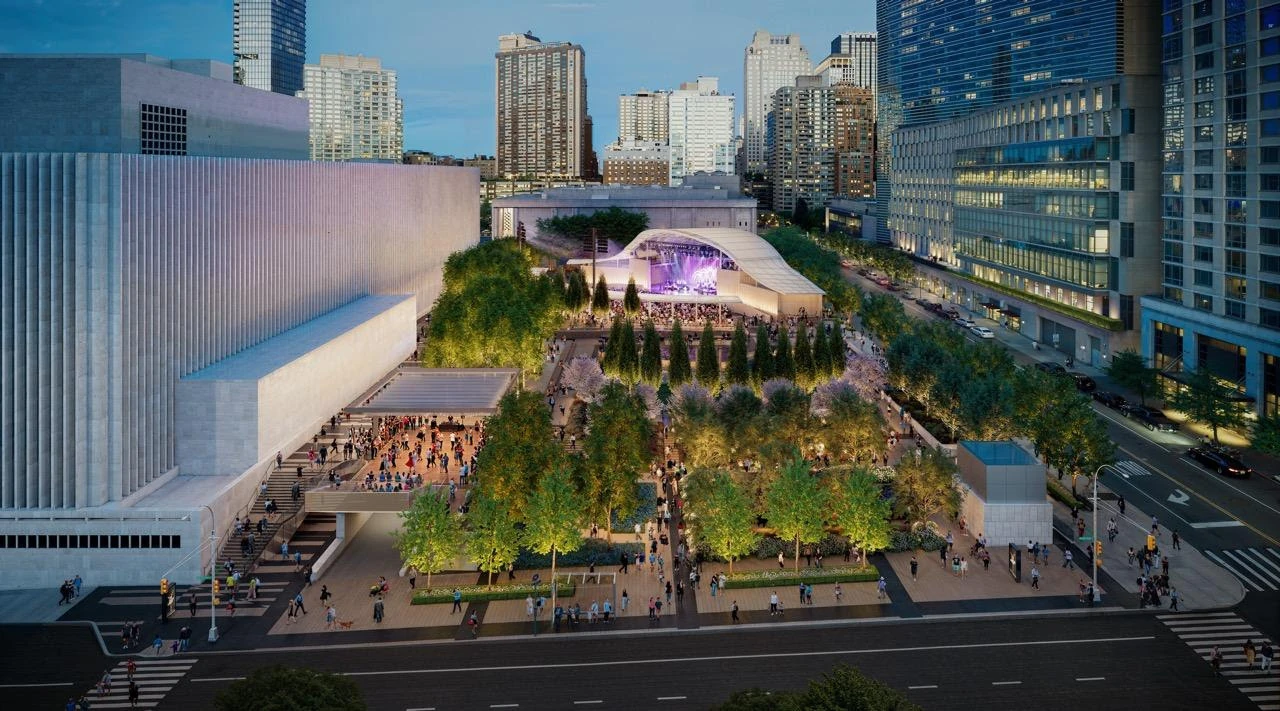
The iconic performing arts campus officially broke ground this week on a massive redesign of its western edge, a massive transformation that will turn the longtime concrete-heavy stretch around Damrosch Park into a space with gardens, groves, public gathering areas and a brand-new 2,000-person amphitheater called The Baron Theater.
The whole thing is part of the Stavros Niarchos Foundation Lincoln Center West Initiative, a $335 million project that aims to make one of New York’s most famous cultural institutions feel much less fortress-like and much more like an actual neighborhood park people can casually wander into. Construction is expected to wrap in summer 2028.
The biggest addition is The Baron Theater, Lincoln Center’s first new freestanding theater in more than 50 years. Designed by architecture firm WEISS/MANFREDI, the open-air venue will host free performances for up to roughly 2,000 people and sit inside a newly landscaped park filled with lawns, flowering trees, shady seating areas and interactive water features.
“We’re thrilled to design Lincoln Center’s first freestanding theater in over 50 years; a theater in the park,” architects Marion Weiss and Michael Manfredi said in a statement. “The Baron Theater and its plaza are designed as an open invitation to gather, connect, and experience art.”
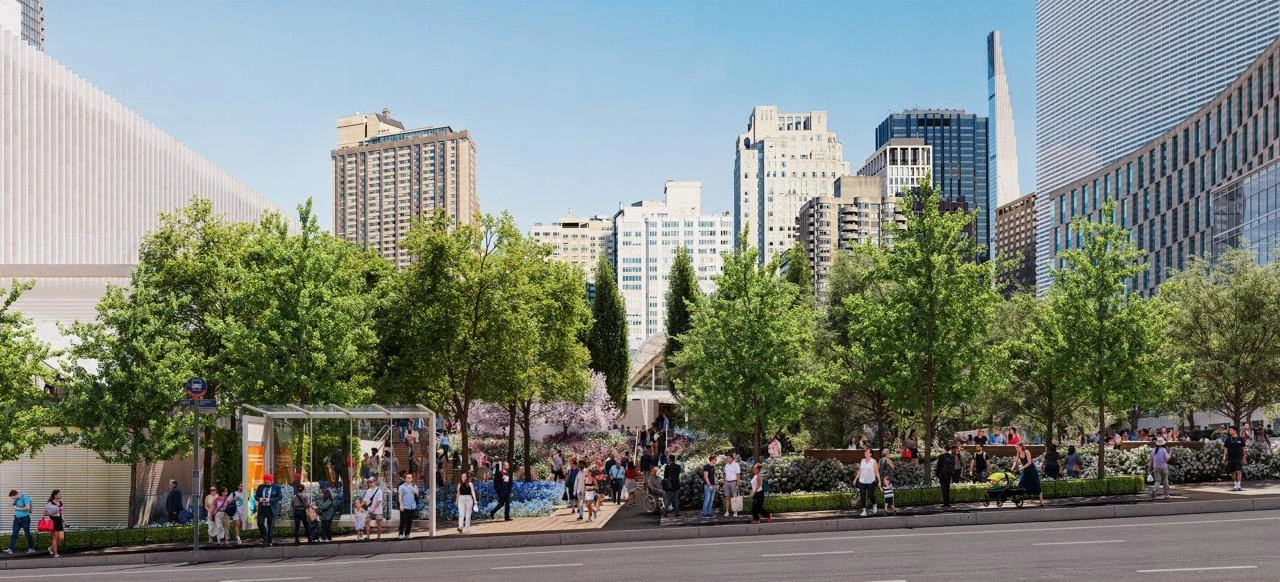
One of the biggest physical changes: the removal of the imposing wall along Amsterdam Avenue, which has long separated the campus from surrounding neighborhoods and nearby NYCHA developments. In its place will be open entrances, green spaces, benches, pathways and expanded sidewalks meant to make the campus feel dramatically more accessible and usable year-round.
“The west side of Lincoln Center's campus has, for too long, sent a message of exclusion,” Lincoln Center president and CEO Mariko Silver said during the groundbreaking ceremony. “No matter where you enter the campus, you will be greeted with the sense of open welcome and possibility that arts and culture should offer for all.”
The redesign also includes a giant new fountain, more trees (50% more than currently exist in the park), flexible community performance areas, shaded overlooks, public art honoring the history of San Juan Hill and new accessibility-focused pathways developed with disability advocates and community groups.
Basically, Lincoln Center is trading in its “intimidating marble citadel” energy for something much closer to “come hang out for a while.”