

[title]
There are ugly subway stations and then there is Chambers Street.
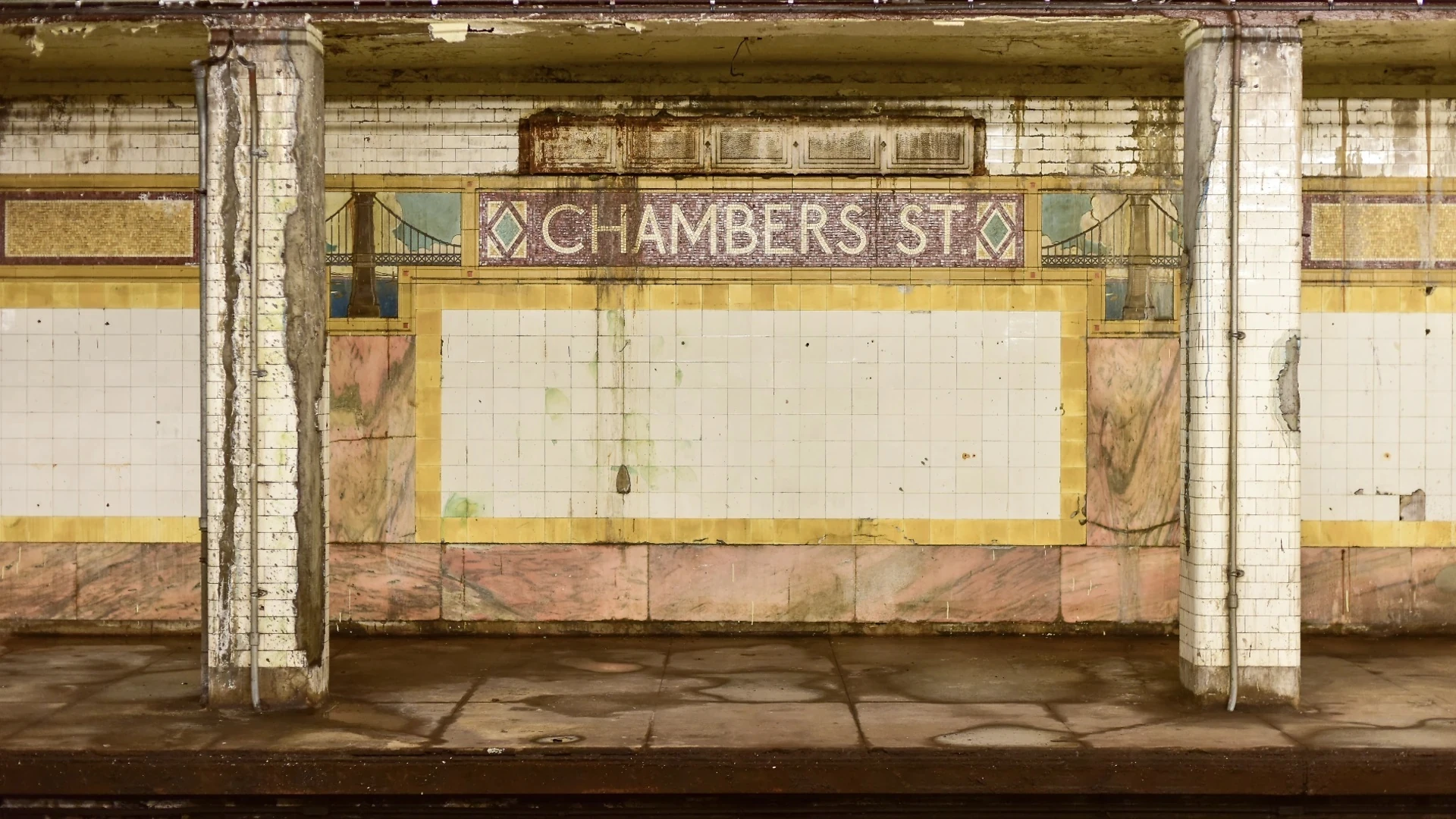
The cavernous J/Z stop beneath the Manhattan Municipal Building has spent decades looking like the setting of a particularly bleak post-apocalyptic movie. There are crumbling tiles, peeling paint, persistent leaks and entire sections that appear to have simply been abandoned to the elements. Now, after years of New Yorkers wondering how a station steps from City Hall could possibly look like that, the centuries-old Chambers Street stop is finally getting the overhaul it desperately needs.
RECOMMENDED: An NYC airport is getting a massive $3 billion renovation—and you’ve probably never heard of it
Governor Kathy Hochul and the MTA announced Friday that the agency is seeking a contractor to completely rehabilitate the 113-year-old station, with a design-build contract expected to be awarded by the end of 2026. The project, funded through congestion pricing revenue, will rebuild deteriorating structures, repair water damage, replace tiles, upgrade stairways, install new lighting and cameras and generally make the place feel considerably less haunted.
There is some genuinely beautiful architecture buried underneath all that decay: Chambers Street opened in 1913 and is listed on the National Register of Historic Places, so the renovation will preserve and restore its ceramic tiles, mosaics, terra-cotta decorations, marble bases and other historic finishes.
And the makeover could eventually make the station literally cooler, too. Today, the state, city and MTA announced plans to study installing a thermal energy network at the Chambers Street J/Z and neighboring Brooklyn Bridge-City Hall 4/5/6 complex. The first-of-its-kind transit project would explore capturing excess heat from the stations and storing it underground, where it could later be used to heat nearby municipal buildings during colder months. Radiant cooling could simultaneously help lower temperatures on notoriously sweltering subway platforms.
The feasibility-study contract is expected to be awarded this fall, with design work potentially beginning in early 2027. Chambers Street’s long-abandoned center platform could be used for geothermal boreholes, allowing the MTA to test the technology without disrupting passenger areas.
“Chambers Street is the poster child for dilapidated subway stations,” MTA Chair and CEO Janno Lieber said when the renovation was announced.
For the roughly 18,000 riders who pass through Chambers Street on an average weekday, “poster child” might actually be putting it politely. At least its days as NYC’s most impressively decrepit subway station finally appear to be numbered.