
[title]
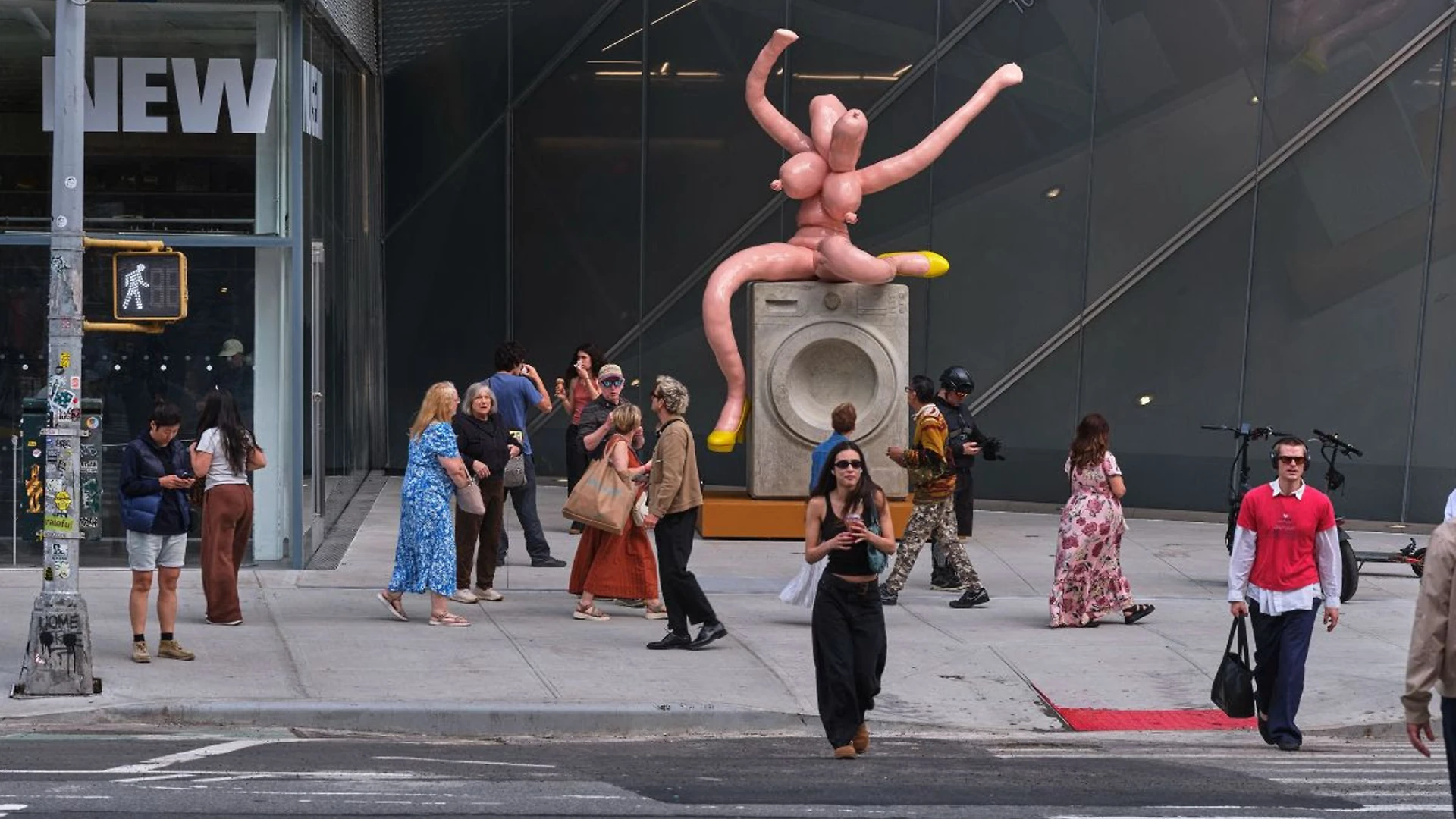
There’s now a giant washing machine goddess looming over the Bowery and, honestly, it kind of rules.
The New Museum officially unveiled a striking new outdoor sculpture this week, VENUS VICTORIA, a towering biomorphic work by British artist Sarah Lucas that now presides over the corner of Bowery and Prince Street, like the patron saint of laundromats and downtown art weirdness.
The sculpture is the first major commission created specifically for the museum’s brand-new public plaza, part of the institution’s recently completed OMA-designed expansion. And in classic Sarah Lucas fashion, it’s simultaneously funny, unsettling, vaguely sexual and impossible to ignore.
At the center of the piece is a giant reclining female form set atop an oversized washing machine, right above one of Manhattan’s loudest, busiest intersections. The work draws from Lucas’ long-running Bunny series, a body of sculptures she’s been developing since the late 1990s using distorted, abstracted figures that often resemble human bodies collapsing into furniture, domestic objects or strange fleshy creatures.
If that sounds intense, welcome to Sarah Lucas. For decades, Lucas has built a reputation as one of contemporary art’s great agents of chaos, using cigarettes, toilets, tabloid newspapers, tights and food to poke at ideas about gender, bodies and power. Her work frequently lampoons the traditionally masculine world of monumental public sculpture and the new sculpture continues that tradition by transforming a giant appliance into a kind of absurd feminist pedestal.
There may not be a more fitting location for it than the Bowery, where luxury condos, restaurant crowds, delivery bikes and restaurant supply stores already coexist in a permanent state of sensory overload. The commission is also notable for launching a new long-term initiative supporting women artists in public sculpture. Lucas was selected by an all-star jury made up entirely of artists: Teresita Fernández, Joan Jonas, Julie Mehretu, Cindy Sherman and Kiki Smith.
The sculpture will remain on view outside the museum for the next two years, meaning New Yorkers now have plenty of time to wander past it, stare at it for a while and wonder whether giant, surreal washing-machine women should maybe become a permanent feature of city planning.