
[image]
[title]It can be tough building healthy habits in New York, especially once the days get shorter, the temperature drops and the instinct to just stay inside gets a lot stronger. Between the earlier sunsets and the hectic pace of the holidays ahead, it’s easy to let the basics—eating well, moving your body, actually sleeping—slide to the bottom of the list right when your body could use them most.
Fear not, though, because the city—which also happens to be the greatest city in the world—is full of free ways to work on it all season long. You just need to know where to look.
That’s why we teamed up with NewYork-Presbyterian, whose doctors laid out everyday habits that can support your long-term health goals this fall and winter. NewYork-Presbyterian provides expert care across over 450 locations in New York City and Westchester, with world-class doctors from Columbia and Weill Cornell Medicine.
So, think of this as your guide to building healthier habits into city life as the seasons turn.
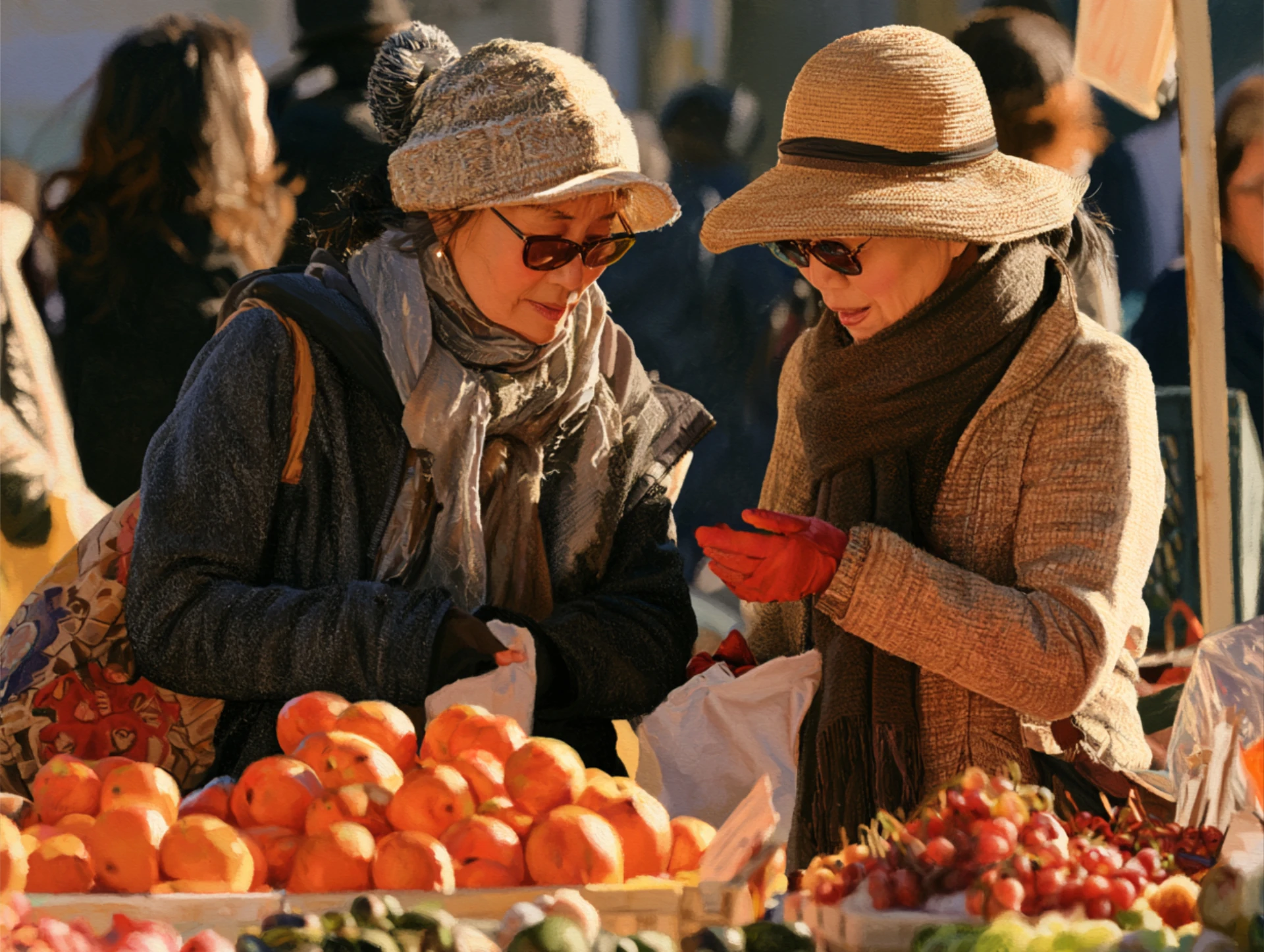
Local greenmarkets
GrowNYC’s Greenmarkets put dozens of farm stands selling fresh produce and minimally processed food together in places from Union Square to neighborhoods across all five boroughs, and they keep running well past summer. Fall brings its own lineup of squash, apples, root vegetables and other seasonal superfoods, the kind of produce built for a pot of soup rather than a salad. It’s great to find what’s fresh, local and in season, and build a meal that supports your health.
What you eat matters more than it might seem. Eating fresh fruit and vegetables can boost your immune system and help protect you during cold and flu season.
Health tip
Gabrielle Gambino, a senior clinical dietician at NewYork-Presbyterian and Weill Cornell Medicine, points to non-processed foods like the superfoods found at a greenmarket. “Nutrients in these foods are antioxidants. They’re anti-inflammatory and they help our body bring down the level of cell havoc.” Superfoods, she adds, are “packed with antioxidants, polyphenols, all the good things that help us combat inflammation.”
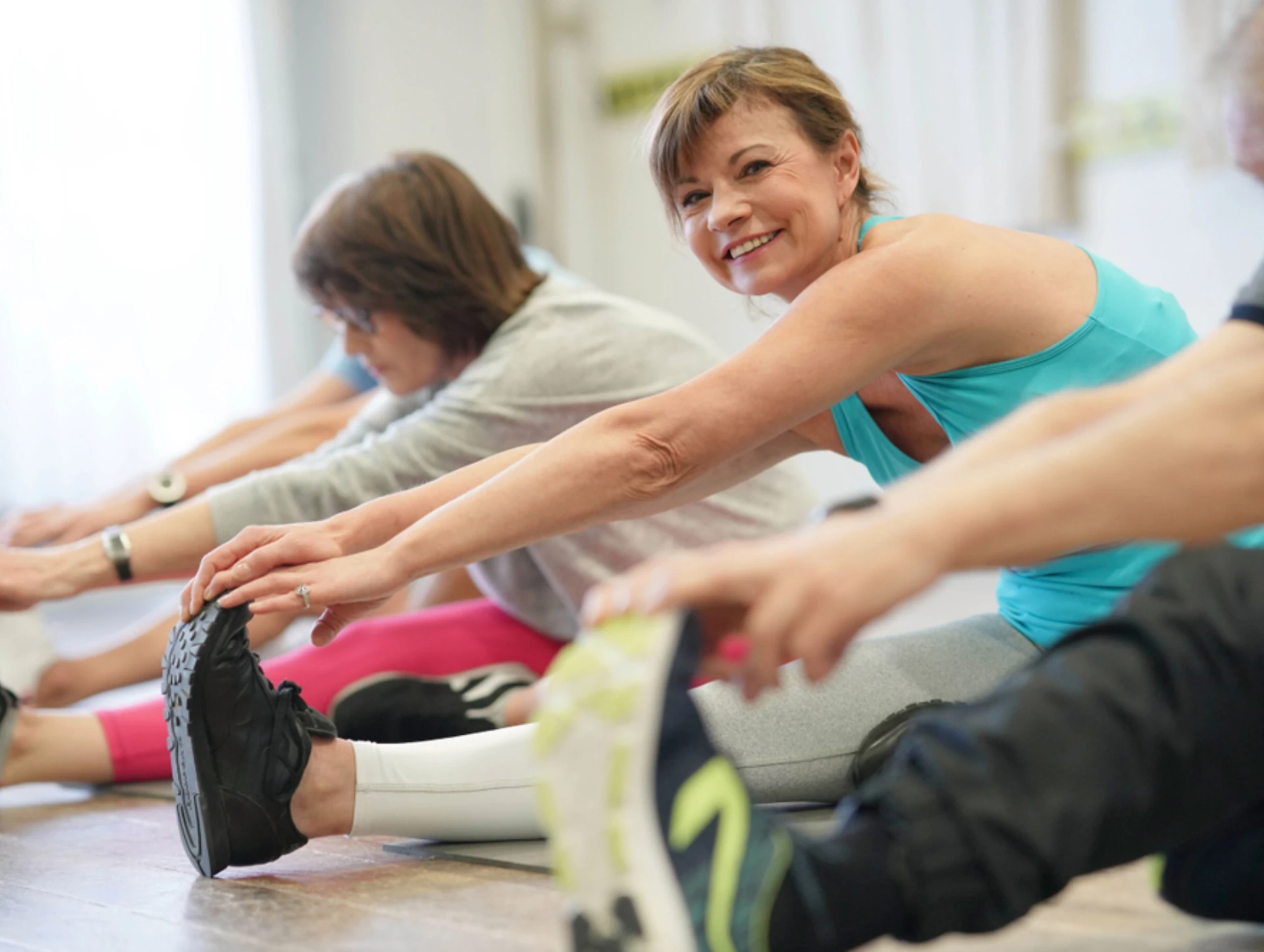
Shape Up NYC
Shape Up NYC, the city’s own free fitness program, runs drop-in classes like yoga, Zumba, bootcamp and more, at parks and rec centers across all five boroughs. Classes continue through the colder months too, so check out your borough’s current schedule since locations shift indoors as the weather turns. No sign-up needed, no membership fee, just show up.
It’s a real workout too, which is exactly the point, especially when the instinct to hibernate kicks in. The benefits of pushing your heart rate up on a regular basis go well past fitting in your favorite jeans.
Health tip
“Higher intensity exercise leads to improvement in oxygen utilization and improvements in VO2 max, which is effectively a measure of your cardiovascular fitness,” says Dr. Jessica Hennessey, a cardiologist at NewYork-Presbyterian and Columbia. That “stress” on the body’s aerobic systems, she adds, also improves metabolic efficiency and boosts anti-inflammatory pathways. Dr. Corey Bradley, also a cardiologist at NewYork-Presbyterian and Columbia, points to the mental benefits too: “Regular exercise boosts endorphins, which can help reduce stress and support mental well-being.”

Domino Park
Domino Park in Williamsburg has a full lawn with lounge chairs and river views, still worth a visit once the weather cools, just bring a coat instead of a towel. Central Park’s Sheep Meadow works just as well if you’re closer to Manhattan, and honestly, any patch of grass in any local park does the same job.
With sunset creeping earlier by the week, catching daylight while it’s out becomes less of an afternoon indulgence and more of a small, deliberate habit.
Health tip
“One of the best-known benefits to being outside is that it allows exposure to sunlight, which is a source of vitamin D,” says Dr. Susan Evans, a psychologist at NewYork-Presbyterian and Weill Cornell Medicine. Vitamin D is critical for the health of bones, muscles, blood cells and the immune system, but Dr. Evans is quick to add a caveat: over-exposure to ultraviolet radiation is associated with skin cancers, so sunscreen still matters, sun or no plans to tan.
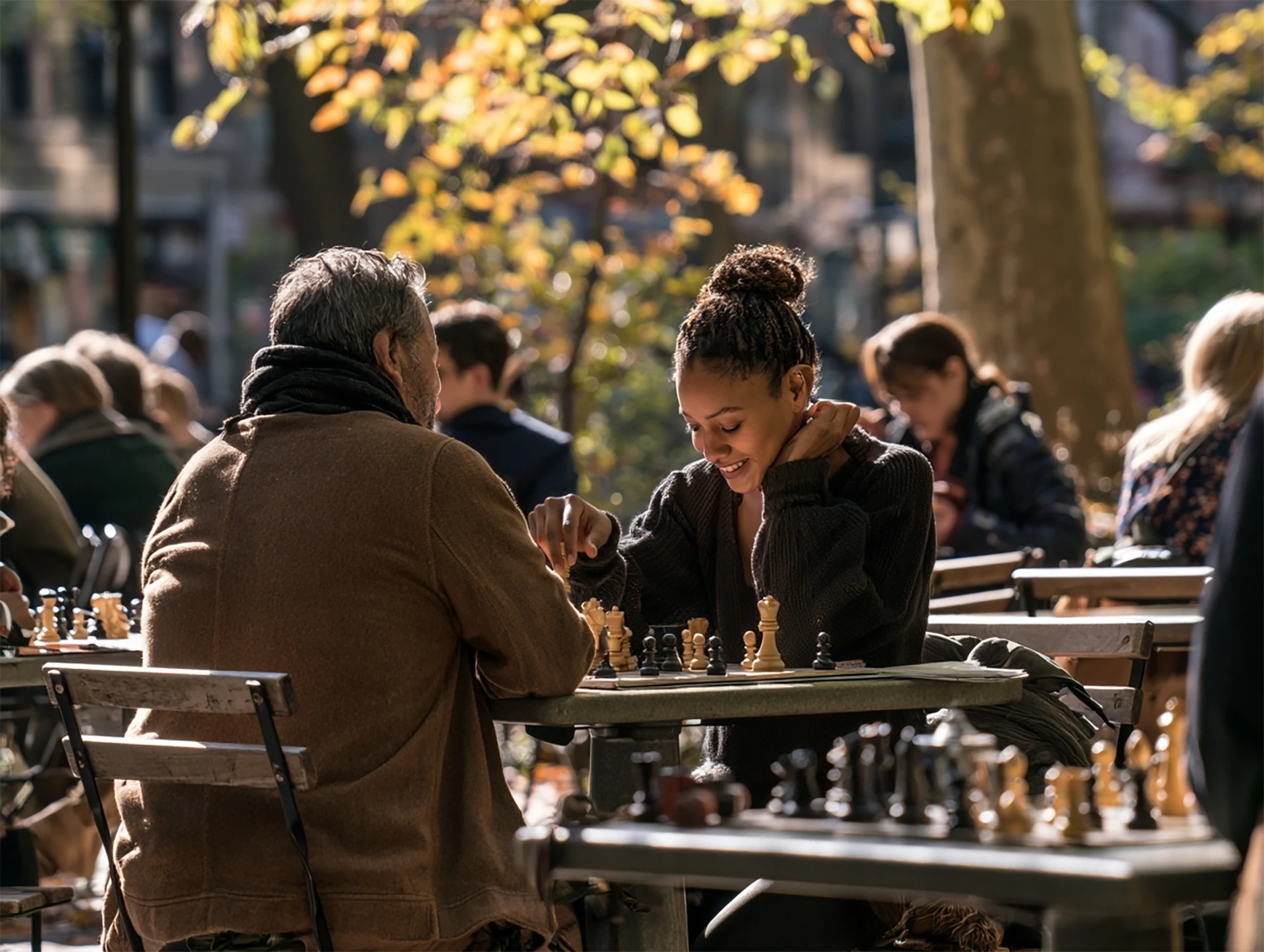
Washington Square Park chess tables and NYC Ever Walk
The chess tables at Washington Square Park have been pulling strangers into games and conversation for decades, free to sit down and play, no partner required.
For something more physically active, Central Park’s NYC Ever Walk meets every Saturday at 10am at the 90th Street and Fifth Avenue entrance for a casual, conversational 3-mile loop, open to anyone, year-round. Different paces, same underlying idea: connection with other people, even people you’ve never met, does something real for your health.
Health tip
“Small interactions, even with strangers, are known to boost health and well-being,” says Dr. Evans. Whether it’s a door attendant, a stranger on the street or a shop owner, the science backs up what a good chess match or a friendly walking group already makes obvious, connection counts, however brief.
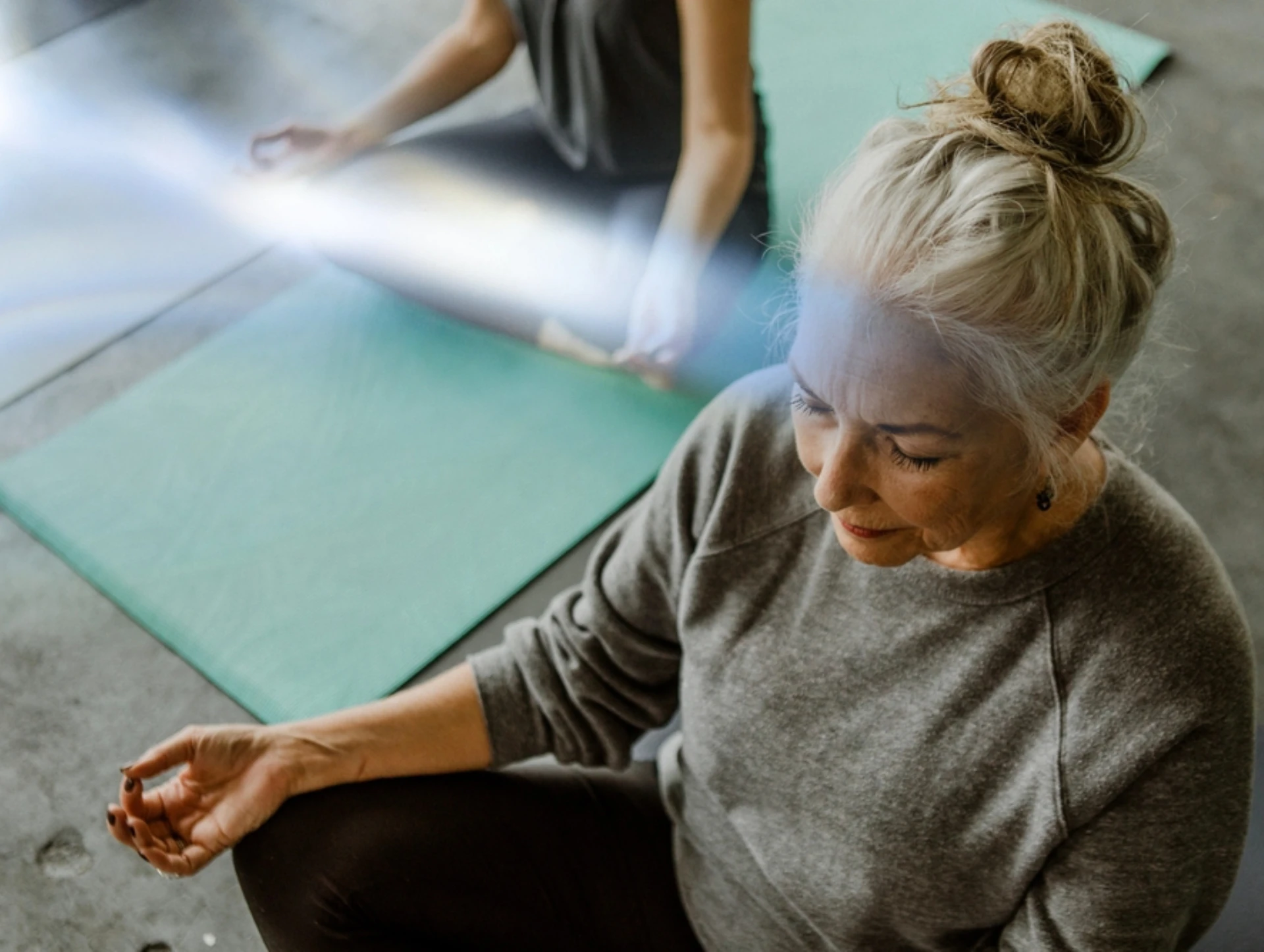
Brooklyn Public Library’s free meditation and yoga classes
Branches across Brooklyn, including Fort Hamilton and Walt Whitman, offer free meditation and yoga classes with no registration required as part of ongoing, year-round library programming. It’s worth checking your own local branch too, since offerings and schedules vary by location.
It’s a small commitment with a bigger payoff than the hour itself suggests.
Health tip
“Meditation practice improves cardiovascular health, decreases inflammation, supports the body’s healing processes, improves sleep quality, reduces physical tension and stress and alleviates digestive problems,” says Dr. Erin Engle, a psychologist at NewYork-Presbyterian and Columbia.

The Rose Main Reading Room at the New York Public Library
The NYPL’s Rose Main Reading Room is free and unmistakably grand, with vaulted ceilings and chandeliers that make it feel less like a neighborhood branch of the library and more like something out of Oxford or an Ivy League reading room. But the grandeur isn't really the point. Step inside and the room offers something rarer than beautiful architecture: permission to sit still. No one's expecting you to order anything, check in or move along once you've been there a while. You can just exist in the space—quiet and unhurried—for as long as you want. That kind of stillness should be counted as self-care.
Self-care gets thrown around a lot, but it’s not indulgence, and it doesn’t look the same for everyone. For some, it’s as simple as finding real quiet, the kind that’s genuinely hard to come by in this city, and treating that quiet itself as a form of care.
Health tip
“Self-care is a way of ensuring that we’re making healthy, effective choices that fill us up when we’re depleted,” says Dr. Engle. “It helps ensure we’re nourishing our own well-being.” And while the phrase might suggest something indulgent, Dr. Engle argues otherwise: “I’d say self-care is self-preservation.” There’s no single right way to do it either. “Different types of people might require or respond to different types of self-care.”
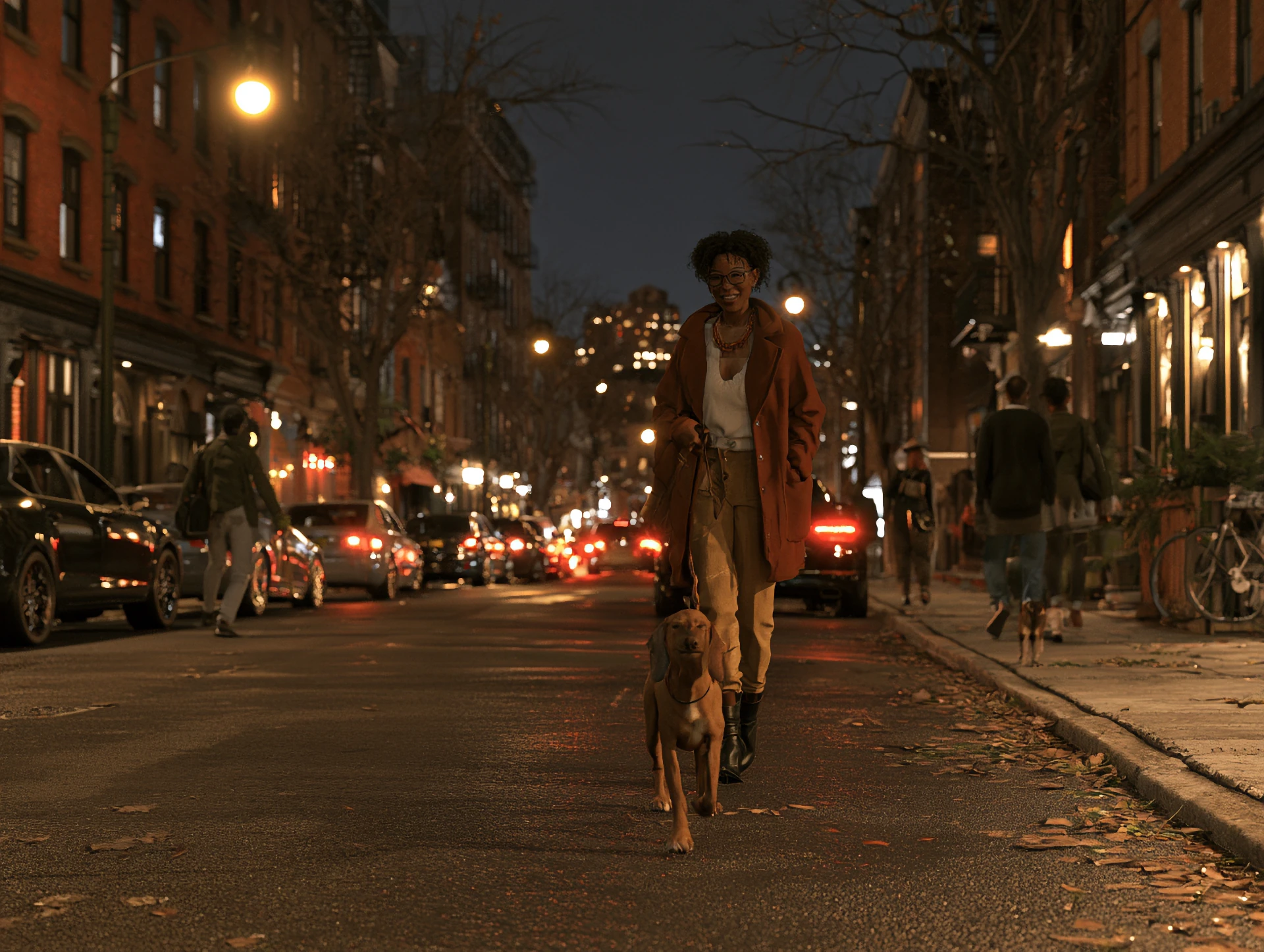
A consistent nightly walk
There’s no single free program built around sleep specifically, but there is a free, repeatable habit that supports it: a walk at the same time, along the same route, every night. It’s worth being especially deliberate about this as the days shorten; earlier sunsets can throw off your body’s internal clock more than you’d expect. Whether that’s a loop around the Central Park reservoir or the Brooklyn Bridge Park esplanade, the specific place matters less than the routine itself.
Health tip
“For healthy sleep, it’s important to remember to be consistent each day,” says Dr. Ana C. Krieger, a sleep neurologist at NewYork-Presbyterian and Columbia. “Figure out how to live your life within this schedule and respect this rhythm.” Sleep, she notes, is often the first thing sacrificed when life gets busy, but a steady external cue, like the same walk at the same time, gives the body something consistent to anchor to.
Building any of these habits into your week is a genuinely good place to start heading into the colder months. But there’s one more thing on this list that isn’t really a habit or a place to go, it’s a conversation worth having with an actual doctor before respiratory season hits full stride.
Get vaccinated
Respiratory illness doesn’t wait for a convenient time, and as fall turns into winter, neither should your protection against it.
Health tip
“Vaccines are one of our key strategies for preventing transmission and reducing severe outcomes of infections,” says Dr. Magdalena Sobieszczyk, an infectious diseases specialist at NewYork-Presbyterian and Columbia. She notes that respiratory illnesses like COVID, RSV and the flu can have a lingering effect on health, and that COVID in particular, even after a mild or asymptomatic infection, can in some people lead to long COVID, something vaccination may also help prevent. “The respiratory season is real,” adds Dr. Nehal Galal, an internal medicine physician at NewYork-Presbyterian and Columbia. “We encounter it every year, and the best way to prepare for it is to get the flu vaccine. The virus changes year to year, and that’s the reason why it is a yearly vaccine. It’s essentially just an extra shield, so you protect yourself and your loved ones at home as well.”
Unlike everything else on this list, this isn’t something you can DIY with a walk in the park. Book an appointment with NewYork-Presbyterian to discuss the vaccination plan that’s right for you. To learn more, visit nyp.org.