


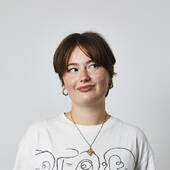
Tim Walker is a phenomenal fashion photographer. The 55-year-old has created iconic spread after iconic spread for the likes of British Vogue, i-D and Vanity Fair, and he’s shot famous faces including Tilda Swinton, Kate Moss and Harry Styles. Walker's surreal, Alice in Wonderland-inspired style is whimsical, always surprising, and somehow still cool. So then, why is the majority of this landmark show made up of boring celebrity portraits taken on plain grey backgrounds?
The premise of Fairyland: Love and Legends is simple: a celebration of queerness comprising 250 portraits, all shot by Walker, of LGBTQ+ activists, artists, actors, singers and allies, taken across six years. Walker got the idea for the exhibition when he stumbled across the plaque commemorating the first gay rights demonstration in Britain while walking in Highbury Fields. A replica of this triangular plaque is displayed proudly at the entrance to the exhibition.
Some of it is subversive and exciting
Fairyland opens with stronger works, in a room dedicated to gay rights campaigners of the ‘70s and ‘80s, all defiantly posing in portraits that mimic the style of Tudor painters Hans Holbein the Younger and Nicholas Hilliard. Olivette Cole-Wilson, a founding member of Stonewall, delicately holds a blackbird in jewellery-encrusted hands that are framed by a thick gilded frame. Musician and longtime supporter of the London Lesbian and Gay Switchboard Tom Robinson smirks at the camera, holding a kestrel and dressed in elaborate Tudor garb. It’s a nice nod to the historic portraits you’ll find elsewhere in the National Portrait Gallery.
Following this, it’s just reams and reams and reams of famous people. If you want to play celebrity bingo, you will adore this. Everyone is in it. Frank Ocean, Chappell Roan, Ian McKellen, Michaela Coel, Tilda Swinton and Kate Bush are all in here. Some of it is subversive and exciting: the 82-year-old Miriam Margolyes gleefully posing topless, a pair of Belgian buns covering her breasts; Harry Styles crouching naked, on top of a stile; Paul O’Grady dressed in a brilliantly bonkers hot pink Marie Antoinette dress floating inside a bubble. The portraits are staged in an eye-catching fashion, scattered across technicoloured walls covered in doodles and handwritten notes.
But there’s also plenty of boring filler – plain portraits injected with cheesy rainbow symbolism as if to say: ‘here are the celebs, and they’re all gay!’ People will hate me for this, but Ian McKellen spelling out ‘Love’ with his hands is not good. Neither is a photo of human rights campaigner Peter Tatchell with the words ‘justice’, ‘equality’ and ‘freedom’ sharpied across his palms in the mode of ‘live, laugh, love’.
As well as all the slebs, the exhibition pays tribute to a number of fascinating activists, artists and allies – Janet Green, one of the first paid employees of the Terrence Higgins Trust, poses in a rainbow-coloured shirt and with a phone to her ear; partners Catherine Bond and Jane Pearce, who are both priests, stand smiling, holding hands in their clerical collars. But the amazing people in the pictures are not done justice by their dull portraits.
Still, Fairyland has its magical moments. The final room is an over-18s-only garden of pleasure, featuring erotic scenes inspired by nursery rhymes, mythology and folklore, with cheeky nods to Rococo artist Jean-Honoré Fragonard, Beryl Cook and German Renaissance painter Lucas Cranach the Elder. A fever-dream-like image inspired by Renaissance paintings from the Getty Museum depicts naked models holding hands around a tree festooned with cartoonish fruit and babies. It’s mad, intricate and fabulous. In another scene, a swan leans in as if it’s about to peck off the model’s penis as he lays back in a hallucinatory blue landscape. If only there could have been more of this funny, odd and sexy stuff, rich with references to great art, instead of countless glib pictures of A-listers.
Fairyland pays homage to many important moments and inspiring figures from queer history – it’s a noble goal – but is it good art? This is the National Portrait Gallery, after all. In the pages of a glossy magazine, nestled among the buttoned-up adverts for Bvlgari necklaces and Dior perfumes, these photos excel. But for a show in one of Britain’s most famous art galleries, I hoped for a little more.
