

[title]
For nearly 200 years, the Tower of London’s moat has been less of a moat and more of a ditch. In the 1840s, the water in the moat smelled so horrific (thanks to animal waste and excrement) that the Duke of Wellington had no choice but to drain it. It’s been dry ever since.
However, under newly approved plans by Historic Royal Palaces, the moat is being refilled with water. Tower Hamlets Council gave the proposals the green light on July 17.
Plans say that the redevelopment will create an ‘ecologically rich moat landscape that reconnects visitors with the Tower’s defensive history while responding to biodiversity loss, and water scarcity’. It’ll be made up of a mixture of ponds, wetlands, meadows and grassland areas.
On the west side there will be ‘rain gardens’ kept fresh by historic spouts from the revetment walls. On the northern side, meanwhile, will be installations memorialising WWI and WWII, including a soldier emerging from the planting and a Women’s Auxiliary Air Force member holding the steel cable from a barrage balloon.
A nature learning pond for school visits and activity spaces will be built in the east moat, highlighting how it ‘historically supported daily life, food production and industry within the Tower’.
Closer to the entrance of the Tower, Historic Royal Palaces plans to install an open meadow with ‘long views along the moat’ and a ‘sizeable gathering area’.
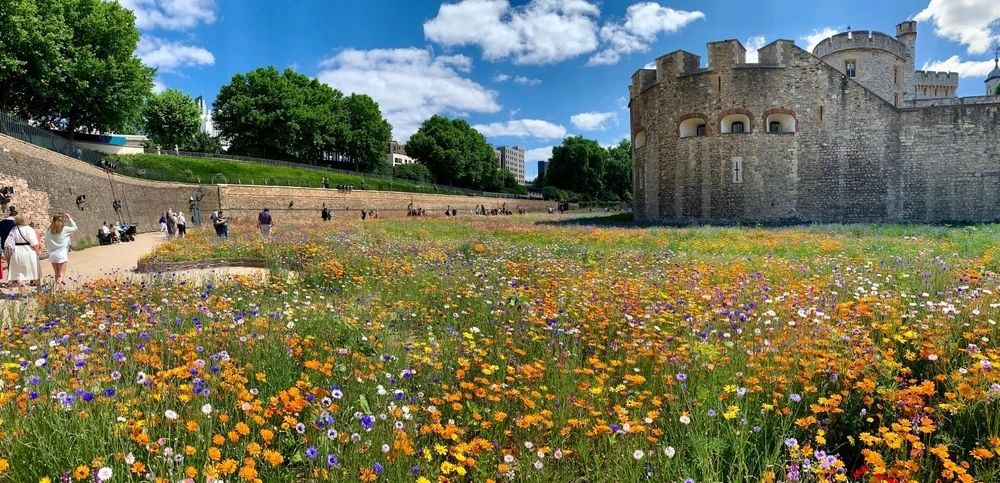
Right now, the moat is filled with wildflowers as part of the Superbloom installation celebrating the Queen’s platinum jubilee. The proposals state that Historic Royal Palaces has ‘learnt from the dry summer of 2022, that the challenges of keeping an attraction such as Superbloom in constant visual splendour, relies on a significant water supply to look attractive’. So, in anticipation of particularly dry periods, they say that there will be a 19th century culvert collecting stormwater to be used to top up the wetlands when needed.
The moat’s transformation is part of a larger £70 million makeover for the Tower. It’ll see the introduction of new community spaces, new learning centres and the opening of the site’s architectural archive to the public.
ICYMI: The new London Museum in Smithfield has revealed its food and drink options.
Plus: Europe’s biggest immersive attraction is coming to London later this year.
Get the latest and greatest from the Big Smoke – from news and reviews to events and trends. Just follow our Time Out London WhatsApp channel.
Stay in the loop: sign up for our free Time Out London newsletter for the best of the city, straight to your inbox.