[title]
Broadway review by Adam Feldman
Rating: ★★★★★ (five stars)
Ticketing: Buy tickets to Death of a Salesman
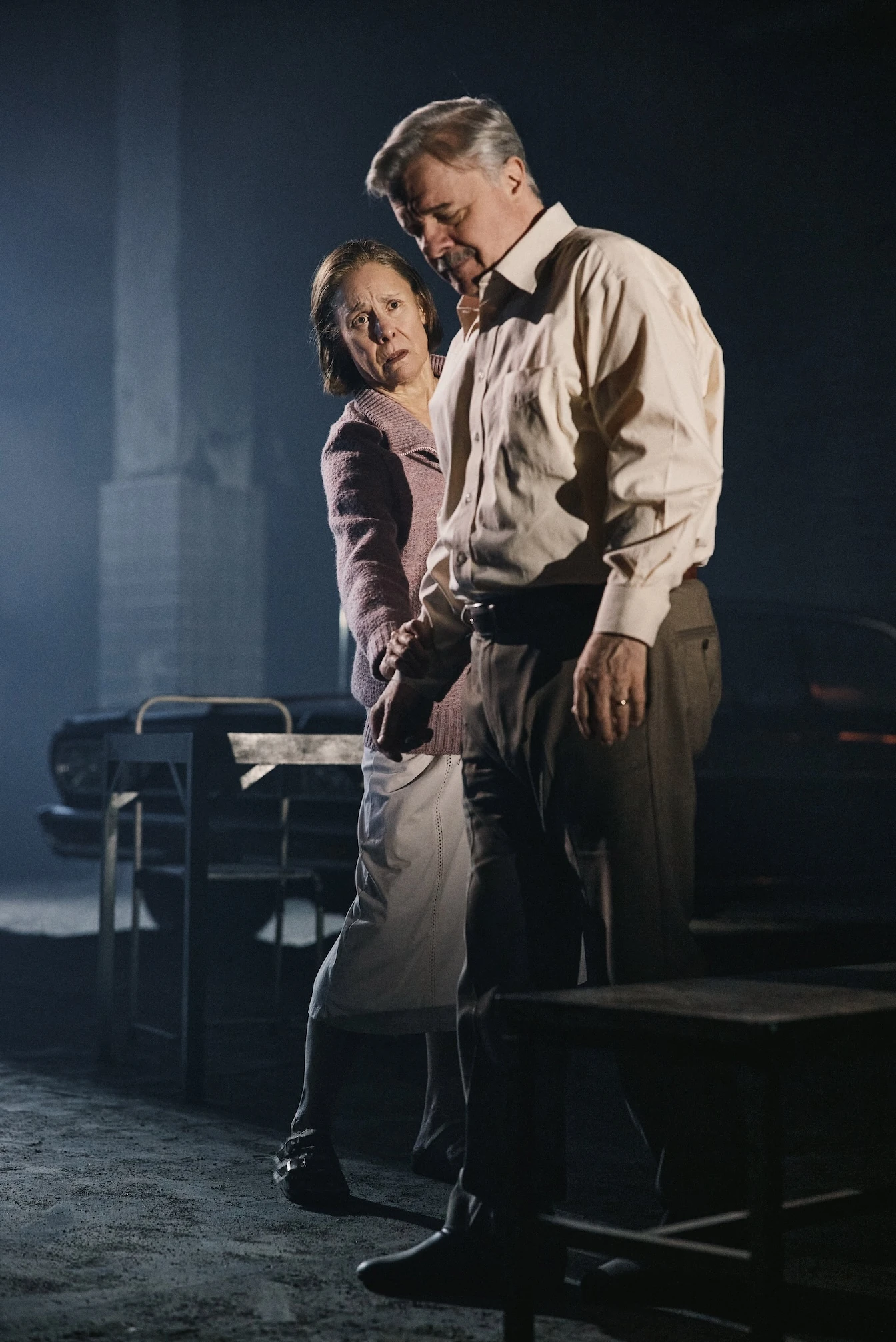
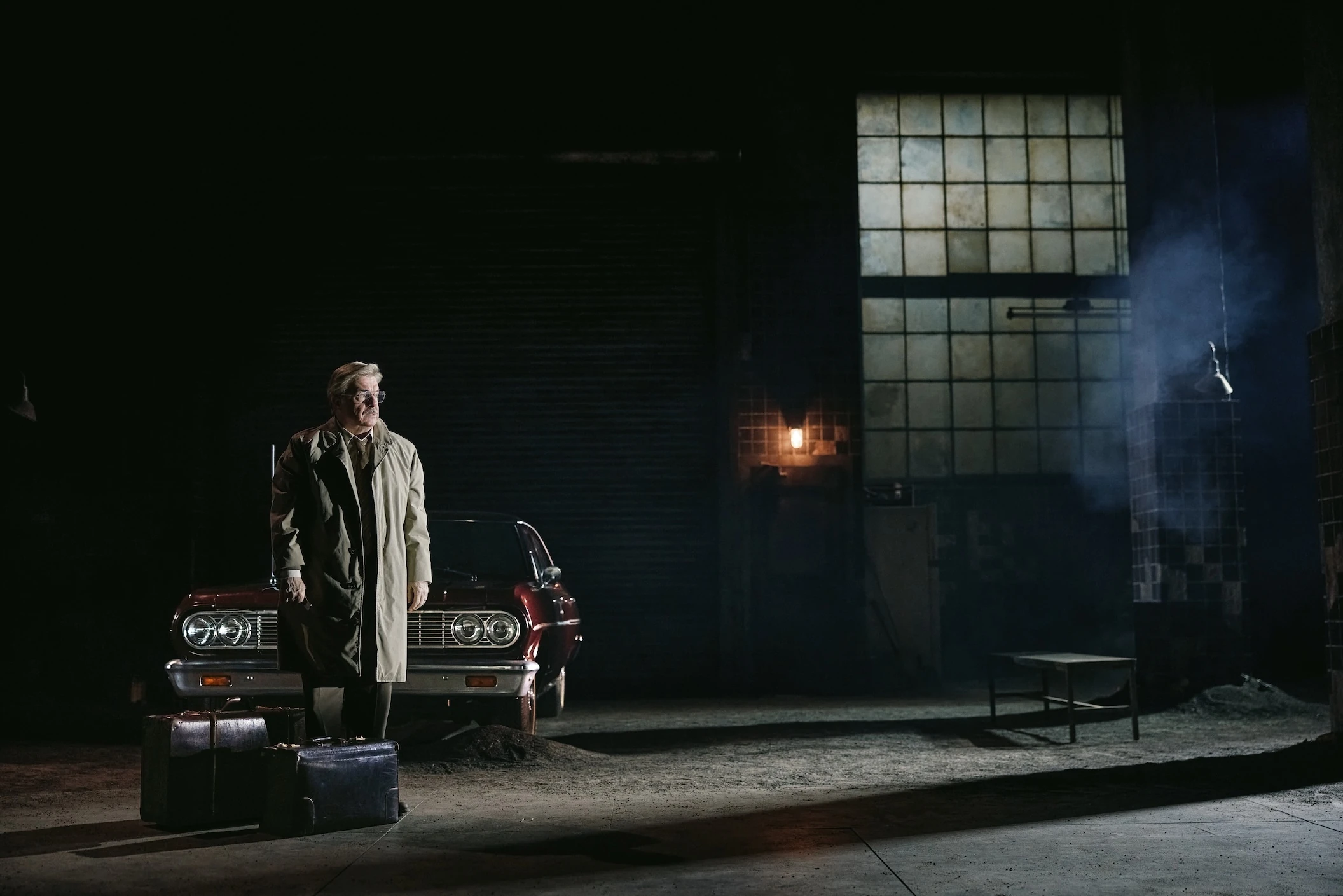
A boxy old car drives onstage at the beginning of Death of a Salesman, its headlights glaring out at the audience, and sad-sack schlepper Willy Loman gets out of it, defeated, a heavy briefcase in each hand. At first, this may seem like the wrong kind of omen: When yet another revival of Arthur Miller’s 1949 drama pulls up on Broadway, beat up and weighed down by 75 years’ worth of travel and baggage, it is fair to wonder whether this vehicle has any tread left on the tires, any gas left in the tank. You might even be inclined to walk right by the Winter Garden Theatre—where this version has parked itself, directed by Joe Mantello and starring Nathan Lane—without a second thought. But that would be a grave mistake: This shattering new production cannot be overlooked. Attention, as Willy’s wife famously declares, must be paid.
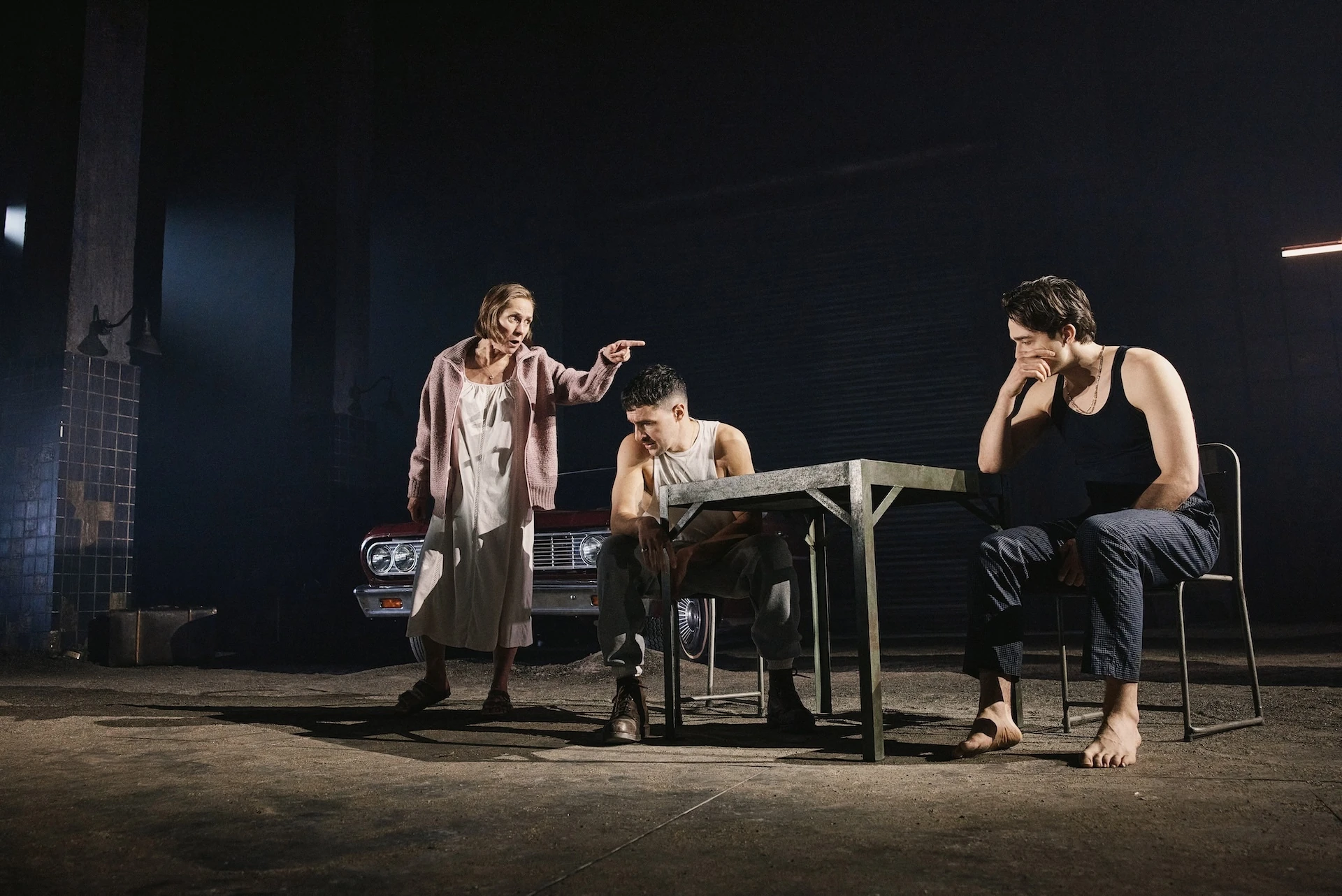
Linda Loman (Laurie Metcalf) says that line as a call of duty to her sons, Biff (Christopher Abbott) and Happy (Ben Ahlers), who have neglected their father's slide into depression and dementia. Miller never tells us what Willy has been selling on his long road trips for 36 years, but it’s clear he has no business doing it anymore, if indeed he ever did. “I don’t say he’s a great man,” she allows. “But he’s a human being, and a terrible thing is happening to him. So attention must be paid.” This cri de coeur doubles as Miller’s statement of principle for Death of a Salesman itself. Classical tragedy, in the Aristotelian sense, typically depicts the fall of a so-called great man: a king, a general, a hero. But Miller insists, via Linda, that there are other stories worth hearing: “A small man can be just as exhausted as a great man.”
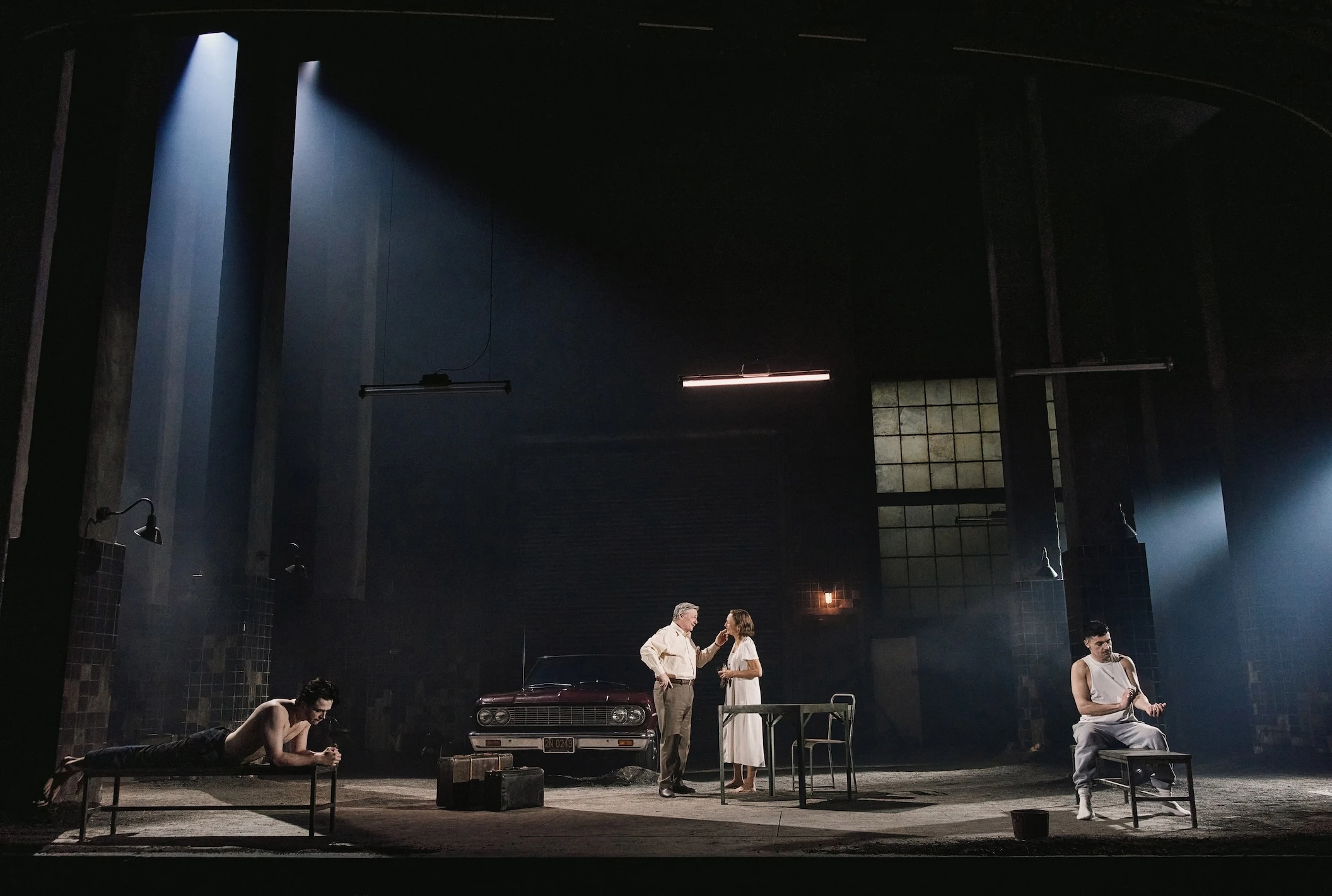
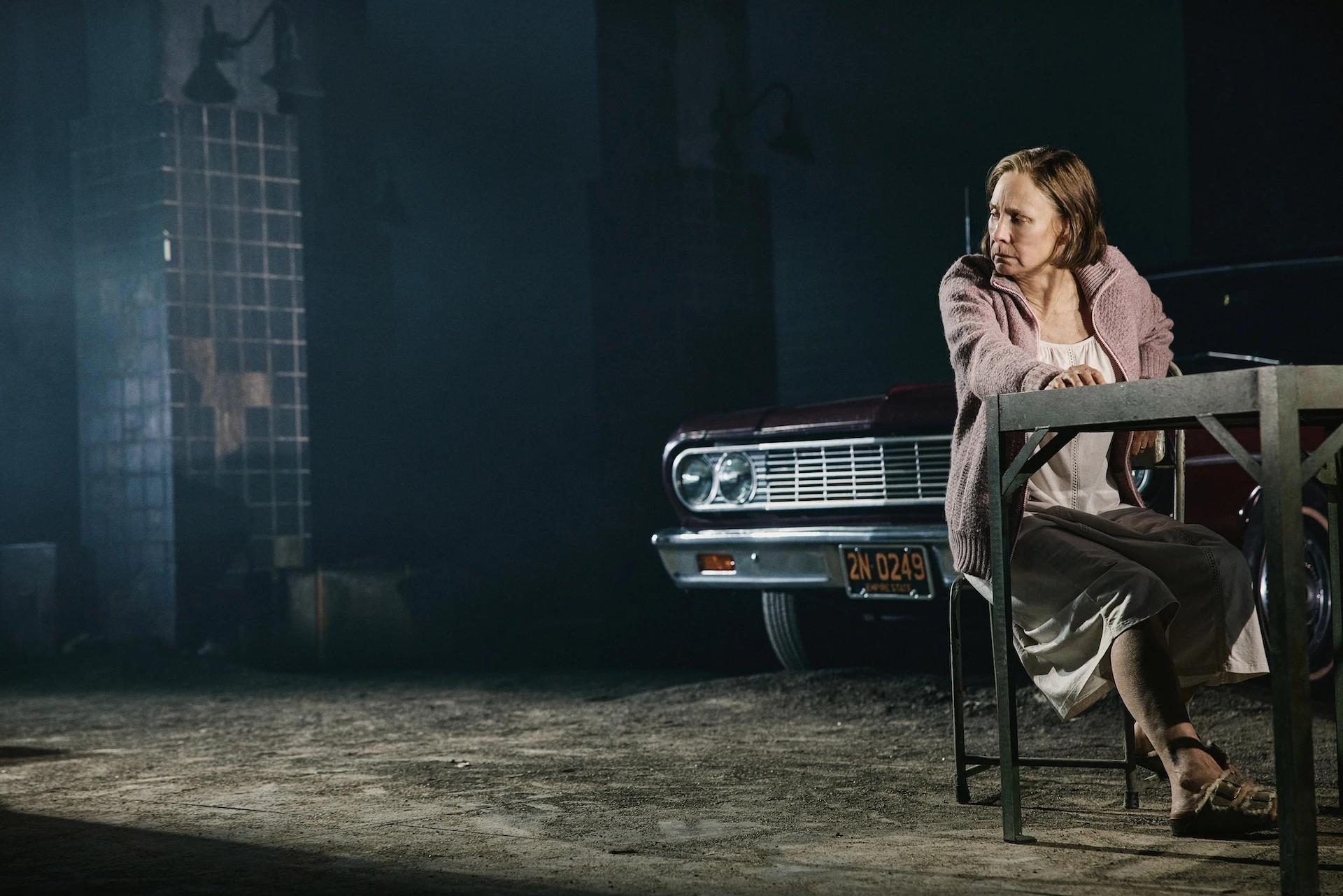
The deluxe 2012 revival of Death of a Salesman—produced, like this one, by Scott Rudin—was scrupulously backward-looking in its aesthetic approach, to the point of reproducing the original production’s set design. Mantello brings the play roaring back to the present, with a Regietheater bleakness. Chloe Lamford’s set, ravishingly lit by Jack Knowles, is an empty ruin with ash on the floor, walls of broken tiles, and the barest of scenery and props. (Several of the latter, such as a milk carton and a Starbucks-style coffee cup, are patently out of period.) All of this makes sense for a play that often takes place inside Willy’s head, as flashbacks or imagined conversations with his dashing older brother, Ben (Jonathan Cake), who somehow got rich quick in the diamond trade. The whole atmosphere is, like Willy, burnt out. In this psychic dreamspace, there is room for only one major set piece: the big, burgundy American automobile that has taken Willy so often from home. That car is his American Dream: He thinks he’s been driving it but all along he’s been in its path, blinded by the headlights and frozen in place.
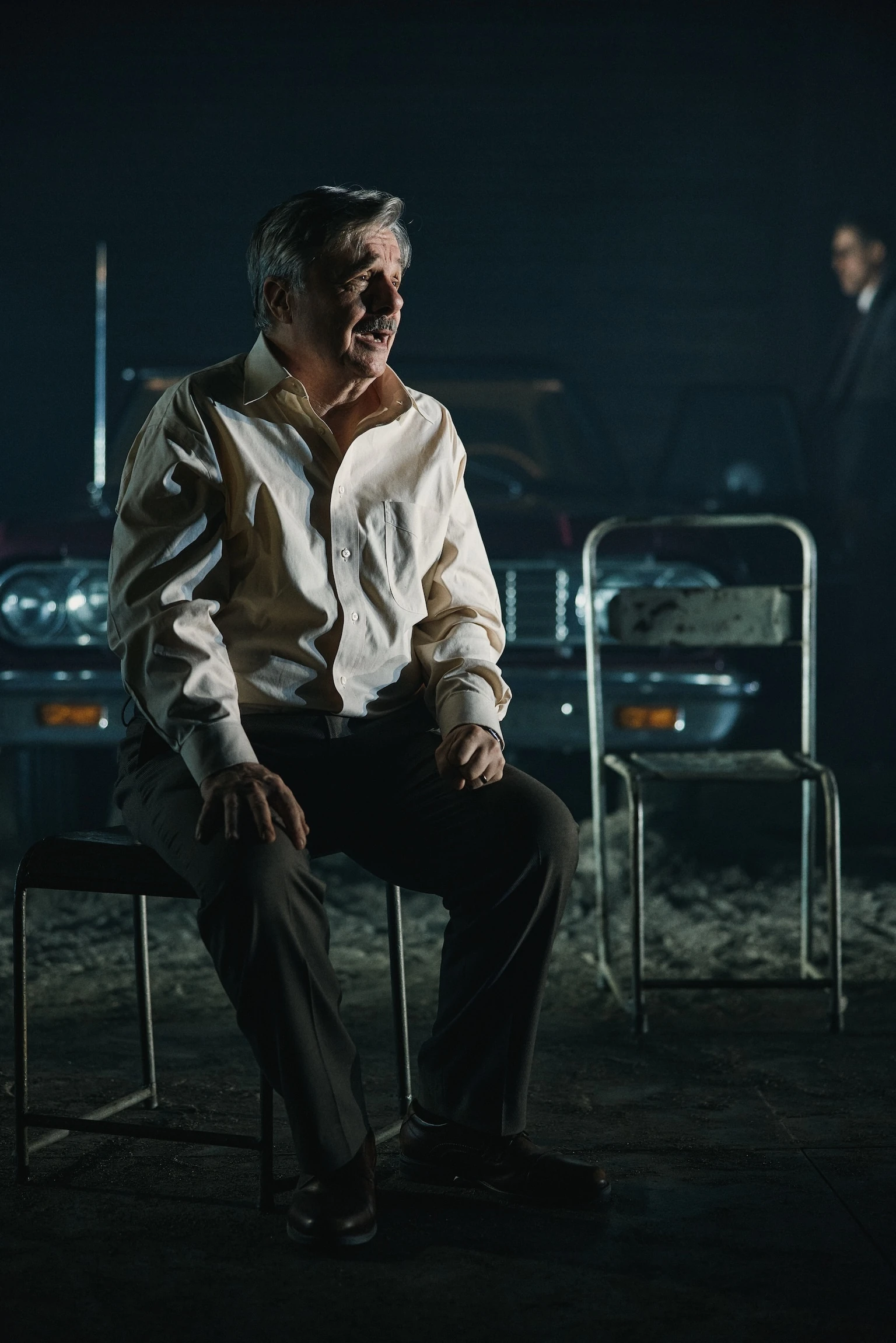
Lane’s tremendous gifts have always had an undercurrent of neediness. Like many of the greatest live performers, he wants to be loved; it’s central to how he engages an audience. And that quality makes him an ideal choice for the role of Willy, who believes that the key to success is to be “well liked.” In a sense, Willy the failing salesman is a nightmare inversion of Lane the star actor: He’s constantly flopping, and he knows it, but he has to keep up the routine. “Linda, people don’t seem to take to me,” he says in a moment of candor. “I know it when I walk in. They seem to laugh at me.” (Miller cleverly juxtaposes this scene with a flashback of Willy’s out-of-town mistress, in which she explains his appeal: “You do make me laugh.”) In neat grey hair and a trim mustache, Willy is desperate to present an image of winning even as his income shrinks and his company downgrades him; he doles out supposed wisdom to his sons and snaps at Linda when she tries to get a word in. But even after all his years as a salesman, he still confuses flashiness with truth. “I told you we should’ve bought a well-advertised machine,” he complains to Linda about their shoddy fridge, but we know, through a flashback, that they chose it precisely because it did have the largest ads. Willy can’t learn: He’s faked it and faked it but never made it. Lane's performance makes that painfully real.
Willy’s rock is Linda, and so is this production’s. Metcalf, like Lane, has a rare power over audiences: She can hold court onstage, commanding spectators to hang on her every word. Here, though, she doesn’t direct that power outward; she channels it, with intense focus, at the other actors, staring holes into them and urging our own eyes to follow. It’s an astonishing star turn that is also, in the deepest sense, supporting: Even as Metcalf, without a phony moment, captures all of Linda Loman’s devastated complexities—her fear, her love, her anger, her toughness, her exhaustion—she subsumes her own virtuosity into the needs and priorities of the play. Playing Biff, who peaked as a high-school jock and has spent the rest of his life as a drifter and small-time thief, Abbott similarly keeps his emotion in reserve, brooding and biding time until it explodes in the right proportion and at the right moment: in Biff’s final confrontation with Willy.
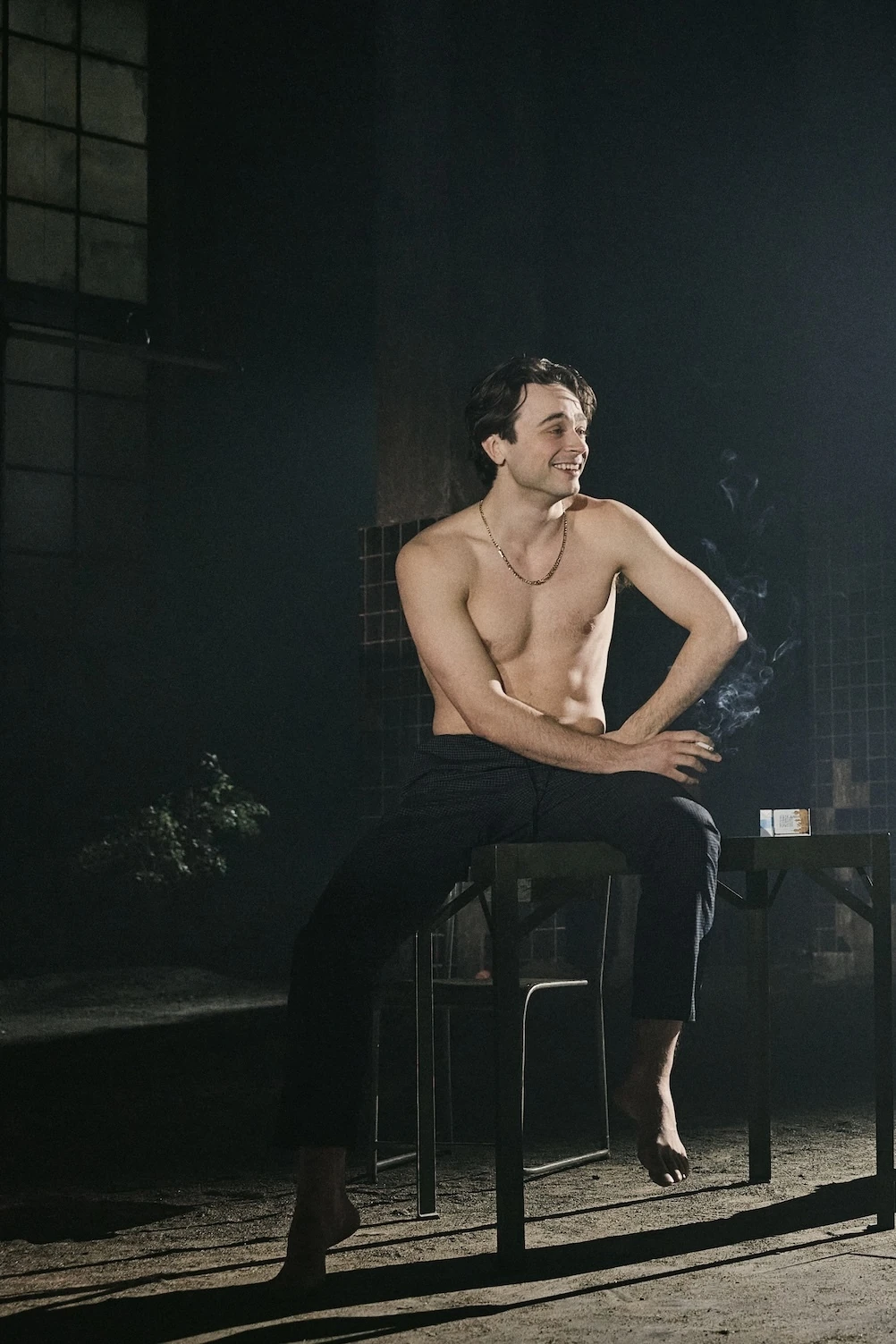
Earlier, in fact, it is Ahlers’s glibly charming Happy who draws more of our attention, thanks in part to the fact that he spends most of the first act shirtless. This show of flesh isn’t gratuitous. Happy has grown up in the shadow of the athletic Biff; in flashbacks, three times, we see a young Happy try to get his father’s attention and approval. (“I’m losing weight, you notice, Pop?”) Now, making up for that, he seeks self-worth in bedding as many women as possible, including the fiancées of his superiors at work. It’s all a competition for him, and the pleasure he takes in his fuckboi body is a symptom of his maladapted values: Unlike Biff—who sees that Willy had “the wrong dreams”—Happy still buys into the system that has crushed his father. (Aside from Linda, all of the play’s women are in some way for sale: Tasha Lawrence as Willy’s boozy floozie, who likes the stockings he brings her; Katherine Romans and Mary Neely as a pair of available girls at a steakhouse.)
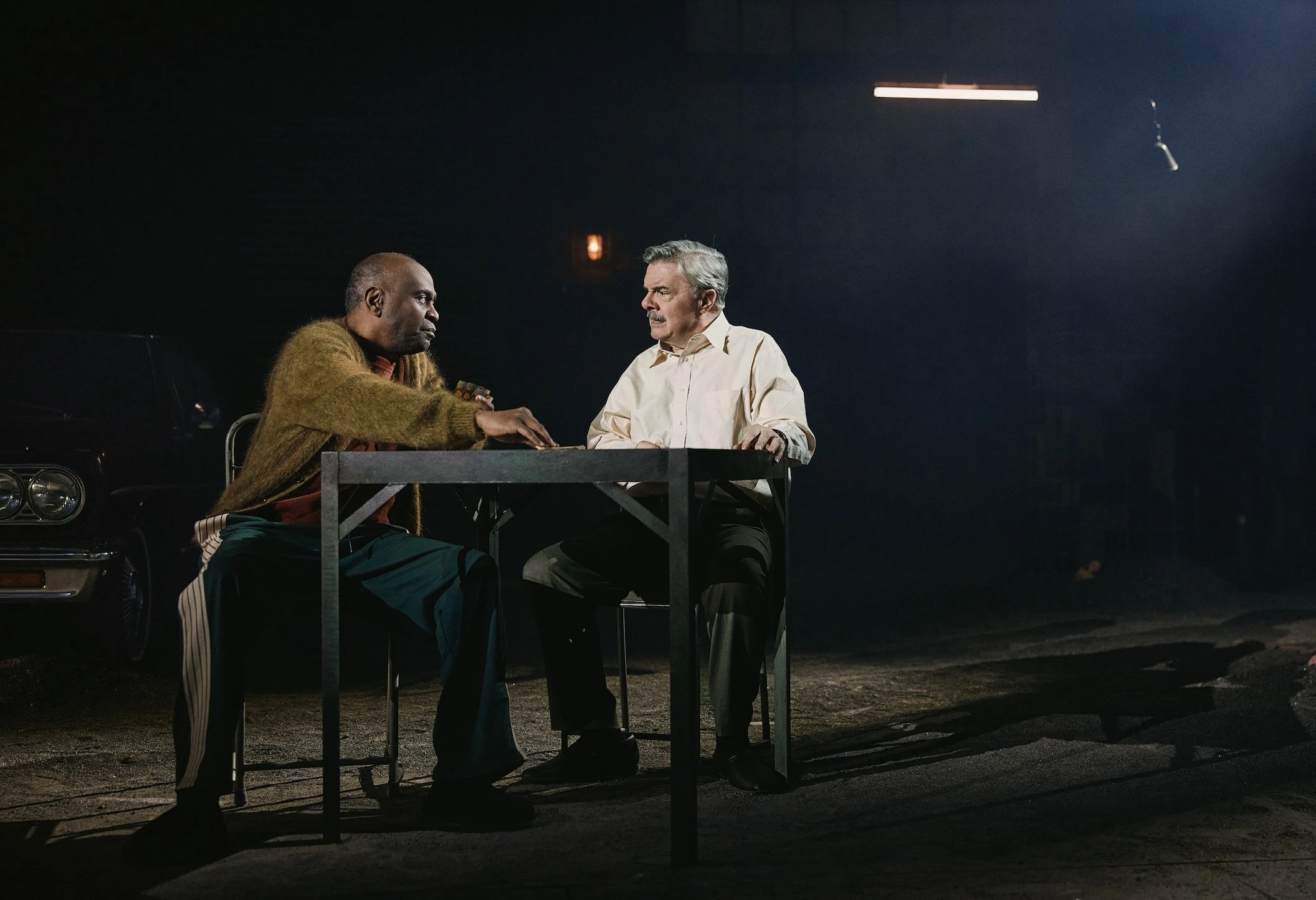
Aside from the look of the show, Mantello’s production departs from the traditional ones in two substantial ways, both well-judged. In flashbacks, Biff and Happy are now played by younger actors: respectively, Joaquin Consuelos and Jake Termine. This avoids the usual awkwardness of having clearly older guys play teenagers, and the innocent promise that Consuelos embodies—posed triumphantly atop the car and bathed in golden light, he’s like a living trophy—makes the pivotal hotel scene that triggers his disenchantment even more poignant. And the casting of Black actors as Willy’s friend Charley (played with exquisite understanding by K. Todd Freeman) and his high-achieving son, Bernard (Michael Benjamin Washington), adds layers of resonance to their presence in the story—as, for example, when Willy turns down a job offer from Charley. (Charley: “What’re you, jealous of me?” Willy: “I can’t work for you, that’s all, don’t ask me why.”)
Everything comes together in this production: Rudy Mance’s costumes, Robert Pickens’s hair and wigs, Mikaal Sulaiman’s sound, Caroline Shaw’s original music. Will you have other chances to see Death of a Salesman? Probably, sure, almost certainly. But let me put it this way: I have seen three other revivals of Salesman on Broadway since 1999; I have watched the film version and the TV movie; I have heard the LP of the 1950 cast; I have read the script countless times. And I consider this revival to be the best account of Miller’s play I’ve ever encountered, and the best I’m likely ever to see. How’s that for a pitch?
Death of a Salesman. Winter Garden Theatre (Broadway). By Arthur Miller. Directed by Joe Mantello. With Nathan Lane, Laurie Metcalf, Christopher Abbott, Ben Ahlers, K. Todd Freeman, Jonathan Cake, John Drea, Tasha Lawrence, Michael Benjamin Washington. Running time: 2hrs 25mins. One intermission.
Buy tickets to Death of a Salesman: Broadway.com
Follow Adam Feldman on X: @FeldmanAdam
Follow Adam Feldman on Bluesky: @FeldmanAdam
Follow Adam Feldman on Threads: @adfeldman
Watch Adam Feldman's theater podcast on YouTube: Sitting Ovations
Follow Time Out Theater on Instagram: @timeout_theater
Follow Time Out Theater on X: @TimeOutTheater
Keep up with the latest news and reviews on our Time Out Theater Facebook page