[title]
Broadway review by Adam Feldman
Rating: Rating: ★★★★★ (very strongly recommended)
Ticketing: Buy tickets here
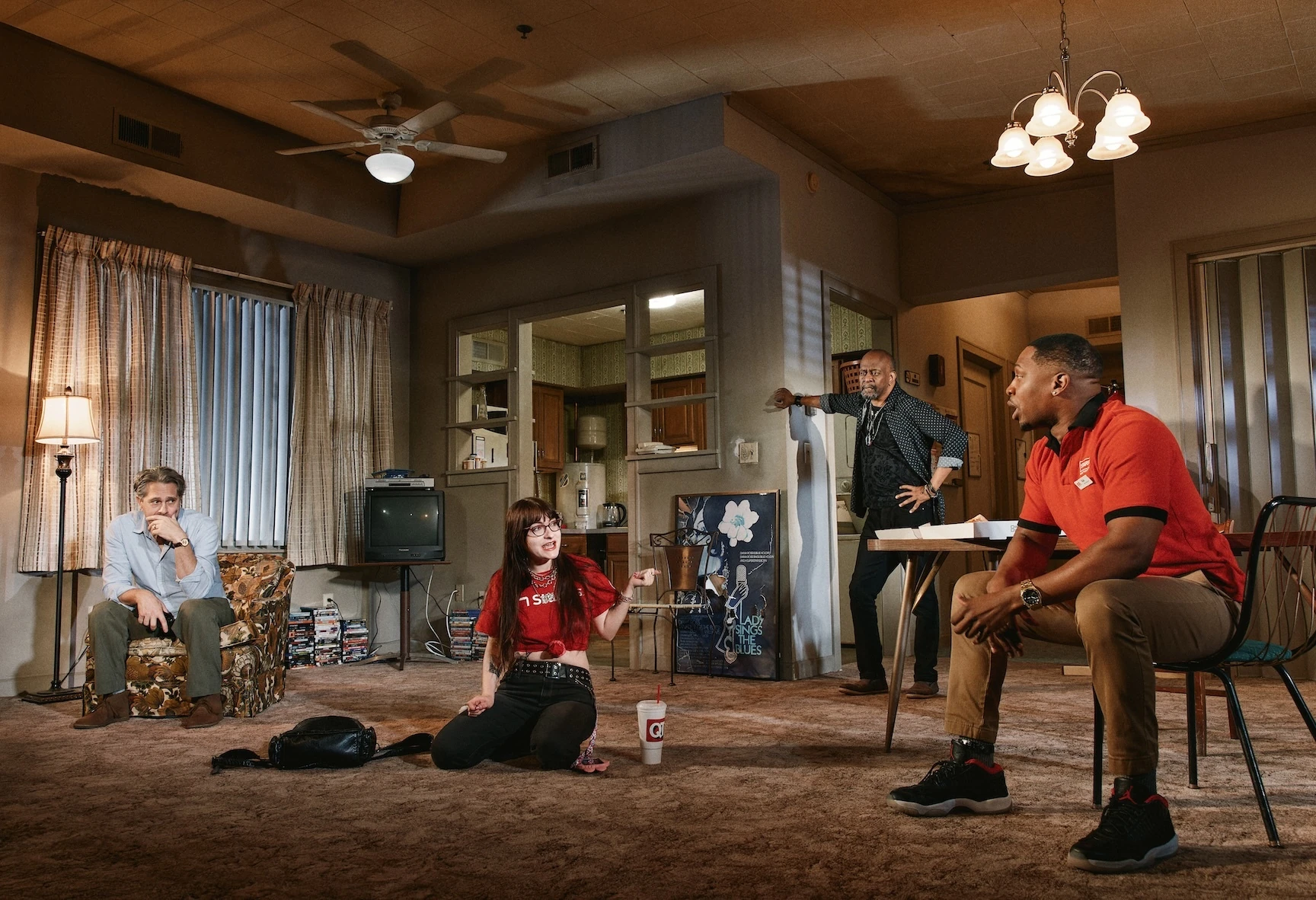
Bruce Norris’s shattering Downstate is hard to write about for the same reason it needs to be seen: It gives voice to the unspeakable. The play is set at a shabby group residence in southern Illinois for sex offenders who have been released from prison. All four of the men who live there were convicted of abusing minors, and while the particulars vary, their guilt is not in question. So what happens now? Having done their time, they’re stuck in the period at the end of their sentences, or in a series of periods—an ellipsis trailing to nowhere. Can any amount of punishment, in the eyes of the culture, be equal to their crimes? Is it possible to see them as anything but bogeymen?
These are questions that seldom get a hearing in public discourse, where there is little reward for getting near them. The motives for this aversion are diverse. Often it is rooted in empathy: Any concern about the lives of abusers may appear to devalue the suffering of their victims. Sometimes it is more cynical, as in recent political messaging about the dangers of LGBT “groomers.” In this context, it is difficult to talk about what Downstate is doing without risking adding fuel to the pyre. (Senator Ted Cruz cited a positive review of the play in the Washington Post as proof that “the corporate media is praising pedophilia.”) But that is why Norris’s play seems so necessary. It uses tools of theater—imagination, nuance, empathy, irony—to make space for a conversation that seems hardly possible anywhere else.
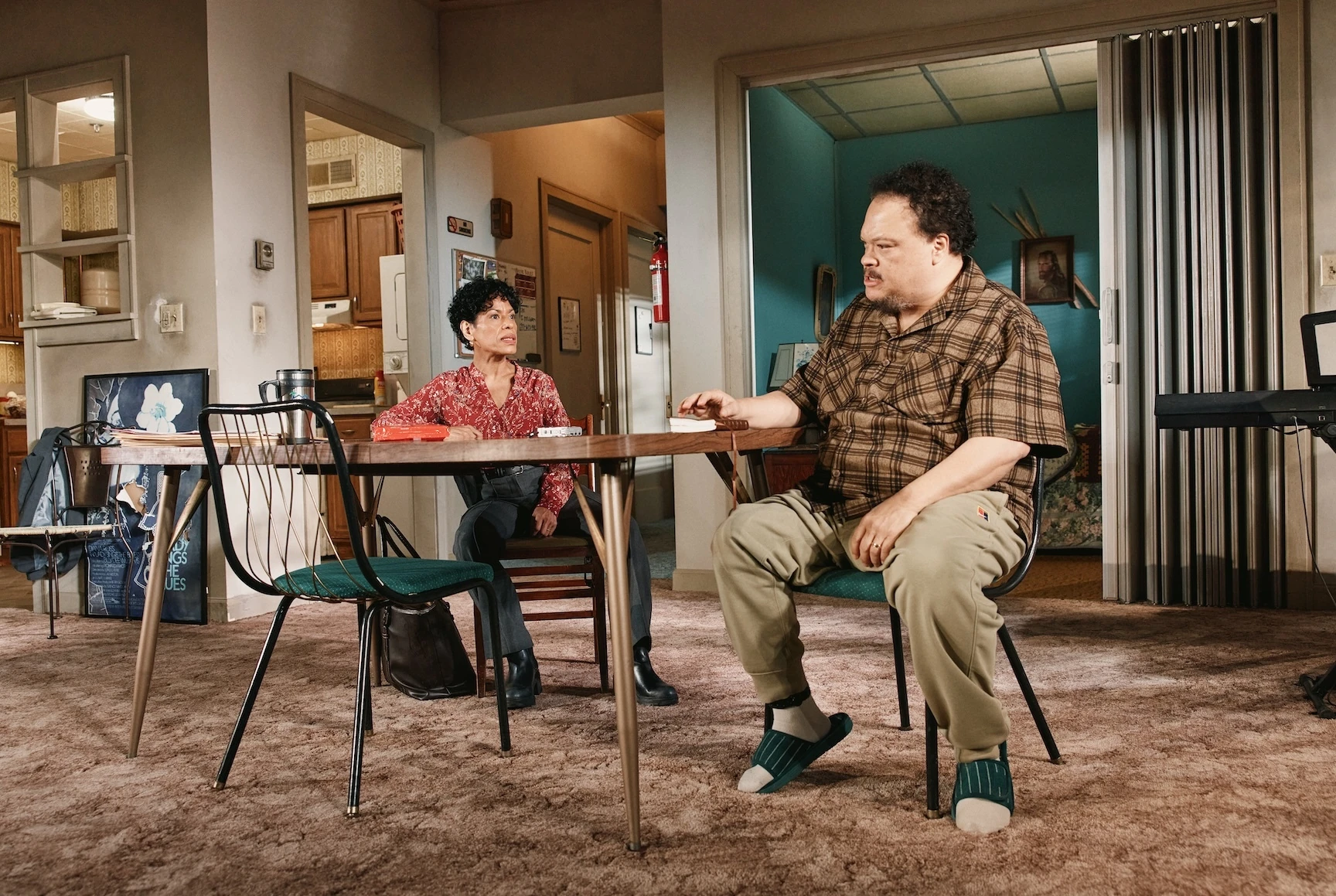
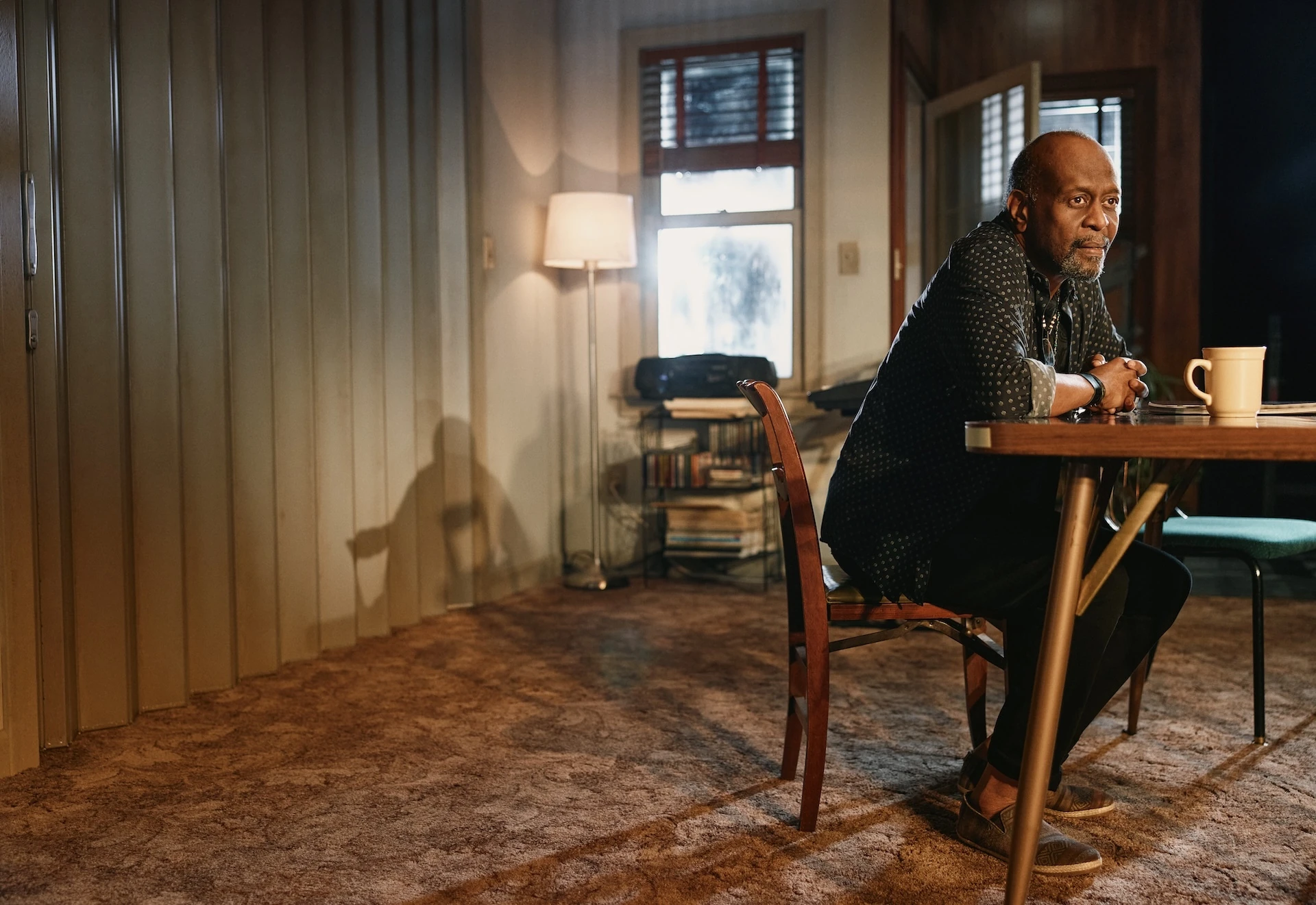
Downstate originated in 2018 at Chicago’s Steppenwolf Theatre Company, directed by Pam McKinnon, then migrated to Playwrights Horizons in 2022 (and won the New York Drama Critics’ Circle Award for Best Play). Its Broadway premiere, directed by Joe Mantello with characteristic intelligence and acerbity, is new in most ways but crucially retains two actors from the previous version: the supreme K. Todd Freeman as Dee, a headstrong and sharp-tongued gay dancer who shows no remorse for what he still views as a star-crossed romance with a 14-year-old castmate; and the surpassingly gentle Francis Guinan as the elderly, wheelchair-bound Fred, who molested at least two of his young piano students. They are joined now by Adrian Martinez as the sorrowful Felix, who can’t stay away from the victim he is barred from contacting, and Al’Jaleel McGhee as the enterprising Gio, who holds the others in contempt. (His crime, he insists, was only statutory: “Any heterosexual man alive tells you he’s not attracted to adolescent girls? That man’s not being truthful, alright?”)
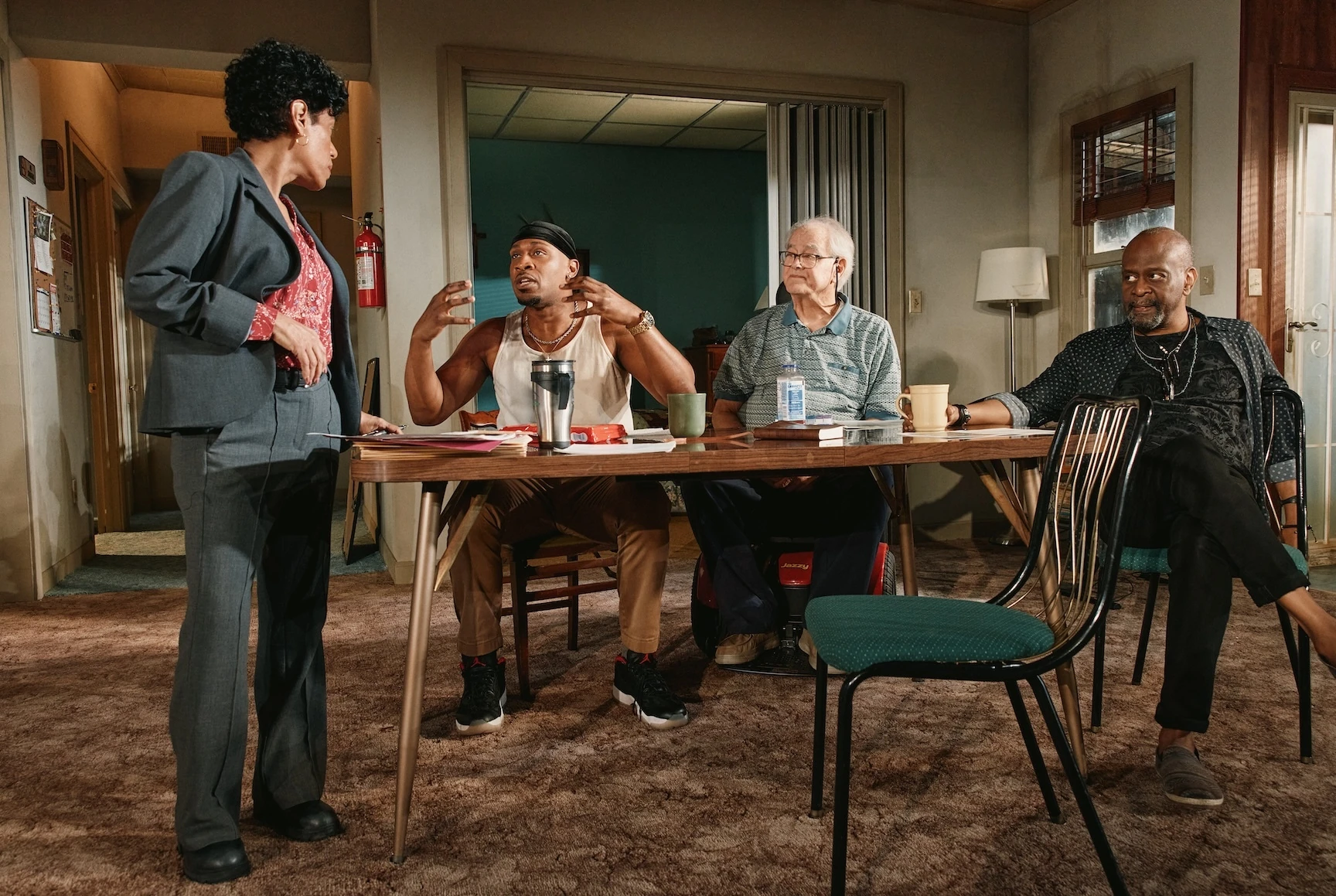
The dramatic action unfolds on a single day, when visitors to the ruins of these men’s lives include their hard-nosed probation officer (The Bear’s terrific Liza Colón-Zayas), Gio’s Staples coworker (Ivy Wolk) and a married couple from out of town, Andy (a moving Thomas Sadoski) and Em (Cassie Beck). Andy has come with a prepared statement—the product of long therapy, patently encouraged by his wife—to deliver to Fred, whose abuse he blames for his chronic depression and anxiety. “I began to accept that we can never truly escape the past, and that evil exists in the world,” he says. “And for me, at this moment, one part of that acceptance, is to look you in the eye today, and tell you to your face that you are a fundamentally evil person.” To this accusation, the unflappably kindly Fred is moved to reply: “Are you sure you don’t want some coffee?”
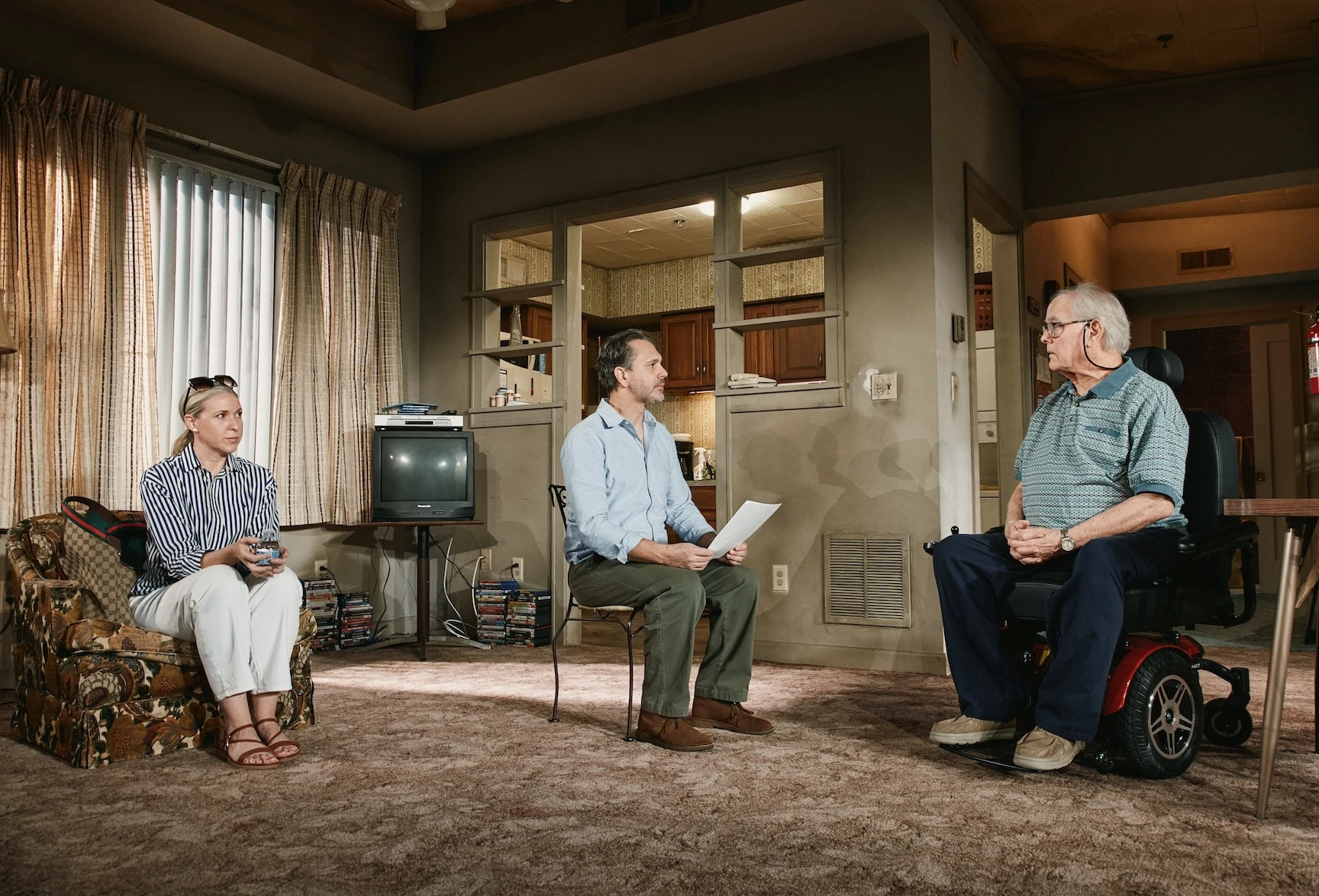
Norris takes his comedy black, as he has shown in such previous plays as Clybourne Park and The Low Road, and here it is often scalding. “I. Am a mother,” reads the righteous Em from a statement of her own. “And a wife. And a daughter and a granddaughter and a sister and a niece.” The audience laughs, but her key point—that “some monsters are real”—might be Downstate’s thesis statement, if not only in the way she intends. Norris’s halfway-house residents have done monstrous things, but they’re real people with complex feelings and ambitions and frustrations and daily routines to face. (Their limbo lodging is evocatively rendered in Scott Pask's shabby set.) We see them as they see themselves, but also as they don’t; at key moments, Ivy’s tough practicality and Andy’s raw pain—both of which register even more strongly on Broadway than before—cut through their self-deceptions even as Norris pokes at the penal system and at the rage that can bubble under liberal pieties.
Downstate is in no way a paean to pedophilia, but it prompts us to examine where justice ends and vengeance begins, to think about different kinds of power imbalance, and to extend our humanity in challenging directions. This play might very well make you uncomfortable. Brace yourself and go.
Downstate. Booth Theatre (Broadway). By Bruce Norris. Directed by Joe Mantello. With K. Todd Freeman, Francis Guinan, Liza Colón-Zayas, Al’Jaleel McGhee, Thomas Sadoski, Cassie Beck, Adrian Martinez, Ivy Wolk. Running time: 2hrs 25mins. One intermission.
Follow Adam Feldman on X: @FeldmanAdam
Follow Adam Feldman on Bluesky: @FeldmanAdam
Follow Adam Feldman on Threads: @adfeldman
Watch Time Out’s theater podcast on YouTube: Sitting Ovations
Follow Time Out Theater on X: @TimeOutTheater
Keep up with the latest news and reviews on our Time Out Theater Facebook page