[title]
Broadway review by Adam Feldman
Rating: Rating: ★★★★ (firmly recommended)
Ticketing: Buy tickets here
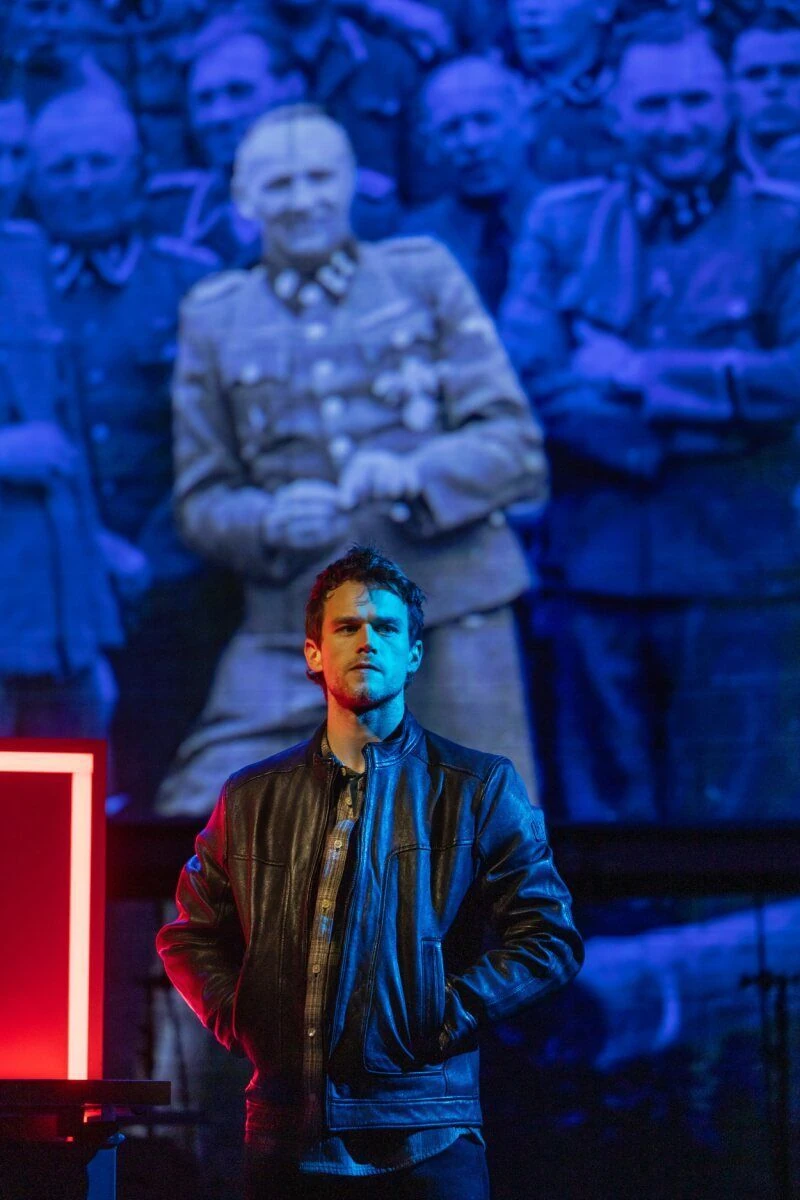
Viewed out of context, a lot of the pictures are charming. A young man smiles at a girl on a bus, and shakes paws with a German Shepherd whose long doggy tongue hangs zanily from its mouth. Officers chat over cigarettes and wine; an accordionist plays a song (maybe “Lili Marlene”?) to a group of attentive soldiers; fresh-faced and smartly uniformed girls sit on a fence eating bowlfuls of berries, or clown for the camera as it starts to rain.
These are not the photos one expects to see of the site of history’s largest mass murder in a single location: Auschwitz, the Nazi extermination complex where an estimated 1.1 million prisoners were killed in the early 1940s, including nearly a million Jews (the vast majority of them on arrival). Yet such were the contents of a personal photo album compiled and kept by SS commander Karl Höcker, who served as adjutant to Auschwitz commandant Richard Baer in 1944. Made possible by the popularization of lightweight portable cameras, these photos don’t capture the banality of evil so much as evil’s leisure time. And they are the subject of Moisés Kaufman and Amanda Gronich’s chilling and fascinating Here There Are Blueberries, a detective story in which the murderers emerge from plain sight.
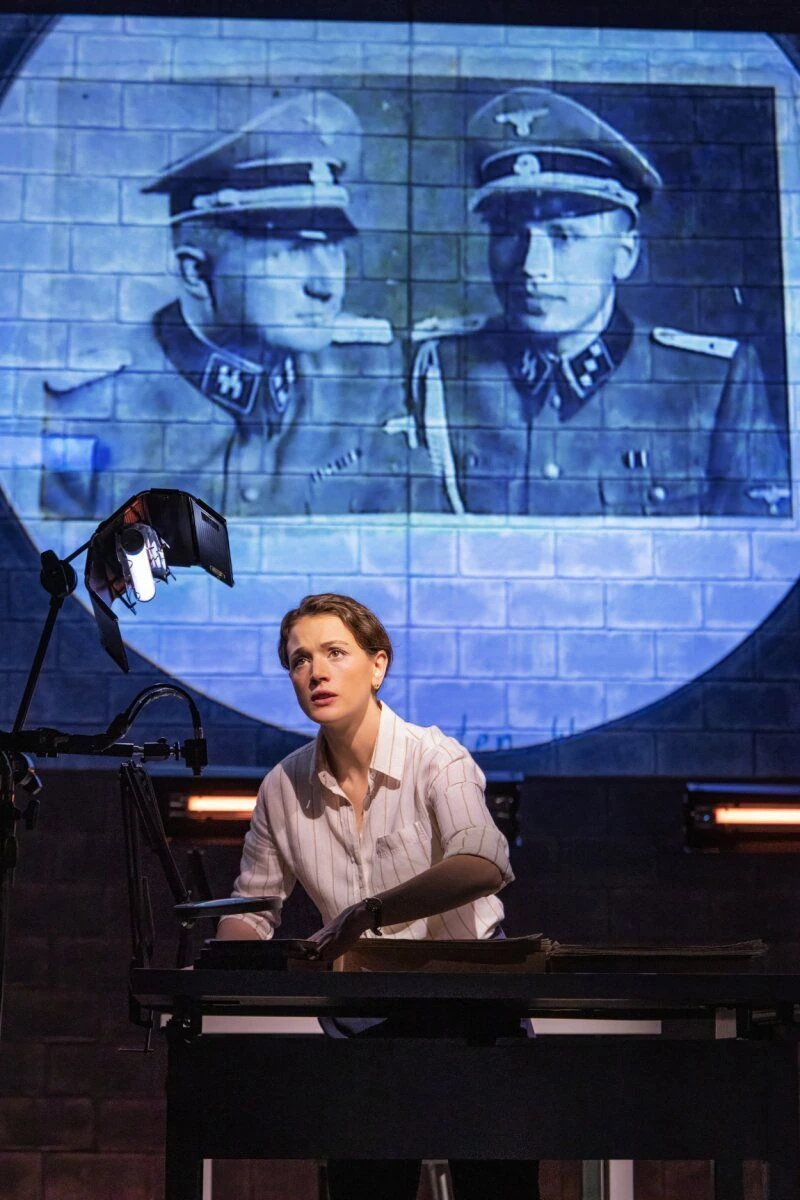
Devised by writer-director Kaufman and members of his docudrama troupe Tectonic Theater Project—notably Scott Barrow, Frances Uku, Grant James Varjas, Amy Marie Seide, the first of whom is also in the play’s diverse Broadway cast—Here There Are Blueberries is an elegant arrangement of strange fruit. It begins in 2007, when the U.S. Holocaust Memorial Museum in Washington, D.C. receives a package of Höcker’s photographs from an anonymous donor. A debate ensues: Should the museum, which focuses on the Nazis’ victims, exhibit snapshots that humanize their killers? The answer, which the play implicitly shares, is that the conversations and questions that these photos elicit make them worth seeing.
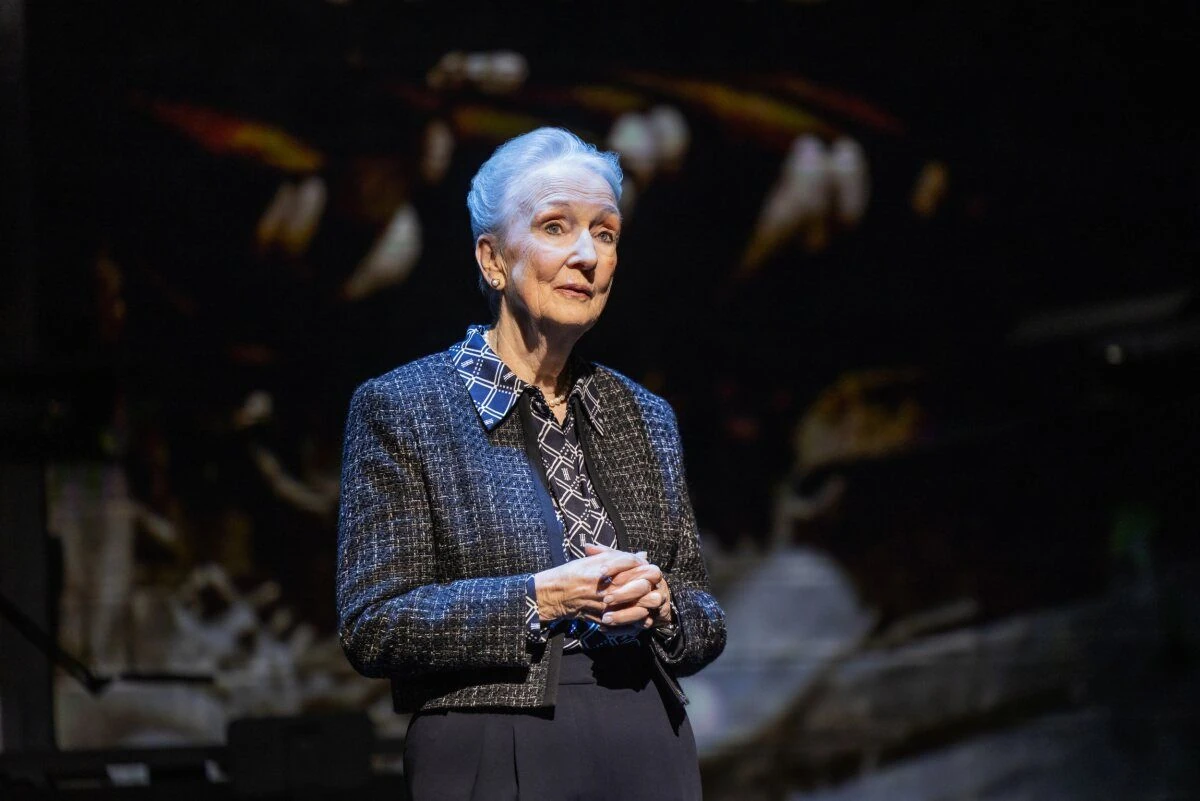
Although Here There Are Blueberries takes dramatic liberties with its dialogue and characters, many of whom are based on real people, it is a celebration of principled historiography, and the photographic evidence is always its focus as Derek McLane’s set provides a shifting array of screens large and small for projections by David Bengali. The central characters include archivist Rebecca Erbelding (Delia Cunningham) and museum directors Judy Cohen (the ever-magisterial Kathleen Chalfant) and Sara Bloomfield (Montego Glover); as their field of inquiry expands and the project gets media attention, they are contacted by Tilman Taube (Conrad Ricamora), who identifies one man in the photos as his grandfather and who helps them reach others whose relatives worked at the camp, and whose disapproval of them is sometimes qualified. (“I just cannot imagine that my sister knew what was going on in the camp,” says one. “My father was responsible for saving 93,000 inmates,” says another.)
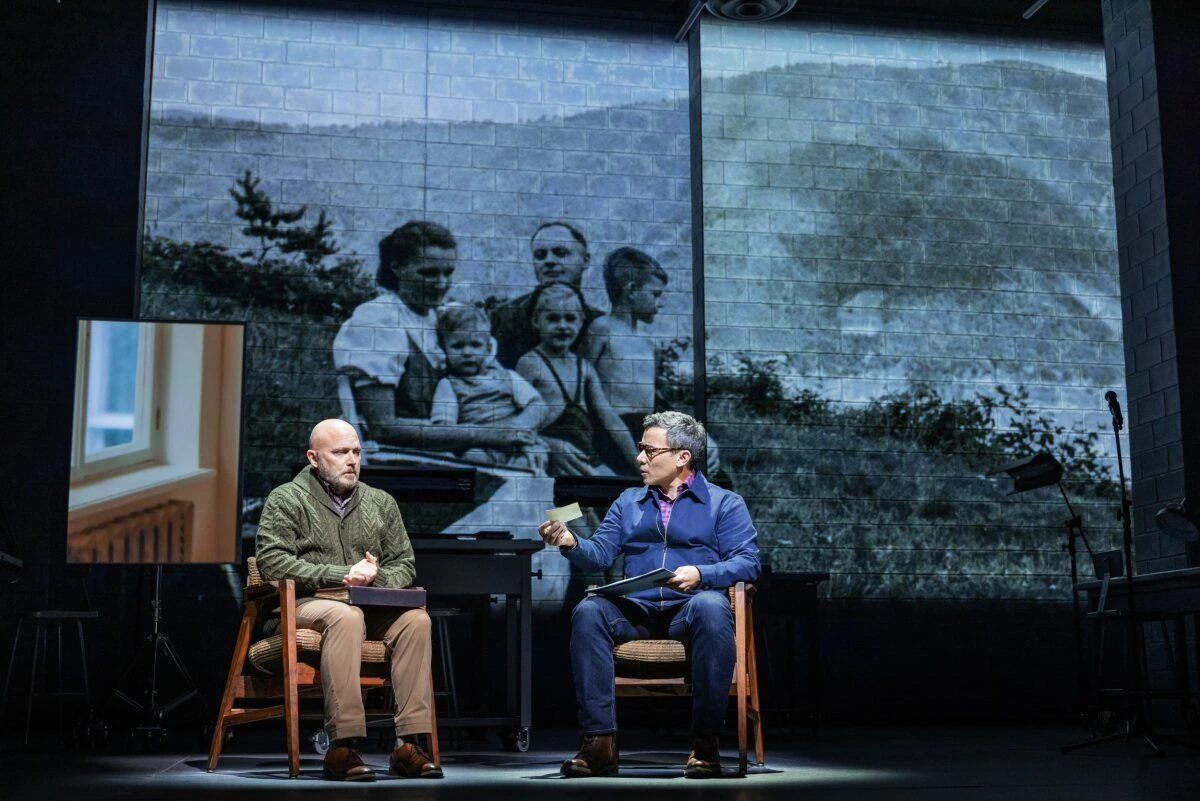
Like the 2023 film The Zone of Interest, which depicted the home life of Auschwitz commandant Rudolf Höss, Here There Are Blueberries explores how the ordinary coexists with the abhorrent. How can the hale fellows we see these photos, in moments that evoke summer camps more than death camps, be the engineers and executioners of systematic genocide? Can that man with the gap-toothed grin really be Josef Mengele, the sadistic medical torturer known as the Angel of Death? When Bobby McElver’s sound design includes the barks of dogs keeping prisoners in line, might one of those dogs be Höcker’s goofy playmate?
In some ways the play resembles a particularly well-assembled podcast or History Channel special, but its protean theatrical form provides a resonant human dimension. The eight actors in the very fine ensemble cast—which also includes Michael Cerveris, Brandon Flynn and Michelle Beck—play multiple roles with simplicity and restraint, without foreign accents and often without regard to gender and ethnicity. The subject is specific, but the scope is universal: Anyone could be these people.
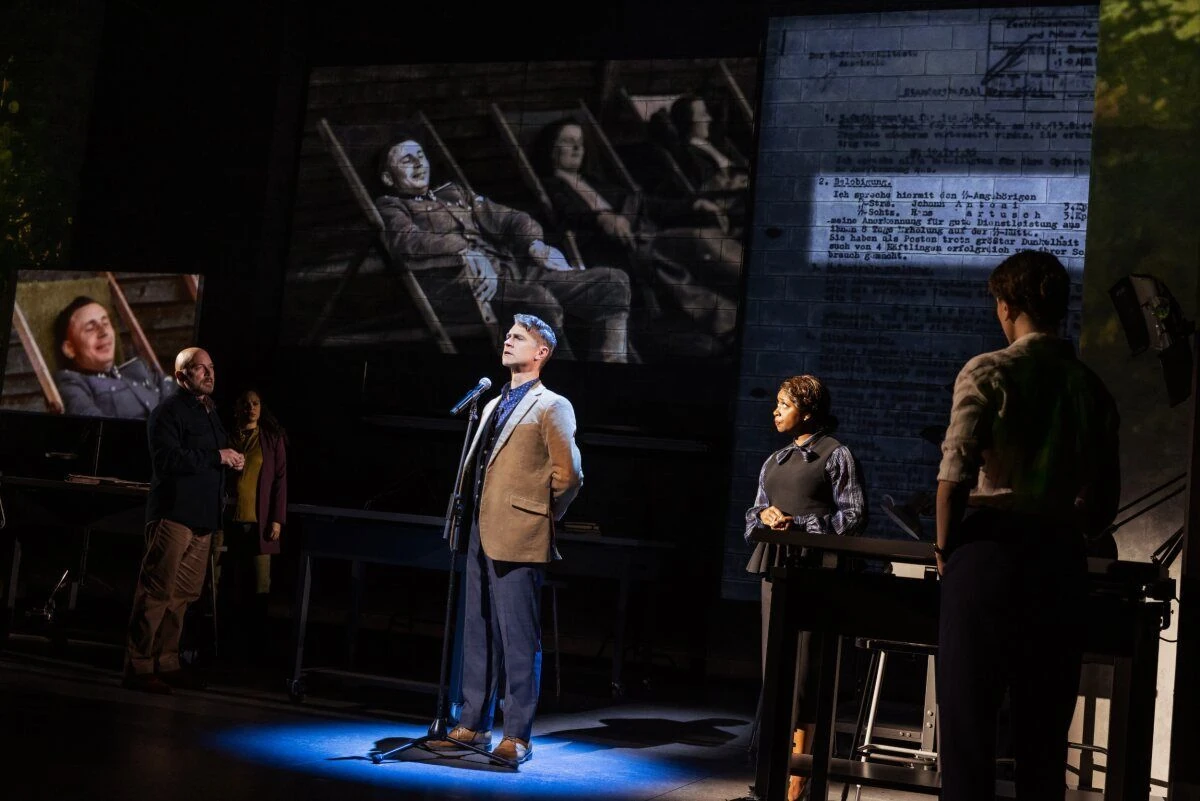
As Taube recognizes his grandfather in Höcker’s photos, Here There Are Blueberries challenges us to recognize ourselves. What horrors are we ignoring right now? What is happening outside the frames of the Instagram stories we tell? Höcker’s collection—as the play points out at the end, by contrasting it with a different set of photos from the same place and time—is remarkable not just for what it shows but for what it doesn’t: None of Auschwitz’s prisoners, none of its victims, appear in the album at all. A picture can tell a thousand words and leave six million unspoken.
Here There Are Blueberries. Ethel Barrymore Theatre (Broadway). By Moisés Kaufman and Amanda Gronich. Directed by Kaufman. With Delia Cunningham, Kathleen Chalfant, Conrad Ricamora, Scott Barrow, Michael Cerveris, Montego Glover, Brandon Flynn, Michelle Beck. Running time: 1hrs 30mins. No intermission.
Follow Adam Feldman on X: @FeldmanAdam
Follow Adam Feldman on Bluesky: @FeldmanAdam
Follow Adam Feldman on Threads: @adfeldman
Watch Time Out’s theater podcast on YouTube: Sitting Ovations
Follow Time Out Theater on X: @TimeOutTheater
Keep up with the latest news and reviews on our Time Out Theater Facebook page