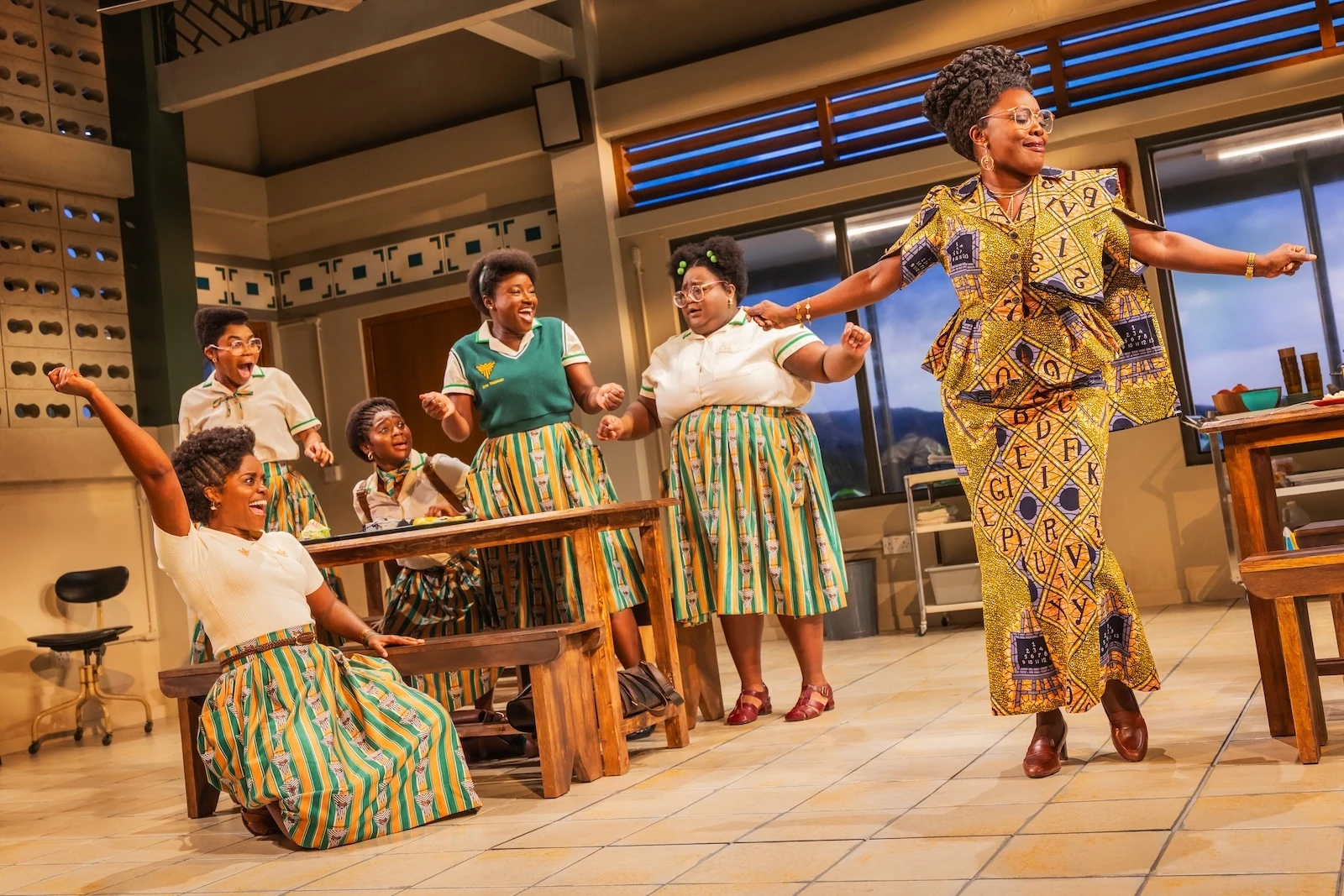
[title]
Theater review by Adam Feldman
Rating: (★★★★) four stars
Ticketing: Buy tickets here
The summer is over and the fall Broadway season has begun, which means one thing for theater critics and fans alike: Back to school! And back, as it happens, to Jocelyn Bioh’s vibrant School Girls; Or, The African Mean Girls Play, which was such a hit in its original 2017 run at Off Broadway’s Lucille Lortel Theatre that it returned for an encore engagement the following year. Since then, the show has become a regional-theater favorite; now, Manhattan Theatre Club, or MTC—not to be confused with MCC Theater, which mounted the show in 2017—has brought this Black comedy to the Great White Way in an all-new version directed by Whitney White, who also worked with Bioh on MTC’s 2023 production of Jaja’s African Hair Braiding. It’s a pleasure to be reunited with the flawed, fractious but ultimately endearing classmates of this crowd-pleasing play.
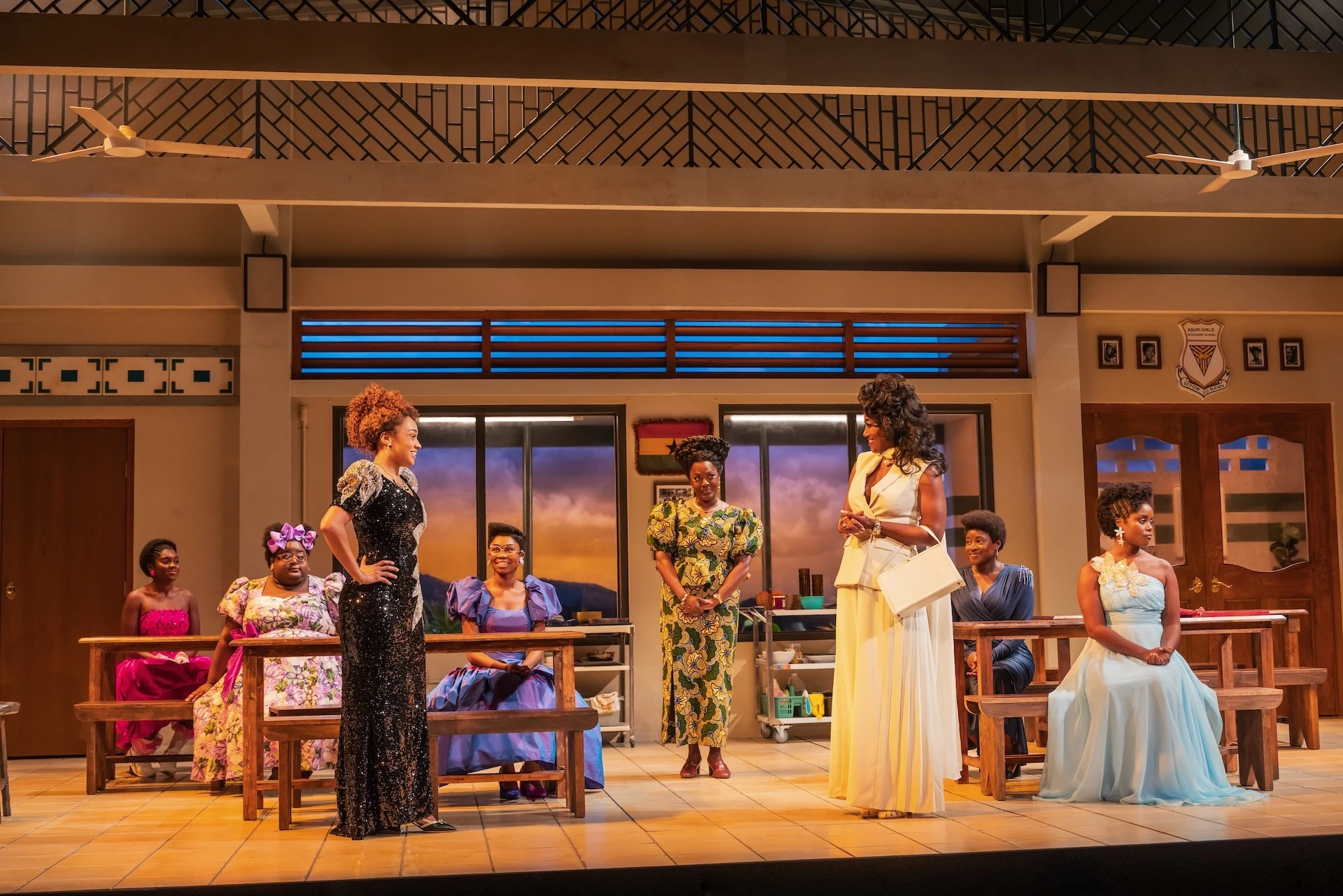
School Girls takes place in the volatile world of adolescent socialization, like many other popular shows of late (such as Wicked, Heathers, The Outsiders, Dear Evan Hansen, John Proctor Is the Villain and, of course, Mean Girls itself). The setting is a girls’ boarding school in Ghana in 1986, where the gorgeous and vicious Paulina (The Gilded Age’s Denée Benton) leads a clique of popular girls that also includes the even-keeled Ama (Lucia Aremu) and the chubby and insecure Nana (Erin Morton), as well as the bespectacled Mercy (Jordan Rice) and the dyslexic Gifty (Nia Otchere-Sarfo), cousins so close that they often speak in tandem. Paulina’s queen-bee status seems unshakeable until an American transfer student, Ericka (Jasmine Amy Rogers), arrives and inadvertently pokes the hive.
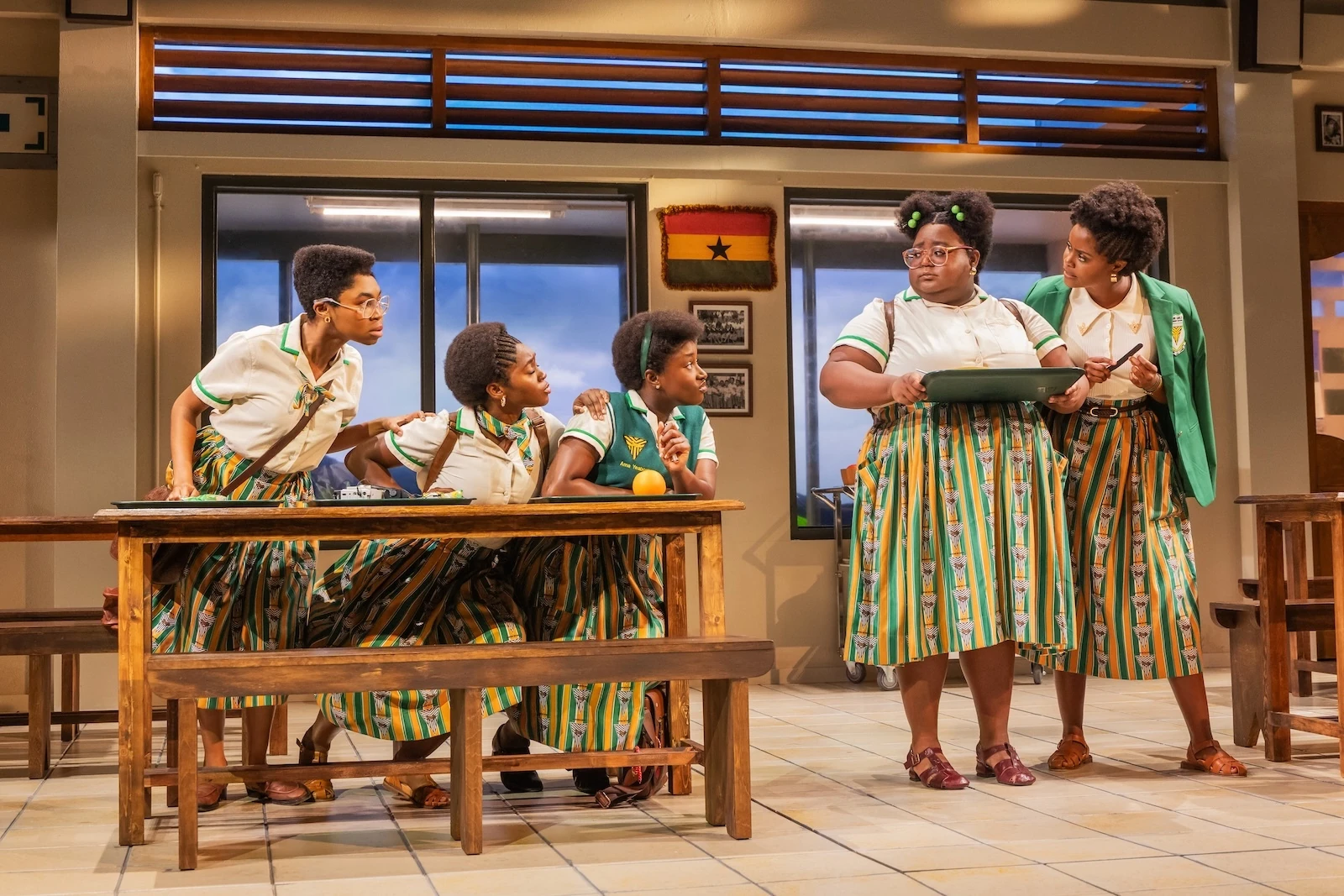
It’s not just that Ericka’s actual background in the United States undercuts Paulina’s status and makes her previous naive bragging—about an American aunt who works at a “high class restaurant” called White Castle and shops at “trendy American boutiques” like Conway and Wal-Mart—look risible. It’s that the pretty, mixed-race Ericka has the kind of naturally light-colored skin that Paulina and the others can only dream about (or try to achieve with dangerous bleaching products). This fact imperils Paulina’s greatest hope: to represent Ghana in the upcoming Miss Global Universe Pageant. A Dynasty-glamorous alumna of the boarding school, Eloise (Patina Miller), who was Miss Ghana herself in 1966 and won’t let anyone forget that for a minute, now works for the pageant and is on hand to recruit a contestant. She wants to pick a winner, and although she is dark-skinned herself, she knows that the pageant’s judges are more likely to have a taste for Ericka’s caramel than for Paulina’s chocolate. (This aspect of the story is loosely inspired by the 2011 choice of Yayra Erica Nego, a biracial beauty from Minnesota who claimed Ghanian heritage, to represent Ghana in Donald Trump’s Miss Universe contest.)
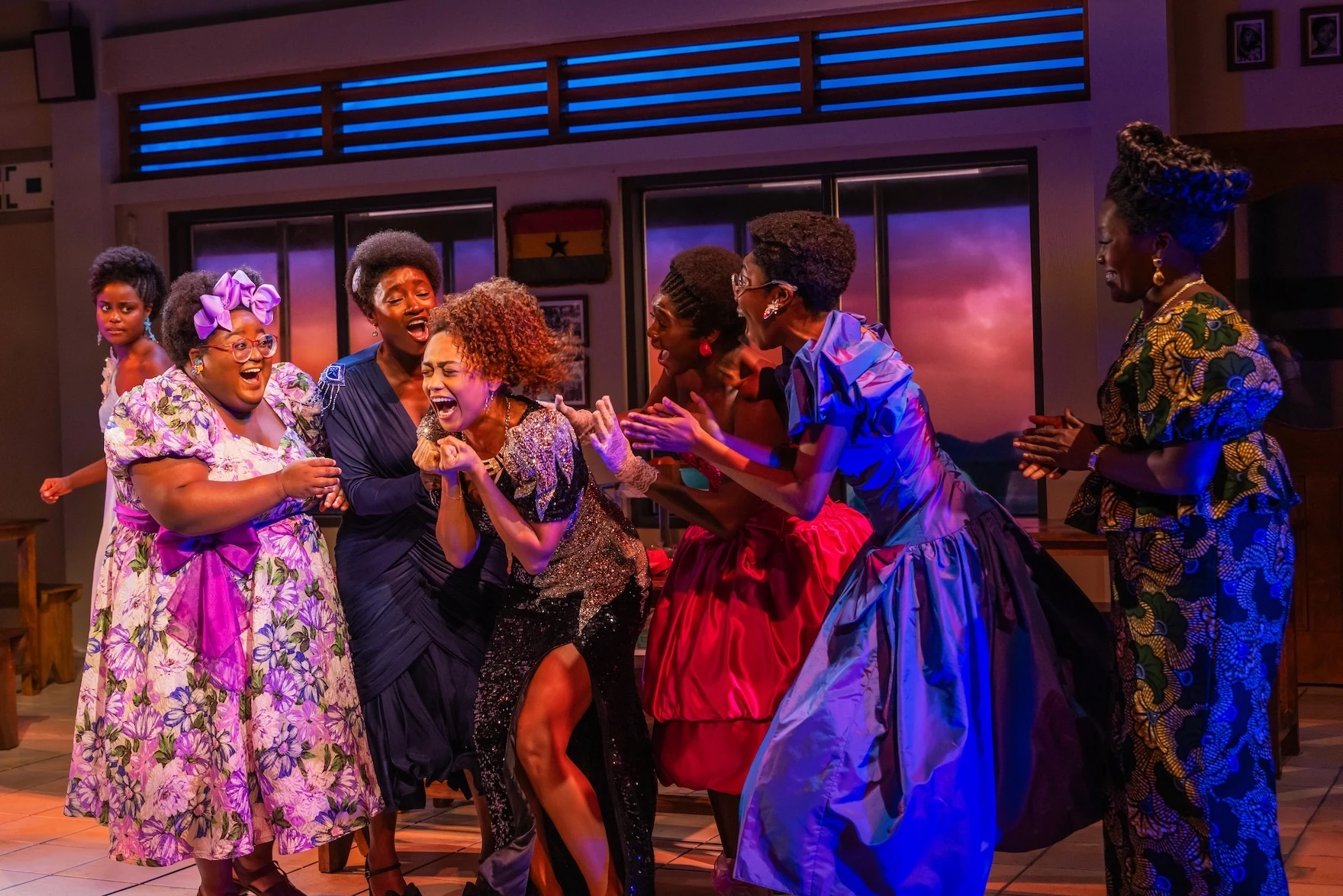
Colorism is a theme throughout the play, but it becomes far more central in the denouement, when School Girls shifts to a more serious tone. As in Jaja’s African Hair Braiding, whose treatment of immigration came to a sharp point at the end, the transition from broad ensemble comedy to issue play is not seamless; School Girls is less than 90 minutes long, and although that helps keep the energy high, it also makes the storytelling feel a little rushed. Paulina loses her grip on the other girls faster than might be ideal, and her comeuppance is a mite precipitous. But Benton negotiates the bumpy journey with grace, and Boop! knockout Rogers continues her meteoric ascent to stardom with another standout turn (and even gets to show off her considerable expertise as a singer); the rest of the cast, wittily costumed by Qween Jean—the persuasive Heather Alicia Simms, as the school’s embattled headmistress, is especially well turned out—deliver Bioh’s punchy, African-accented dialogue with verve. The play’s depiction of colorism is effective, but its greatest appeal lies in its moment-to-moment colorfulness.
School Girls; Or, The African Mean Girls Play. Samuel J. Friedman Theatre (Broadway). By Jocelyn Bioh. Directed by Whitney White. With Denée Benton, Jasmine Amy Rogers, Heather Alicia Simms, Patina Miller, Lucia Aremu, Erin Morton, Jordan Rice, Nia Otchere-Sarfo. Running time: 1hr 25mins. No intermission.
Buy tickets to School Girl; Or, The African Mean Girls Play: Broadway.com
Follow Adam Feldman on X: @FeldmanAdam
Follow Adam Feldman on Bluesky: @FeldmanAdam
Follow Adam Feldman on Threads: @adfeldman
Watch Adam Feldman's theater podcast on YouTube: Sitting Ovations
Follow Time Out Theater on X: @TimeOutTheater
Keep up with the latest news and reviews on our Time Out Theater Facebook page