[title]
Broadway review by Adam Feldman
Rating: ★★★★ (four stars)
Ticketing: Buy tickets to The Balusters
“The politics of the university are so intense because the stakes are so low," said the Columbia professor Wallace Sayre. His quip that has been generalized into what’s known as Sayre’s law: The less consequential the issue, the more bitter the divisions about it become. Though often applied to the academe, this law is equally relevant to the insular worlds of co-op boards, planning committees and homeowners associations of the kind depicted in David Lindsay-Abaire’s entertaining and needling drawing-room comedy The Balusters. Directed by Kenny Leon for Manhattan Theatre Club, and set in a wealthy residential neighborhood called Vernon Point—think Prospect Park à clef—the play takes relish in sending up the tensions beneath placid surfaces.
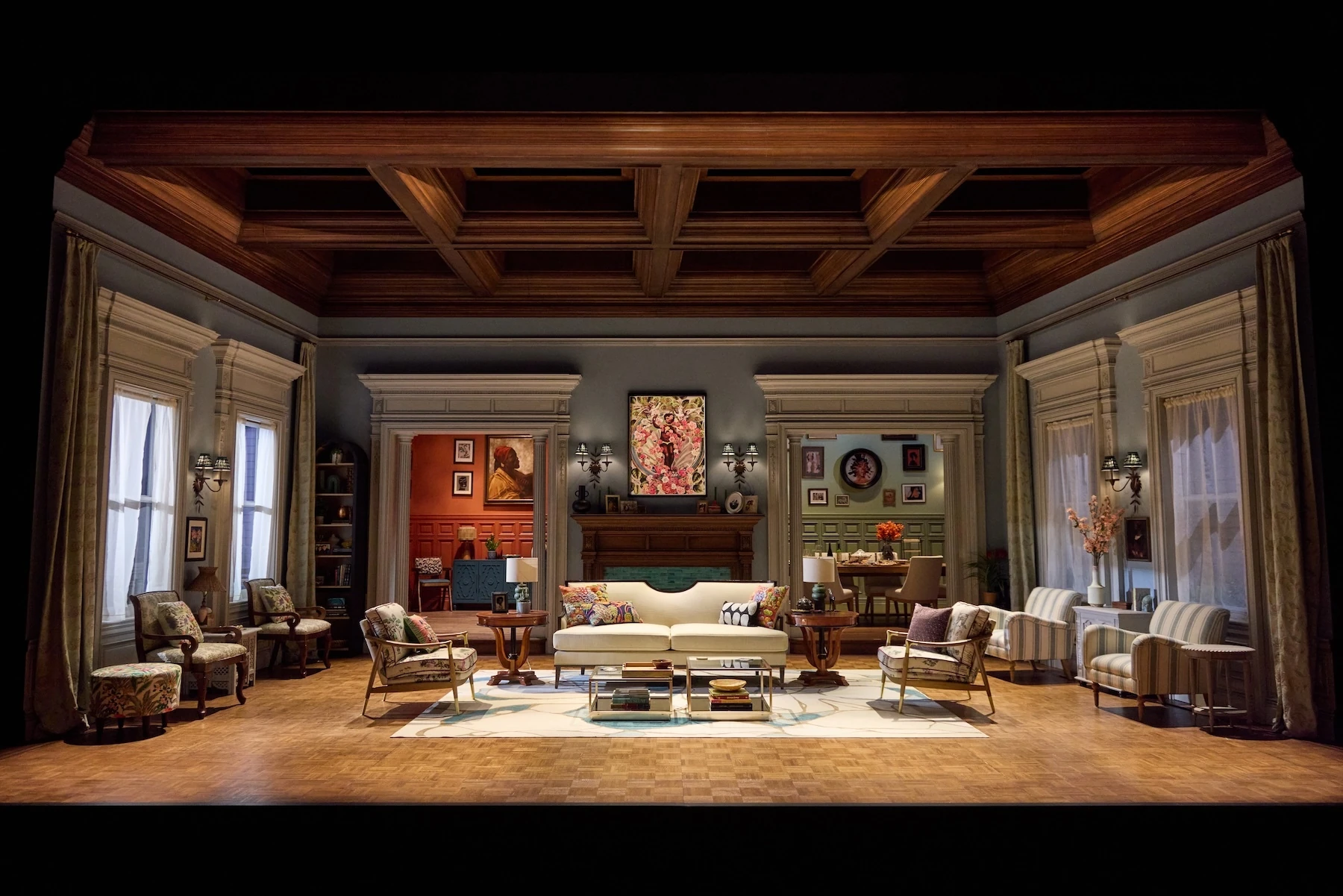
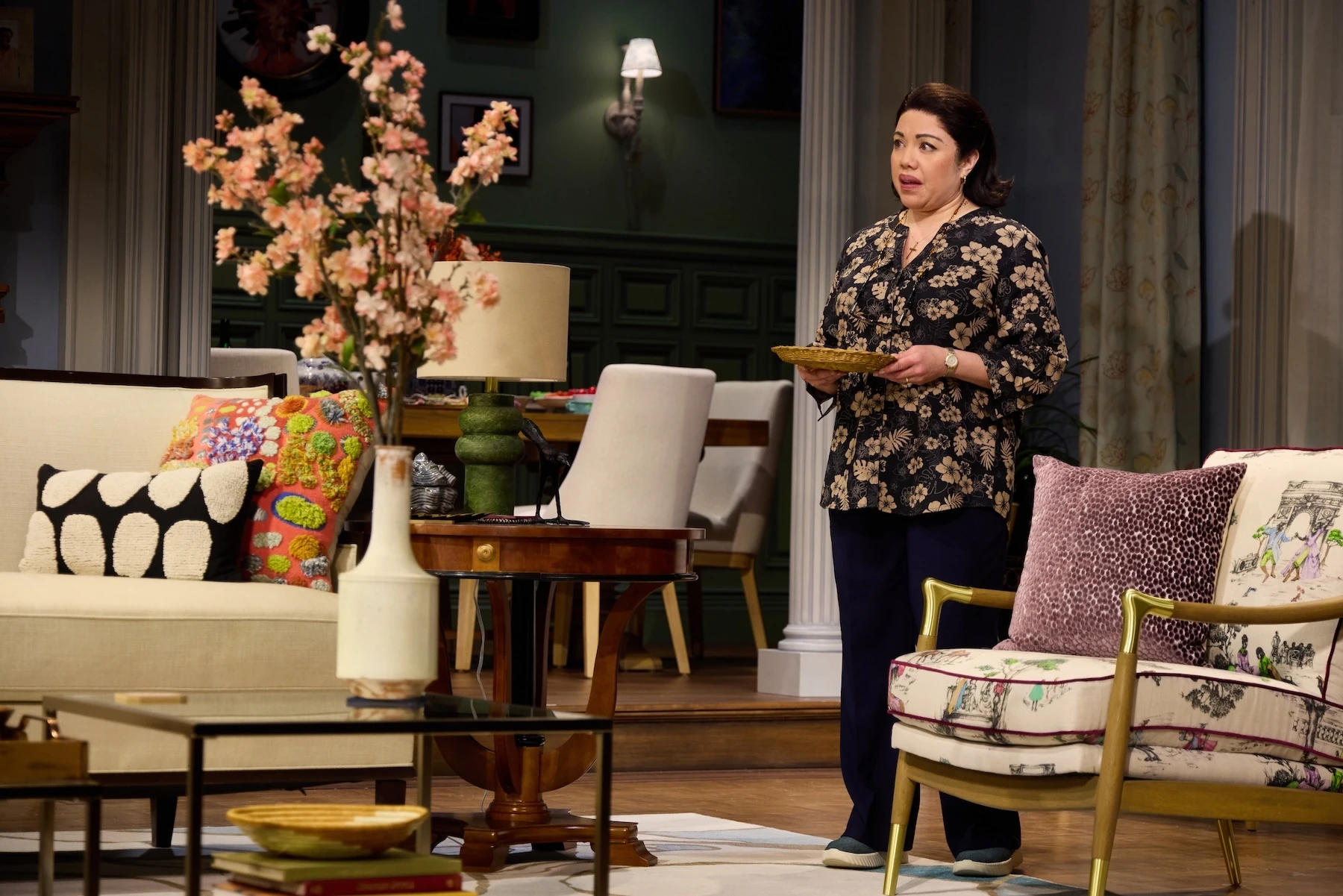
Not a detail is amiss in the elegant front parlor of the Victorian home that belongs to Kyra (a radiantly poised Anika Noni Rose), the Neighborhood Association’s newest member. Her decor establishes African-American identity in a context of traditional fancy taste; gorgeously appointed by set designer Derek McLane, the room is practically a character in its own right. (Among the production photos provided to the press is one of the set by itself, free of actors.) The creamy upholstery of the central couch is offset by brightly colored pillows; Rose herself, dressed by Emilio Soso in vibrant puffy orange, stands out similarly in the play’s final scene. The back walls are dotted with Black art, and in pride of place—center stage, between the parquet floor and the coffered ceiling, above the carved wooden mantel of a bricked-up fireplace—hangs a brilliant Kehinde Wiley–style floral portrait that replicates this same theme: It depicts a Black Venus on a clamshell, with two classical cherubs hovering above her.
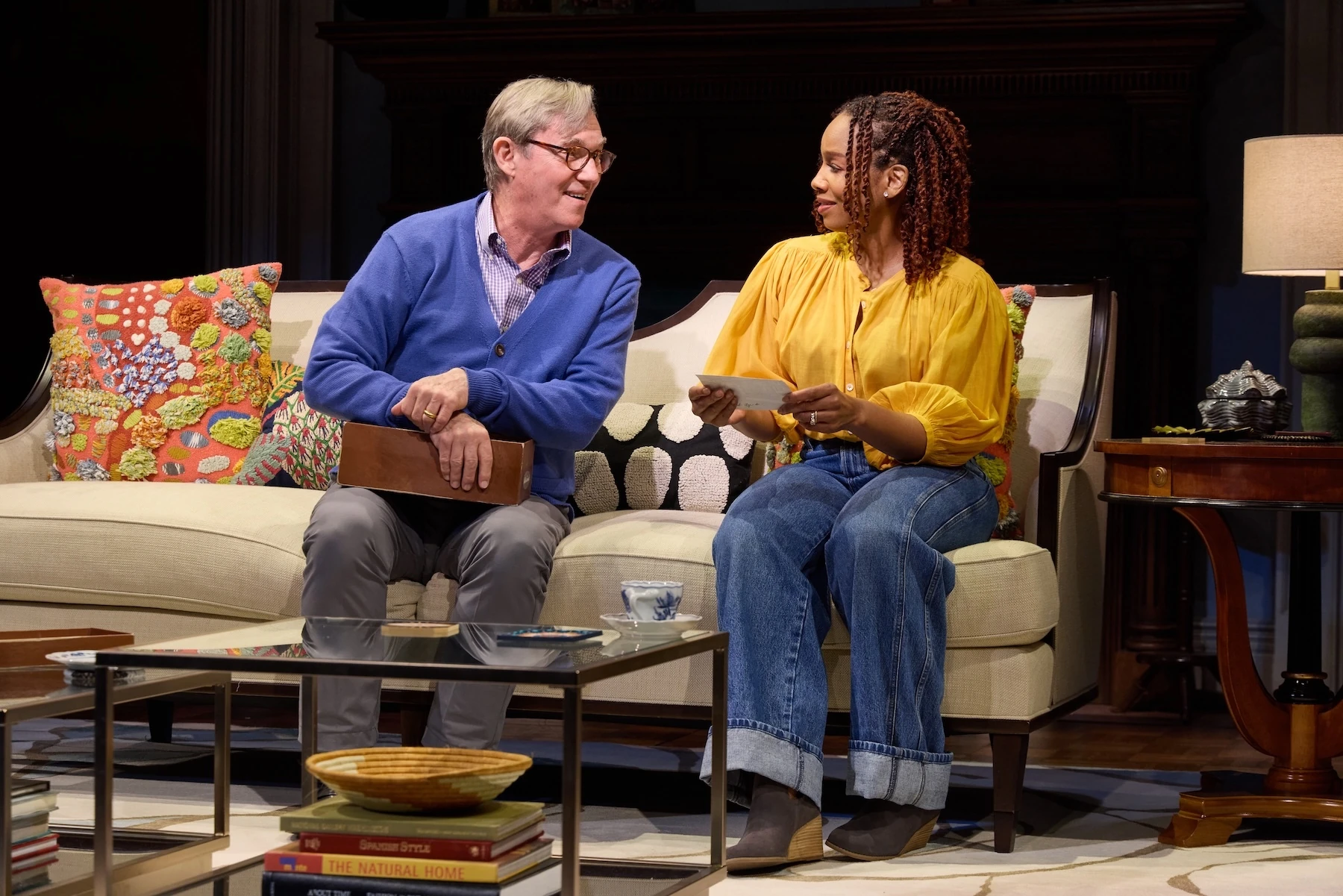
Everything about this house testifies to the idea that a certain kind of Black family is welcome in Vernon Point, but also stands out there. And between scenes, lighting designer Allen Lee Hughes and sound designer Dan Moses Schreier flood the space with signifiers of a different kind of Blackness—projected graffiti, loud hip-hop music—that suggest the there-goes-the-neighborhood anxieties that undergird the Association’s efforts to protect its enclave, lest it suffer the same fate as the nearby Vernon North. “All those houses leveled to put up the projects,” laments the genial Elliot (Richard Thomas), a realtor and the group’s longtime president. “It was lucky we got landmarked when we did. It put an invisible wall around us. At least in our little citadel, things would stay as they were.” Theirs is not exactly a gated community per se, but it does have gatekeepers—led by Elliot, who is eager to preserve the Vernon Point he grew up in: a genteel world of baseball and egg creams and strains of Brahms in the air. That it also happened to be exclusively white is an aspect he doesn’t notice.
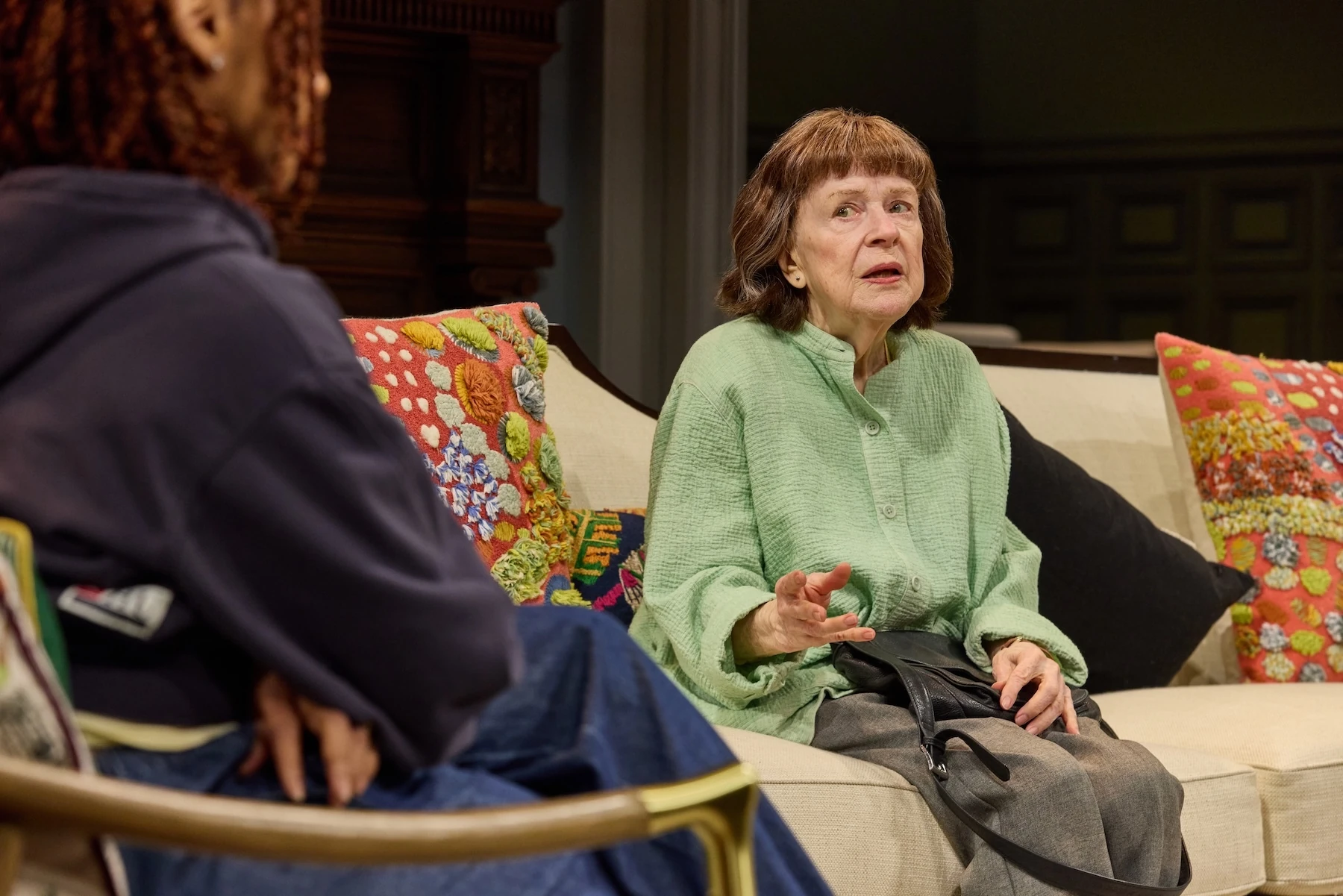
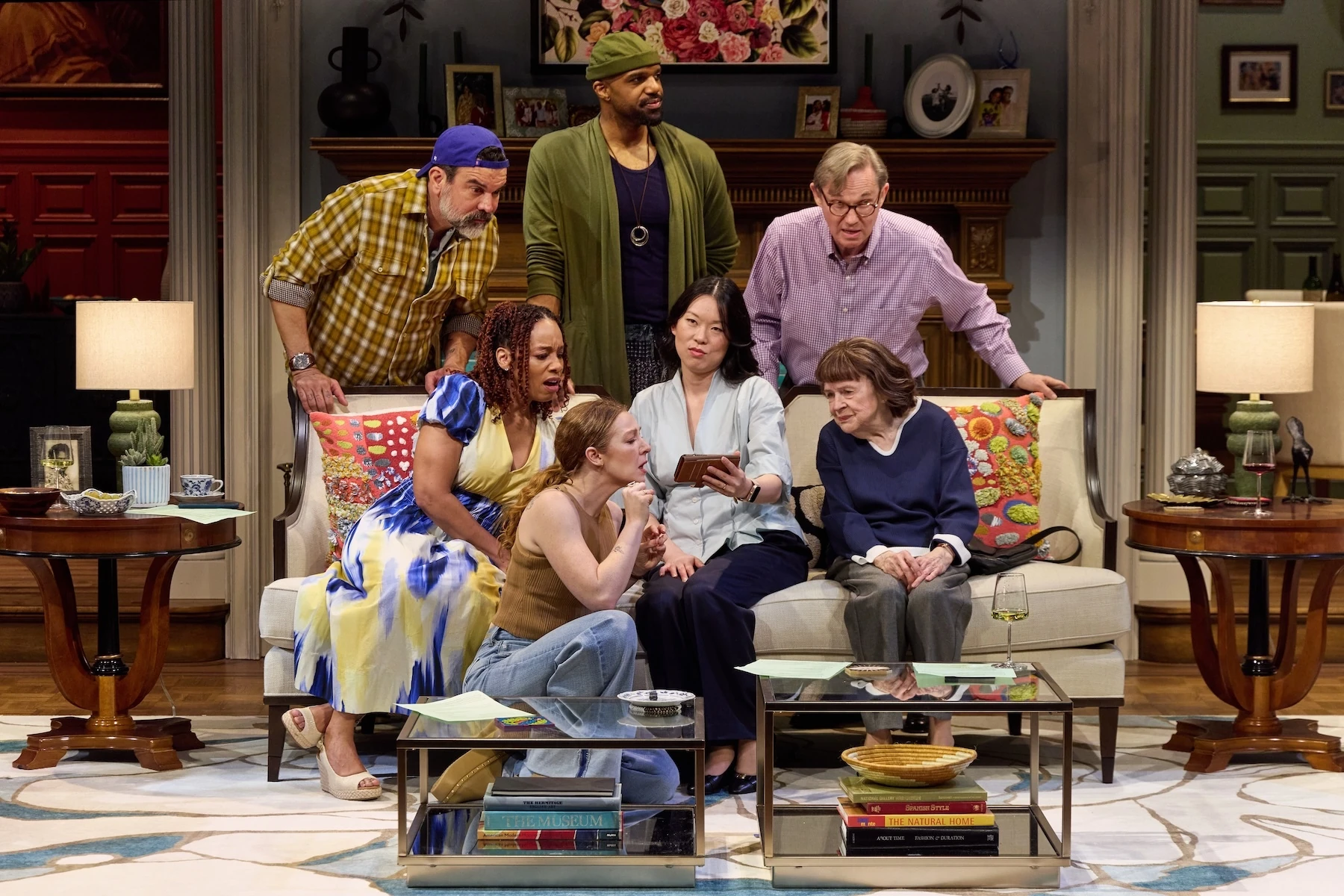
The current Neighborhood Association is certainly diverse in terms of age, race, sexuality and political leanings. In addition to Kyra and Elliot, its members include Melissa (Jeena Yi), an Asian-American lesbian, and Brooks (Carl Clemons-Hopkins), a Black gay travel writer, as well as the Jewish and blunt Ruth (Margaret Colin, playfully flinty) and the Latino and bluff Isaac (Ricardo Chavira). The elderly Penny (the invaluable Marylouise Burke, small and feisty and perfect) works for Elliot but holds her own counsel, and the other two white members bend over backward to prove they’re no bigots: Willow (Kayli Carter), the youngest of the group, is stridently woke—”I acknowledge my privilege, and I welcome having it checked”—and prone to correcting aggressions, especially from Alan (Michael Esper), a straight, male and defensive schoolteacher. (“My wife is Jewish!” he protests. “My son was adopted from Ethiopia! And my daughter from Colombia! My brother is gay and his partner is Bhutanese.”)
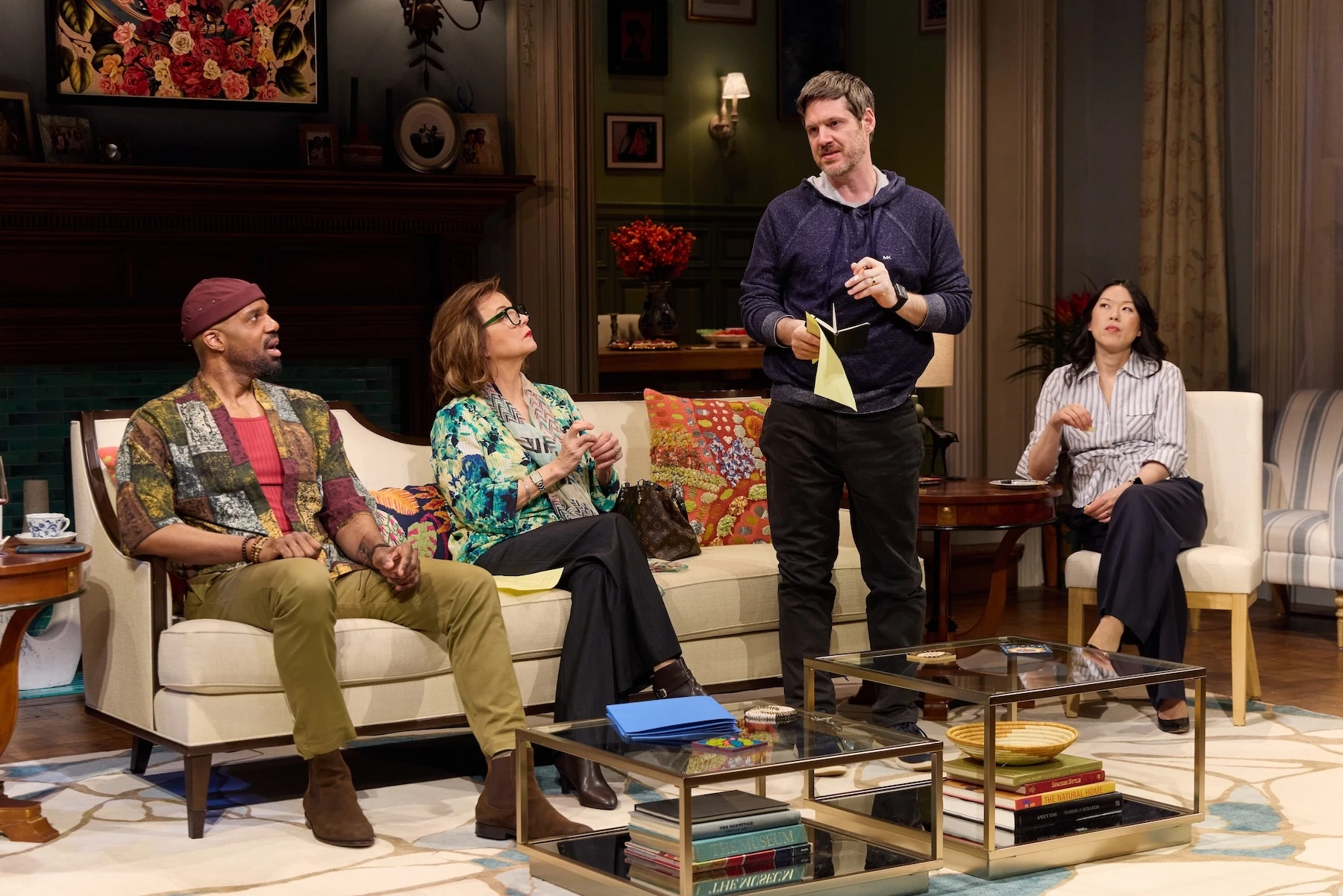
What these nine people have in common is a commitment to protecting the neighborhood. That entails a certain suspicion of perceived outsiders: Is the Muslim guy who owns the health-food store homophobic? Are Black teenagers loitering in the neighborhood to admire it or to case it? But most of the issues on their docket pertain to preserving the district’s historical character. One of them involves a house that has installed the wrong kind of balusters: the vertical posts, often ornamented, that support a handrail. But the major point of contention is Kyra’s desire to have a stop sign installed on the corner of her street, which Elliot firmly opposes. She tries her best to be friendly and even-tempered, because her more contentious attitude on a previous co-op board ended in a disastrous stroke of bad luck. But lurking on the sidelines is Kyra’s Filipina maid, Luz (a nicely circumspect Maria-Christina Oliveras), who left Elliot’s employ under shady circumstances that are bound to come to light. A showdown inside the association is inevitable; the Vernon Pointers are ever happy to point the finger at someone else. And when push comes to shove—as it is guaranteed to do in this kind of play—some of the differences among the members prove more important than others.
Compared with two other recent Broadway plays with comparable set-ups, The Balusters is quite safe. Like Kyra’s house, it is traditional in architecture but smartly adorned with modern touches. But none of its scenes are as up-to-date and uproarious as the social-media melee in Eureka Day (though Facebook drama is alluded to), nor does it take a big swing into horror like the final minutes of The Minutes. And the characters subjected to the brunt of its judgment, Elliot and Willow, are easy targets: the rich and duplicitous older white man and the spoiled social justice warrior. Even so, The Balusters, as performed by Leon’s very fine ensemble, is an entertaining and well-observed look at the blusters of the privileged few: how fragile their neighborliness can prove, and how easy it can be, when pressure is applied, for decorous pillars of the community to fly off the rails.
The Balusters. Samuel J. Friedman Theatre (Broadway). By David Lindsay-Abaire. Directed by Kenny Leon. With Anika Noni Rose, Richard Thomas, Marylouise Burke, Margaret Colin, Jeena Yi, Maria-Christina Oliveras, Ricardo Chavira, Carl Clemons-Hopkins, Michael Esper, Kayli Carter. Running time: 1hr 35mins. No intermission.
Buy tickets to The Balusters: Broadway.com
Follow Adam Feldman on X: @FeldmanAdam
Follow Adam Feldman on Bluesky: @FeldmanAdam
Follow Adam Feldman on Threads: @adfeldman
Watch Adam Feldman's theater podcast on YouTube: Sitting Ovations
Follow Time Out Theater on Instagram: @timeout_theater
Follow Time Out Theater on X: @TimeOutTheater
Keep up with the latest news and reviews on our Time Out Theater Facebook page