

[title]
Lei is a small, pretty wine bar tucked into Doyers St, Chinatown's elbow-shaped, pedestrian-only stretch of storefronts. Owner Annie Shi built it as her first solo project after co-owning King and Jupiter, and the concept is straightforward: a well-stocked cellar in a vibey nook, plus a short food menu from chef Patty Lee, previously of Mission Chinese Food. Pairing wine with Chinese flavors in the heart of Chinatown’s warren of restaurants and storefronts feels like a sharp calculation, and Lei executes with easy confidence.
The room measures 700 square feet and seats 28, most of them ringing the perimeter; a communal table at the center handles bigger parties, up to eight. There's not an inch to spare, but the room doesn't feel cramped. This is what a properly intimate restaurant feels like, lighting tuned to pull focus toward the tables and away from the serving lanes. Staff outnumber what a room this size usually rates, and they move like a single organism: I watched someone turn to greet a walk-in mid-bus, holding a plate behind their back, passing it off to a coworker without a word. Recommendations and explanations come without the stiff recitation that usually accompanies them, giving the place warmth.
The wine list is extensive but not overwhelming. There’s a full list plus a short by-the-glass menu. Burgundy and Champagne, German and Basque whites and, further out, a low-intervention Chinese Cabernet. Shi curates it herself in concert with wine director Matt Turner. Many bottles are in the $60–80 range, so there’s room to experiment. It’s a setup sure to excite enthusiasts; for agnostics and casuals, it's an unintimidating entrée to a tasty glass or three.
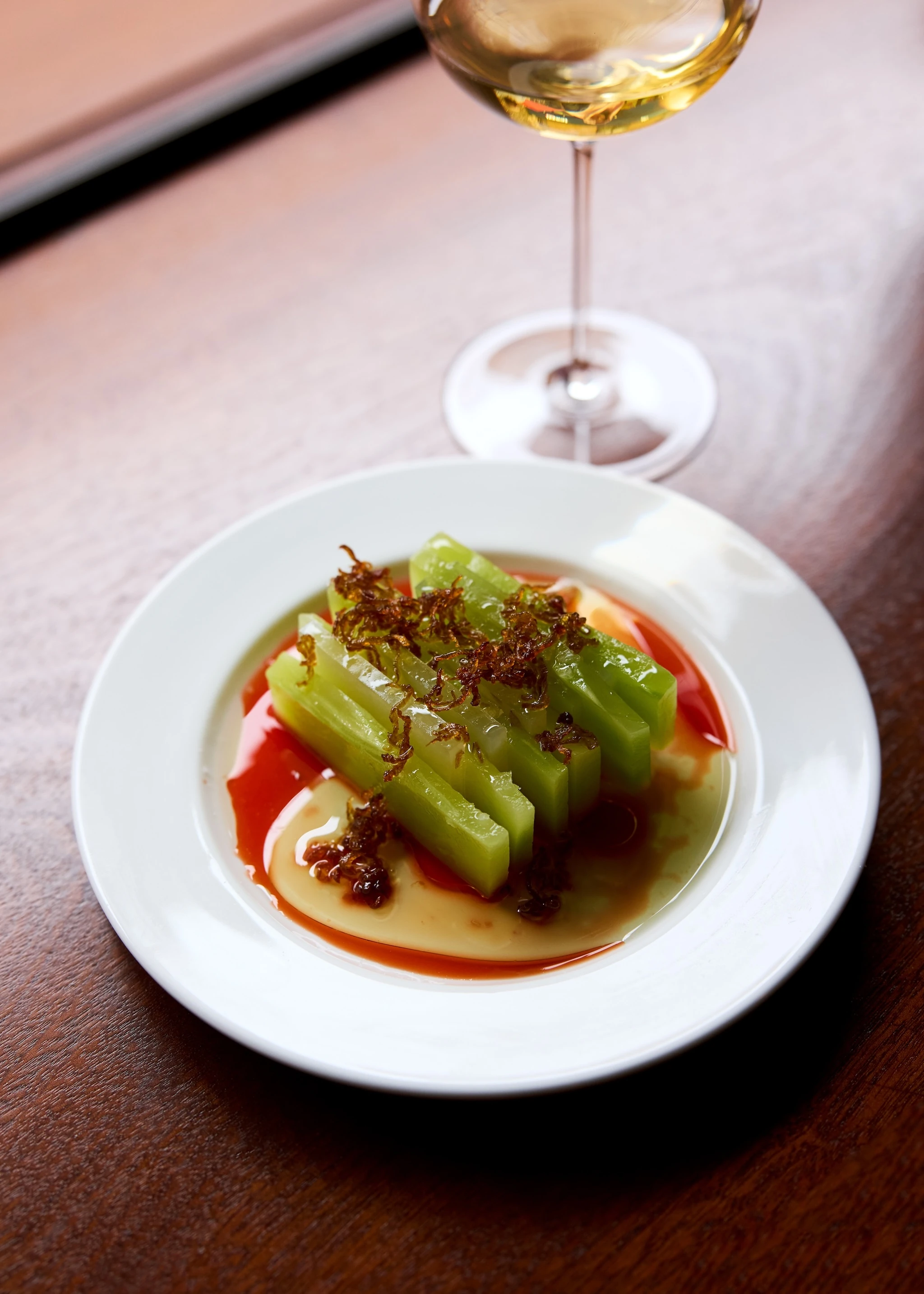
The flavors read unmistakably Chinese: a balance of sweet, salty, sour, umami. The kitchen is electric, so there's no wok cookery–those with visions of dumplings and stir-fry can find plenty of that nearby. These are Chinese dishes calibrated to a Western audience; a knife and fork are necessary for some. Tiles of crisp celtuce get briny depth from slivers of kombu jelly, but the veg becomes a dish with a heap of fried shallots and the pool of red vinegar in which the salad sits.
These are Chinese dishes calibrated to a Western audience; a knife and fork are necessary for some.
The shao bing bread is reminiscent of a croissant in both shape and construction with lamination and an ooze of butter, but doesn't carry much flavor alone; it does, however, mop up sauce. Speaking of, the sweet and sour beef short rib arrives coated in a deep-burgundy cherry-and-molasses sauce whose richness and spoon-coating consistency feel like a demi-glace, but don't hold me to that. Braising leaves the hunk of meat tender, but a quick fry before saucing tightens the protein to give it texture. It pulls clean off the bone, but retains a pleasing chew. The aforementioned knife and fork are the way in here; the chopsticks are useless unless one hacks the rib into morsels before and digging in—which, considering increased surface area means more sauce—is recommended.
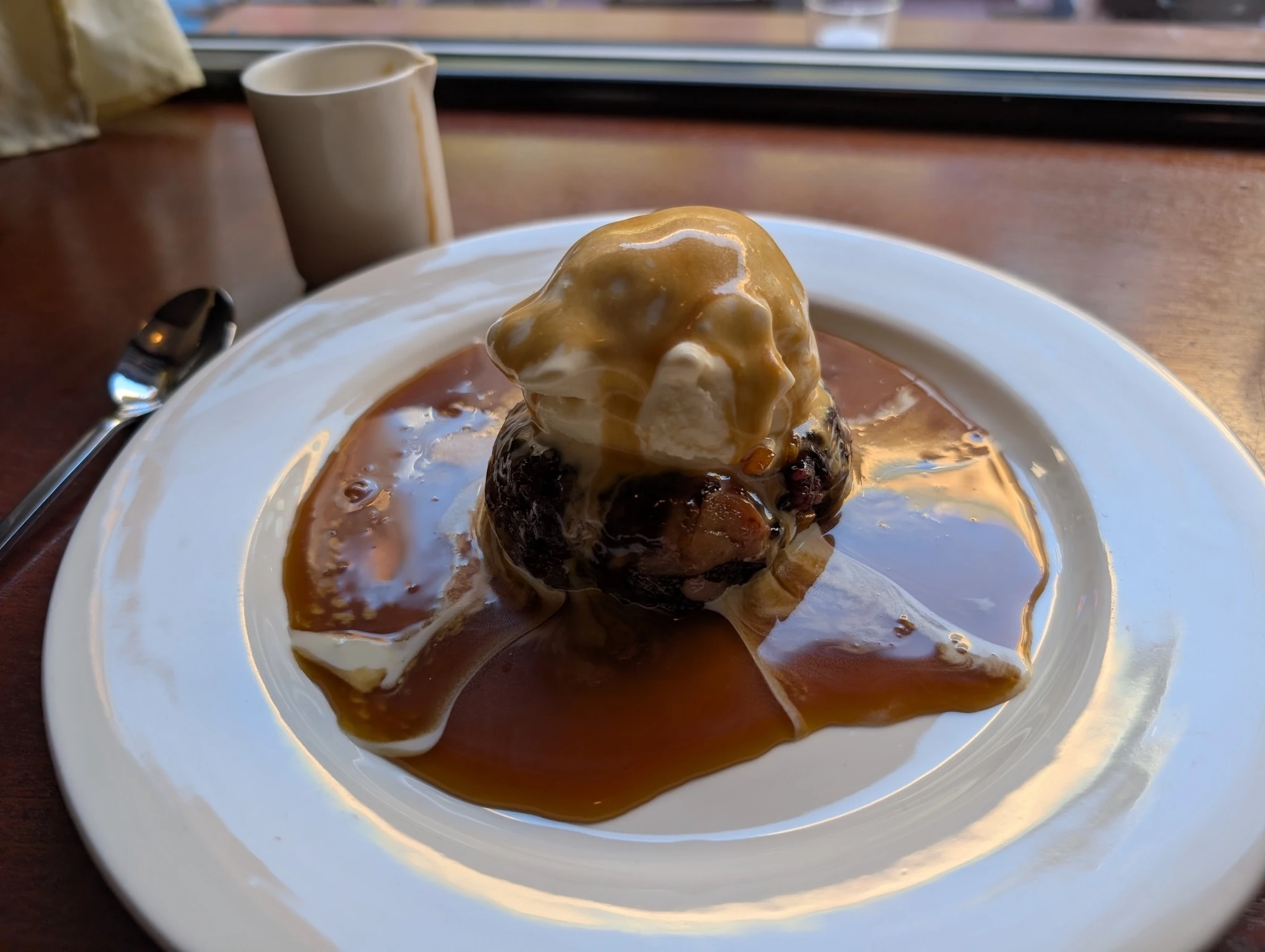
Dinner closes on a black rice pudding studded with beans and orange rind, topped with vanilla ice cream and sticky toffee sauce; nothing stuns alone, but together it's a satisfying, not-too-sweet finish with some nice texture. Portions run small but with proper server-guided ordering, nobody is at risk of leaving hungry.
Reservations open two weeks out, and Lei was already one of the hardest tables in town before it won the James Beard Award for Best New Restaurant in June 2026. Lei is open for dinner Wednesday through Sunday, 5pm–midnight. Book ahead, though the room holds some seats for walk-ins each night.