

[title]
East Village Cookbook, a collection of over 200 recipes from area restaurants and residents, didn't begin with a publisher, a deal or even much of a plan. It began, in a very New York way, with dogs.
During COVID, when the city shrank to the radius of a few blocks, a loose group of East Village residents kept running into each other around Tompkins Square Park. They were there for the same reason, walking their dogs, but what formed was something bigger: a kind of accidental community stitched together by routine.
"We would not have found each other before COVID," says Will Horowitz, a chef, author and one of the creators of East Village Cookbook. "It was so diverse in terms of age, religion and professions. We had students, priests, doctors, chefs and so on."
Through those daily overlaps, Horowitz got to know pastor Will Kroeze, who runs Trinity Lower East Side, a small, nearly 200-year-old church on the corner of East 9th Street Avenue B. A modest, almost cafeteria-like space, the church's main mission is to feed people, as made clear by its popular soup kitchen, which is now in its 40th year.
By 2023, Horowitz had joined Trinity's board, helping think through both the food and the fundraising, an effort that led him to community cookbooks.
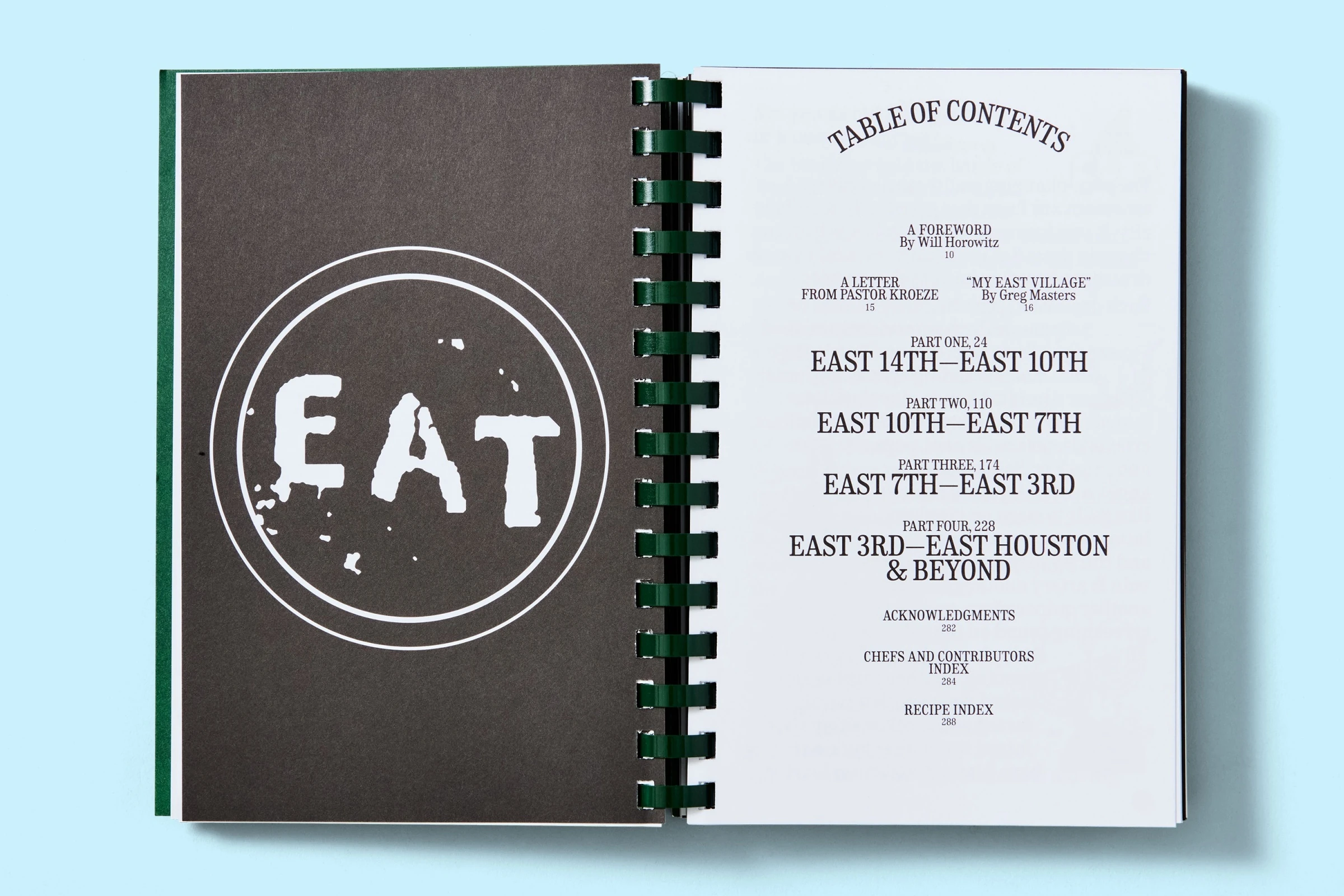
"I felt like it was a really good way to raise money, especially in such polarizing times," he says. "A way to bring the community together, to tell the story of all these remarkable community members through food."
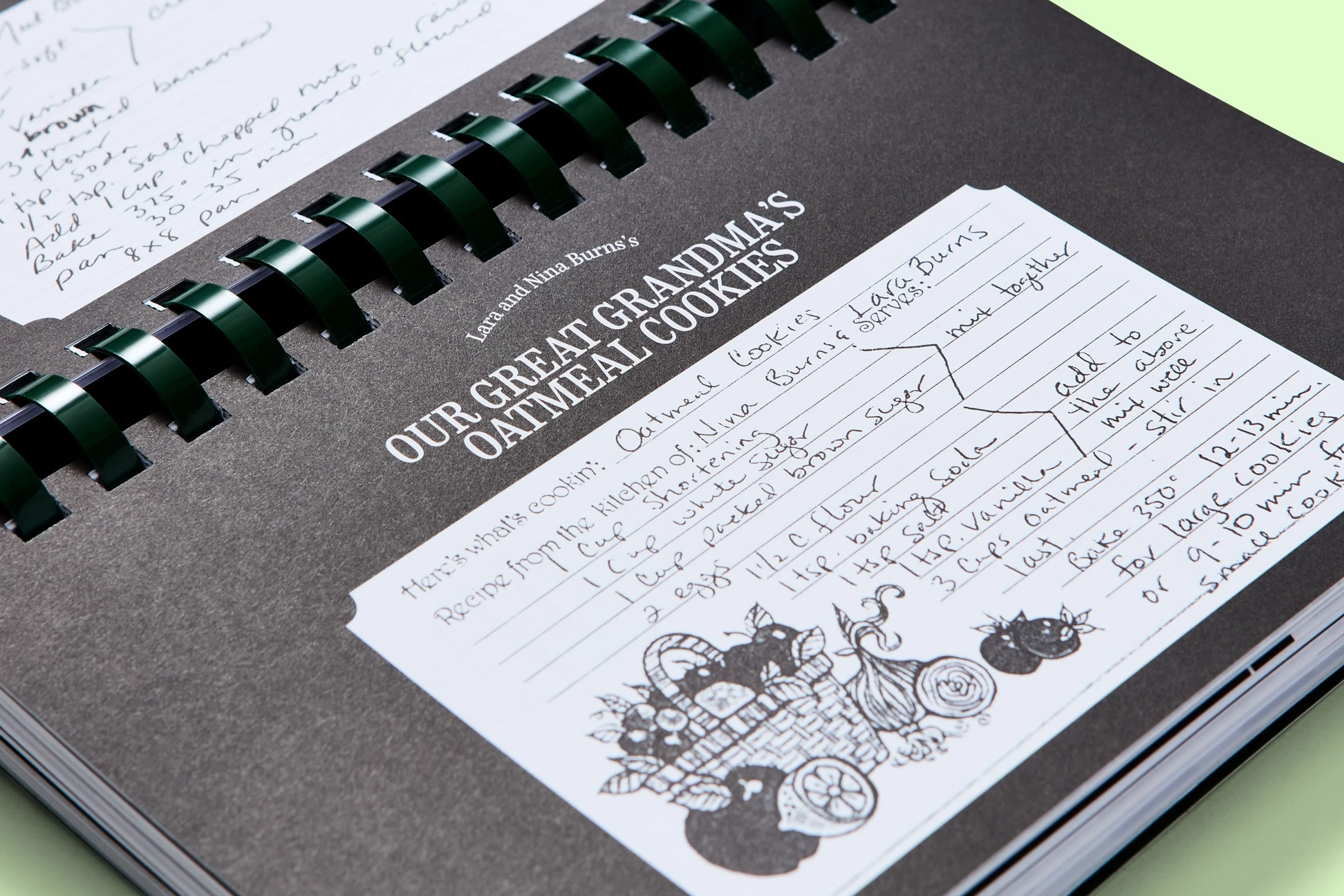
So they started asked for recipes in whatever form people felt comfortable submitting them: drawings, poems, instructions, memories. "Even if it’s just how you like butter on your toast," Horowitz says. "We wanted it to mean something."
Horowitz and the rest of the team put up handmade posters around the neighborhood, a scrappy riff on Uncle Sam, but with Julia Child: We want your recipe.
People responded by submitting their own entries and also asking how they could help launch the project.
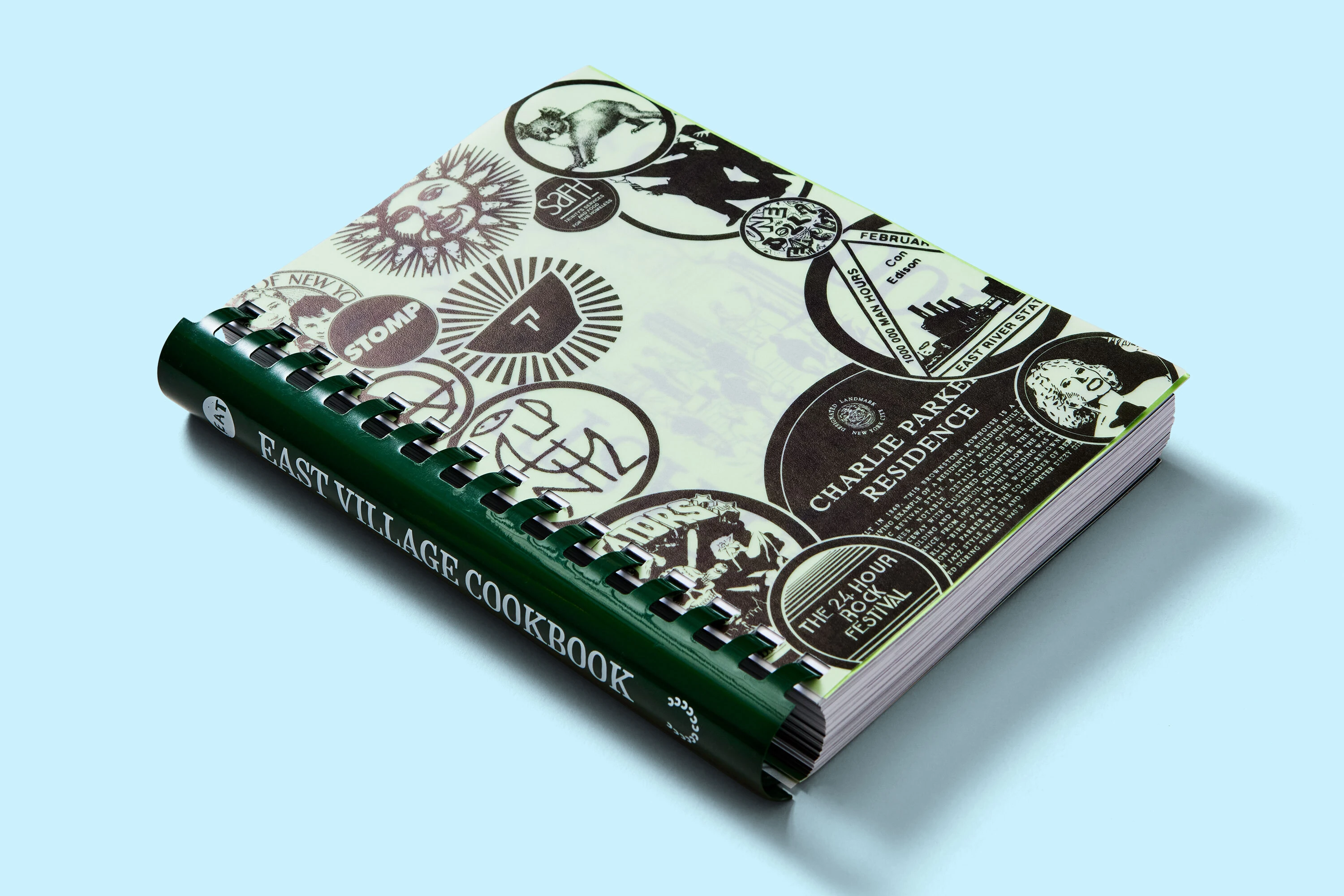
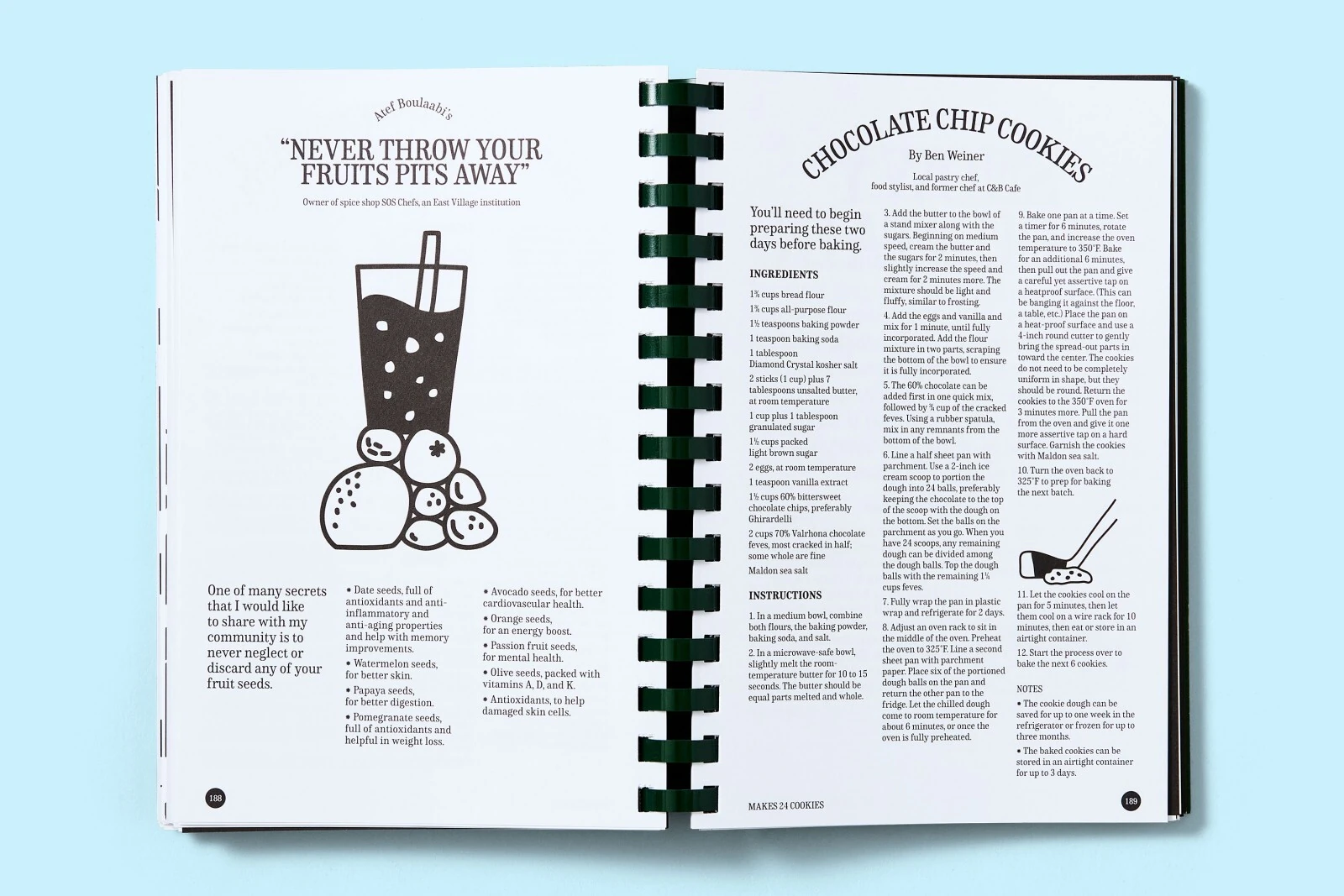
The result became The East Village Cookbook: nearly 200 recipes that read less like a collection and more like a map of a place. On one page, contributions from institutions like Katz’s, B&H Dairy and Ray’s Candy Store. On another, Michelin-starred chefs and... a grandmother's meatloaf? Alan Cumming's go-to in the kitchen? A neighbor's family dish?
The book was released at the very start of 2025 without a big marketing push or any sort of PR involvement, a true grassroots movement to raise money for the soup kitchen. And raise money they did: the 5,500 copies printed as part of the initial run sold out. A special mention goes to area branding agency Champions Design, who produced the physical book entirely pro bono.
As mentioned by New York Magazine, the tome become the year's top-selling cookbook at Kitchen Arts & Letters on the Upper East Side, a figure that catalyzed a renewed interest in the book across all forms of media in recent weeks.
According to Horowitz, hundreds of books are still being shipped every week and a half, all handled by volunteers. In the last week alone, the team brought in about $40,000. Overall, the project has raised roughly $160,000 for the soup kitchen, with 100% of proceeds post costs going directly to support it.
"I’d say 75% of sales now are from outside New York," Horowitz says, mentioning California, Canada, Europe and Australia. "It’s gone way beyond the neighborhood."
Those sorts of numbers clearly move the cookbook out of the East Village and into a interest arena, which is why publishers have approached the team about potential collaborations.
The irony is hard to miss: a hyper-local project, built without infrastructure or intention of scale, is now being courted by major publishing houses.
Horowitz is open about the next step: they're working on a possible second run with a broader release, perhaps alongside a big firm that could help print even more copies, faster. Don't worry, though, the intention is still to offer all proceeds to Trinity's soup kitchen.
As devastating as COVID was—and despite the fact that we’re still grappling with its aftermath—it’s hard not to see something hopeful in what came out of it. Projects like this one, born out of isolation and uncertainty, are a reminder of what makes New York City so damn special in the first place: the people who call it home and, of course, what they're eating.