

[title]
If Christopher Nolan’s The Odyssey has you suddenly brushing up on Homer, New York has a considerably older version of the story waiting for you—roughly 2,300 years older, in fact.
The Metropolitan Museum of Art has put the oldest surviving fragment of The Odyssey back on public display, giving visitors a chance to see a piece of the epic poem dating to around 285–250 BCE. The remarkably ancient bit of papyrus is now on view in Gallery 162 in the Met’s Greek and Roman Art galleries after spending an extended period off display.
And while calling it a “copy” might conjure up something you could actually sit down and read, temper those expectations. The artifact is a papyrus fragment measuring just over 7 inches, containing lines from Book 20 of Homer’s epic. It was made in Ptolemaic Egypt and written with a combination of charcoal and water on papyrus. The fragment is particularly important because it’s the first early Ptolemaic fragment of The Odyssey ever discovered. Even more intriguing: it contains three lines that don’t appear in the standard version of the poem we know today.
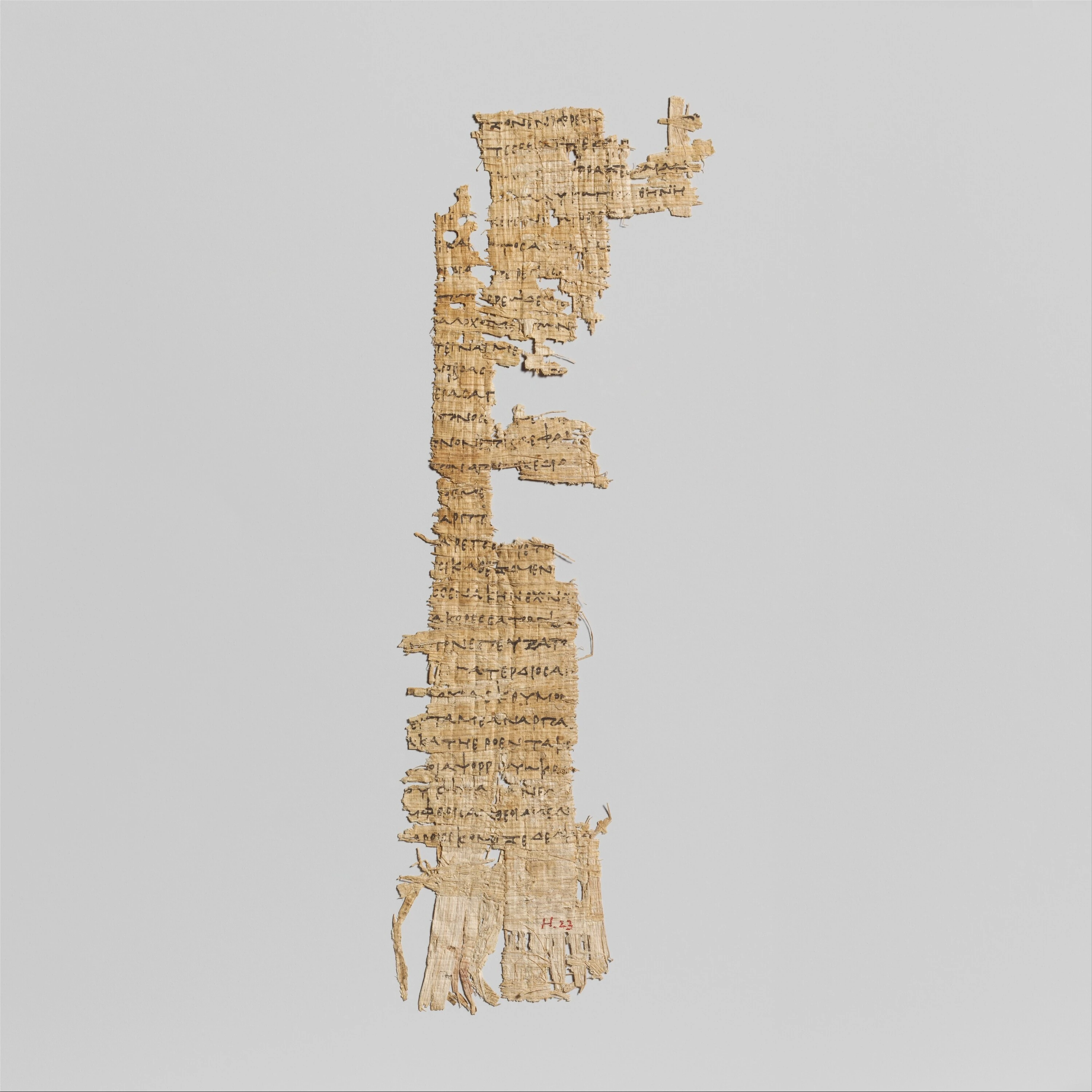
That discrepancy offers a glimpse at how The Odyssey evolved long before it became the fixed text we've read for generations. The poem, composed around the eighth century BCE, started as an oral tradition, passed down and performed by bards rather than pulled from a bookshelf.
In a recent Met video, Sean Hemingway, curator in charge of the museum’s Department of Greek and Roman Art, explains that bards would “occasionally embellish and have different versions of these stories,” helping account for those extra lines. Visitors can see both the front and back of the fragment in its display.
The papyrus is also part of a larger Odyssey-themed journey through the Met’s collection. The museum has highlighted seven works connected to Odysseus and his adventures, including a tiny carnelian scarab depicting the Trojan Horse, a fifth-century BCE bowl showing Odysseus pursuing Circe and a Roman fresco featuring the Cyclops Polyphemus.
Now you can spend the afternoon with Odysseus without sitting through a blockbuster—or embarking on a perilous 10-year voyage home—just head to Gallery 162.