[category]
[title]
If you're looking for a piercing studio with fine jewellery and expert knowledge, this is the place for you


I’ve been wanting a helix piercing for a long time. The main things holding me back? Pain – and all the horror stories about piercings getting infected, bleeding endlessly or taking forever to heal.
I'd like to justify that my fear wasn't completely unfounded. I got my first earlobe piercings when I was about 14 at a chain-piercing shop. There was no consultation process. I just picked a piece of jewellery, got my ears stapled, and was handed a bottle of alcohol for aftercare before being sent on my way. After a couple of allergies to cheap metals and intense itching, I eventually decided to let the piercings close up, and with it, any further desire to get more piercings.
So when I heard of a new piercing studio on Club Street that focused on healing as much as aesthetics, I was sceptical but also hopeful. I booked a session with Melin, the founder of Eir Piercing – named after the Nordic goddess of healing – to find out more about what makes it different from the other piercing studios I'd sworn off years ago.
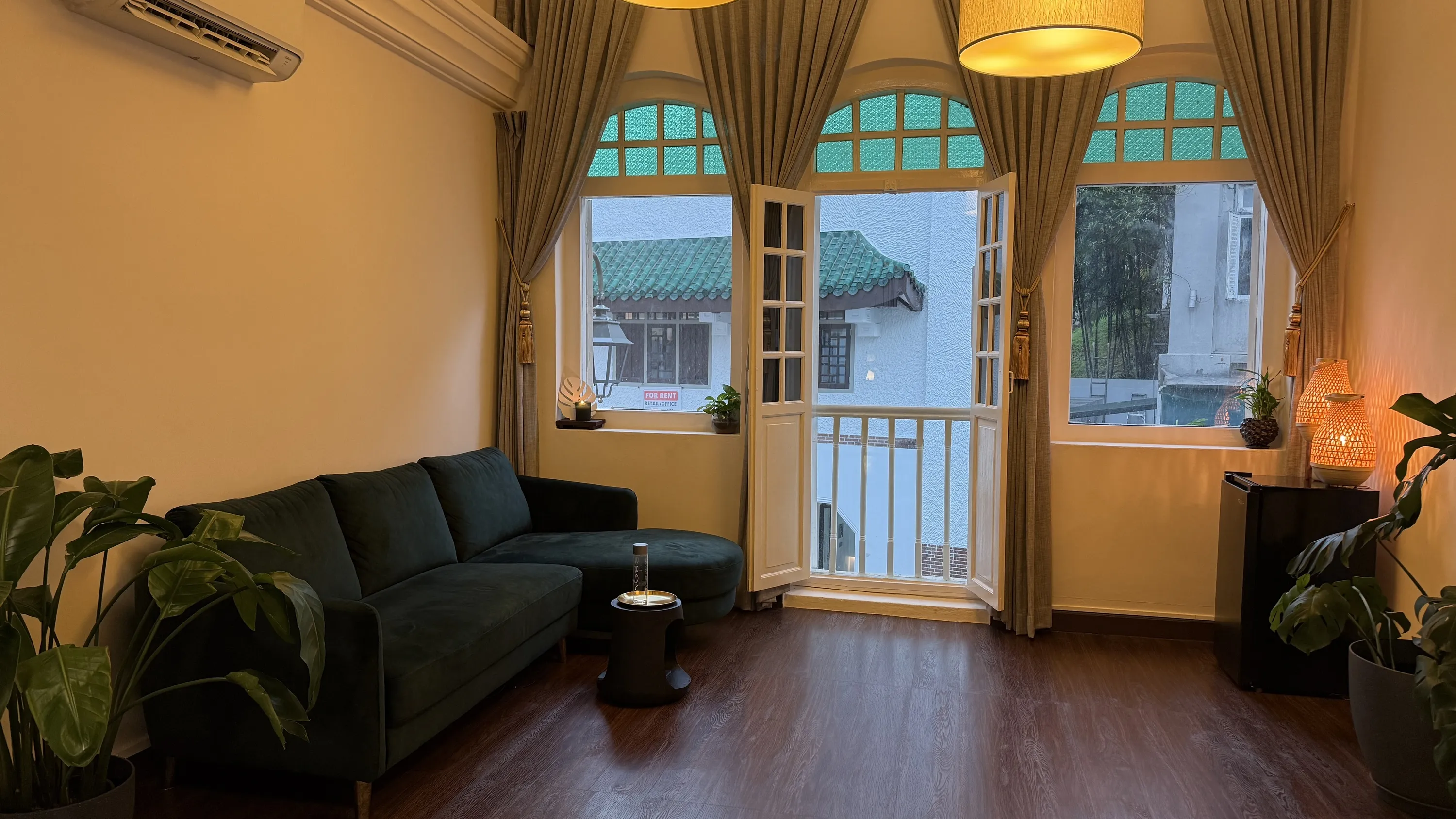
Eir’s second-floor studio feels nothing like a traditional piercing shop or grab-and-go jewellery space. The studio is expansive, calm and flooded with natural light. By the windows, there’s a large green couch where Melin welcomes you with still or sparkling water and begins with a proper consultation.
“People usually come in with an idea of where they want to get pierced, or jewellery they’ve already seen on my website or socials,” she explains.
I came in wanting a left helix and a right conch piercing, but Melin advised doing one side at a time, not just for better healing, but also so I could actually sleep comfortably at night. That kind of practical advice, even if it means losing a sale, sets the tone for the whole experience.
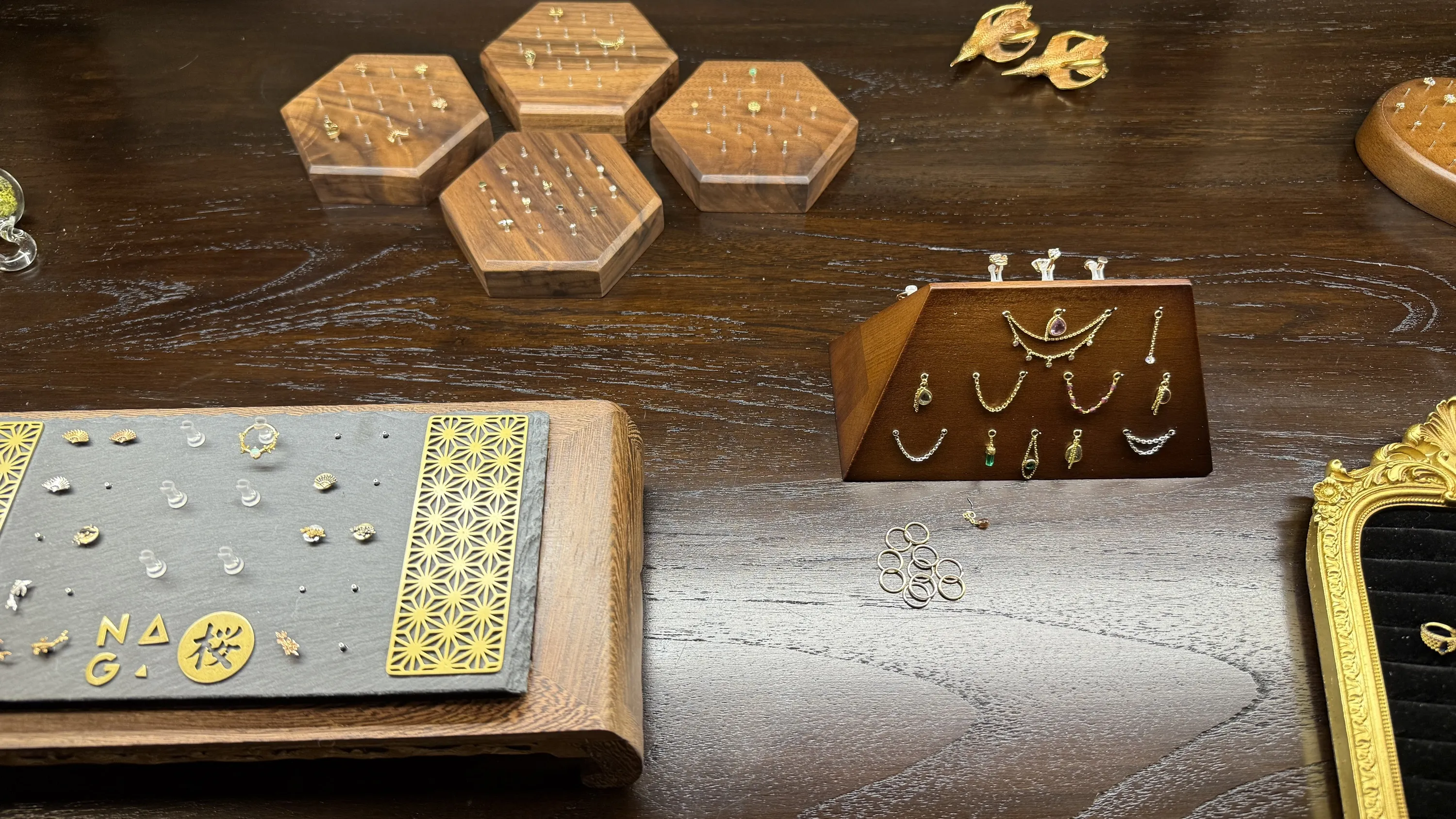
From there, we moved to the centre of the studio, where a large glass display showcases fine jewellery curated by Melin, alongside pieces she designs in-house. Jewellery ranges widely depending on design, stones and materials: gold pieces start from around $120 and can go into the thousands for solid gold, gemstones and custom-made designs.
Imported jewellery is made from 14K or 18K gold and implant-grade titanium, while everything crafted in-house uses 18K recycled gold. Nickel, steel, plated jewellery and low-grade alloys are completely avoided, making it safe for people with metal allergies. Melin also uses nitrile gloves only, as latex allergies are more common than people realise.
The selection is intentionally limited. “I curate jewellery the way galleries curate art,” she tells me. “Small editions, one-of-a-kind pieces. Every order is different.” While Eir occasionally shares pieces on Instagram, the best way to see what’s available is in-studio, because things move quickly.
Piercing fees are separate from jewellery and vary by placement: $70 for earlobes, $70–$90 for most standard ear cartilage, $90 for advanced ear cartilage (placements like daith, rook, snug, anti-tragus, vertical conch, forward helix and other technically complex cartilage piercings) and $120 for industrials (two cartilage piercings connected by a single bar).
And if you change your mind after the initial consultation? That's totally fine. Even if you decide not to get pierced at all, Melin prioritises consent over everything else, which is also why Eir has a no-kids policy.
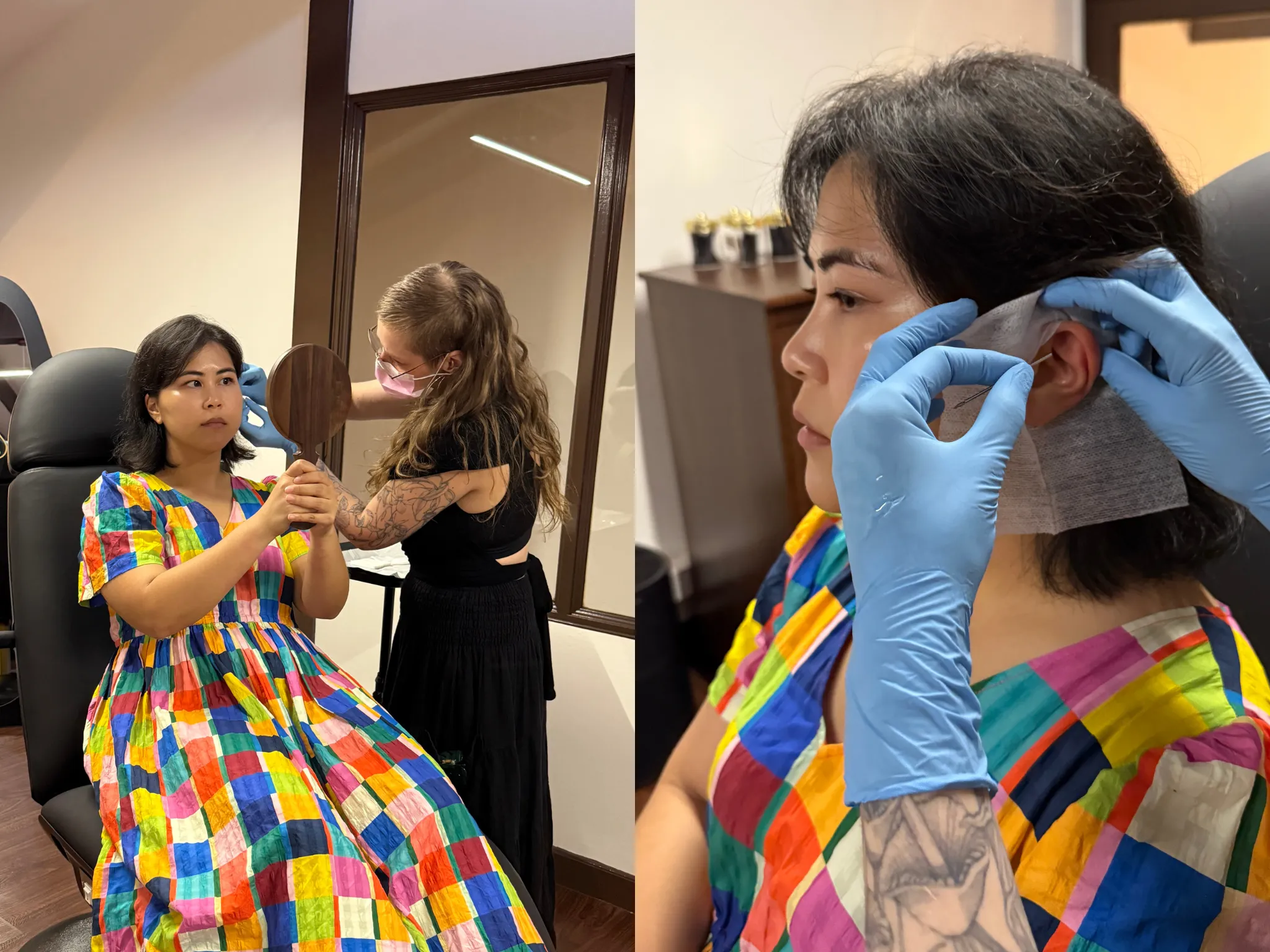
After filling in a couple of forms, I'm led upstairs to the third floor where the piercing happens. Melin shows me how my selected piece of jewellery is sterilised using a medical-grade steam autoclave (a Statim 2000, the same class of equipment used in hospitals and surgical clinics). Tools and jewellery are sterilised at 134°C, with daily testing and strip indicators used in every cycle to confirm proper sterilisation. Watching the colour-change strip emerge is also strangely reassuring.
Piercings are done using single-use, sterile, disposable needles only. The entire piercing process is disposable, minimising cross-contamination risk from start to finish.
Melin also has over a decade of experience piercing with luxury brands like Maria Black and Maria Tash, and has opened multiple studios internationally before relocating to Singapore to build Eir. You can rest assured that you're in safe hands.
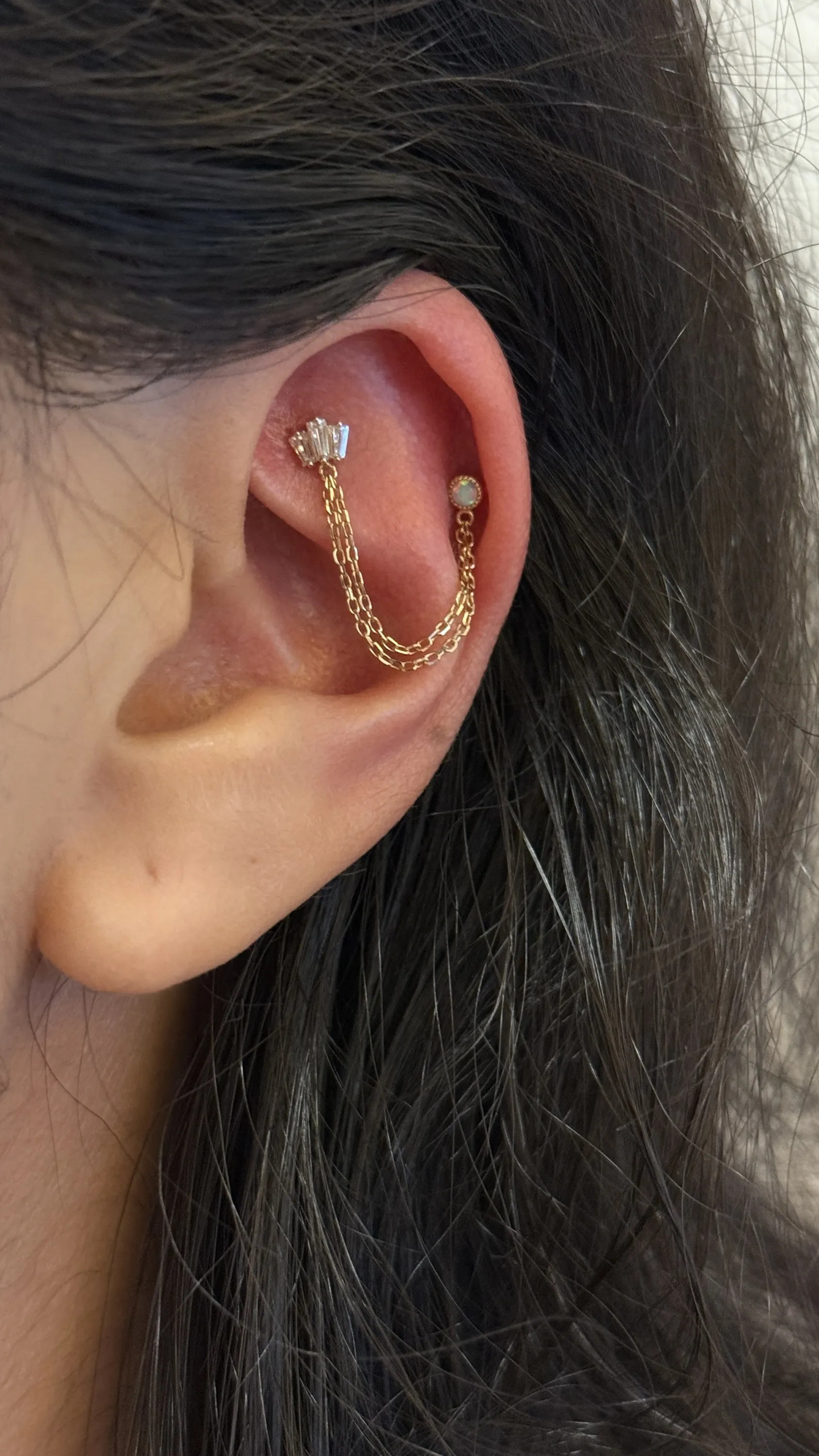
Before anything happens, there’s another consultation where placement is carefully mapped. I initially planned to pierce only my helix, but after seeing how the jewellery sat, we decided to add a flat piercing as well and move the helix placement so that both piercings would sit in a way that's visible to me in the mirror.
Short answer? A two out of 10. For me, at least.
Everyone’s pain tolerance is different, but this was far easier than expected. Melin mentioned that lobe piercings we get as kids often feel worse simply because we’ve never experienced pain the way adults have. She also shared that factors like how well you slept the night before, where you might be on your menstrual cycle, and whether or not you've eaten recently all play a part in how you experience pain.
The flat piercing felt like a dull ache that quickly subsided once a cold compress was applied. The helix was sharper and a little spicier but still completely manageable. Melin says most clients are surprised by how easy it feels and often start planning their next piercing immediately.
Aftercare is where Eir really stands apart. You’re given an airtight sterile saline spray and instructed to use it before and after showering, daily. Melin advises not to use any DIY remedies, including oils, ointments or alcohol. It's usually when people decide to go off-script that issues might occur.
Despite the horror stories, Melin says only two clients out of thousands she has pierced have ever had infections – both due to ignoring aftercare instructions. One went to a mud rave. The other used a non-airtight cleaning solution stored in a bathroom, which led to bacterial growth. Moral of the story: follow instructions, and you’ll be fine.
During healing, you should avoid soaking piercings in pools or the ocean, touching or rotating the jewellery, sleeping directly on fresh cartilage piercings, or applying lotions and soaps directly to the area.
Expect the piercing to feel warm on day one. Redness is also totally normal. By the end of the first week, tenderness largely subsides and full healing for helix piercings takes about six months.
There’s also a check-in about a month later to assess healing and shorten the jewellery if needed, a crucial step that many studios skip.
It’s ideal for first-timers, people re-piercing after bad experiences, and anyone who treats piercings as a form of self-expression rather than an impulse decision. Many clients come specifically for curated ear styling and long-term planning, some even fly in from places like Dubai to continue their piercing journey with Melin.
Two weeks in, my piercings feel great, look incredible and I’ve had zero issues sleeping, even when I accidentally roll onto my pierced side in the middle of the night. Now, all I have to do is wait six months for it to fully heal and then I’ll be back for that right conch.
Eir Piercing
Address: 42A Club St, Singapore 069420
Opening hours: Tue-Sat 11am-7pm
Instagram: @eir.piercing
Website: www.eirpiercing.com
Discover Time Out original video