

[title]
Watch out, Londoners. RMT union tube drivers are striking on the London Underground. After a first strike on November 26-27, more walkouts are planned for December, January and February.
Seven more 24-hour strikes are taking place across 16 days between December 2026 and February 2027, impacting several dates in the lead up to Christmas. Train drivers who are members of the Rail, Maritime and Transport (RMT) union are taking action to protest ‘attacks on working conditions’. This is a separate dispute from that of the TSSA union, which walked out on November 20-21 on the Piccadilly and District lines.
Worried about more industrial action hitting the capital? Here’s everything you need to know, from the confirmed walk-out dates to the expected scale of the impact.
RECOMMENDED: When are the next UK-wide train strikes? What you need to know about nationwide industrial action.
PLUS: London Tube and Train Disruption This Weekend: Full List of Closures for November 28-29 2026.
When are the next London tube strikes?
London tube strikes are taking place across November and December 2026, and January and February 2027.
Each of the RMT’s 24-hour strikes will start at midday and end the following day. Here are the RMT walk-out start dates to watch out for:
- Thursday December 17 2026
- Saturday December 19 2026
- Monday January 4 2027
- Wednesday January 6 2027
- Wednesday February 17 2027
- Tuesday February 23 2027
- Thursday February 25 2027
What time do the tube strikes start and end?
The rest of the RMT strikes are likely to impact the following times:
- December 17 at 12pm – December 18 at 11.59am
- December 19 at 12pm – December 20 at 11.59am
- January 4 at 12pm – January 5 at 11.59am
- January 6 at 12pm – January 7 at 11.59am
- February 17 at 12pm – February 18 at 11.59am
- February 23 at 12pm – February 24 at 11.59am
- February 25 at 12pm – February 26 at 11.59am
During walk-outs, the impact of strikes is felt longer than the 24-hour period. Expect services to slow down before industrial action and wind back up again after.
Which London Underground lines are affected by strikes?
During major walk-outs, the entire tube network is affected, whether by delays and cancellations or partial and full-line closures. As a reminder, here’s a list of every London tube service:
- Bakerloo
- Central
- Circle
- District
- Hammersmith & City
- Jubilee
- Metropolitan
- Northern
- Piccadilly
- Victoria
- Waterloo & City
Find a full guide to getting around London during the RMT tube strike here.
Not all lines are always down in every strike – especially when ASLEF union members do not all walk out.
The Elizabeth line is not a London Underground service.
What are the chances of London Underground strikes being called off?
It’s possible that strikes may be called off. Industrial action earlier in the year was suspended by the union and the RMT and TfL could strike a deal before all industrial action takes place.
How to get around London during a strike
TfL recommends that Londoners allow more time for their journeys during the strikes. The Elizabeth line, DLR, London Overground, National Rail trains, buses and trams, are working as normal.
As we found in the April and June 2026 strikes, e-bike hire schemes prove particularly popular during periods of industrial action.
How long will the London train strikes last?
The current period of industrial action is set to end on February 26 2027. However, more strikes could be called if no agreement is reached.
Why are there new tube strikes?
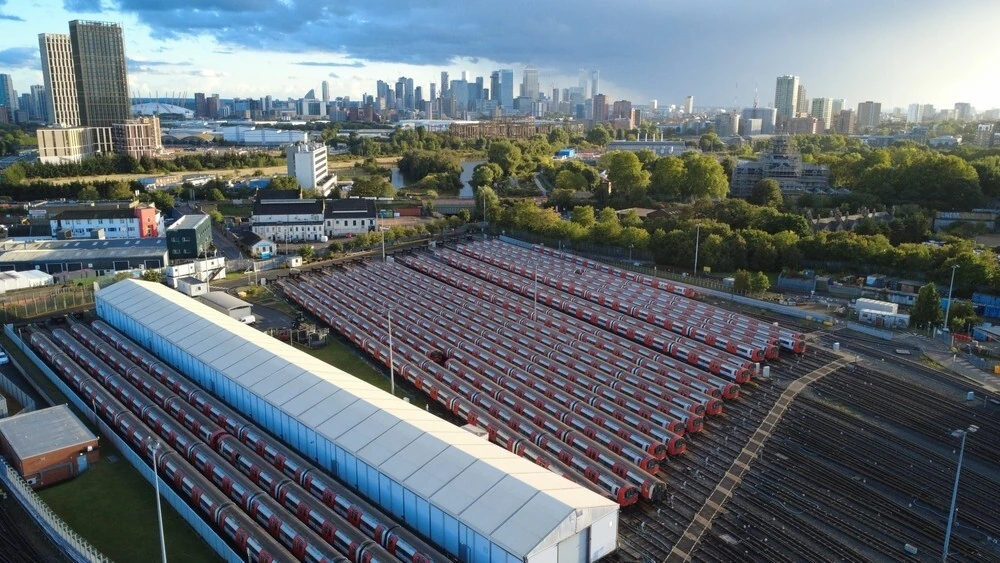
The RMT says that the strikes are due to ‘plans to introduce a so-called voluntary four-day working week alongside a new Trains Modernisation Framework’.
The union warns that ‘the proposals would force drivers to surrender hard-won protections regardless of whether they choose to work four or five days a week’, arguing that drivers face more time driving trains, earlier starts and later finishes. It also says that drivers could be displaced from their current depots, and that it is concerned that the proposals are paving the way for ‘hundreds of job cuts’.
What have union and rail bosses said about the strikes?
RMT general secretary Eddie Dempsey said: ‘London Underground is attempting to dress up a wholesale attack on drivers’ working conditions as a voluntary four-day week.
‘But there is nothing voluntary about a scheme that forces drivers to give up existing protections whether they work four days or five, and threatens those who refuse with displacement from their depots.
‘Our members are being asked to spend more time driving trains, accept longer and more unpredictable shifts and surrender agreements that have been negotiated and defended over many years.
‘This is not about improving work-life balance. It is about squeezing more work out of fewer drivers while giving management greater flexibility at the expense of our members.
‘RMT is not opposed to a genuine four-day working week that benefits our members, but we will not accept it being used as a vehicle for job cuts, intensified working and the erosion of terms and conditions.
‘London Underground must withdraw these damaging proposals and engage seriously with the union to reach a negotiated settlement.’
Nick Dent, director of customer operations for London Underground, said: ‘This will give our colleagues a real, meaningful choice on their working pattern without having to change where they work.
‘This will also mean less time at work for Tube drivers, while delivering a more efficient, reliable Tube service for our customers.’
Finn Brennan, ASLEF’s full-time organiser on London Underground, told the BBC: ‘We are surprised that the RMT has, once again, decided to take strike action to try to prevent Underground drivers moving to a four-day week on a voluntary basis.
‘The voluntary four-day week gives Tube train drivers an extra 35 days off every year with rosters based on a 34-hour week in return for some changes to working conditions and moving to electronic, rather than paper-based, systems for booking on for duty.
‘Management have agreed that anyone who wants to keep working a five-day week will be able to do so without suffering any detriment, and we will be holding them to that.
‘A strike designed to stop people having the choice of a shorter working week and more time off is a strange choice to make.’
When are the next London Overground strikes?
There are no strikes currently planned for the London Overground network.
Will strikes affect the Eurostar?
Eurostar is not expected to be affected by any strike action.
Will the Elizabeth line be on strike?
No Elizabeth line strikes are currently planned. The purple line runs normally on tube strike days, though it is usually much busier than usual.
How will the strikes affect London airports?
Tubes and trains are rarely on strike at the same time, so travellers can usually get the other, non-striking one to the airport. For example, if you plan on using the on-strike Piccadilly line to get to Heathrow, you can always use the Elizabeth line or Heathrow Express.
Coaches frequently run from central and outer London areas by the likes of National Express. All airports are also, obvs, accessible by road – whether you’d like to drive or get a taxi. Expect potentially higher levels of traffic during strike days.
Timeline of previous London tube strikes
Here’s a lowdown of all the tube strikes that have taken place in the last few years.
- June 6-7 2022
- June 21-22 2022
- August 19-20 2022
- November 10-11 2022
- November 25 2022
- March 15-18 2023
- September 5-12 2025
- April 21-22 2026
- April 23-24 2026
- June 2 and 4 2026
- November 20 and 21 2026
- November 26-27 2026
Bus strikes
While east London has been hit by bus strikes over the past year, no more walk-outs are currently planned.
Get the latest and greatest from the Big Smoke – from news and reviews to events and trends. Just follow our Time Out London WhatsApp channel.
Stay in the loop: sign up to our free Time Out London newsletter for the best of the city, straight to your inbox.