[category]
[title]
Artist Paul McCarthy’s ‘Chocolate Factory’ is both inaugurating and benefitting Chinatown’s soon-to-open Performance Art Museum.

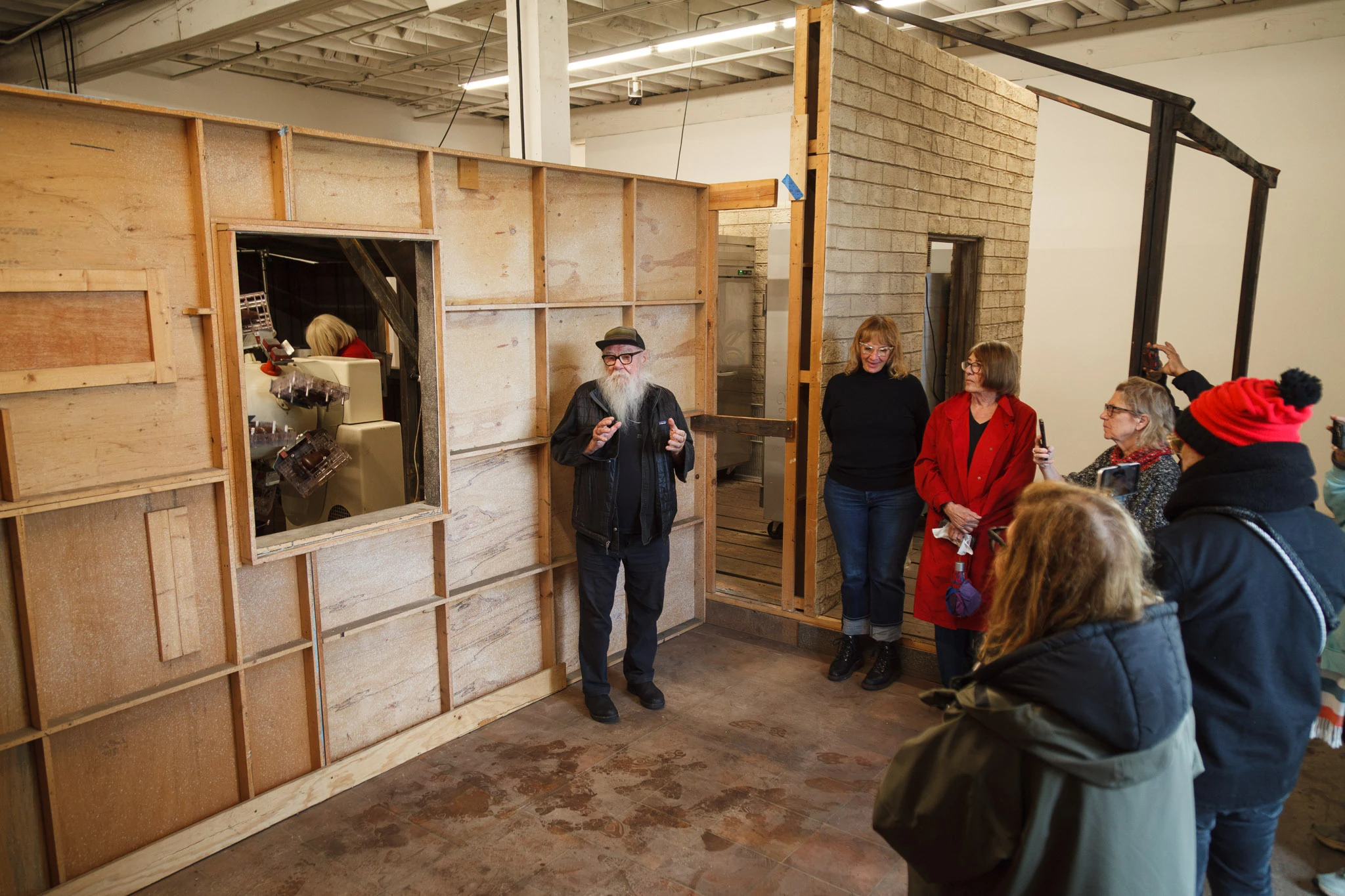
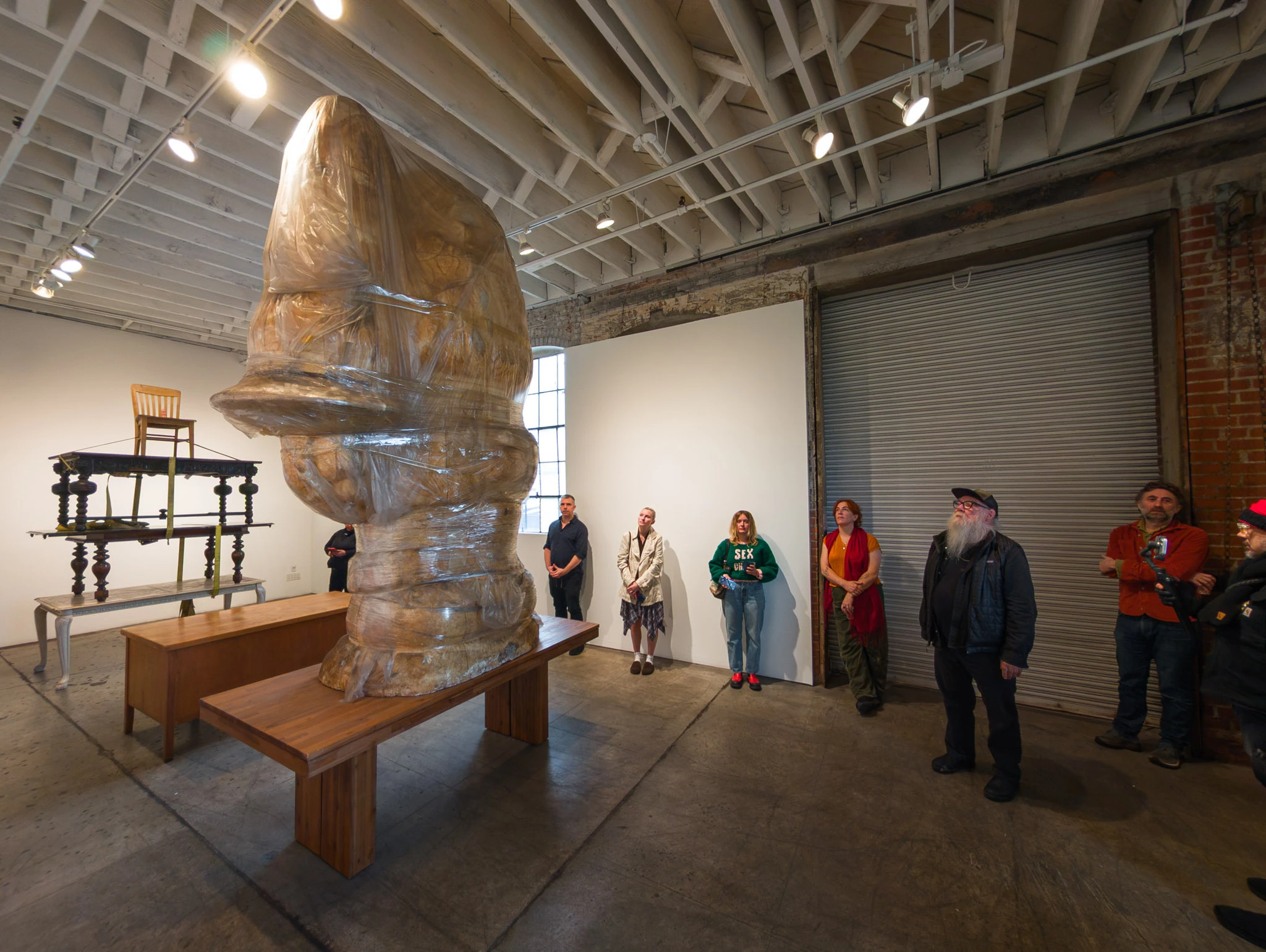
I had a lot of questions before visiting artist Paul McCarthy’s (re-read that name—no, it’s not the Beatle) new factory-like installation in Los Angeles. Like, why butt plugs? Why Santa? And why chocolate? And, you know, after an artist-led walk-through of the consumption-prodding piece, I actually came back with surprisingly matter-of-fact answers to all of those questions.
But maybe my most important takeaway: L.A. has a new museum that’s about to open, and this inaugural installation is a vital avenue for funding its future. After spending the past three years as a roving institution, the Performance Art Museum is almost ready to debut its stationary home inside of a 9,000-square-foot former artist studio in Chinatown, about a block east of the neighborhood’s Metro stop. The museum, which is dedicated to advancing the visibility, legacy and scholarship of artists working in performance, doesn’t fully open until January, but starting today and running through December 26, you can get an early look with the arrival of McCarthy’s Chocolate Factory—and even order a limited edition chocolate sculpture that benefits the museum.
“I keep saying, what better way to inaugurate a warehouse that was intended to be a factory 120 years ago than with a factory?” museum director Samuel Vasquez remarks.
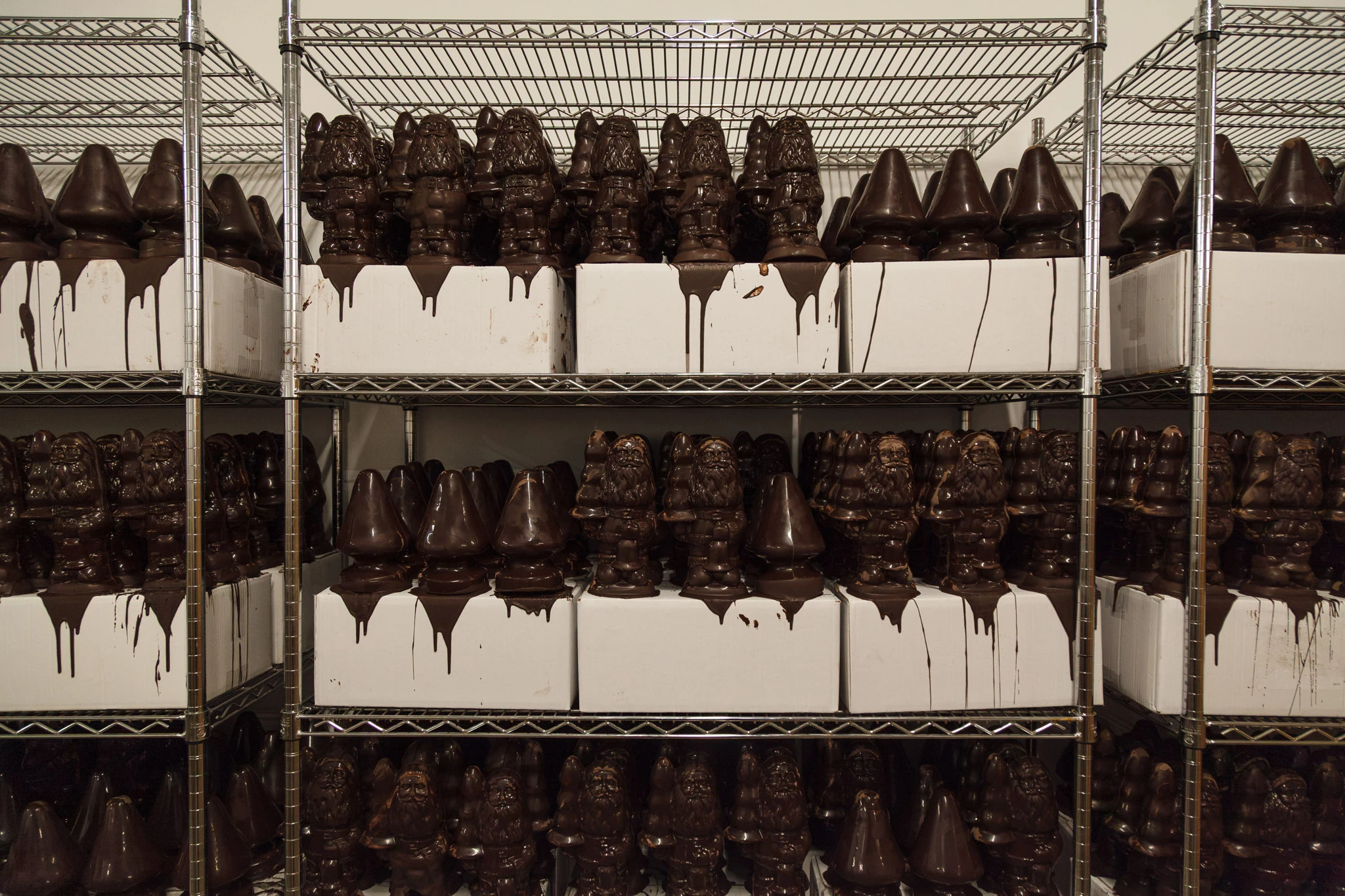
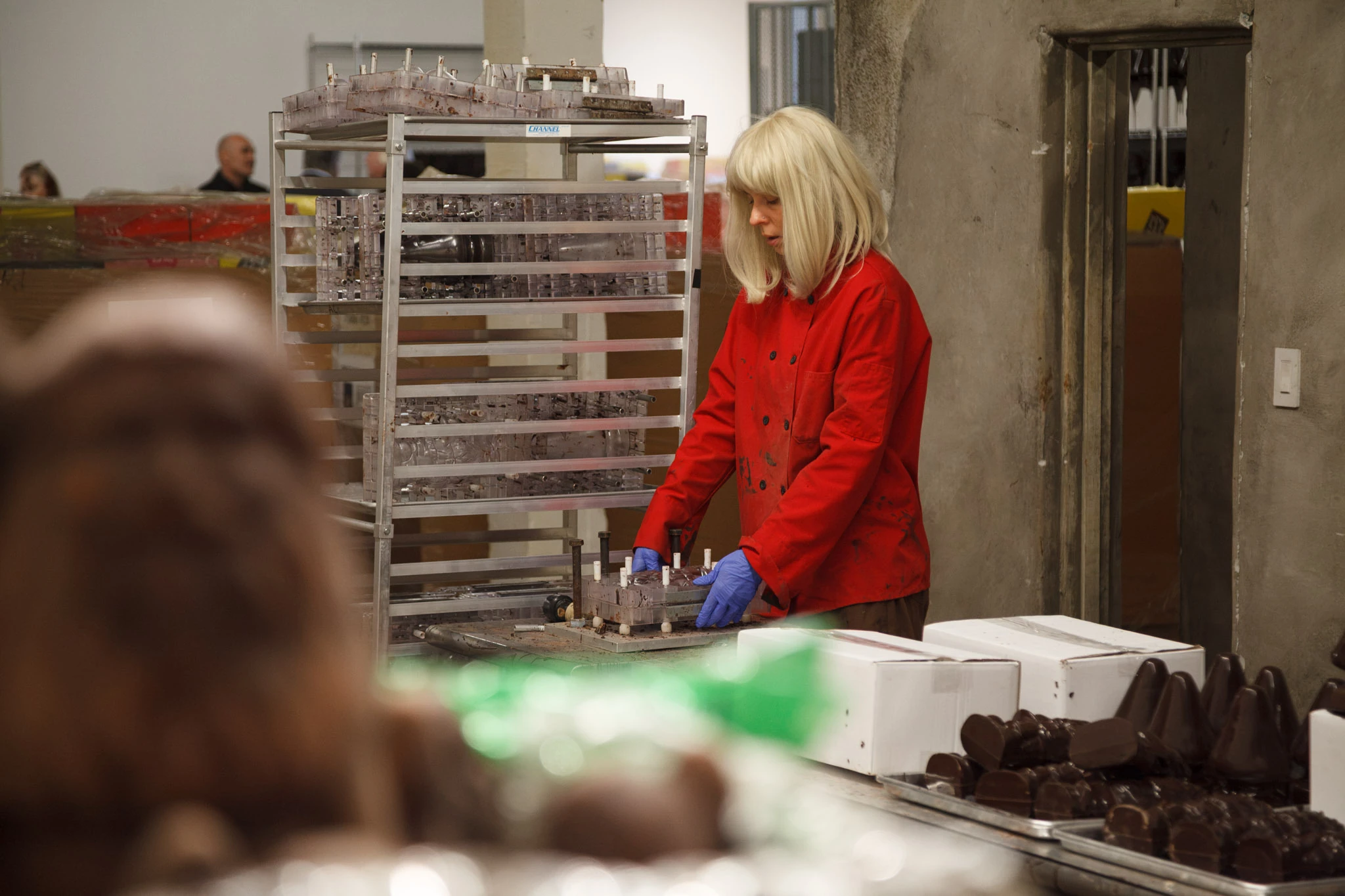
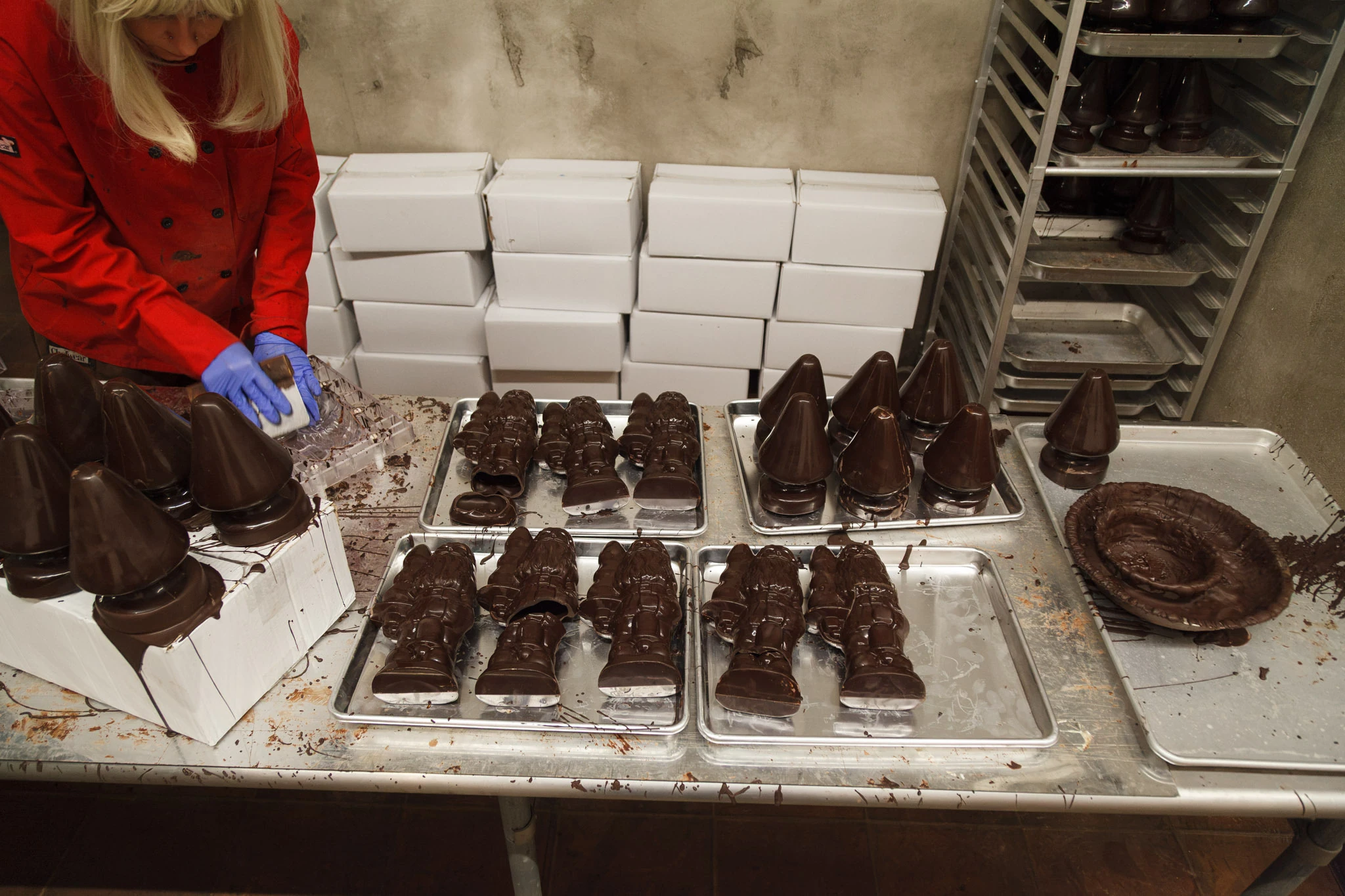
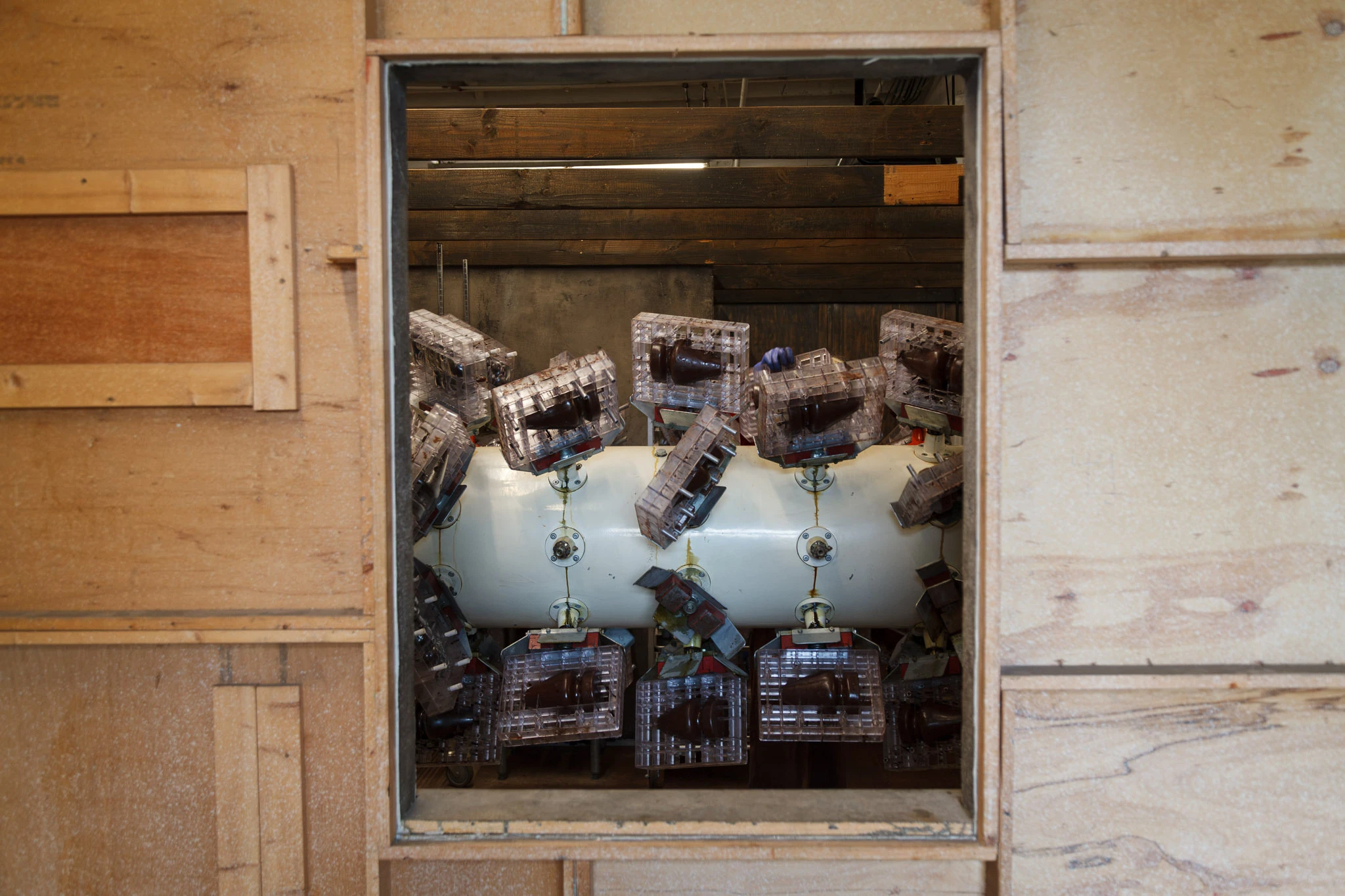
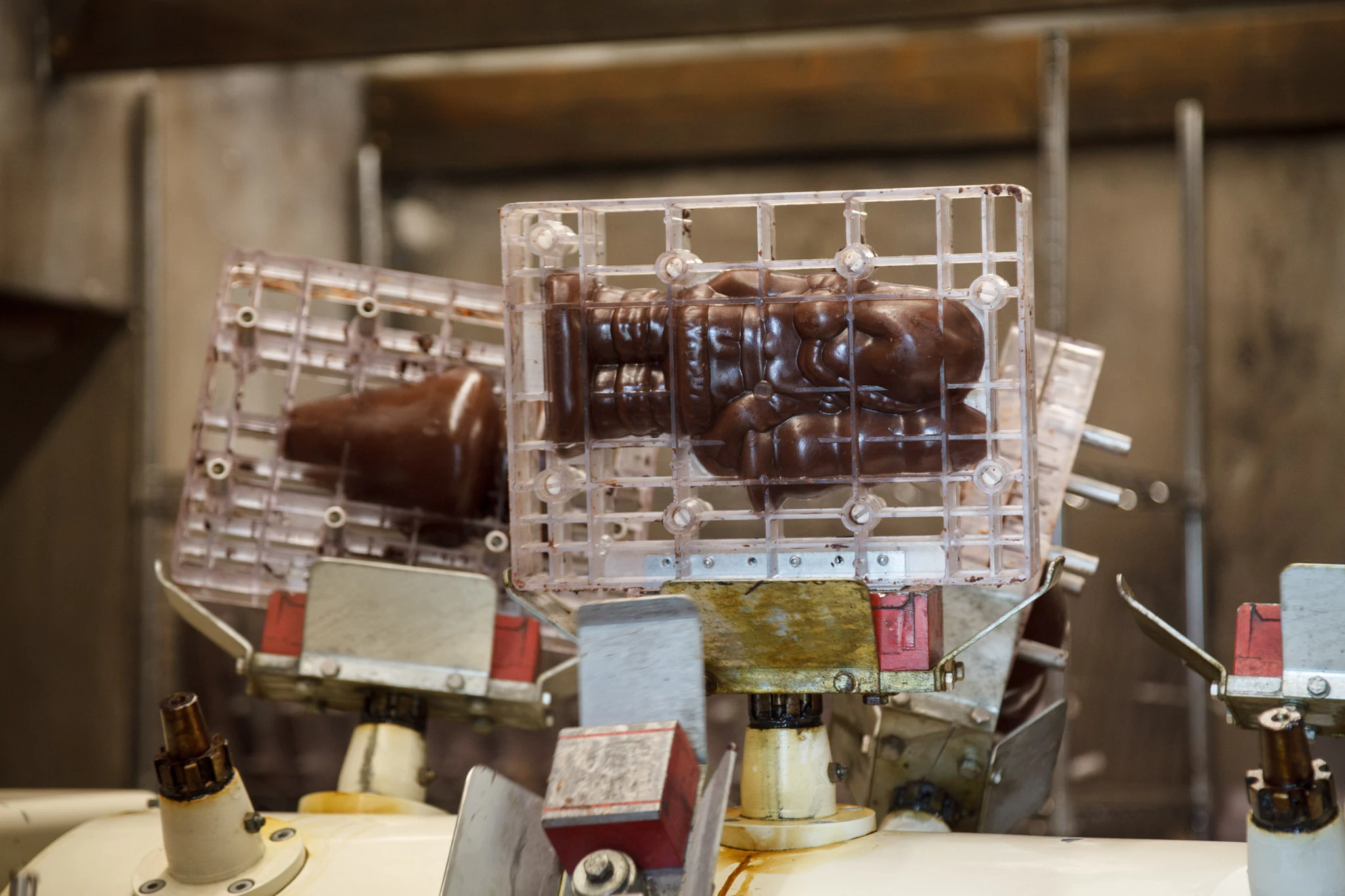
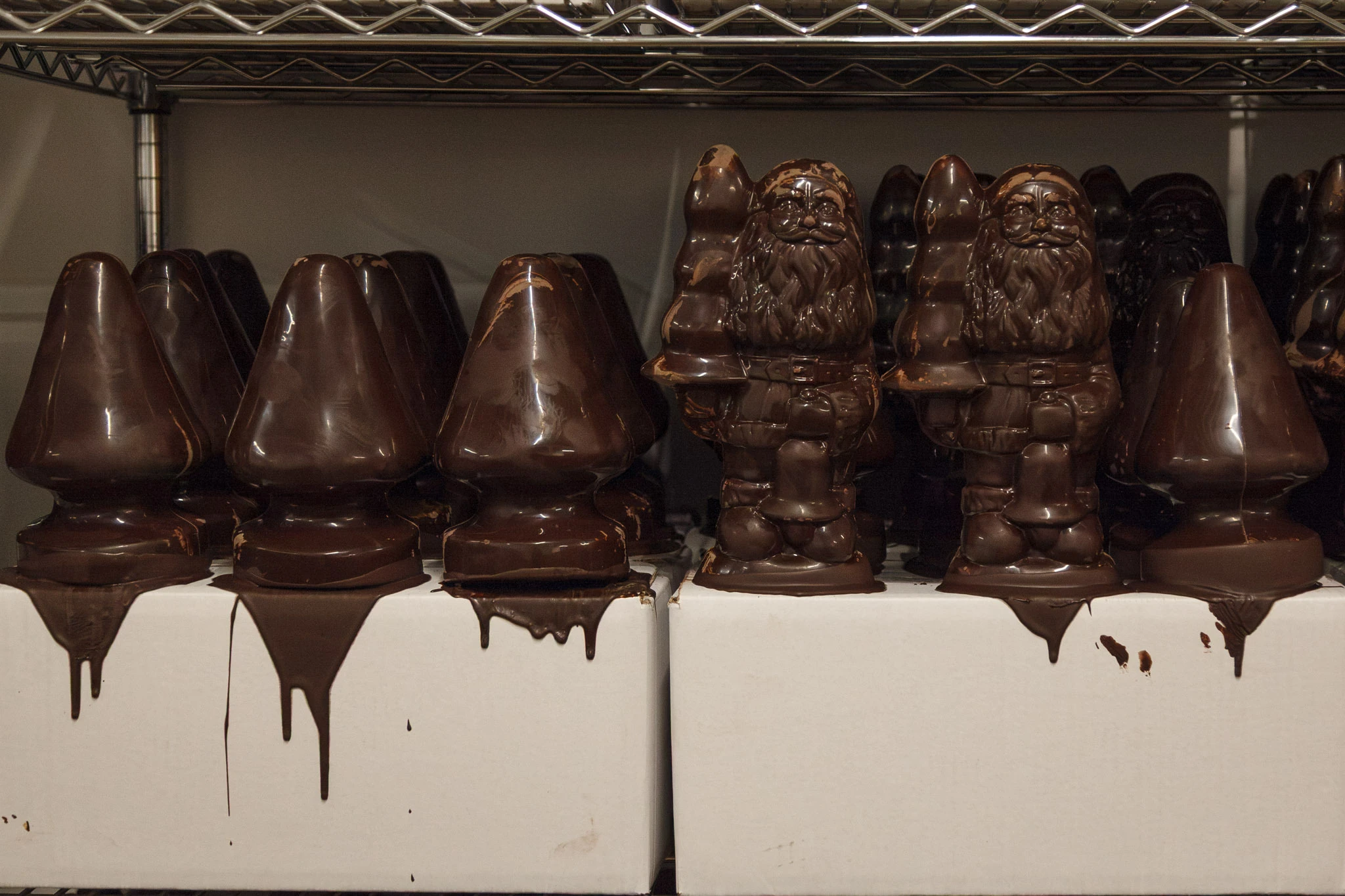
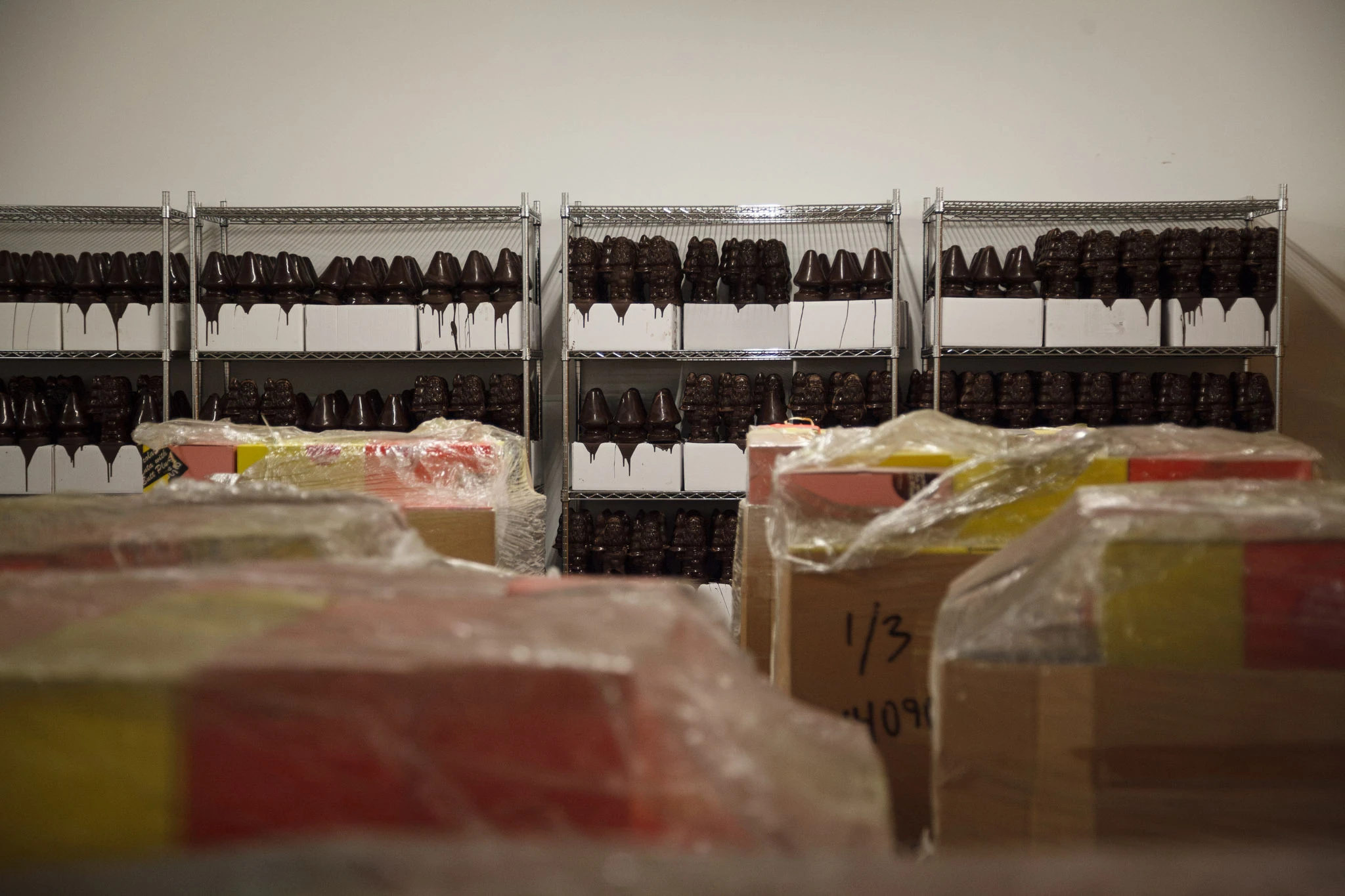
It just so happens that this factory is turning out about 400 sculptures a day made out of chocolate fabricated in two varieties: Santa with Tree Plug, which features Santa Claus holding a tiered Christmas tree–shaped butt plug, and Tree Plug, a comparatively squat plug all by its lonesome. Performers in red double-breasted chef jackets and blond wigs toil away in a setting that’s a little less Willy Wonka pure imagination and a little more (intentionally) Willy’s Chocolate Experience forlorn factory. They fill molds with chocolate, tend to them on a mesmerizing mechanical spinner and then repetitively crack open those casts. Over time, the finished chocolate pieces will fill and clutter the Chinatown warehouse—at least to the point that the fire marshal will allow. Though the bulk of the shelves were still relatively sparse during my early-run visit, the sweet smell of chocolate in the gallery was already quite potent.
While these figurines are forged out of somewhat low-grade chocolate in a space that’s not fit for consumption, Beverly Hills–based andSons Chocolatiers is creating edible editions—if you so choose to eat them rather than just display them—of the sculpture in a food-grade production kitchen. Based on the same McCarthy-designed molds, they’ll be producing 1,500 Santas and 500 plugs out of 62% bittersweet dark chocolate. Each sells for $200, available for free pickup at the museum or $25 to ship around the country, and the proceeds will benefit the Performance Art Museum.
“I just kind of jokingly said, well, I’ve got a chocolate factory,” McCarthy remembers telling Vasquez as the museum was still taking shape.
So back to the promised “why” of it all: McCarthy has been working in the realm of absurdist parodies since the 1970s. It was around then when, as a student, he decided to put a butt plug on a chair and refer to it as “Brancusi on a pedestal,” a reference to the famous Romanian artist’s finish-obsessed, often-amorphous smooth sculptures. Fast forward a few decades: The piece had broken, and while fixing it at his desk, McCarthy noticed that the plug fit perfectly onto the tree part of a Santa Claus figurine that a friend had given him.
That accounts for the plug and Santa portion of the piece, but what about the chocolate factory? McCarthy says he’s always created works about spinning, delirium and losing a sense of self. So when he encountered a chocolate mold–spinning machine in Zurich, he was so taken aback by its beauty that he bought one of the industrial contraptions for himself.
All of those elements aligned in the aughts, as McCarthy became fascinated by the consumerism of art during an era when galleries and the art market were booming. He teamed up with New York’s Maccarone gallery to bring a factory installation to life—and realized his hodgepodged Santa would be the perfect size.
“I wanted to make a chocolate figurine that filled the gallery, like thousands of them, and they would be all over the floor and in the bathrooms and on the desk,” he says.
For that first staging of Chocolate Factory in 2007, the gallery was converted into a food-grade facility and sold chocolate figurines on-site. At the time, McCarthy thought it might be the start of a satirical franchise; after its run, somebody else could buy the factory, make their own sculptures and try to operate their own business—something he compares to a joke version of McDonald’s franchises. He even considered seasonal variations of the factory, going so far as to make mock-ups for additional holidays, like a pumpkin for Halloween and a turkey for Thanksgiving.
The factory and its chocolate figurines went into storage (you’ll see those archival crates lined up inside of the Chinatown space) until 2014, when a second iteration of Chocolate Factory arrived at the Monnaie de Paris, inside a historic French mint. This time around, it wasn’t possible to create food-grade figurines on-site, so the piece morphed into a configuration that’s carried over to L.A.: two iterations of the sculptures to merely look at that were created in the factory, with food-grade ones crafted off-site to be sold.
“It never was about making money,” McCarthy says about the retail component. “The piece itself is too expensive, the chocolate alone is too expensive.”
Instead, it’s about how an innocent mascot of childhood reverie and an abstract object of sexual desire both have commercial motivations attached to them, and when combined and re-created in chocolate, put a spotlight on production and consumption. That and, you know, that a factory of chocolate butt plug–toting Santas is just amusingly absurd.
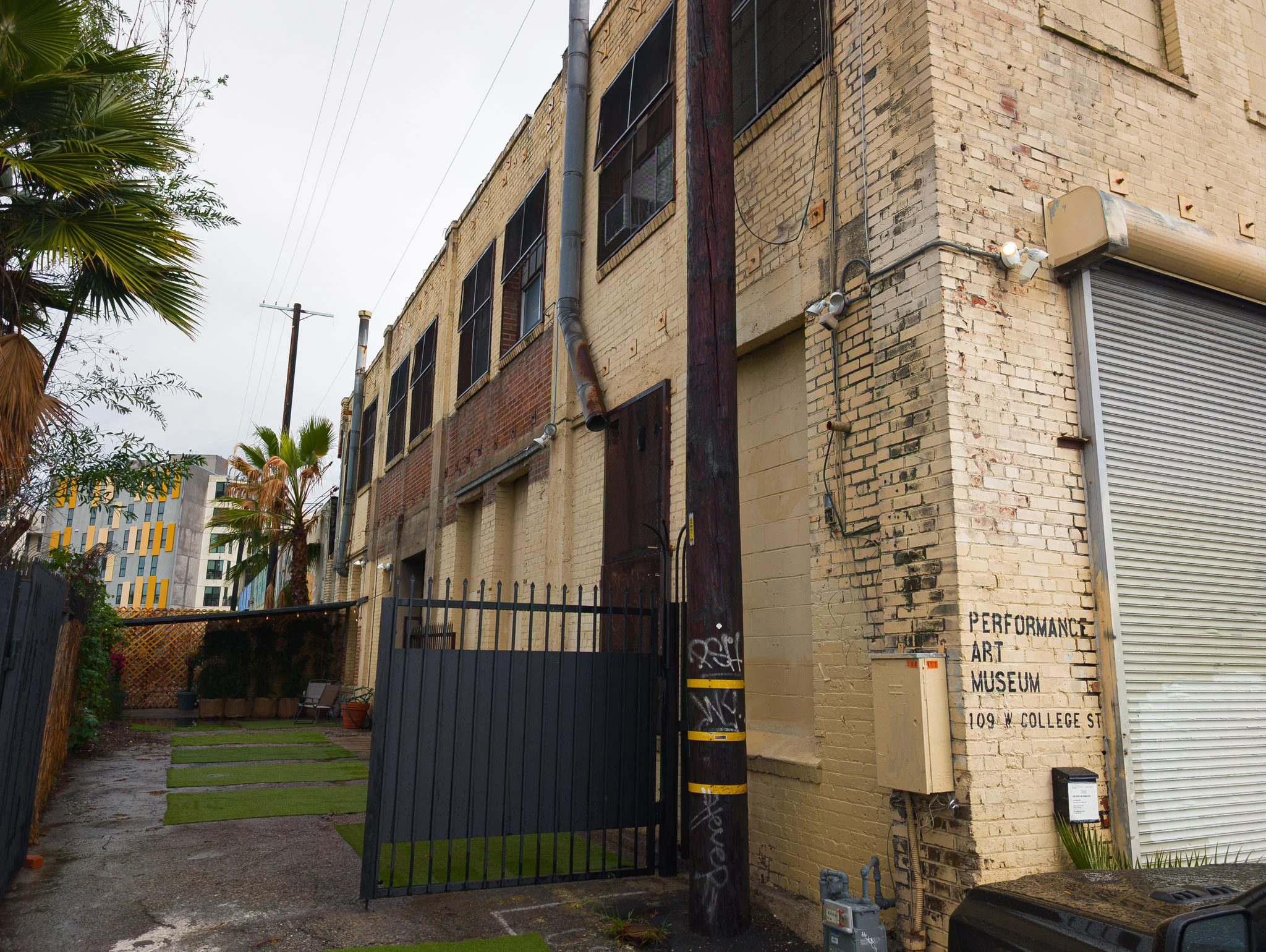
Chocolate Factory runs through December 26 at the Performance Art Museum; timed reservations are available with a $5 donation, though the museum also states that no one will be turned away for luck of funds. The space properly opens in 2027; its initial programming includes a suspension piece by Australian artist Stelarc on January 15, and collage-style videos that incorporate L.A. Times newspaper covers and L.A. landscapes by local artist Matt Savitsky that opens on February 10. You’ll find the museum at 109 West College Street (on a semi-industrial block that is, at the time of publication, lined with RVs and a considerable amount of trash on the other side of the street); look for the alleyway next to the “Performance Art Museum” text stenciled onto the southwest corner of the beige brick building. Free street parking is available in the surrounding area, and the Chinatown station on Metro’s A Line sits a block away.
Discover Time Out original video