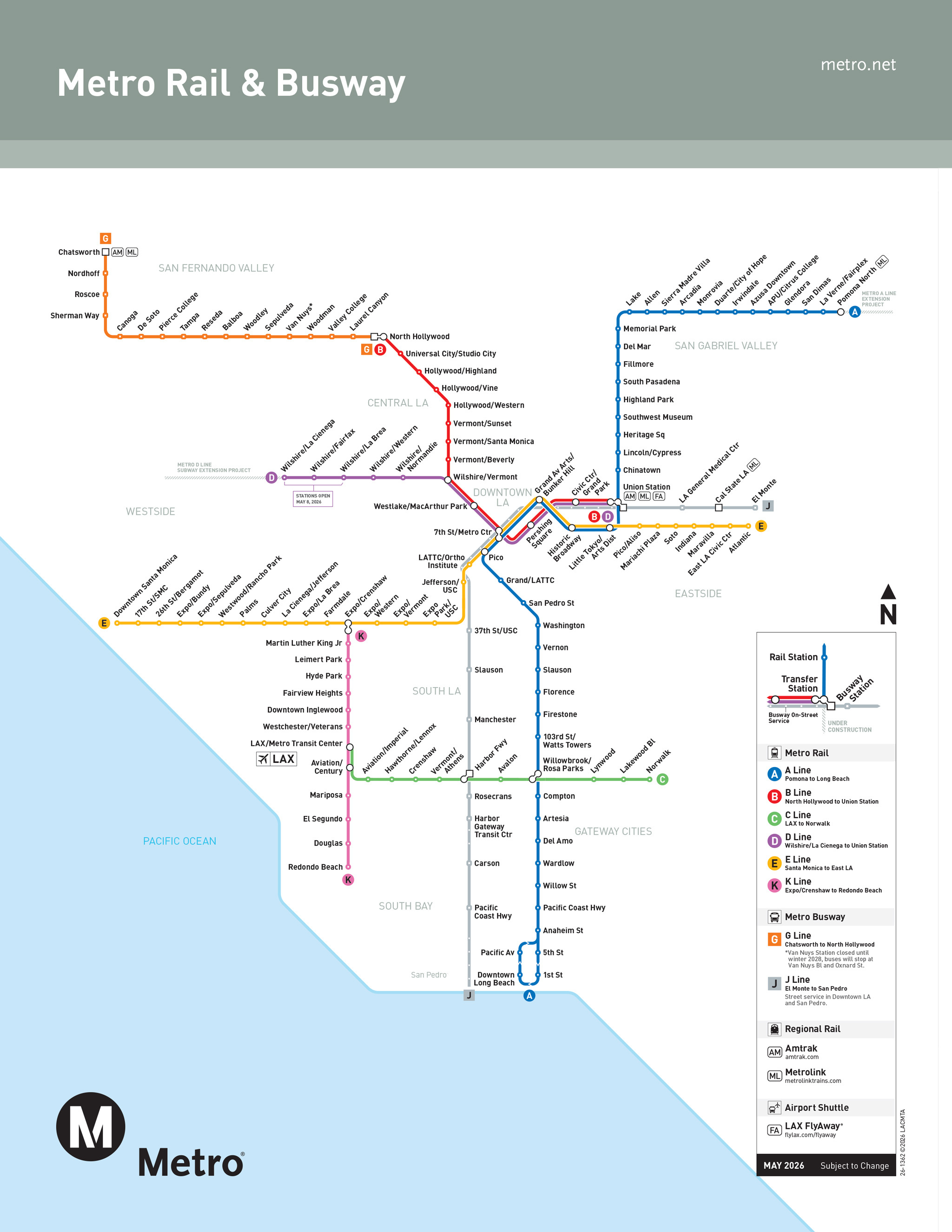
Riding (and paying for) Metro


As of May 29, 2026, Metro has rolled out the ability to use contactless credit or debit cards (both physical and digital versions) at TAP validators on buses and at rail stations. In other words: There’s no need to buy a dedicated transit card anymore, and as long as you use the same credit or debit card, you’ll receive free transfers on Metro within two hours and discounted transfers between other transit agencies, plus a $5 cap on rides for the entire day.
If you do still want a physical TAP card, that’s certainly still an option: Available at all Metro Rail stations and select retailers with a $2 surcharge, these reusable cards can be filled with pre-set dollar amounts. A single ride, regardless of the destination, costs $1.75 and includes free transfers for up to two hours.
Since 2023, Metro’s fare-capping structure eliminated daily, weekly and monthly passes with set dollar amounts in favor of a maximum amount that you’ll be charged (as long as you’re using a TAP card or the same credit/debit card): $5 a day or $18 a week.
Very few bus stops have TAP vending machines, but you can buy a new card on board (buses also accept exact change). Make sure to hold onto your card as it’s accepted on all 26 county transit agencies (and has a 10-year lifespan). You can also order or refill a card on the TAP website.
There’s also an app for both iOS and Android called TAP L.A. that lets you use a digital TAP card on your smartphone to pay for your Metro ride. But we’ve had enough finicky experiences that we don’t necessarily recommend it for first-time riders—and the abysmal app store ratings suggest we’re not alone. Thankfully, the rollout of contactless payment makes this an obsolete option for full-fare riders (Metro’s newly-launched trip planning app will also integrate fare payment in the future).
When you’re entering a train station or a bus, it’s as simple as holding your card against the marked terminals. Some light rail stations don’t have turnstiles, but still make sure to tap—otherwise you could face up to a $250 fine.
Most lines operate from before 5am to after midnight. Trains run as often as every 10 minutes during peak times, though you could be stuck waiting for 20 minutes during late nights. Use Metro’s Nextrip service to take out some of the arrival time guesswork.