[category]
[title]
But how do they stack up to ‘Urban Light’?



There are some 2,500 works of art inside and around LACMA’s long-awaited new building, the David Geffen Galleries. But we wanted to focus on what really matters: which are the most photogenic. You know, so you can prove just how cultured you are with the quintessential souvenir—the perfect photo.
Of course, LACMA is no stranger to photogenic art. Since it was installed in 2008, Urban Light, a constellation of 202 historic streetlamps along Wilshire, has become one of the most photographed landmarks in L.A. So as a handy guide, we’ve ranked each of these 10 new picks with “lightbulb” scores, gauging how they stack up to Urban Light in photogenic-ness on a five-point scale.
Some of our picks are longtime LACMA holdings which have been cast in a new light (literally), some are new acquisitions, and some are brand-new works that have been specially commissioned by the museum. And some aren’t even art but rather uniquely “Los Angeles” views and photo ops. (I mean, the LACMA Erewhon just sounds like a punchline from SNL’s “The Californians.”) Note: Keep in mind that, even if these pieces call out to you, you’re still in a world-class museum with priceless art—so no touching.
💡💡💡💡💡
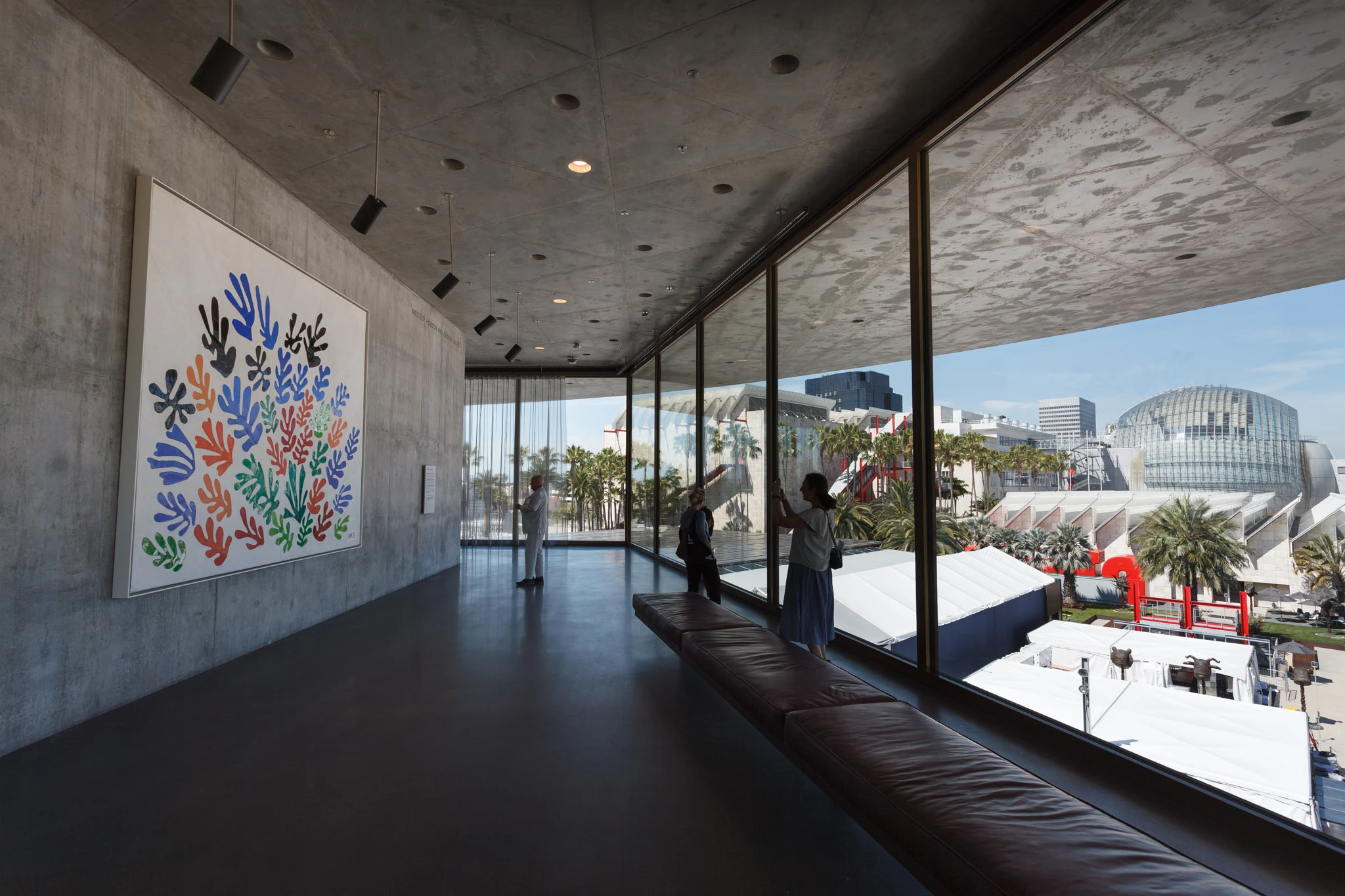
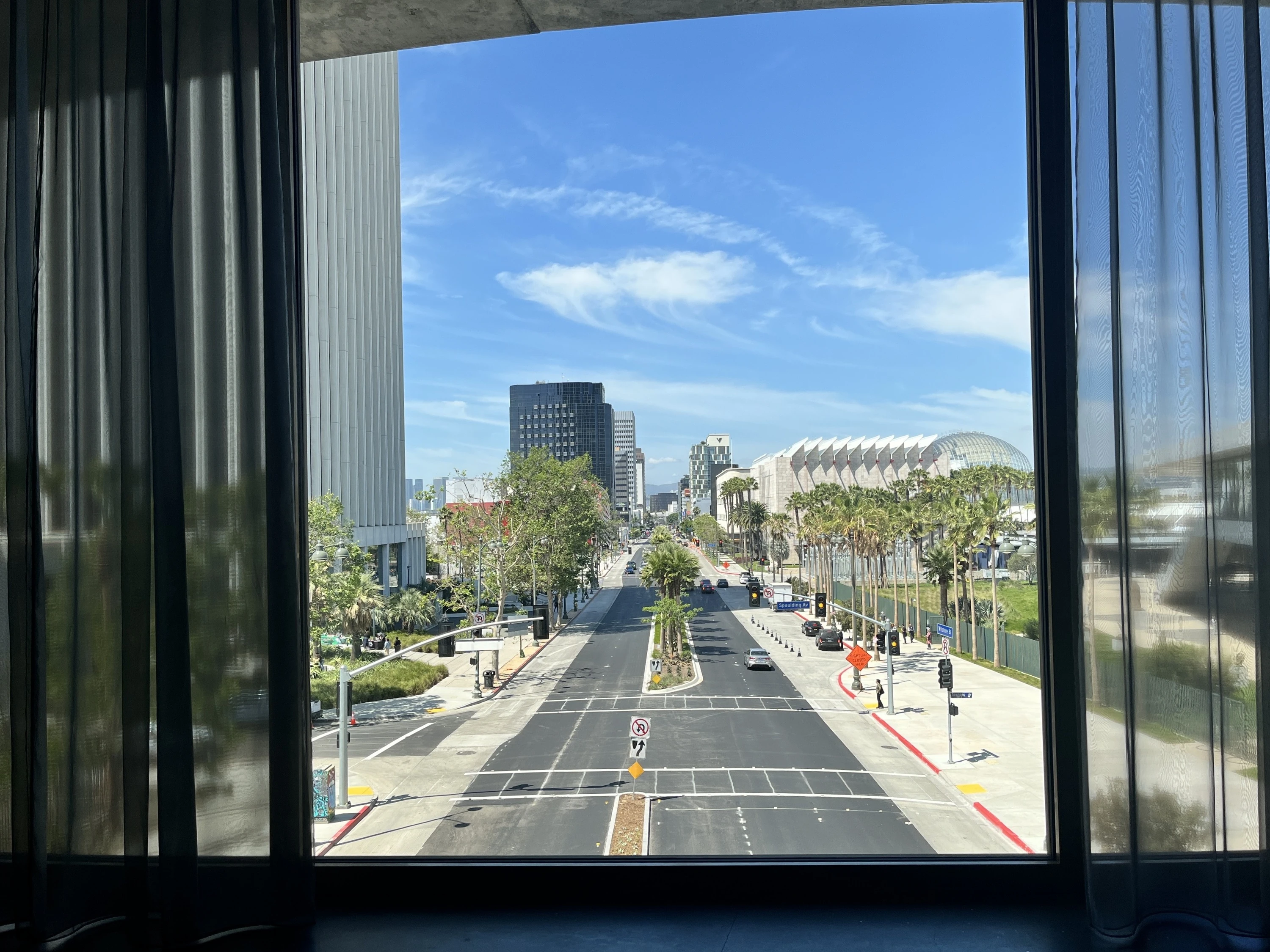
The walk up to the very western tip of the David Geffen Galleries is already vying for one of the most breathtaking views in L.A., an impossibly cinematic vantage point that seems to float above the LACMA campus and perfectly frame the prominent bubble of the Academy Museum and the hills in the background. That ultrawide window isn’t just for selfies, though: Light floods the lone wall here with Henri Matisse’s La Gerbe (The Sheaf), a 2,000-pound ceramic translation of the artist’s simple-but-boldly colorful paper cut-outs. Formerly consigned to a mezzanine of LACMA’s bygone Ahmanson Building, the luminous installation here channels what it must’ve felt like inside the private Holmby Hills courtyard it was commissioned for in the 1950s. —Michael Juliano
💡💡💡💡💡
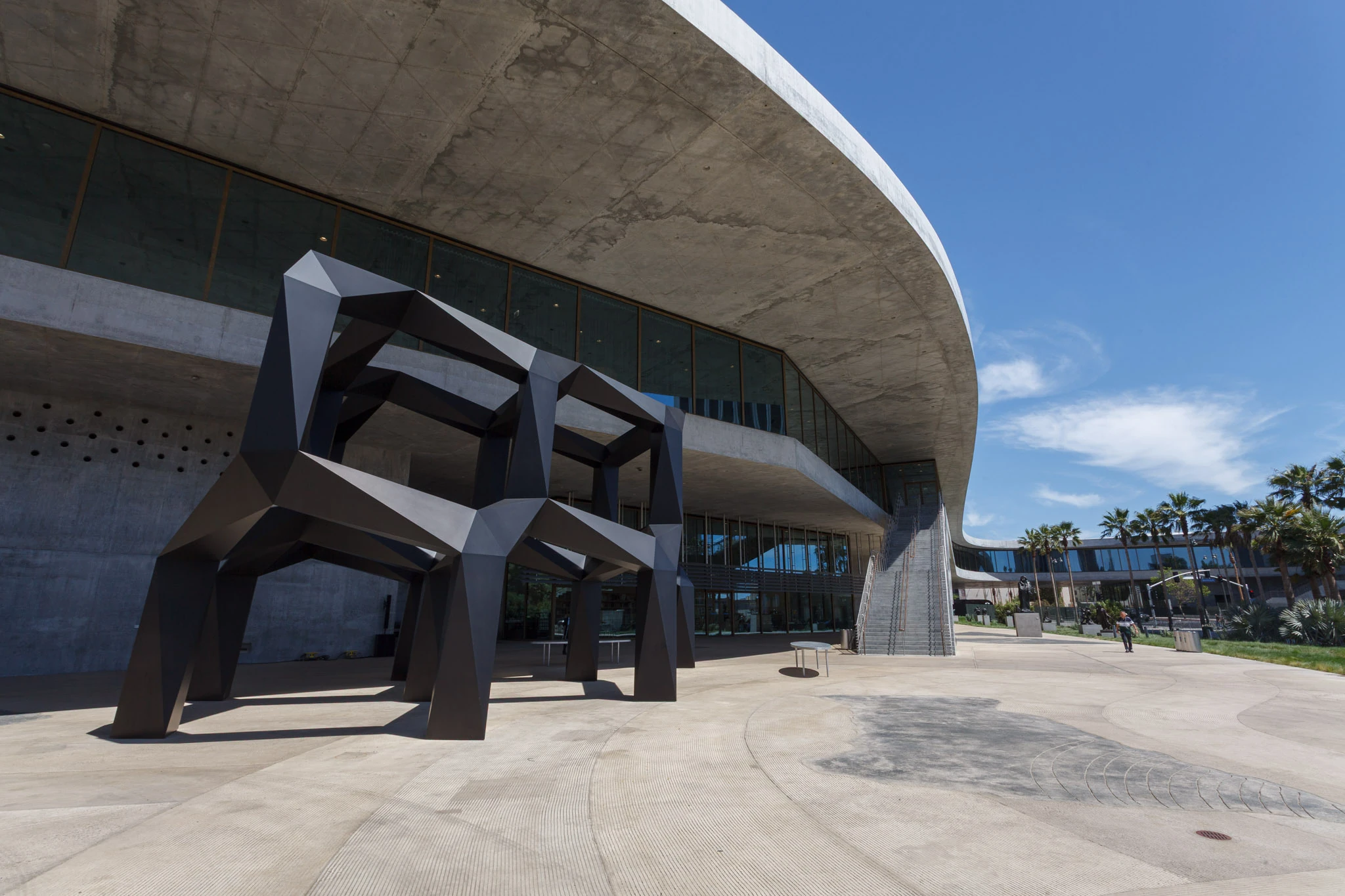
Artist-architect Tony Smith’s geometric, jungle-gym-like sculpture isn’t new to LACMA—it, too, used to reside in the Ahmanson Building, before it was taken apart and rebuilt outside. It now has a new starring role in front of the David Geffen Galleries, where it can be enjoyed even without buying a ticket. The larger-than-life structure stands at 24 feet tall—rivaling Urban Light in size—and serves as a dramatic welcome to the new building. It’s also the perfect focal point for a photograph with the swooping roof of the galleries in the background.
💡💡💡💡
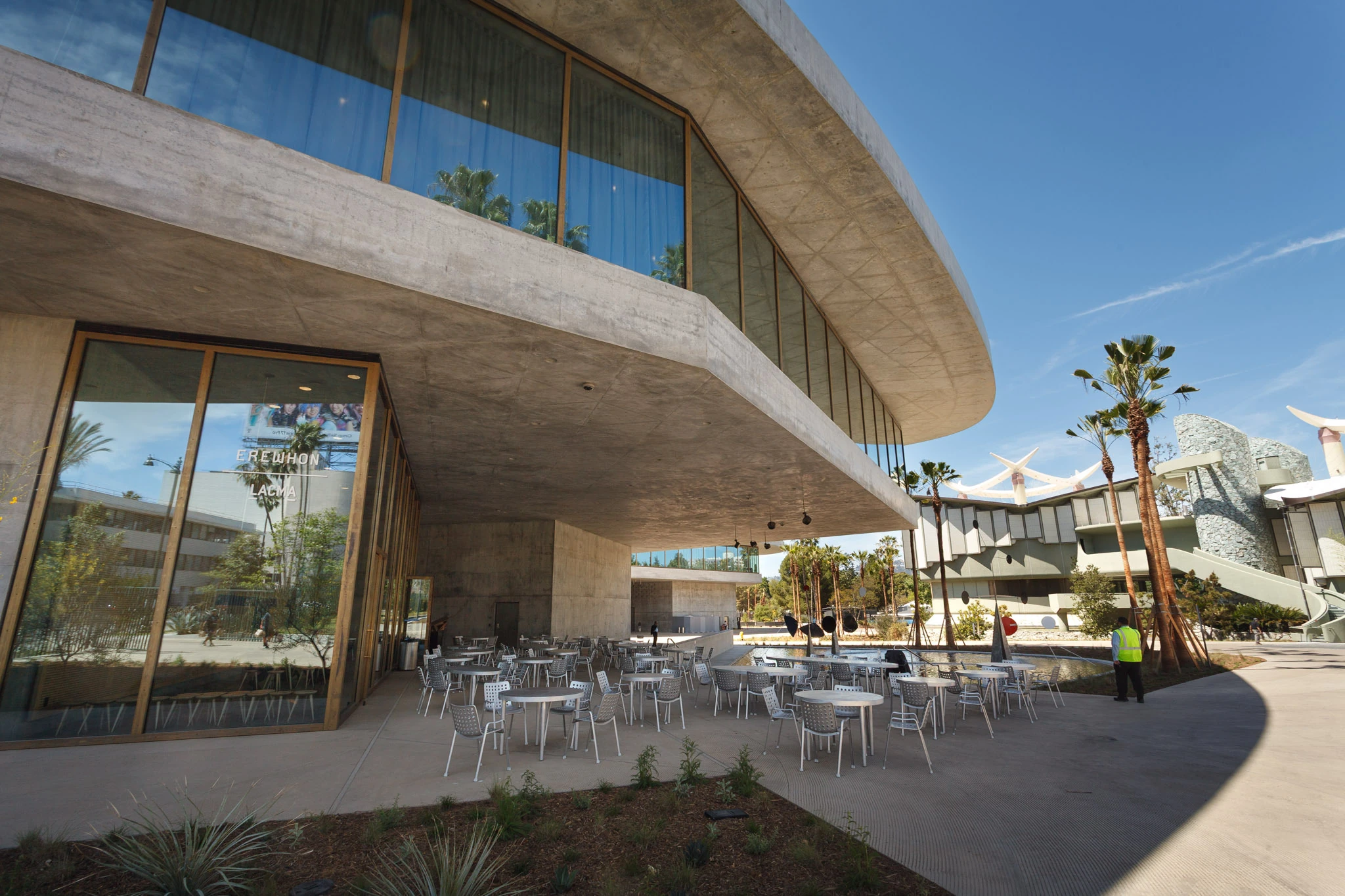
When the internet’s peak grocery store status symbol meets the flex of visiting a sure-to-be-trendy museum, you have a recipe to absolutely break the social currency bank. Local luxury grocery store Erewhon has stepped into one of LACMA’s ground-floor dining spaces with coffee, pastries, snacks and, yes, those aesthetically enviable smoothies. During our preview, we were able to sip on a bottle of green juice with both the Erewhon and LACMA logos imprinted along its glass sides. But the eye-catching visuals don’t stop at branding: The cafe sits in the shade of the Peter Zumthor-designed building and next to the playful, kinetic fountains of Alexander Calder’s Three Quintains (Hello Girls). —MJ
💡💡💡💡
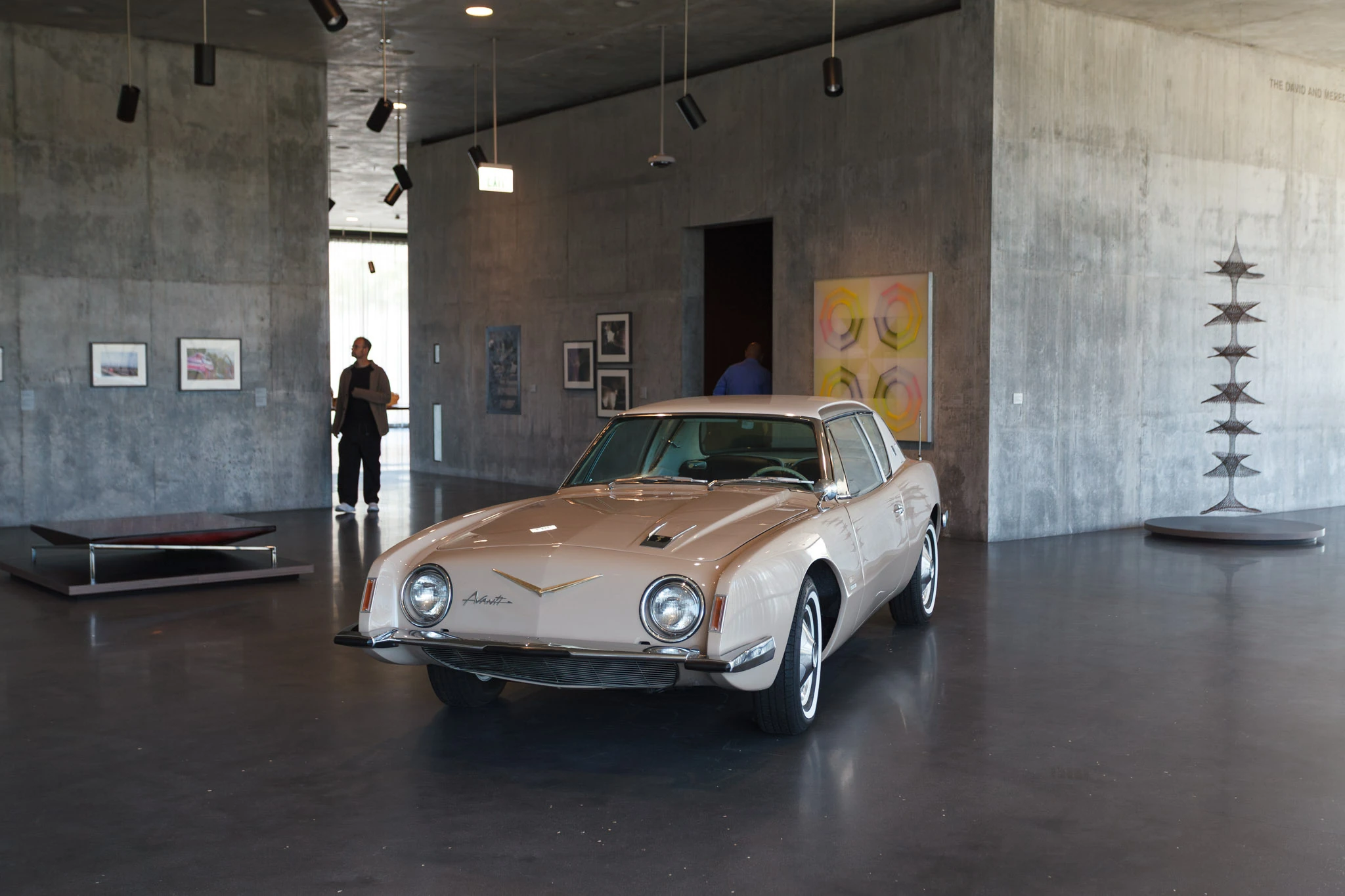
The David Geffen Galleries have an installation dedicated solely to Car Culture and its significance for California. And parked in the middle of the space is a 1961 Studebaker that’s just asking to be photographed and ogled by car enthusiasts. Master of streamline design Raymond Loewy designed the sports car in Palm Springs to try and aid the failing car manufacturer. Unfortunately that didn’t pan out, but today we can appreciate the vehicle as a design object and important piece of California design. After acquiring it back in 2014, the museum recently restored the Avanti to its original glory—and the result gives the classic cars at Petersen Automotive Museum down the block a run for their money. Adding to the photogenic appeal here is a 1954 wire sculpture by Ruth Asawa hanging behind the car.
💡💡💡💡💡
Even if you somehow had no interest in the art inside the David Geffen Galleries, one of the main draws of the new building is the architecture itself. Beyond the curvilinear shape, arguably its distinguishing feature is the way its galleries double as a bridge over Wilshire Boulevard. One moment you’re wandering around, taking in sculptures, and the next you look out the window to find you’re standing above oncoming traffic going down the busy thoroughfare. It’s a surreal experience, and one that has to be seen to be believed—even if that just means you snapping photographic evidence for your followers.
💡💡💡💡
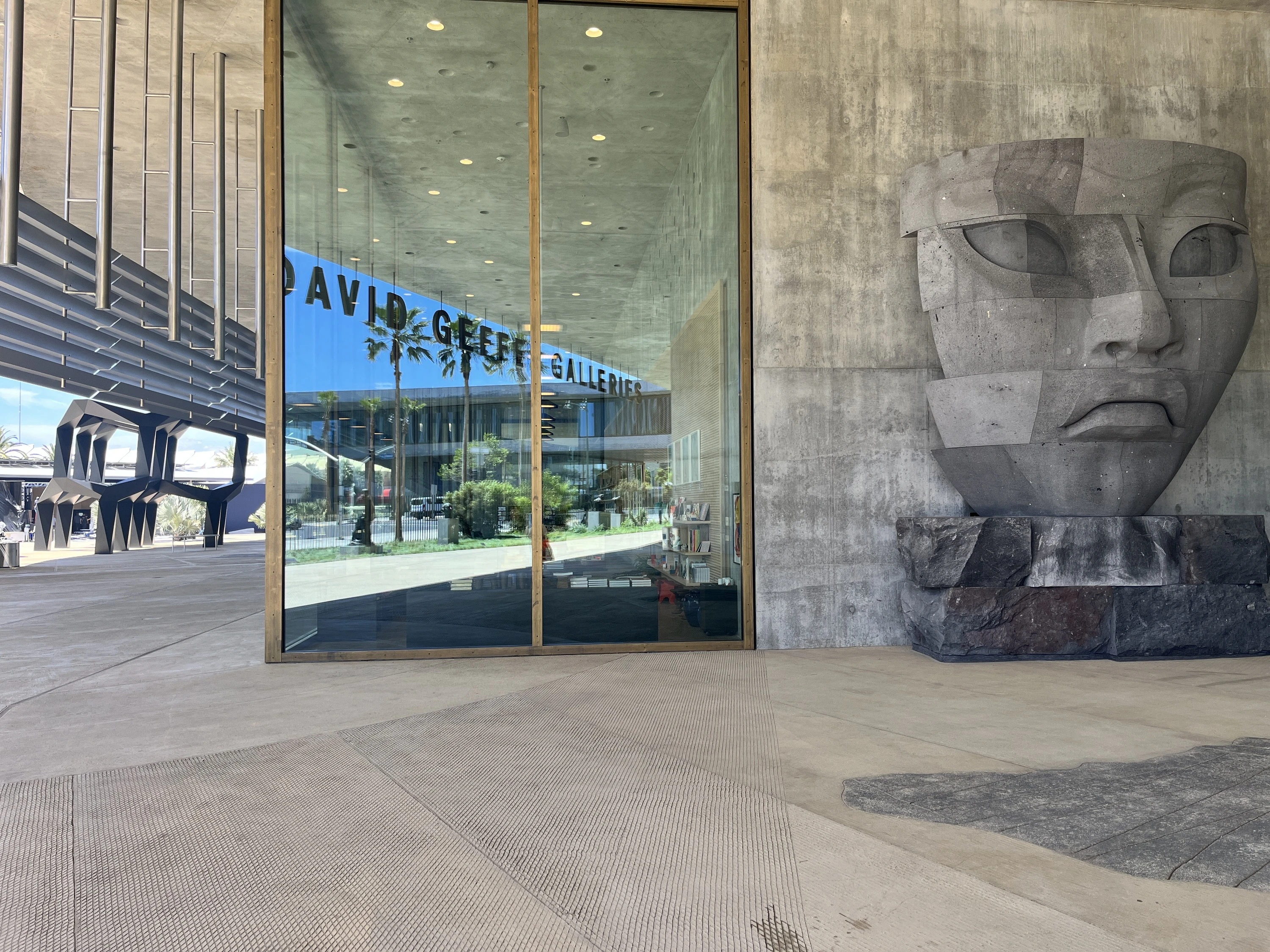
Another new commission for the David Geffen Galleries, Mexico City artist Pedro Reyes’s massive sculpture of a female face both blends into and sticks out against the first-floor wall bordering the new LACMA store. Inspired by Olmec culture and Mother Earth, the work was made out of lava stone and sits against the galleries’ brand-new concrete, seamlessly blending old and new. Even The New York Times has called it: “Pedro Reyes's Tlali is an outdoor selfie site.” Depending on your angle, you can also capture the “David Geffen Galleries” sign reflected in the gift shop window, completing the tableau.
💡💡💡💡
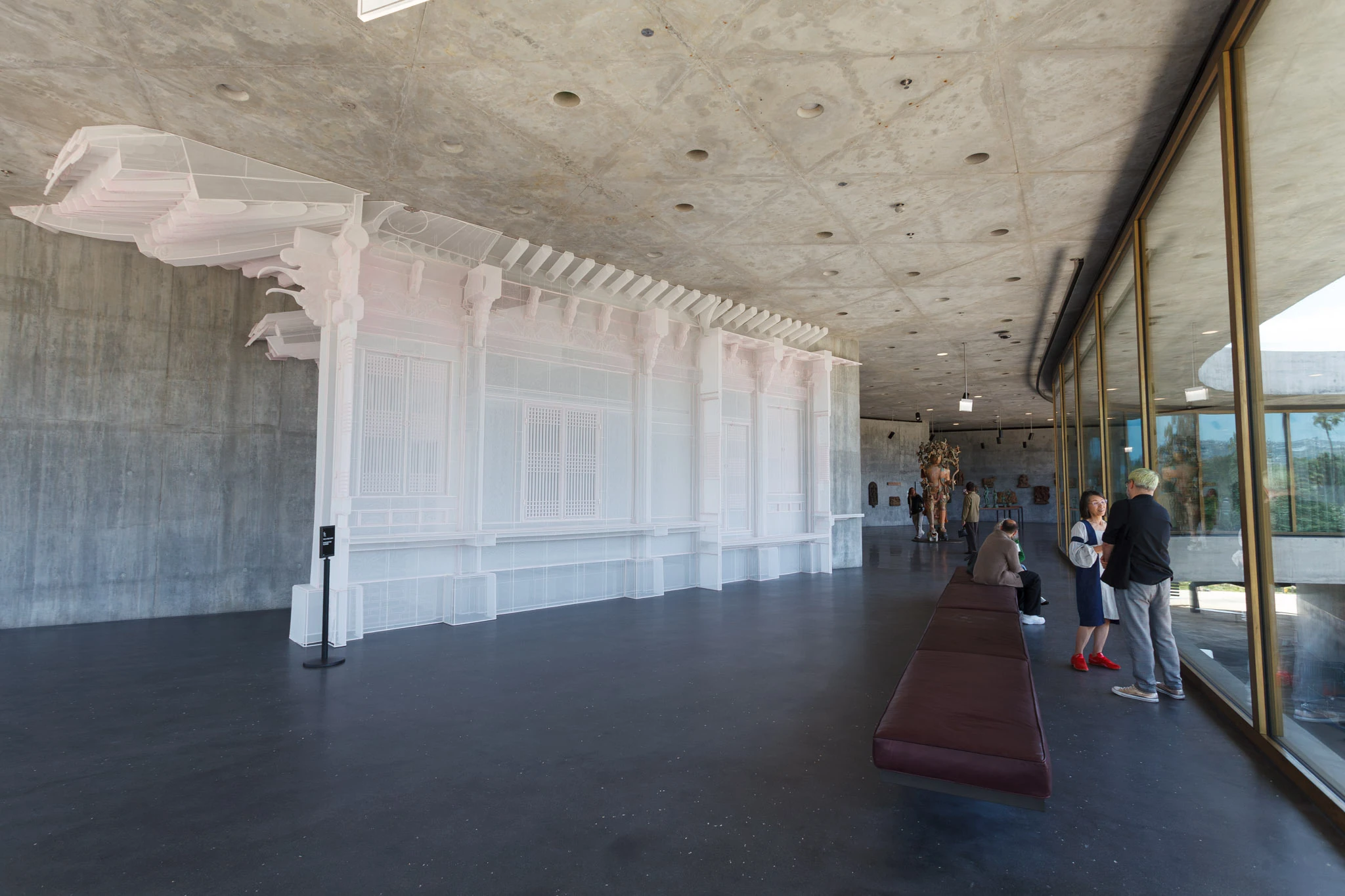
In the southeast corner of the David Geffen Galleries, you’ll find this imposing yet delicate masterpiece, a new commission from Korean artist Do Ho Suh. A life-size re-creation of a section of the queen’s palace in ancient Seoul, Suh’s work is made entirely with translucent fabric but somehow manages to communicate the ornate details and structure of its inspiration. The light streaming in from the windows interacts with the sheer fabric beautifully, and you’ll wish you could step inside the gauzy ghost palace—but you’ll have to settle for a photo.
💡💡💡💡
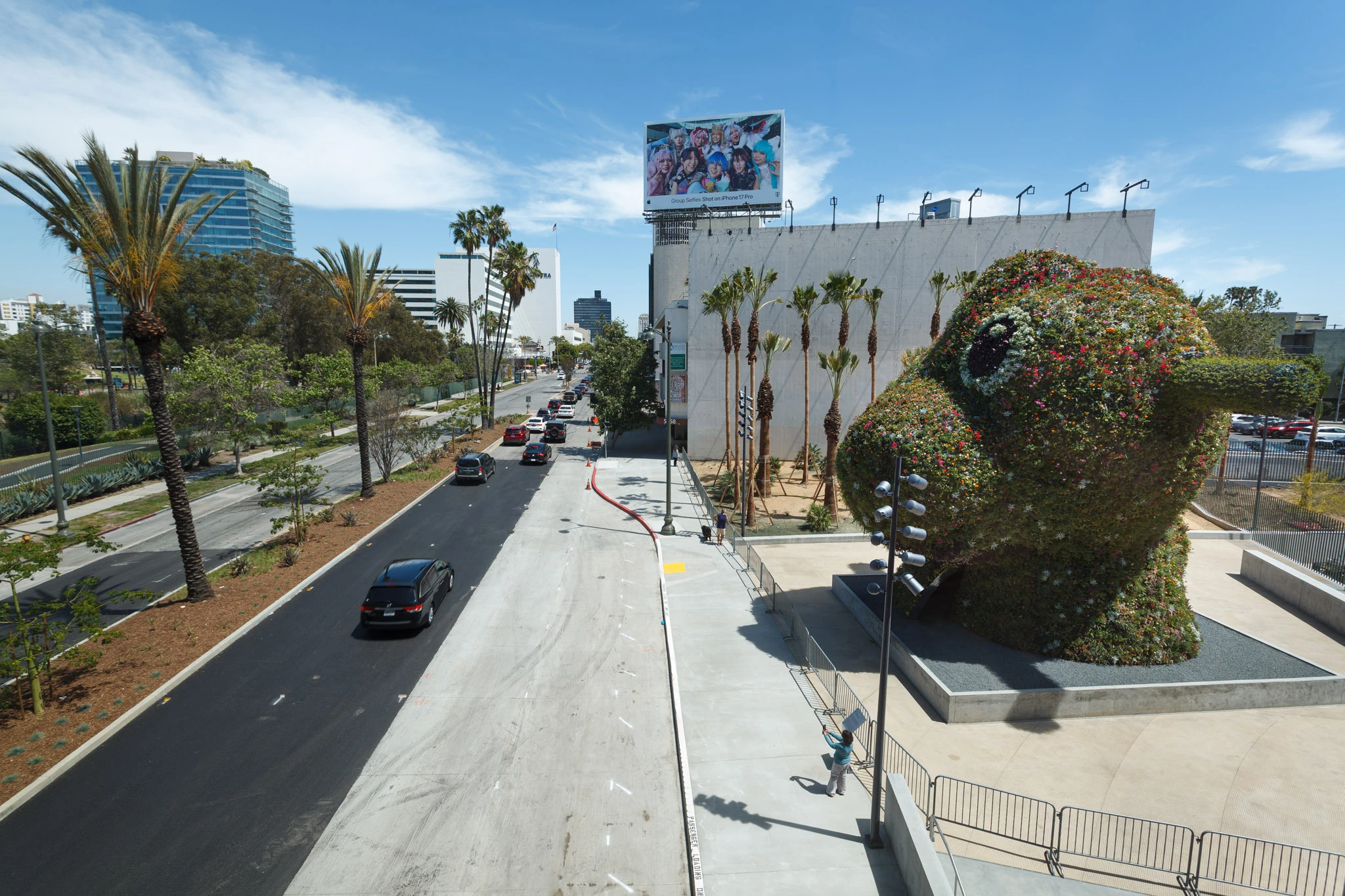
You might be surprised that this living sculpture, located on the south side of Wilshire, is from the mind of Jeff Koons. Offering a decidedly different vibe from the artist’s iconic balloon-animal sculptures, this work, a version of which was previously displayed in New York, is more cartoony—part rocking horse and part dinosaur. What you’ll notice first, though, is the 50,000 drought-resistant native SoCal plants that are completely covering the sculpture’s 37-foot-tall head, which have been carefully selected so that it’ll bloom year-round. Its location across the street from the bulk of the museum’s campus means it’s just as accessible to pedestrians as museum visitors—from my perch in the galleries, I saw a passerby stop to snap pics along the sidewalk. Adjacent to Split-Rocker, the museum is opening a new wine bar and 300-seat theater, which will bring even more foot traffic.
💡💡💡💡
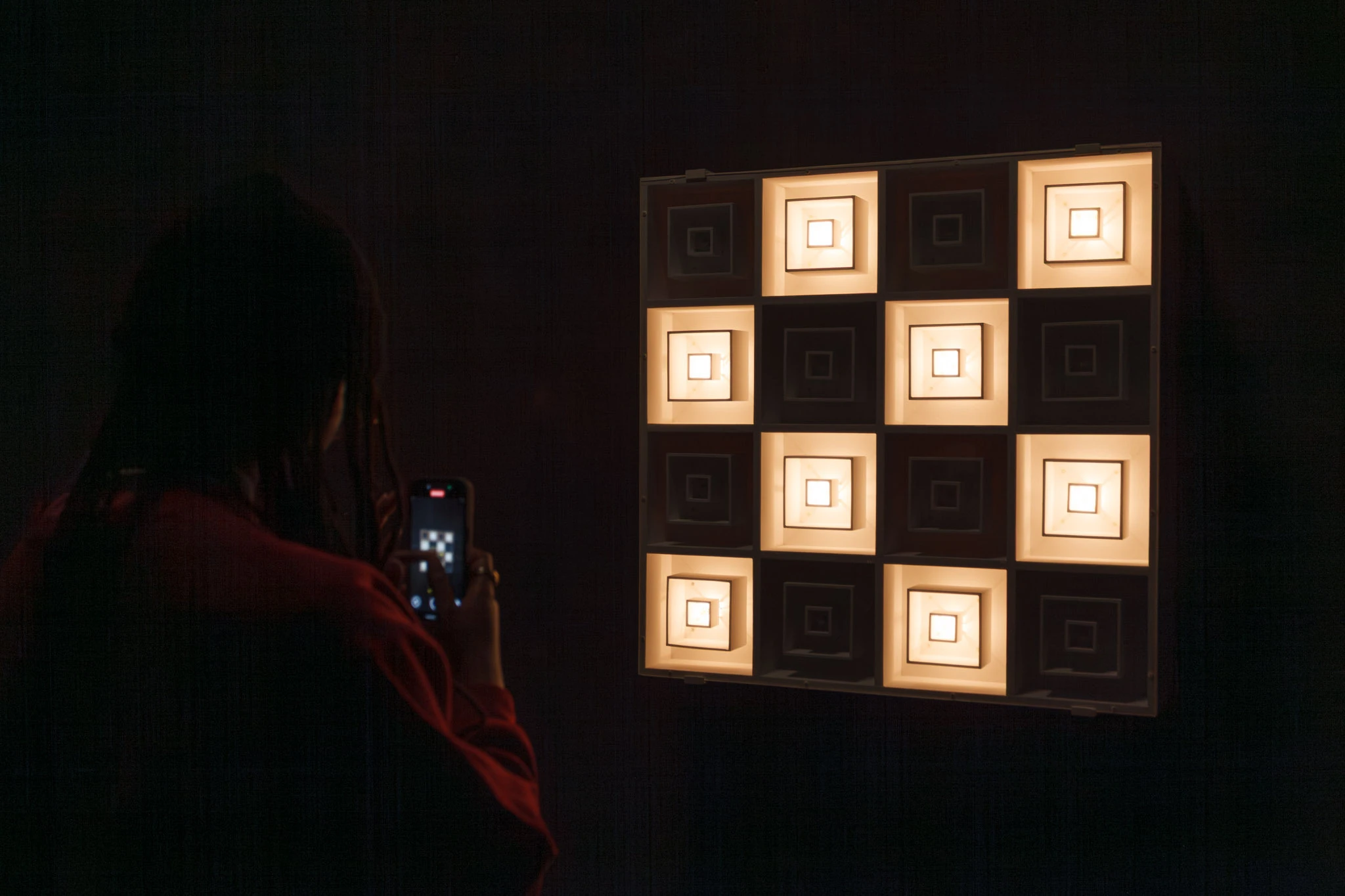
One of my favorite pieces in the galleries was this motorized grid of black and white lights from 1966, located in a gallery devoted to “Turmoil and Optimism in Latin America.” Within the room of drool-worthy midcentury furnishings, geometric art and a trippy polka-dot mural, there’s a smaller room containing just three kinetic works. All are mesmerizing in their own right, but this satisfying checkerboard-esque square by Gregorio Vardanega was attracting the most cameras. It just goes to show that there are artistic treasures around every corner (or curve) of the new building.
💡💡💡
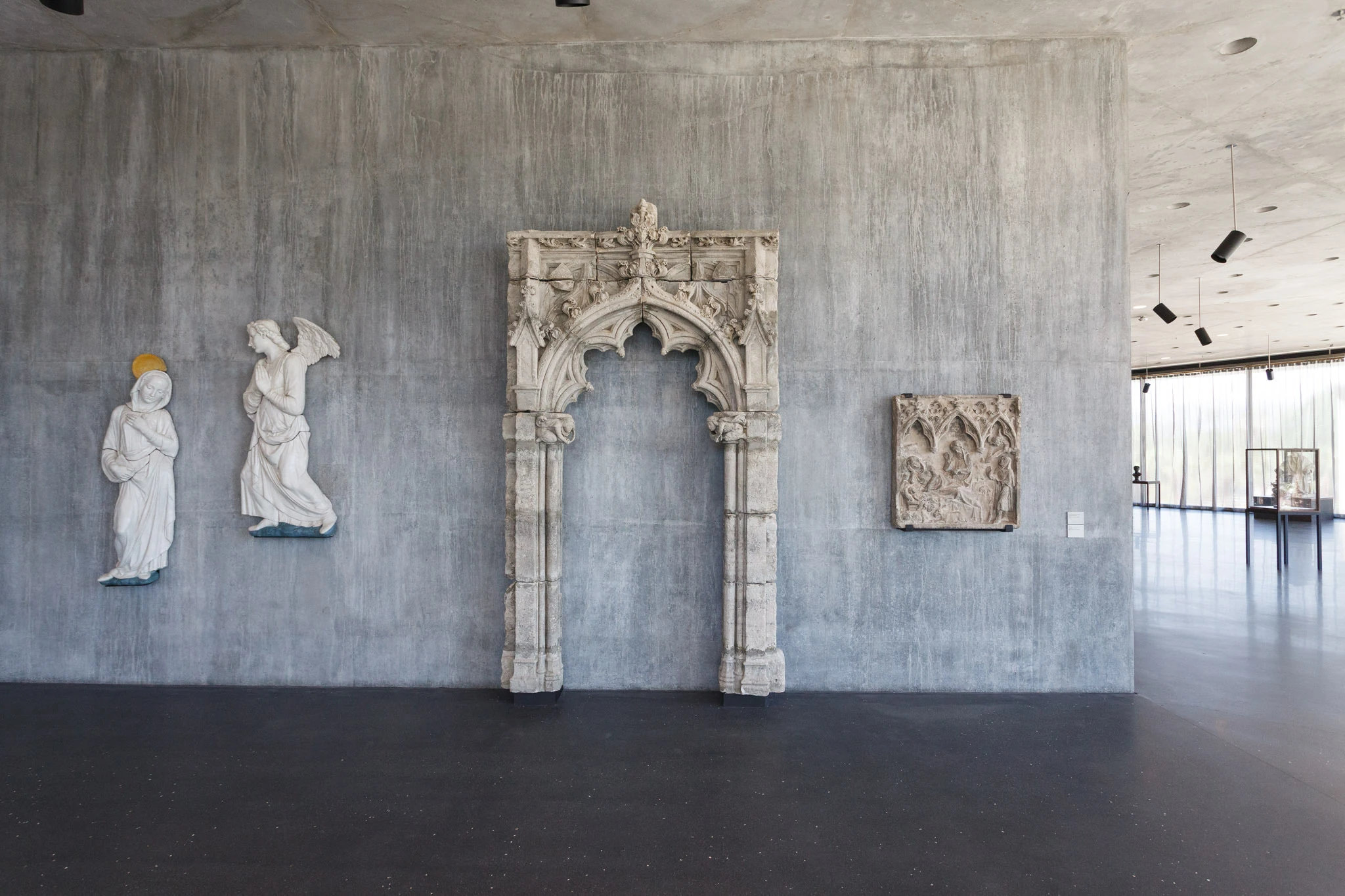
Leah Lehmbeck, LACMA’s curator and department head of European paintings and sculpture and American art, predicts that this medieval French arch will be a prime selfie spot—though she hopes she’s wrong. “I kind of fear that people are going to stand in that doorway,” she says, laughing. “Please don’t do that. Please look at it from afar, no need to stand in it.” Though the stone doorway from an unknown artist dating back to 1500 has already been on display at LACMA previously, Lehmbeck brings up an interesting point about the new space: “This building allows for a kind of access to artworks, even though many of these things have been uncovered for a long time.… There’s something about the museum, with the windows and the way in which it’s installed, that makes the objects much more accessible, which is a beautiful thing. [But] they feel closer to people, even though they aren’t—they’re in the exact same position they always have been. And the doorway is one of those invitations that feels like, ‘Oh, this is the perfect place for a selfie.’” So remember, just because you can take the perfect selfie, doesn’t always mean you should.
And lastly, there’s one thing you’ll probably be itching to film but can’t. Berlin-based artist Tino Sehgal has created one of his signature “situations” especially for LACMA. This looks like bike riders doing slow-motion wheelies, live violin music wafting throughout the galleries, and a soccer player balancing a ball on his head. At one point, I walked past and all of the piece’s “interpreters” were lying on the ground while the music played on. At the preview, everyone’s instinct was to begin filming the action, but we were informed that photos and videos weren’t allowed. The situation only exists in the moment, so take a seat on one of the surrounding benches and soak in the experience. There aren’t specific performance times—the activation will take place during the museum’s open hours through at least June.
Discover Time Out original video