[title]
Broadway review by Adam Feldman
Rating: Not starred
Sometimes everything just goes wrong. Friends get together to snag valuable property from a vault, but they haven’t planned the operation well enough; they make unforced errors, they panic, and soon they’re holding people hostage in a sorry and confusing situation that drags on for hours. That is the story told in Dog Day Afternoon, the classic 1975 film about a real-life 1972 Brooklyn bank heist turned tense and sweaty standoff. It is also the story of Dog Day Afternoon, Stephen Adly Guirgis’s confounding new Broadway play, in which the heat never rises past lukewarm and it’s the paying audience that winds up robbed.
What gave the original crime an extra frisson of sensationalism was that the would-be robbers, John Wojtowicz and Sal Naturile, were known in the local gay community; Wojtowicz was planning to use the money to finance a sex-change operation for his lover, whom he had married the year before. The Life magazine article that inspired the movie—titled “The Boys in the Bank,” a nod to Mart Crowley’s closet-breaking play—described Wojtowicz as “a dark, thin fellow with the broken-faced good looks of an Al Pacino.” Journalistic dream casting came true when Pacino ended up starring in director Sidney Lumet’s motion picture, playing the Wojtowicz character, Sonny, opposite the haunted-hangdog John Cazale as Sal and a raw, unstable Chris Sarandon as Sonny’s wife, Leon, who is sprung from Bellevue (in a mental patient’s robe) to talk to him by phone.
RELATED: Buy tickets to Dog Day Afternoon
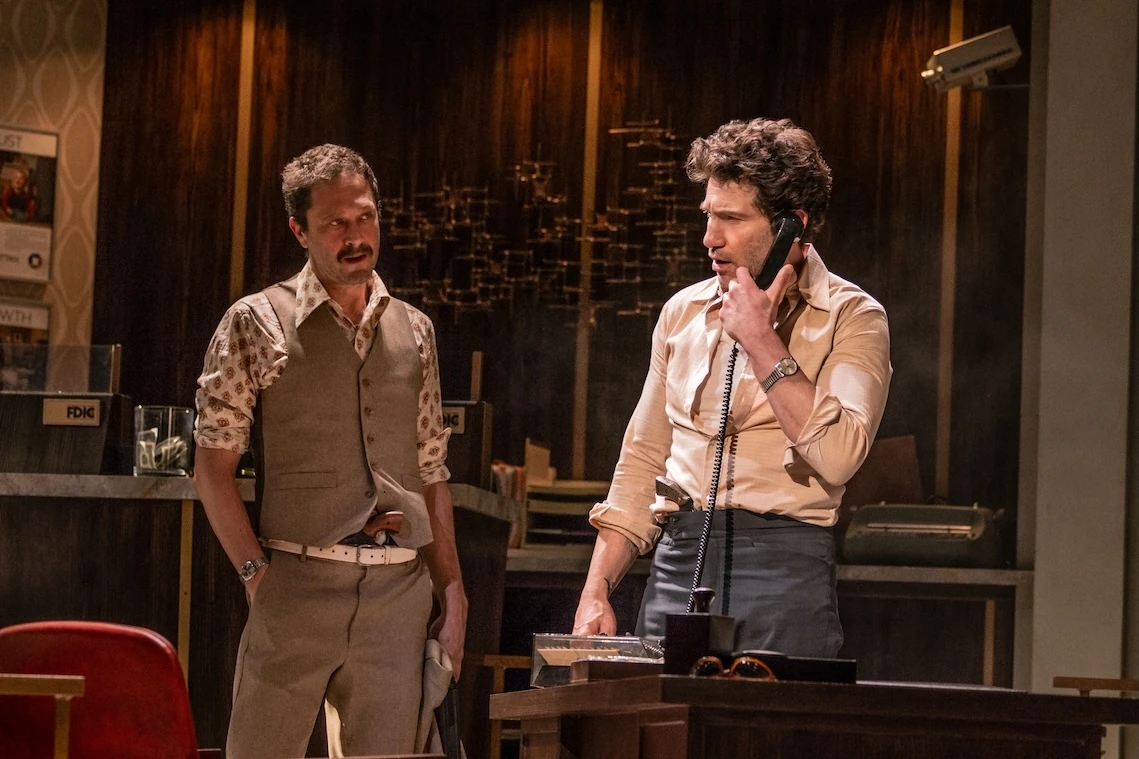
The New York grit of the film holds up well half a century later, which is surely what drew Guirgis to the material; he has built his name on such wide-angle tales of Gotham City as Jesus Hopped the 'A' Train, Our Lady of 121st Street and Between Riverside and Crazy. And the 1970s coolness factor of the Pacino-Cazale pairing was no doubt attractive to The Bear co-stars Jon Bernthal and Ebon Moss-Bachrach, who inherit their roles in the stage version. Both actors acquit themselves ably enough; Bernthal shows charisma and vocal endurance—Sonny tends to shout a lot—and Moss-Bachrach gives Sal a tough, loose-cannon desperation. The rest of the cast, which includes several Guirgis regulars, also contributes good work: John Ortiz as the schlubby police detective trying to de-escalate the situation, Michael Kostroff as the bank manager, the always welcome Jessica Hecht as the starchy head teller who develops a fondness for Sonny. But none of them can save what is otherwise a hollow and desultory maladaptation.
Dog Day Afternoon is being produced by Warner Brothers, and is ostensibly based on its film. But for reasons that are between him and his dramatic gods—and/or, perhaps, intellectual-property lawyers?—Guirgis has retained almost nothing from Frank Pierson’s Oscar-winning screenplay: just an overall shape, a handful of character names and, of course, the movie’s most famous scene, in which Sonny leads a sympathetic crowd outside the bank in a chant of “Attica! Attica!”—a reference to the misjudged police response to a 1971 prison riot that left multiple hostages dead. (He’s both playing to anticop sentiment and reminding the cops to tread carefully; he’s also starting to enjoy the sense of himself as a little-guy spokesman and celebrity antihero.)
For the most part, the stage production is helpless to summon a major aspect of the film: the noisy mass of people gathered outside the bank that includes local gawkers, media vultures and hundreds of law enforcement officers with guns trained at the doors. The only exception is the “Attica” scene, when the theater audience is meant to stand in for the crowd (as policemen hurtle down the aisles), responding vocally to Bernthal’s provocations. Much of the audience, it must be said, seems confused at what to do in this sequence; when I saw the show, the cheering for Sonny seemed limited to a few loud pockets. That confusion is justified: Little in the preceding hour has set up why we should be on Sonny’s side—nor has anything set up this scene’s fourth-wall break, which the play never tries again. It’s a structural one-off, all too consistent with the production’s tonal farrago.
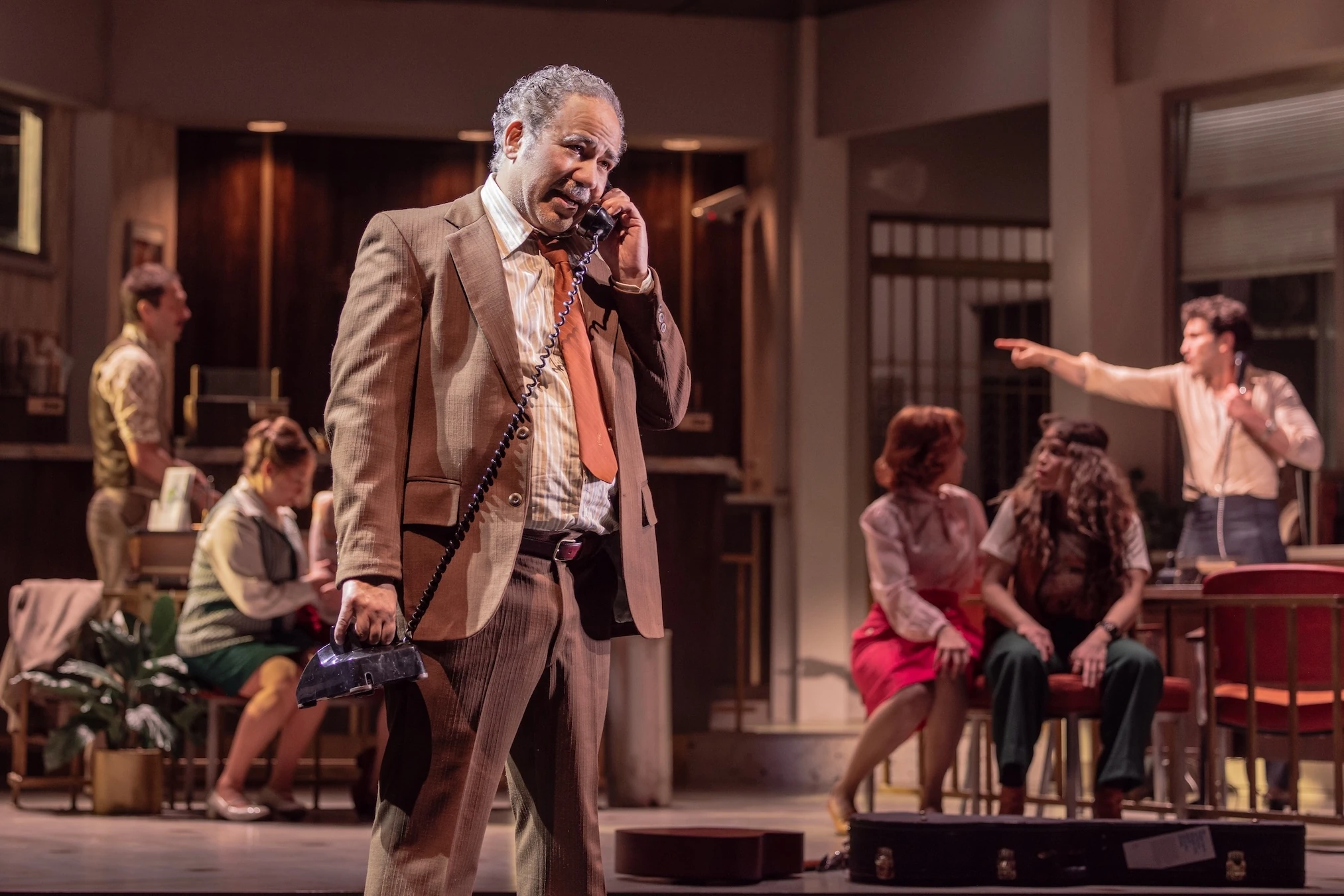
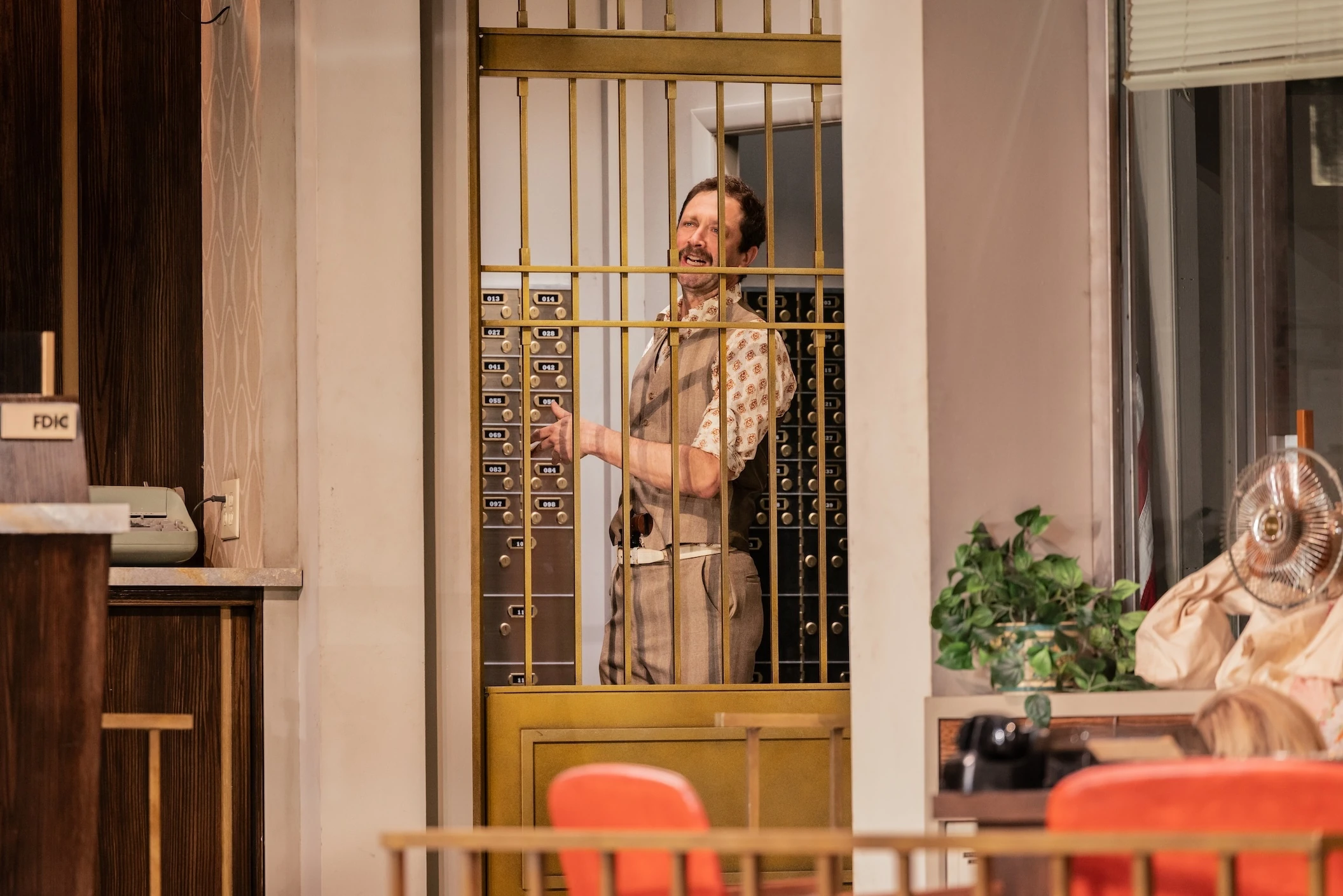
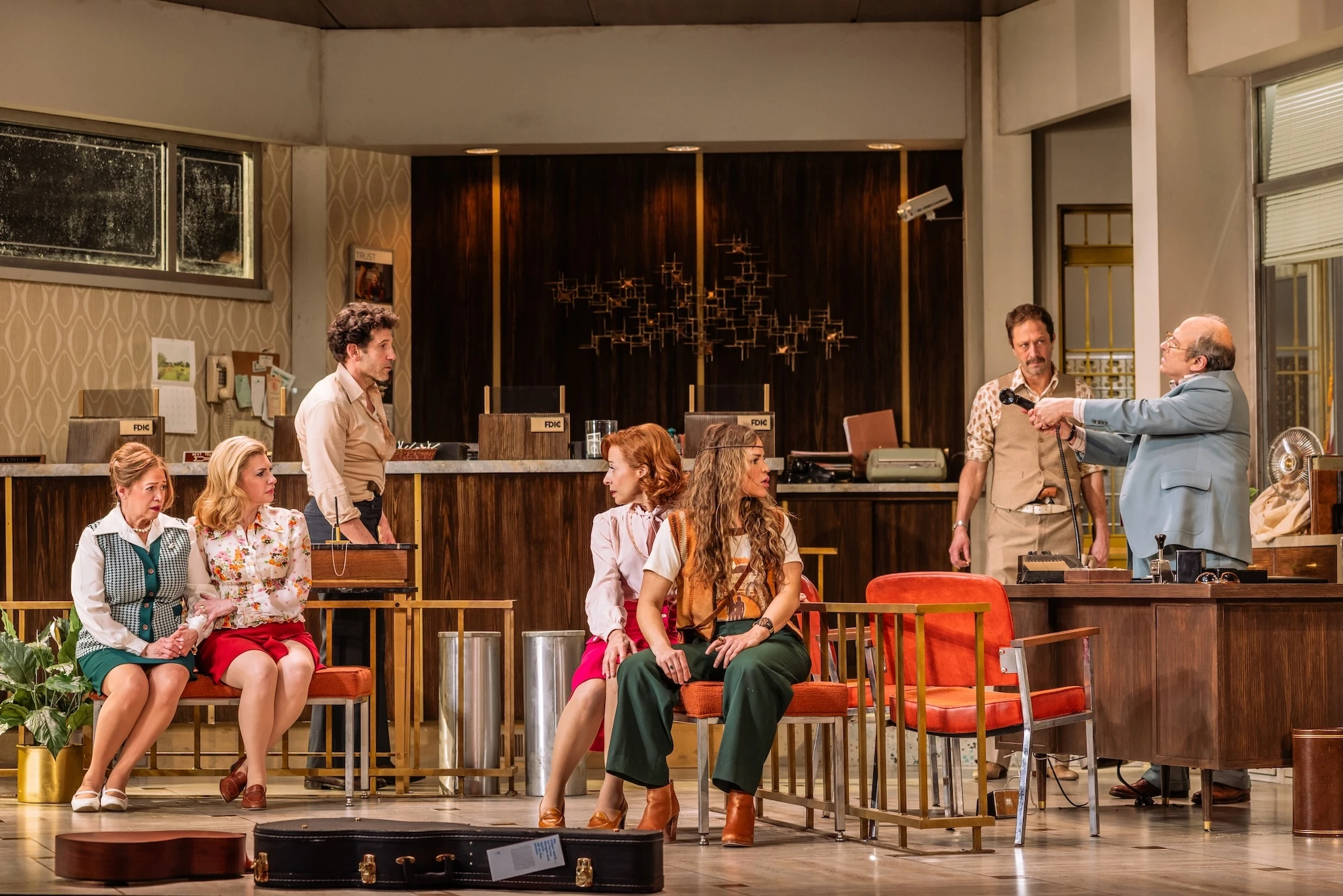
Nearly every major choice in Guirgis’s script and Rupert Goold’s direction feels off. David Korins’s set is beautifully detailed, but there’s no sense of entrapment in the bank; it’s airy and open where it should feel sweaty and cramped. (It takes up roughly twice as much space as the street set outside.) The pacing is likewise all wrong: The “Attica” scene, which occurs half an hour into the movie, has been moved to end the first act, so the earlier bungling of the heist—which should be urgent and rushed—is slow and overextended; and the new time frame means that a kindly security guard who has had a heart attack is left unattended in a corner (perhaps to die?) for hours, while people chitchat away, unbothered. When he briefly staggers to life, it is only to deliver a hoary vaudeville gag while the hostages are ordering donuts. (Not even the donuts are right! They make a point of wanting frosting, but the props they get are plain.)
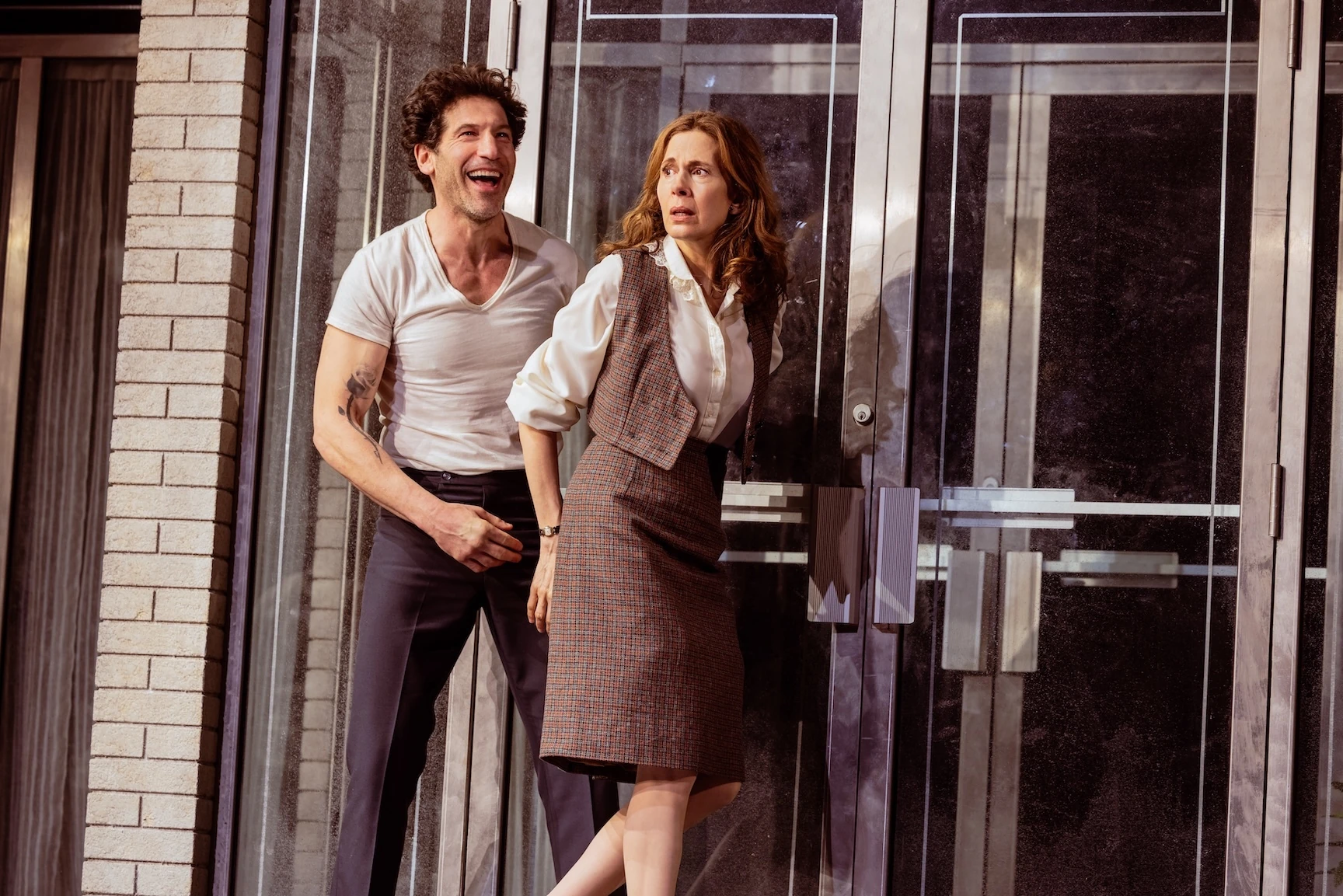
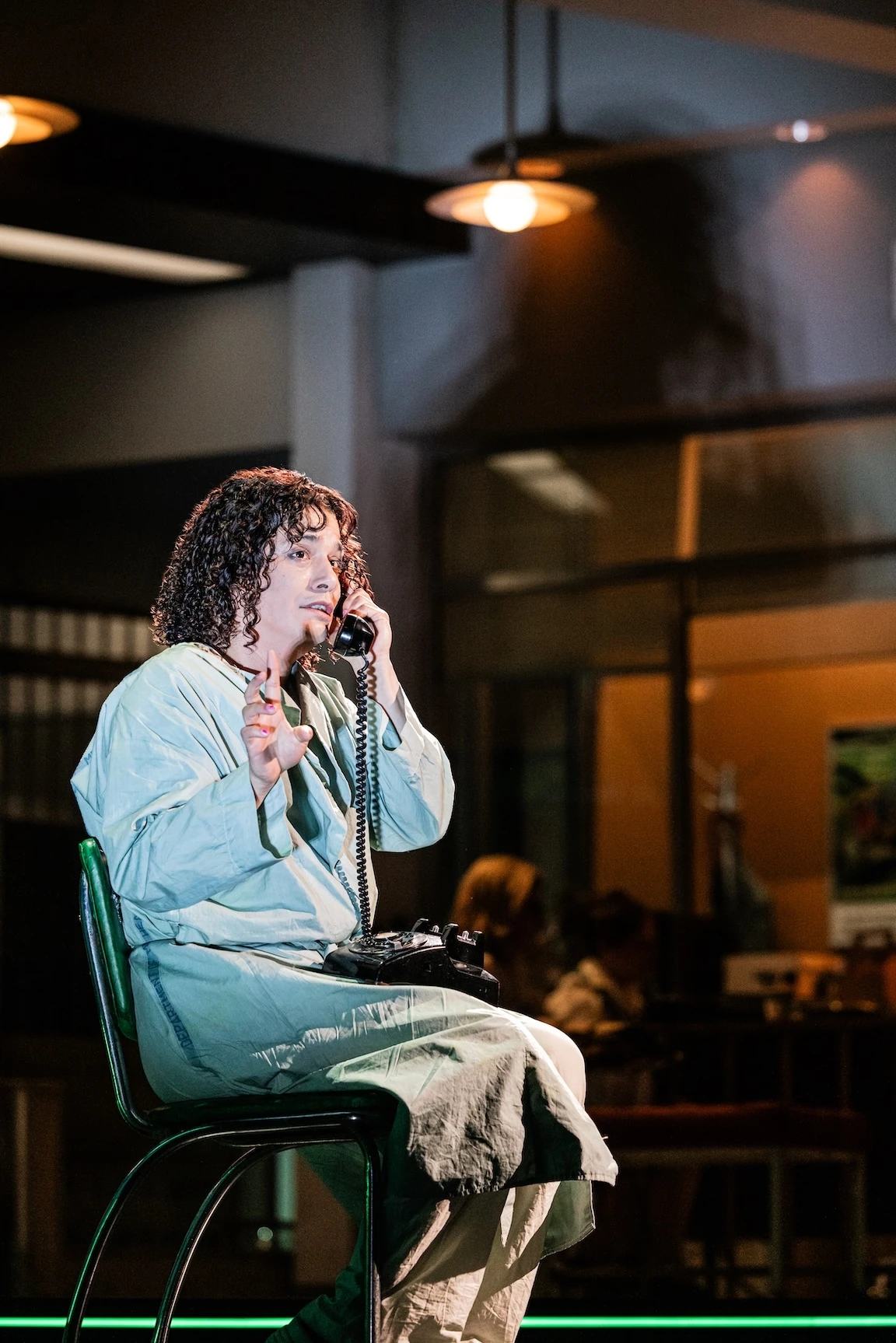
The spirit of cheap comedy dominates what should be a thriller and character study. If a stage version of Dog Day Afternoon was unable to figure out how to integrate the outside narrative—the crowd, the media, the effect that revelations about the robbers’ sexuality have on both—it could have compensated with expanded explorations of Sonny’s relationships with, say, his first wife or his mother. Instead, the former is reduced to a shrieking cameo (“All this nonsense on the TV about you taking up with men—you didn’t used to be like that, did ya? Used to be you couldn’t get enough of me!”) and the latter is excised completely in what appears to have been a late edit. (The character was still listed in my Playbill.) Sonny’s friendship with Sal fares barely better: Some baseline gay stuff is added about drinks at Julius’ and a class at hairstyling school, but nothing deeper than that. And the treatment of Leon is actively worse than the film’s. The fact that Leon is trans is held back, implausibly, for a relatively late reveal; when we finally meet her, she fusses about her looks (“Oh my God my nails—Oh what’s the use—I just wanna die!”), flicks her tongue lasciviously at a cop (“Come down to the Village sometime, you’ll leave a changed man”) and rambles on about being a prostitute (more corny humor here: “I’m like McDonalds—over a million served!”).
To fill the holes left by suspense and realism, Guirgis offers broad jokes about drug use, office politics and the romantic lives of the ladies who work at the bank (who, thanks to overmiking, scream their gossip from the outset). There is also endless blathering by Ortiz’s Detective Fucco, who has been named Fucco just so that his name can be insultingly mispronounced by a snide FBI agent, Sheldon (Spencer Garrett), whose every on-the-hard-nose line sounds like a South Park parody of his character. (“If this was my case to command, I could make dinner reservations for 7:30 this evening, assure the missus I wouldn’t be late, and be at the bar with a tall gin ricky by 7:15. But hey, this is your thing. And when you screw it up royally—I’ll be here to clean up your mess.”) Not all the well-chosen Brenda Abbandandolo costumes and David Bowie songs in the world can disguise this production’s flaws. Guirgis has written plays that capture the spirit of New York City in vibrant and original ways. But this one? This one’s a dog.
Dog Day Afternoon. August Wilson Theatre (Broadway). By Stephen Adly Guirgis. Directed by Rupert Goold. With Jon Bernthal, Ebon Moss-Bachrach, John Ortiz, Jessica Hecht, Spencer Garrett, Michael Kostroff, Esteban Andres Cruz. Running time: 2hrs 15mins. One intermission.
Buy tickets to Dog Day Afternoon: Broadway.com
Follow Adam Feldman on X: @FeldmanAdam
Follow Adam Feldman on Bluesky: @FeldmanAdam
Follow Adam Feldman on Threads: @adfeldman
Watch Adam Feldman's theater podcast on YouTube: Sitting Ovations
Follow Time Out Theater on Instagram: @timeout_theater
Follow Time Out Theater on X: @TimeOutTheater
Keep up with the latest news and reviews on our Time Out Theater Facebook page