


[title]
UPDATE: May 19, 2026
----
The Long Island Rail Road is officially suspended as a massive worker strike enters its third day, leaving nearly 300,000 daily riders scrambling for alternate ways into New York City and turning large parts of Queens, Brooklyn and the Long Island Expressway into one giant stress ball.
The strike officially began just after midnight on Saturday and involves five unions representing a majority of the LIRR workforce. At the center of the dispute is money, healthcare contributions and the final year of a four-year labor contract.
The MTA says it has already agreed to 9.5% wage increases and insists the unions are among the highest-paid rail workers in the country. Union leaders argue the agency tried to sharply raise healthcare costs for new hires while offering raises that fail to keep pace with Long Island’s cost of living.
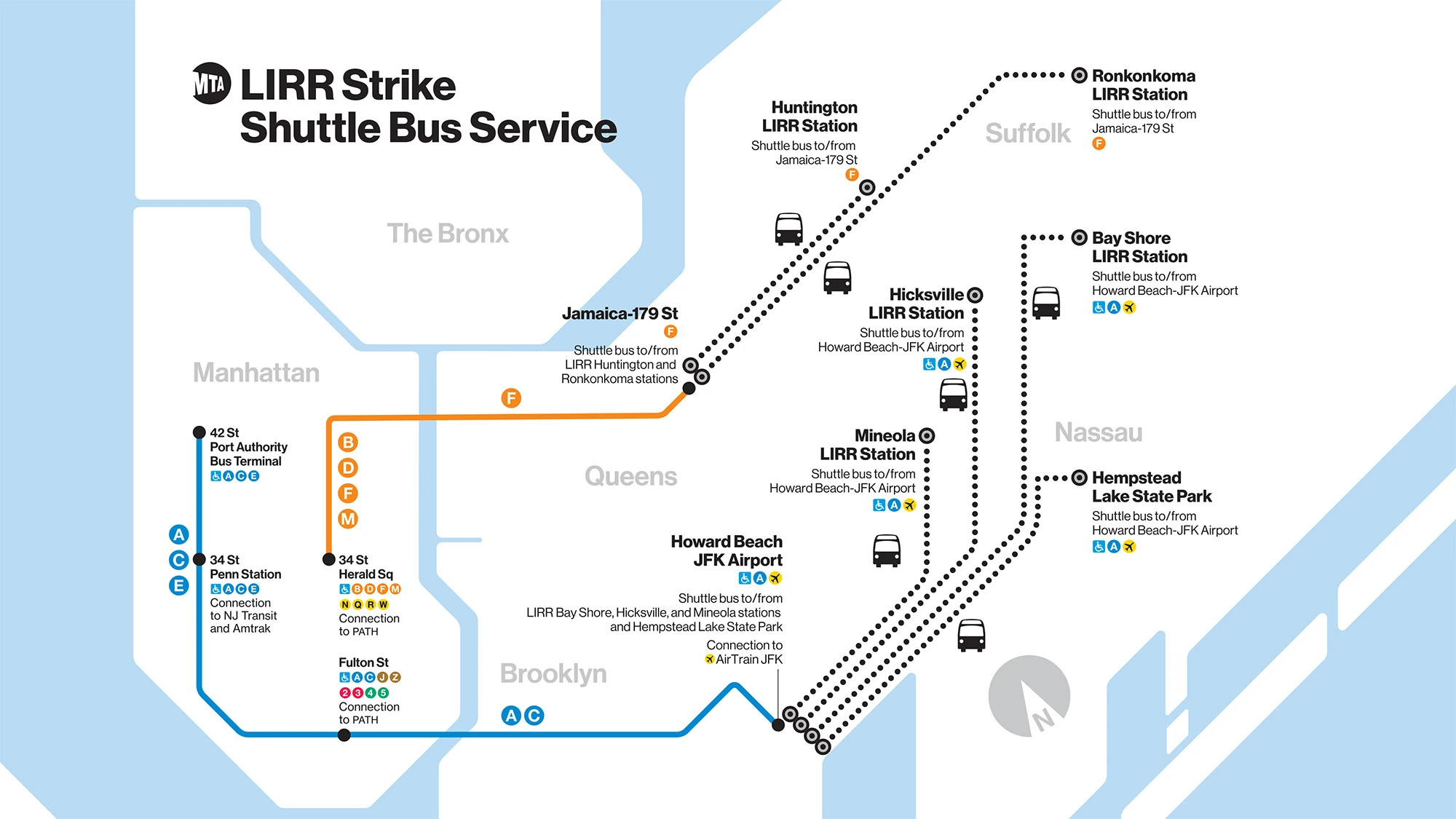
Meanwhile, commuters are the ones currently living through the transportation disaster.
On Monday morning, shuttle buses ferried riders from stations like Hicksville, Ronkonkoma and Mineola into Queens subway hubs, where packed A and F trains took over the rest of the trip. The MTA says it deployed 275 free shuttle buses, but even agency officials acknowledge that the system can accommodate only a fraction of normal ridership. The buses can handle roughly 13,000 passengers daily compared to the LIRR’s usual 250,000-plus weekday riders.
Governor Kathy Hochul and the MTA are continuing to urge anyone who can work remotely to stay home. And based on commuter stories so far, that advice may not be hyperbole.
One teacher commuting from Wantagh to the Upper West Side told reporters she left an hour early. Another rider from Copiague said he woke up at 2am for a Brooklyn commute that normally would have involved one straightforward train ride. One Long Island pharmacy worker told The City her trip ballooned into a five-hour ordeal.
So when will this actually end? That remains the billion-dollar question. Federal mediators from the National Mediation Board ordered both sides back to negotiations Sunday night and talks resumed Monday morning. Officials on both sides have described the discussions as productive and expressed “cautious optimism,” but no agreement has been reached yet.
Even if a deal is finalized today, commuters should not expect trains to roar back to life immediately. MTA sources say the railroad would still need at least a full day to inspect tracks, signals, equipment and reposition crews before restoring regular service.
In other words, your kitchen table may still be your office for at least another day or two.