
[image]
[title]
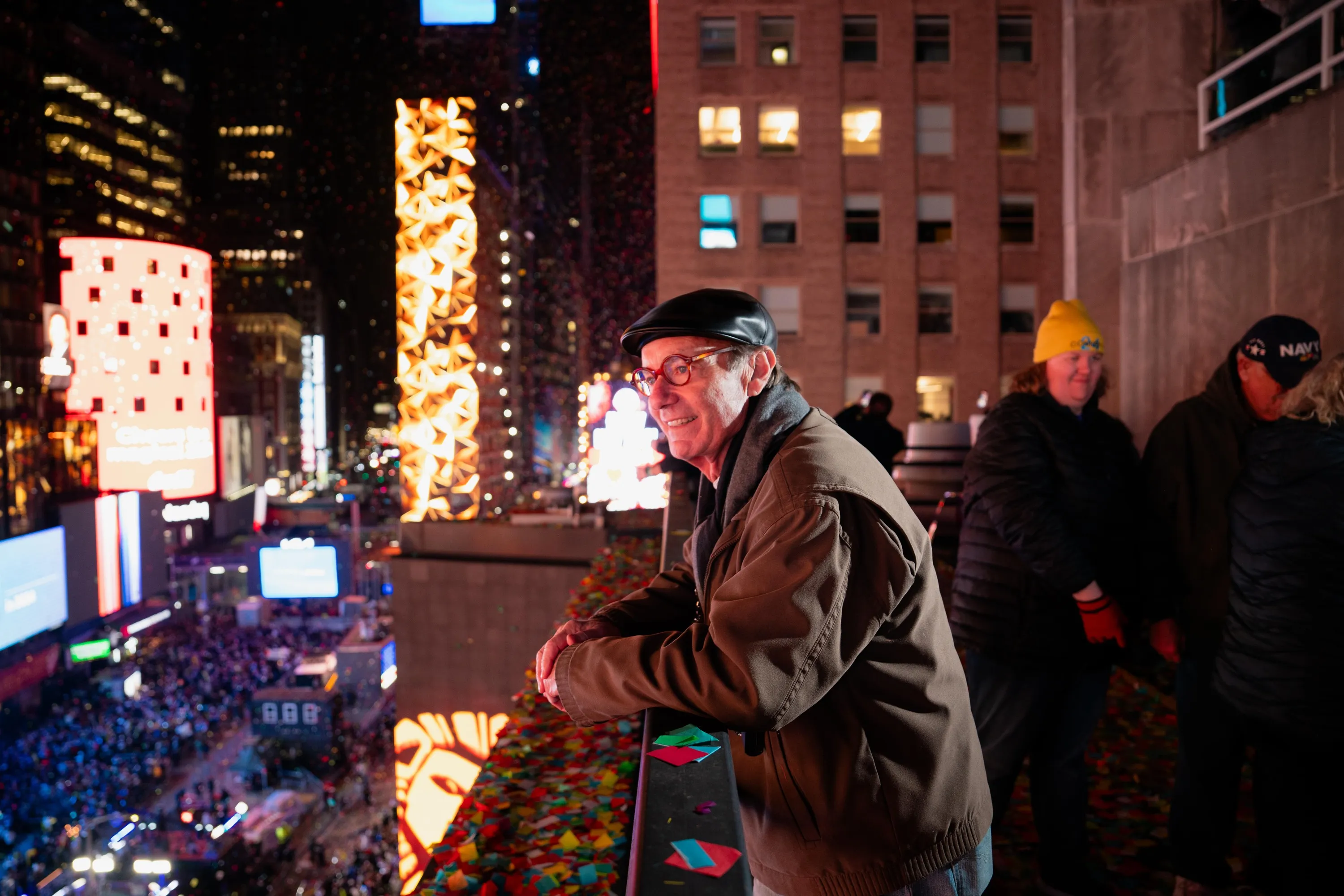
It’s 20 seconds before midnight on New Year’s Eve, and Treb Heining is perched atop the Minskoff Theater in Times Square. He holds his walkie-talkie to his mouth and utters the two words that take this celebration to its goosebump-inducing apex: “Go confetti.”
With that, more than 100 volunteers—a.k.a. confetti dispersal engineers—positioned atop buildings across Times Square dig their hands into boxes of colorful tissue bits. As the New Year’s Eve ball begins to drop, they toss the confetti, some emblazoned with handwritten wishes, into the air to float down onto the crowd of a million people below. The sounds of “Auld Lang Syne” begin, followed by Frank Sinatra crooning “New York, New York,” as revelers around the globe watch the celebration on TV, sharing kisses and wishes for the year ahead.
For the past 34 years, Heining has served as the so-called Confetti Master for the iconic New Year’s Eve celebration in Times Square. It’s a complex logistical puzzle that demands coordinating more than 100 volunteers atop seven buildings who lob 3,000 pounds of confetti into a swirling blizzard. For Heining, it’s a dream job. We sat down with him for a behind-the-scenes look at how he pulls off this incredible feat year after year—and how you can get involved. Responses have been lightly edited for clarity and length.
How does one become a Confetti Master?
It started with being able to tie balloons fast. It was something I learned when I was a balloon boy at Disneyland, back in the late ’60s. I had these ideas about putting putting four balloons on a paper clip, and I was the one that invented balloon garland and balloon arches way back when. So that’s how I started in the balloon business, and I basically pioneered the balloon decorating industry, starting in ’79 and then on all throughout the ’80s. Because of that, I got involved in Olympics, Super Bowls, political conventions and world records.
When Peter Coleman and Gretchen Dykstra with the original Times Square Business Improvement District contacted me about New Year’s Eve, I was in a good position to do something like this. The organizational aspect of it, I was primed for and I was ready. We started in 1992, and this will be our 34th year doing it.
How has the Times Square New Year’s Eve celebration changed over the years?
When Peter Coleman first called me, he said, “We’re in charge of the ball drop now, so we want to eventually make it a family event.” And we all looked at Gretchen and Peter like, “There’s no way this is ever going to be a family event.” Back in the day, it was just a big drunken brawl. The buildings boarded up their windows, there were no speakers, there was no sound. So we couldn’t imagine what their vision was, but they were exactly right. Sure enough, now you see that families do come out, and it’s very safe and it’s wonderful. So that part of it has changed.
The emotional aspect has never changed for me, and I think for a lot of the people there, too. It’s really hard to put it into words. When the countdown happens, it’s electric. The music kicks in, the “Auld Lang Syne” for me. And then, of course, Frank Sinatra singing “New York, New York.” Singing “Imagine” before the ball drops, that started year 2000. It’s become this tradition, which I love. I wish John Lennon could have lived to see it.

Walk us through the week leading up to New Year's Eve. How does this spectacle happen?
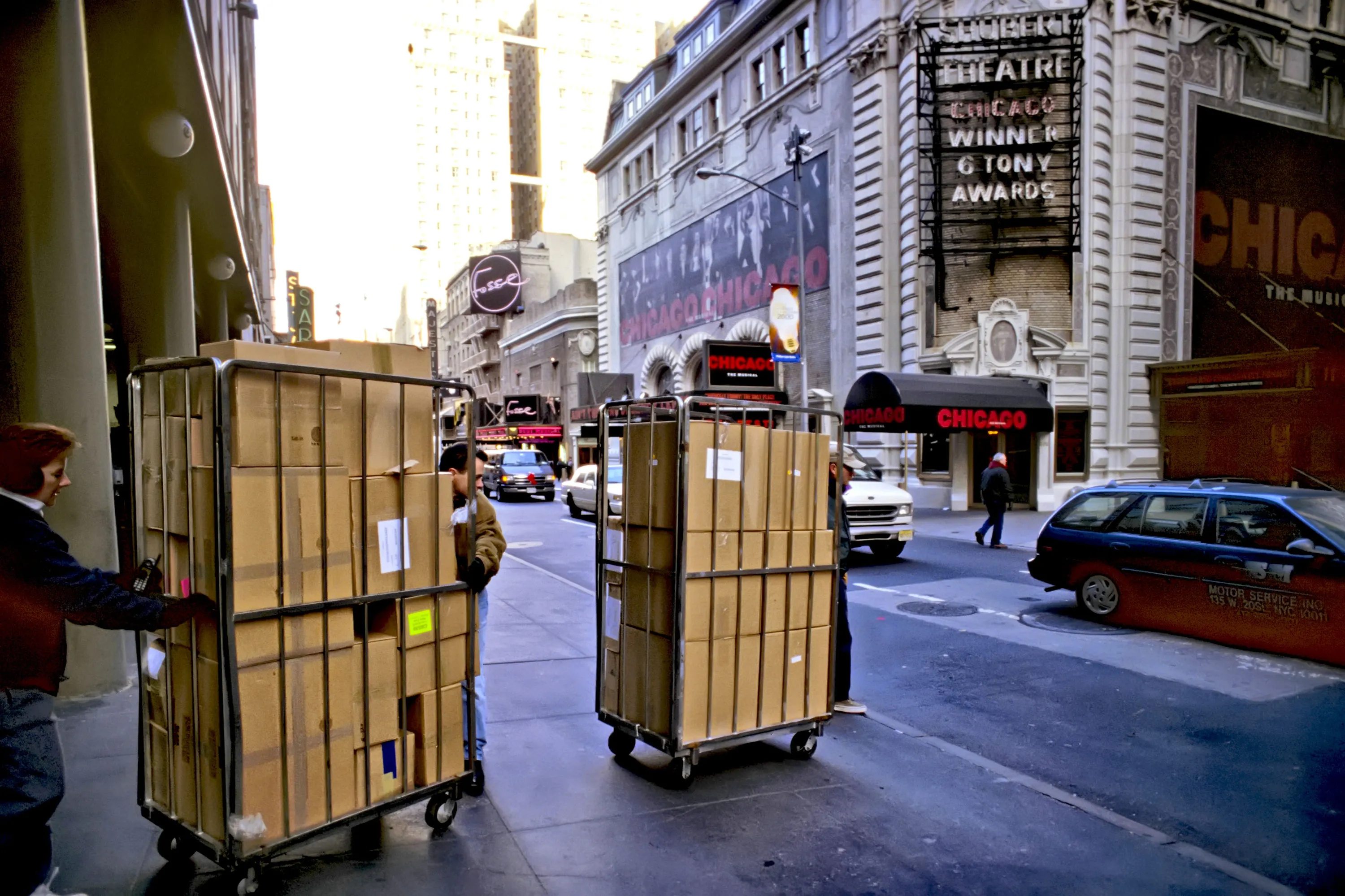
I fly in from California on the 26th, I change my clothes into a suit, and I hit the town walking, so I have a couple days to do what I want. The 29th is load-in day. The confetti comes into the city off a truck, and we move it to all the locations. It’s made here in the United States, it’s all recycled paper, and it’s 100% biodegradable. It’s 3,000 pounds of confetti, that’s 75 cases. Pushing the confetti through the streets is always so fun because nobody knows what you’re doing. We deliver it to seven buildings. We like to have all the all the locations because we never know how the wind currents are exactly to carry the confetti.
The 30th is our credential pass-out day, and we have a family and friends dinner. Then, it’s get a good night’s sleep.

What happens on New Year’s Eve to prepare?
The 31st is pretty much sleep in and take it easy. We pick up all the wishes that people have written, seven different bags. We have an orientation meeting in the evening for our volunteers; safety is primary. We pass out ponchos and beanies to everyone. We then walk down into our buidlings by 9pm.
The music is always playing. They have their credentials around their neck, and they’re walking through the fire lanes, and they get cheers sometimes. The people that get to do it for the first time, that’s one of the biggest thrills they get. Then it’s a matter of getting the confetti ready. The vantage point is so spectacular. There’s places on every one of our setbacks to go in and stay warm, have a little coffee, have a sandwich. None of it’s fancy. Sometimes people say to me, “Should we dress up?” I say, “No. Dress comfortably.”
The emotional aspect has never changed for me.
We have communication all night long with the crew captains. In the 11 o’clock hour, the crowd becomes electric at that point. You can feel the excitement. All the people have been waiting for so long, all of a sudden, it’s like, “okay, now it’s time.” That leads up to standby at about 10 minutes before. Everybody’s ready, all the confetti is ready. After all these years, you would think that I’m just sitting there just waiting, but I’m pacing. I’m walking up the entire block, back and forth, back and forth, because I’m nervous. I equate it to performing.
About 20 seconds before midnight, we give the cue. I’ll say, “go confetti, go confetti.” The confetti hits the air, and the noise doubles again. You’re sitting there with goosebumps and just hurtling the confetti off as fast as you can, and it becomes a blizzard within seconds.

Why do you start throwing the confetti before midnight?
Peter from the Times Square BID wanted me to start the confetti early. He said, “when the live feeds come in from around the world, we want the confetti to already be in the air.” Gretchen said it used to be that we would get a TV live feed of five or 10 seconds and that was it. She said, “when you started the confetti, we would get a minute or two minutes.”
View this post on Instagram
What about the confetti on which people have written their wishes?
Each crew chief has a bag of the wishes, and we’re mixing in the wishes as we fluff the confetti.
One year, there was a volunteer who said, “Treb, let’s read some of these.” There was a wish there that said, “I wish that my mom’s cancer goes away,” and it had a phone number. He said, “we’ve got to call.” They answer the phone, and I said, “I just had to call you tonight on New Year’s Eve. I organize the confetti here in Times Square, and we just came across your your handwritten note.” It was silence at the other end. They were crying. I said, “I just wanted you to know that it will be going out tonight.” And they said, “Thank you so much.” And that was it. But having a connection like that…
What happens after the ball drops?
We collapse our boxes, and we clean up as much as we can. Then we have a party afterwards until around 2 or 2:30am.

What are some of the most special moments you’ve experienced in your 34 years doing this?
I did get a personal thank you from Dick Clark. It was a thrill. He said, “you make me look good.” And, you know, I had grown up watching him. To play a part in it is a real thrill.
I have to tell you another story. One year, after a newspaper article about me had published, I’m sitting up there on the Minskoff, and it’s like 11:15 or so. We’re getting ready, and I’m kind of getting nervous. All of a sudden, a group of firemen came out. And I’m like, “Oh my God, what’s going on? What happened?” This one guy comes up and he said, “We just came up because we want to shake your hand. We read the story in the paper. Anybody that loves this city as much as you do, we just had to say thank you.” This is New York. There’s nothing else like New York.
How can people get involved?
It was hard the first couple years to get people involved in throwing the confetti. We had to hire people. But then word got out, and we’ve never had a hard time since then. Now it’s over-the-top. I made a website where people can express interest. I can only accept 30 per year because every person selected gets to bring a guest. Then, I have to save room for the crew, and that puts us close to 100. There’s only so much space on the setbacks, and I have to be respectful to the building owners.
This is New York. There’s nothing else like New York.
Time Out Tip: Enter your name now if you want to try to secure a spot as a confetti dispersal engineer for next year. In the meantime, you can visit the New Year’s Eve Wishing Wall in Times Square during December to write your wishes on a piece of confetti that will become a part of the New Year’s Eve celebration. Or if you’re not in NYC, you can submit a digital wish, which will also be included in the festivities.