[category]
[title]
Jeju Haenyeo blends mesmerising visuals with poetic storytelling, interactive elements and fresh produce from Jeju Island

Think Jeju Island and a few things might come to mind: sweet, juicy hallabongs, stone grandfather statues, the majestic Hallasan, salty sea breeze, Jeju abalone, and... haenyeos. Much has been said about these women divers, who don their iconic orange suits to plunge into the sea and harvest its bounty – all in one breath. The profession has been well represented in recent Netflix dramas like When Life Gives You Tangerines, Welcome to Samdal-ri, Our Blues and more. So when we heard that an immersive dining experience from Jeju about haenyeos was coming to Singapore, we had to check it out.
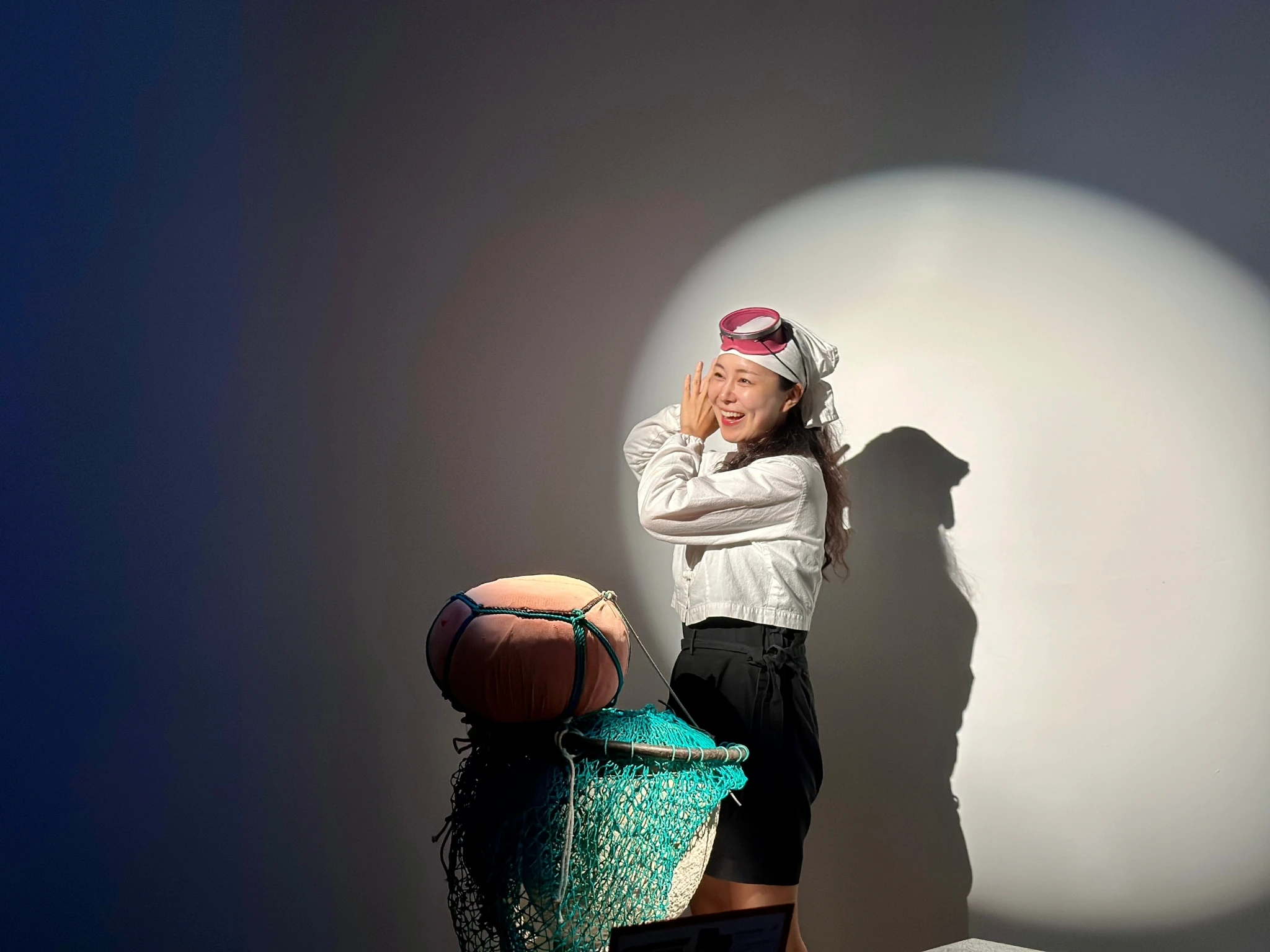
Known as Haenyeo Kitchen in Korea, the dining show currently has two locations on Jeju Island, and after six years, it's finally gone global. Lucky us, because it chose the Arts House in Singapore as its first and only overseas branch, even hosting the First Lady of Korea on her recent visit. Breathing life into the whole experience is performance artist Kim Ha-won, 34, who is herself a Jeju native. She is joined by a group of two or three other performers and hosts, who take us through the stories of Jeju Island – its history, seasons, produce, people and customs – with a series of poetic narrations, immersive visuals, interactive activities and of course, food. The whole thing lasts two hours and is priced at $148 per guest.
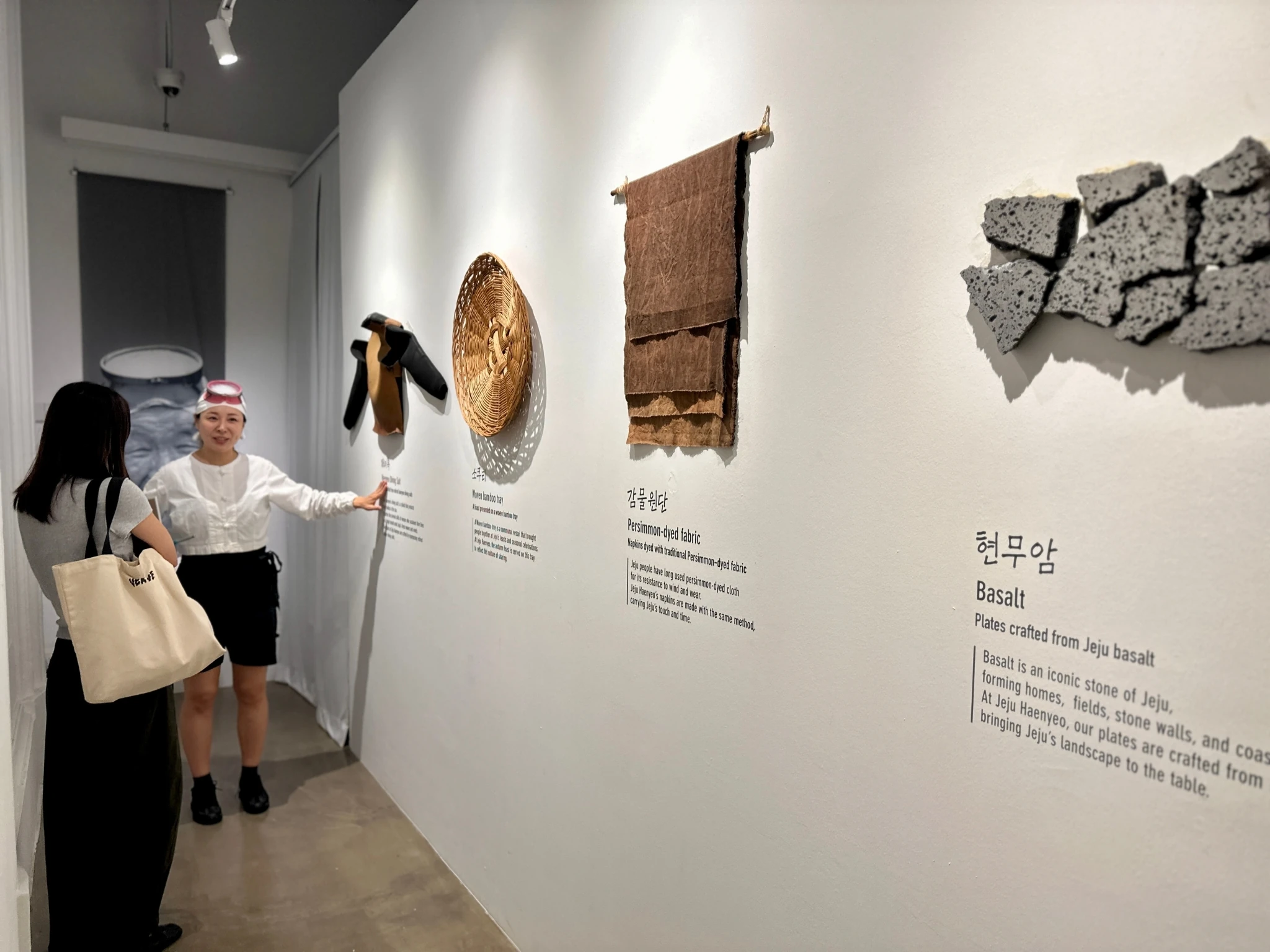
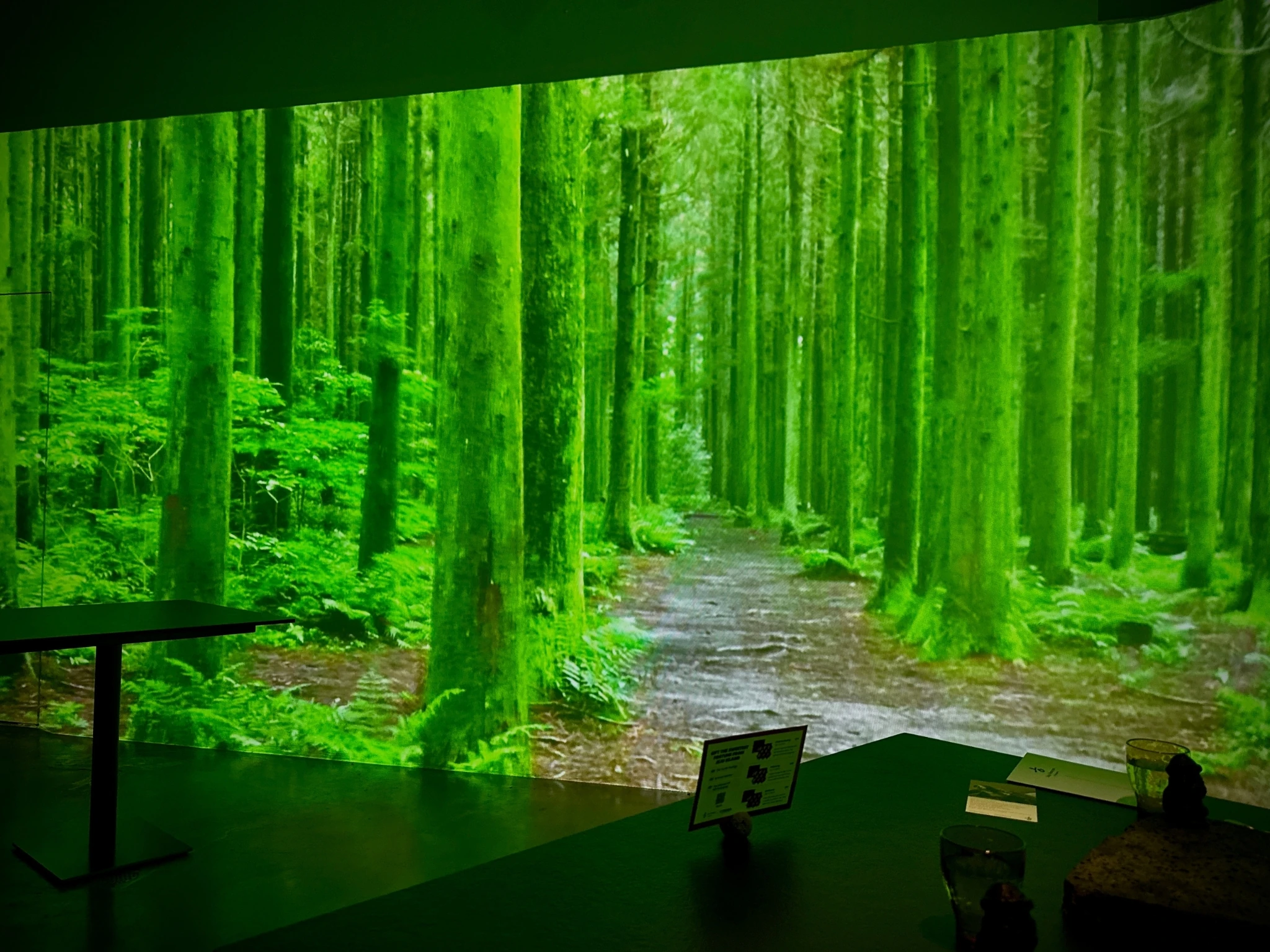
Our evening begins at the entrance of Jeju Haenyeo, where we get acquainted with materials from the island that we'll come across throughout our dinner. Think plates crafted from basalt, napkins made from persimmon-dyed fabric, woven bamboo trays to feast from, and chairs upholstered with real, worn haenyeo diving suits. We then enter a small, dark room with an L-shaped dining layout, folksy music engulfing the space and white walls that later double up as projection screens to showcase the stunning, panoramic landscapes of Jeju. The show starts promptly – the lights are dimmed, and the spotlight is on Ha-won as she delivers her opening monologue on the origins of Jeju Island.
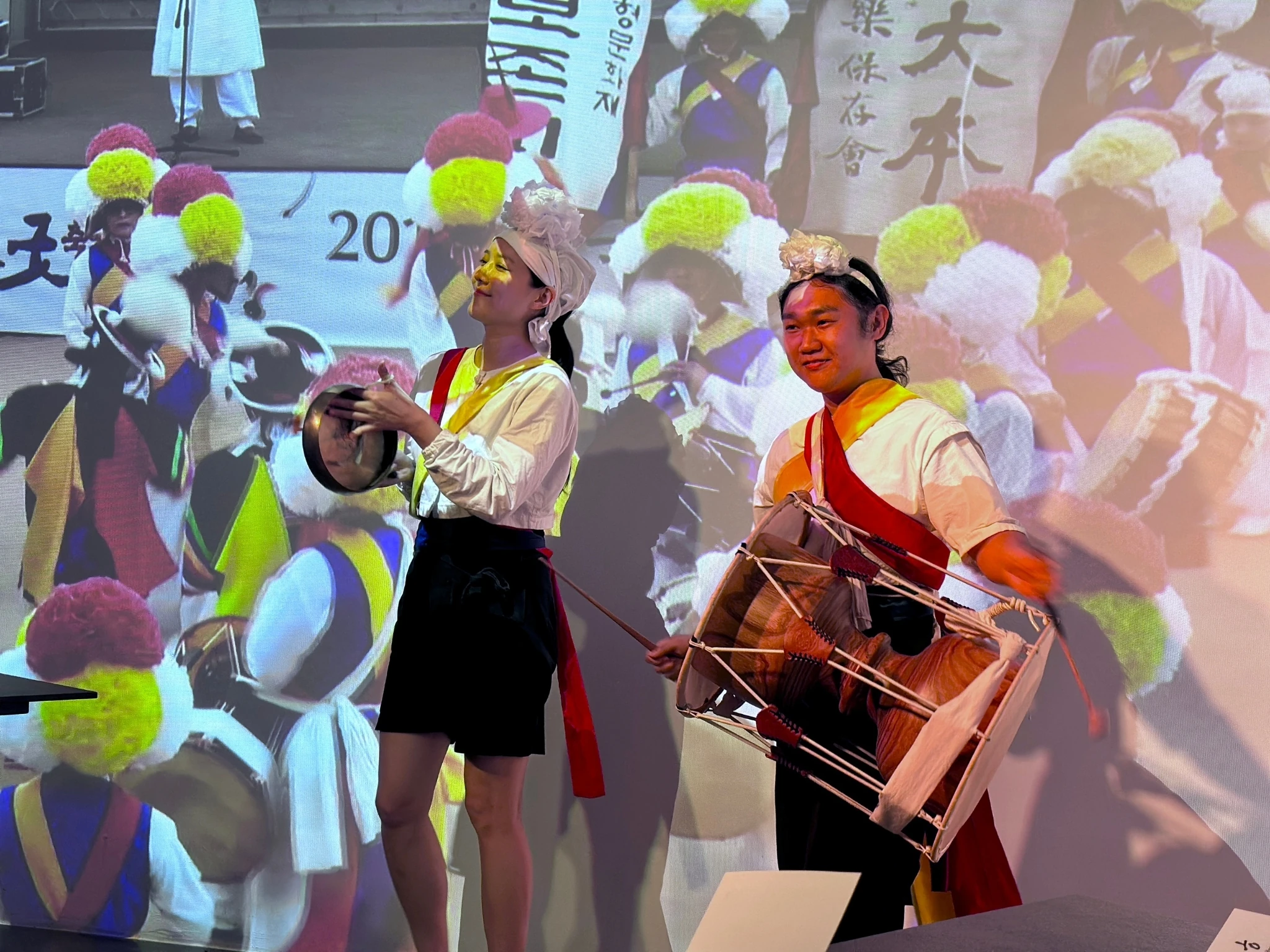
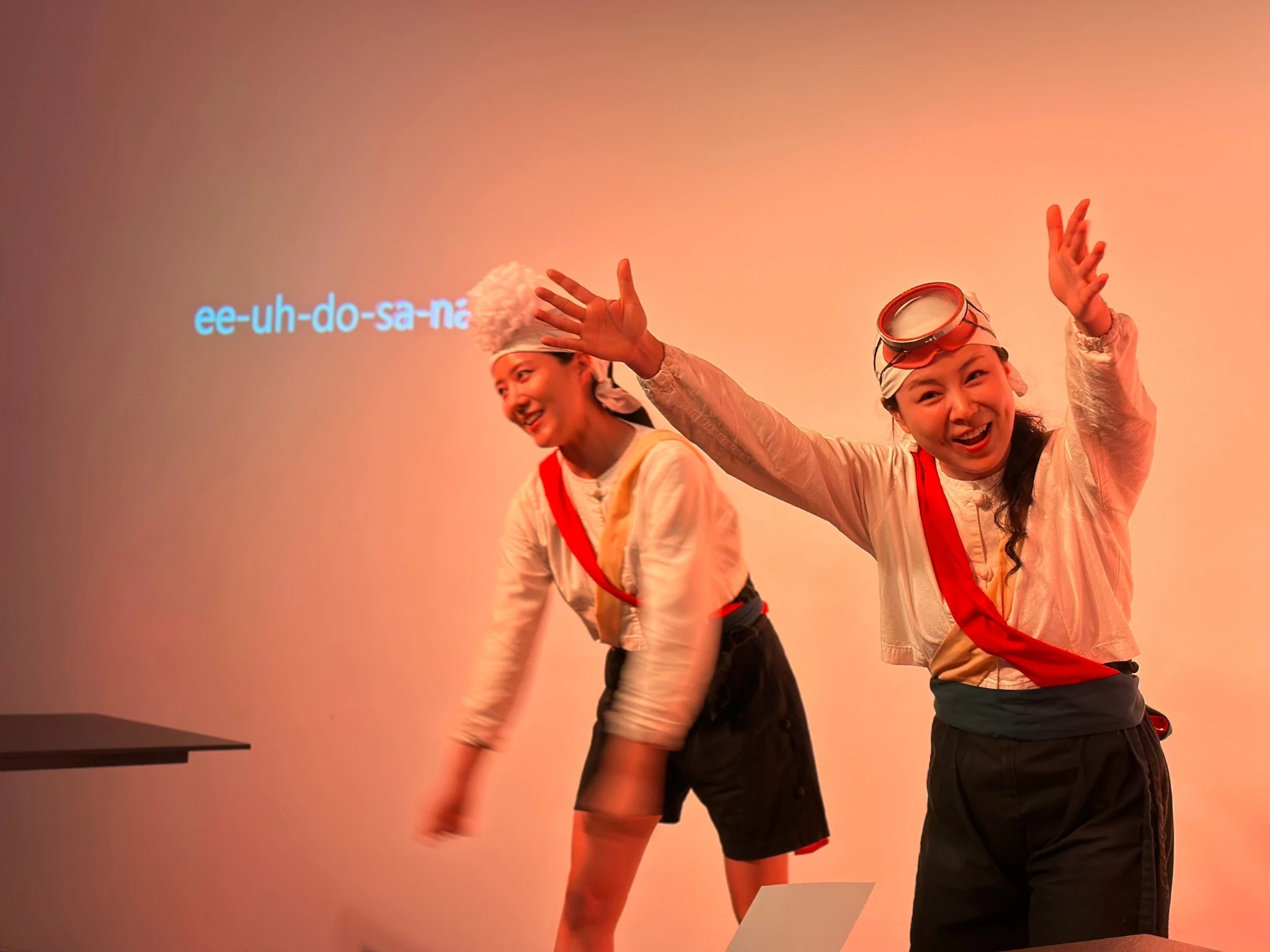
Quickly, we notice how everything is highly choreographed, from the speeches to the performers' expressions, the props used and so on. If you've been to dining experiences like the Banquet of Hoshena or Le Petit Chef, it shouldn't be new to you, but if it's your first time, like us, it can take some getting used to. Think of it like watching a play unfold up close, in a much more intimate setting where participation is encouraged at times, whether through the questions asked, taking part in a samul (traditional percussion performance), or even some singing. Depending on the audience that day, these interactions can feel either breezy and natural or slightly forced. Ours was a rather shy group, so getting the audience to volunteer to play an instrument or join in on a folk song felt as difficult as making Singaporeans do the Kallang Wave.
Our favourite part of the experience – besides the eating – is hands down, the visuals and music. As the meal unfolds through Spring, Summer, Autumn and Winter chapters, we are treated with accompanying scenes of Jeju's lush canola fields, deep blue waters, mystical, atmospheric forests, quiet, snowy mountains and more, projected on the screens. The L-shaped layout makes you feel like you are being taken through these very landscapes, encountering Jeju up close. Our only gripe? Depending on your seat, you might be able to spot glimpses of the kitchen's bright white lights through the side door, which can interfere with the immersive environment that the team tries to create.
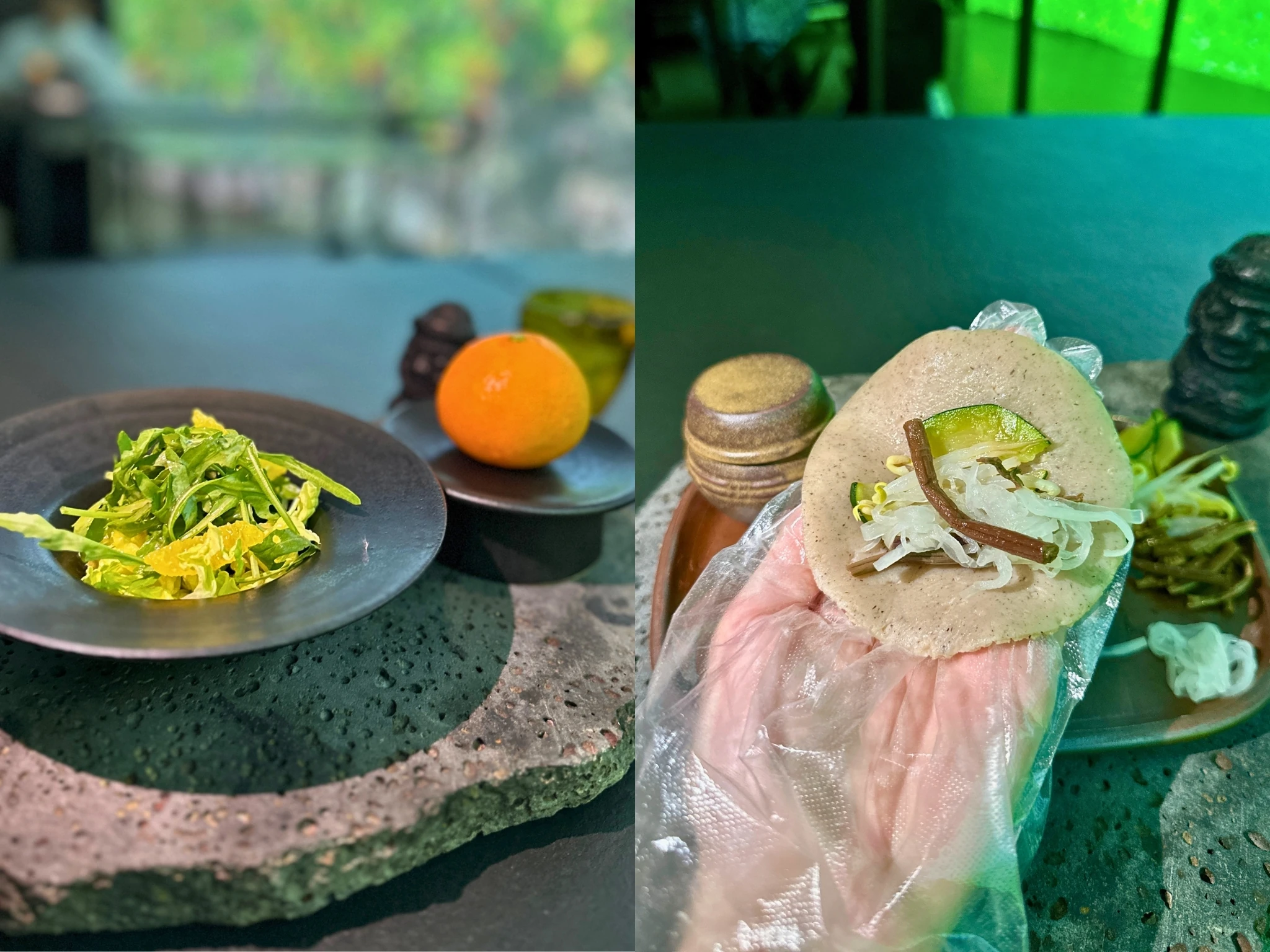
The first thing to know is that while the name, and perhaps the price, of the experience suggest that there would be plenty of seafood served, that is not quite true to our experience. The show only dives into the story of haenyeos in Act Two: Summer, after two 'Spring' dishes are served – rocket salad with perilla oil dressing and Jeju tangerines, and bingtteok (buckwheat pancakes) with accompanying sauteed vegetables. We are given a short spiel about haenyeos, how they are mostly in their seventies, diving 10 to 20 metres in depth for over eight hours a day.
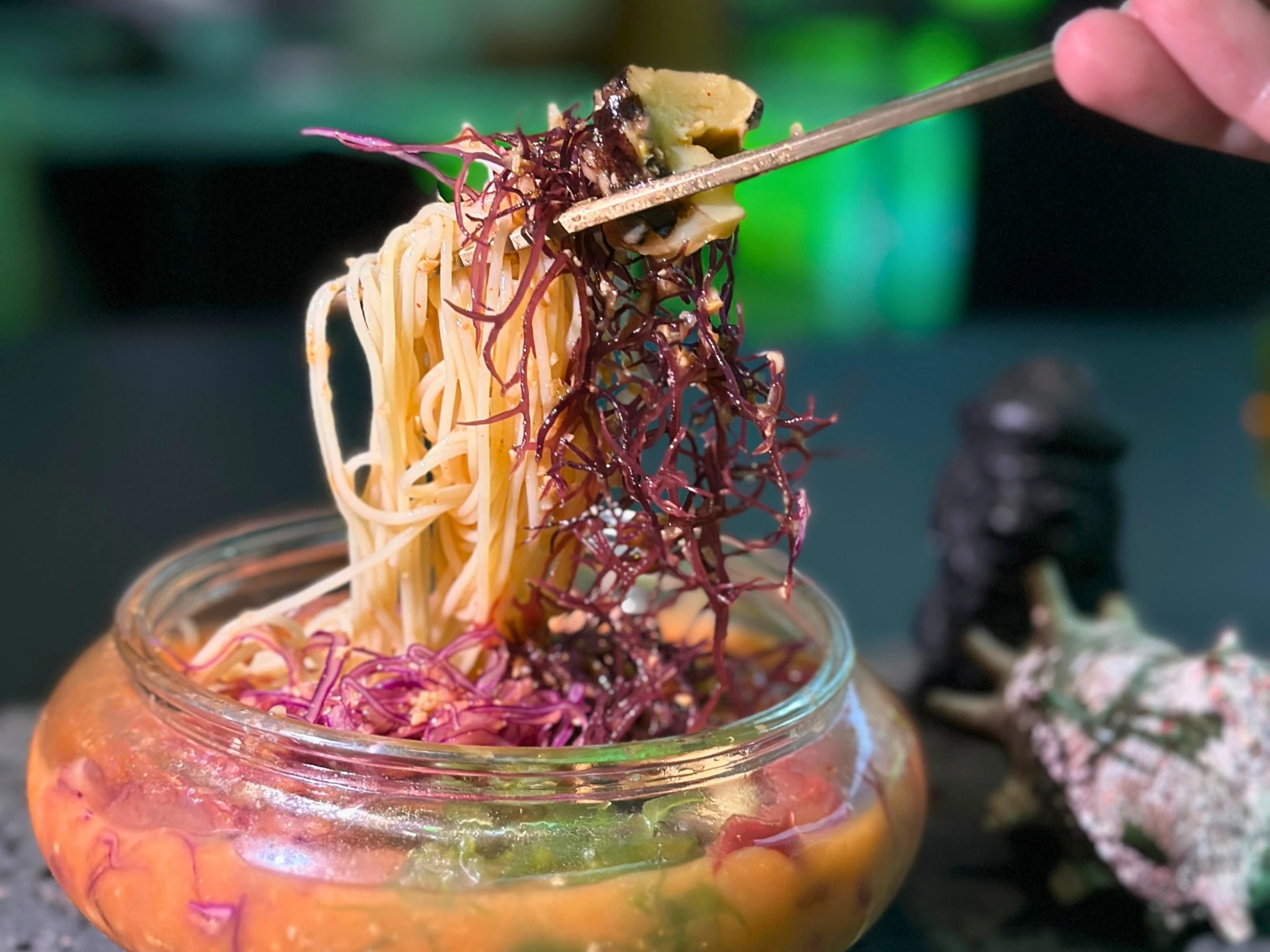
Throughout the meal, seafood only features prominently in one dish: the Jeju mulhoe or cold noodle soup, with the main ingredient being bbulsora (conch), caught by active haenyeos who partner with the show. The reason is the unpredictability and limited quantities of hand-harvested seafood, as well as the need to preserve species like abalone and prevent over-harvesting. While the constraints are valid, this realisation might be quite disappointing for seafood lovers. The team makes up for this with intentional links to haenyeos – citing real names and real stories – though we're left curious and wanting more.
That's not to say the food itself isn't good, though. We like the texture of the noodles in the mulhoe, especially the fresh vegetables and different colourful seaweed varieties in the soup. The broth is a spicy, soybean paste base that is incredibly tangy and addictive, though we wish we could customise the amount of mustard, as the dish gets a little too sour over time. For those who want to sample more seafood, there is also the option of adding on Jeju tile fish in a later course for $35, though whether it is caught by haenyeos is not specified.
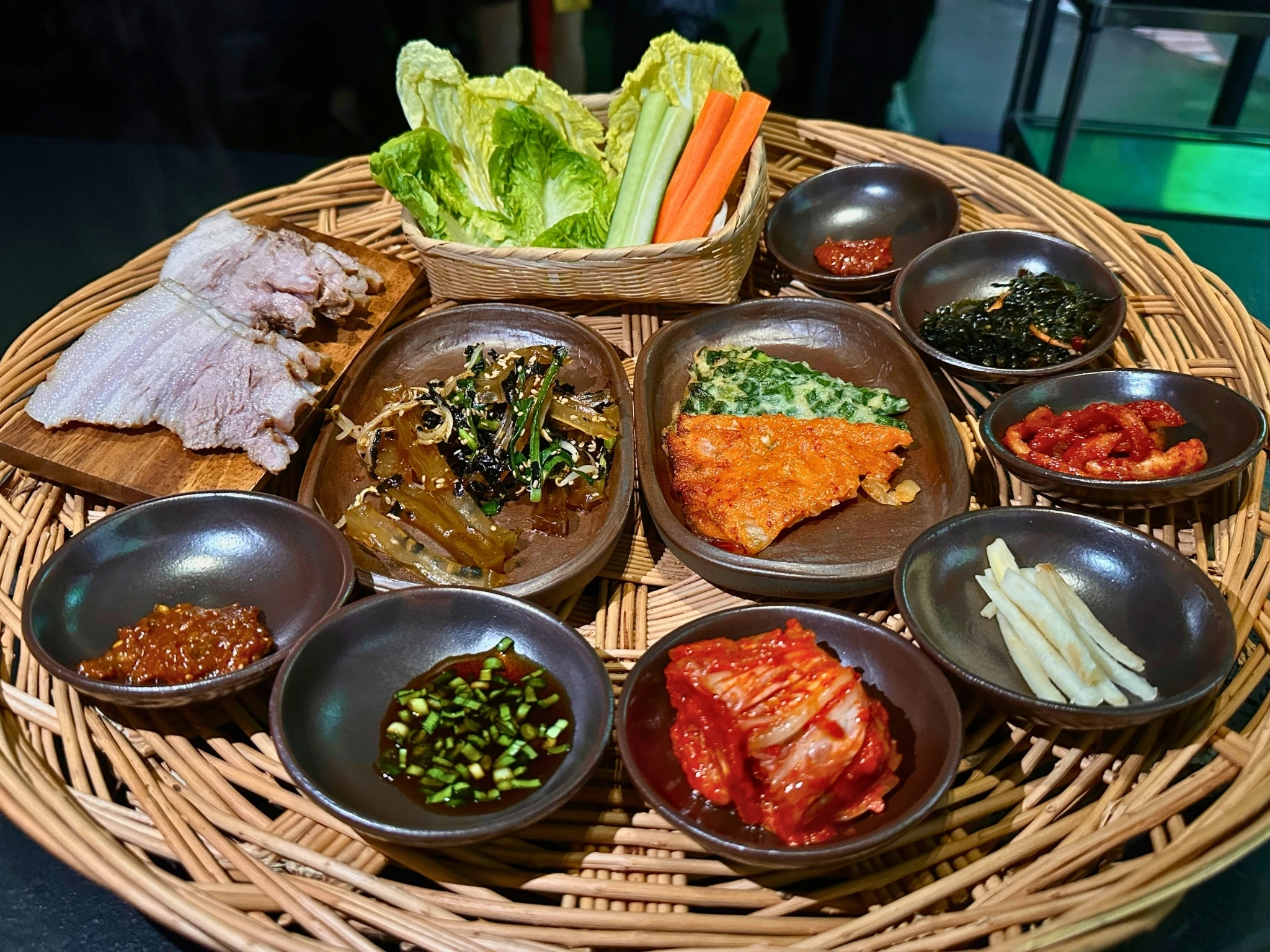
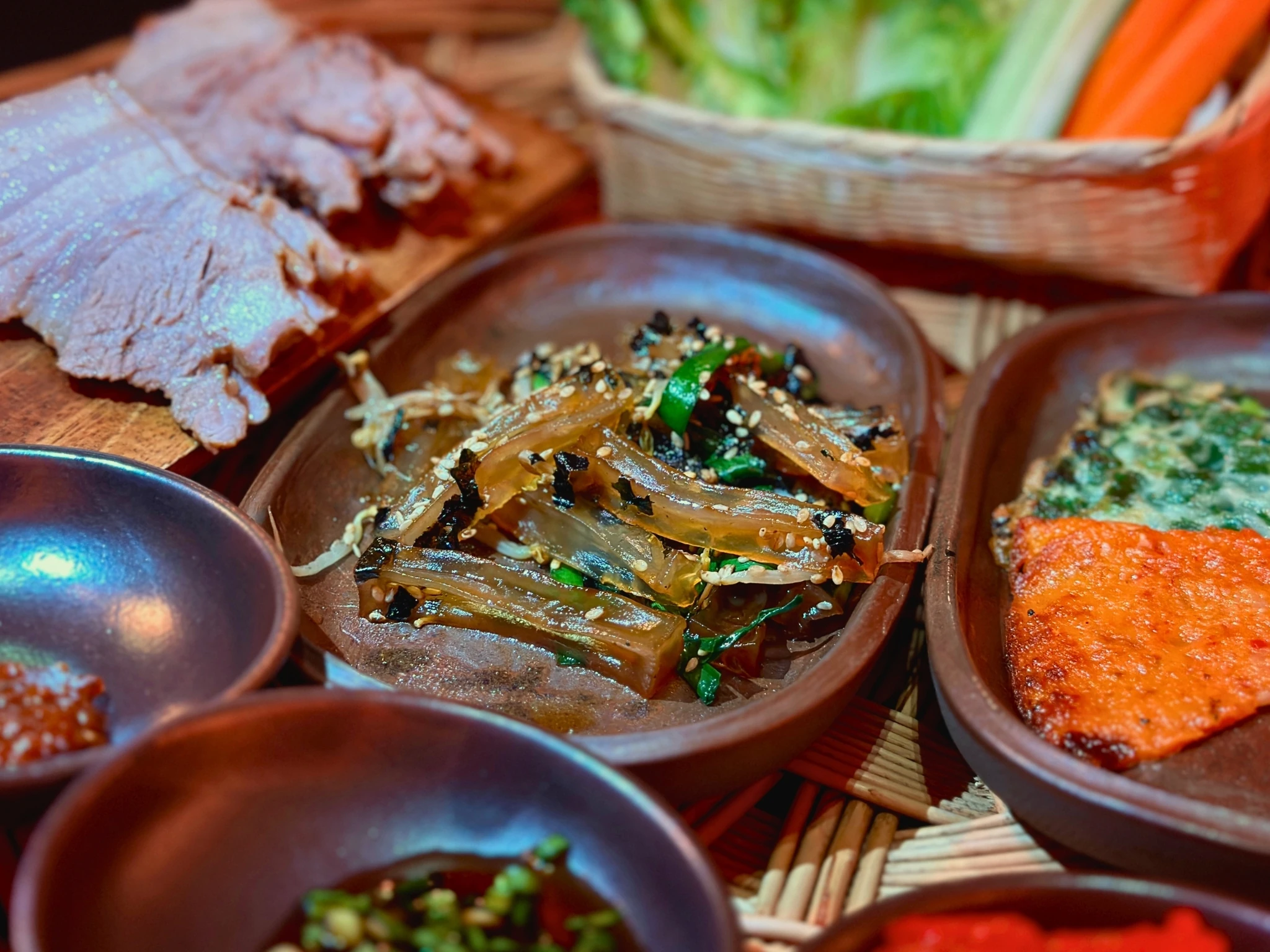
What really fills us up is the traditional hansangcharim or Autumn Feast, which features a generous spread of banchan like Korean pancakes, radish kimchi, seaweed and more. The standout: slices of dombe pork (boiled Jeju Black Pork) served on a cutting board. They are hearty and meaty without any gameiness, though not quite succulent or tender. The best way to enjoy this is on a slice of lettuce, with a dab of jeot (fermented beltfish innards), kimchi and ssamjang, followed by a scoop of barley rice dipped into soybean paste soup. But our favourites have got to be the mungbean jelly, marinated in a sauce similar to what's used in japchae, as well as the crunchy bellflower roots, with a similar texture to burdock but less intense and more fragrant in taste.
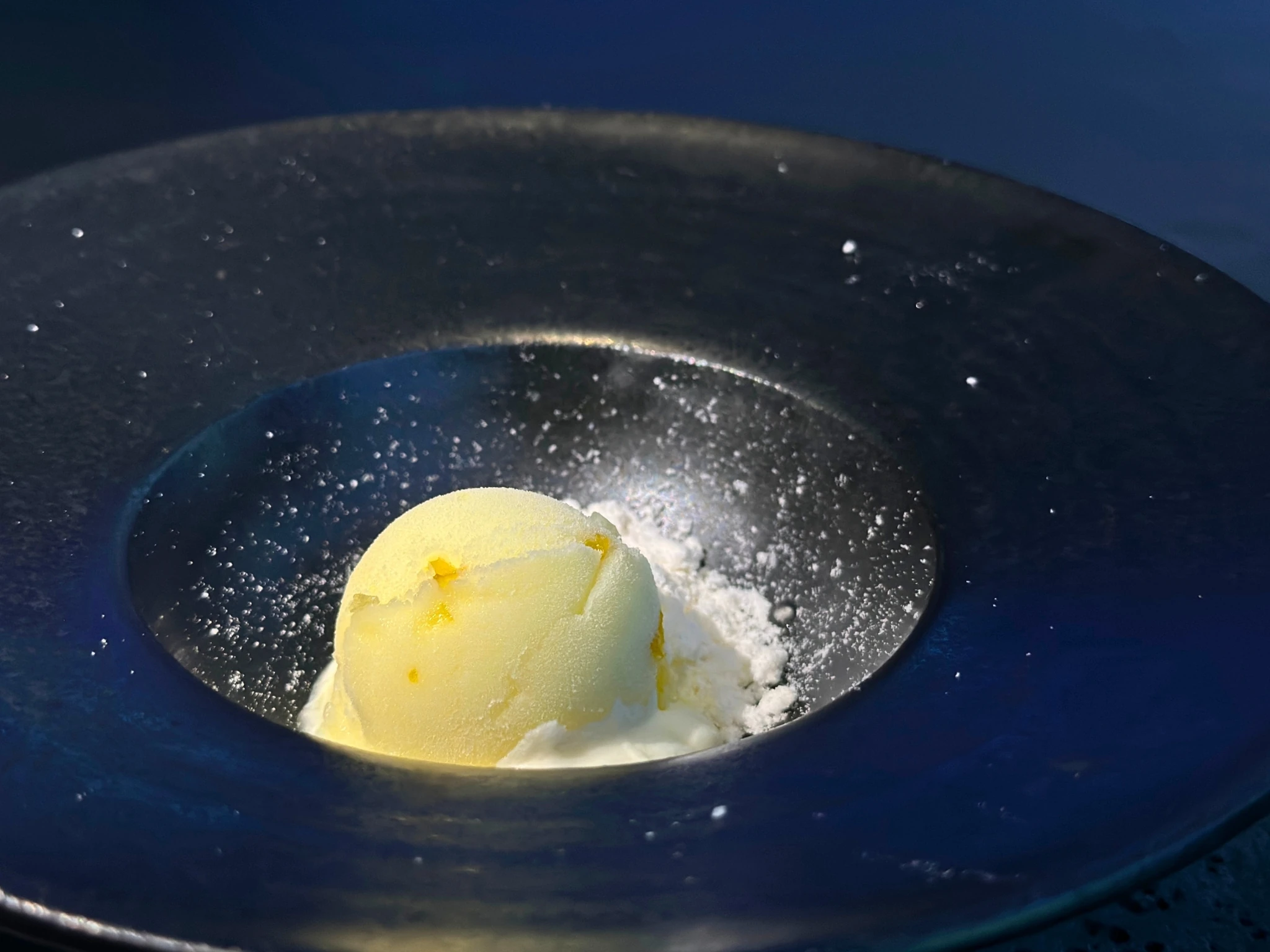
Dessert is equally lovely. While there's nothing quite inventive about mascarpone and yuzu ice cream, the all-white dish, enjoyed with the background of snowy Hallasan and meditative background music, makes for quite the experience. And that soothing Solomon tea at the end feels like a warm hug, wrapping up the whole experience nicely.
Jeju Haenyeo Singapore is one of the most unique dining experiences you can find in the city right now. At $148 per person, it is on the steeper end for dinner, even on par with dinner menus at some award-winning restaurants. Though if you think of it as a ticket for a play where food happens to be served, it makes much more sense. For the first half of the experience, it is mainly a show with just some eating, and in the second half, especially when the hansangcharim is served, it is more eating and friendly service than edu-tainment and performance.
You'll spot couples, friends, families and just about anyone here, but it does fit the bill if you're looking for a date night activity to reserve for a special occasion. So, should you try it once? Definitely. Should you come back? Maybe not. At the end of the day, nothing quite beats the real thing (read: travelling to Jeju) after all, but if the experience gets you scanning for cheap flights the next day, we guess the team's job here is done.
Jeju Haenyeo Singapore is located at The Arts House Annex Building, 1 Old Parliament Lane, Singapore 179429. Show times are 5pm and 7.45pm from Wednesdays to Fridays, and 12.30pm, 5pm and 7.45pm from Saturdays to Sundays.
Find out more and make a reservation here.
READ MORE:
Discover Time Out original video