[category]
[title]
In addition to hosting eight matches, L.A. will be home to a bunch of major fan events across the city.


Don’t have the cash to score tickets to the FIFA World Cup? While it won’t be quite the same as having a seat right on the pitch, the Los Angeles World Cup 2026 Host Committee has announced a slate of major watch parties for this June and July’s matches, as well as a handful of community celebrations that lead up to the 39-day tournament.
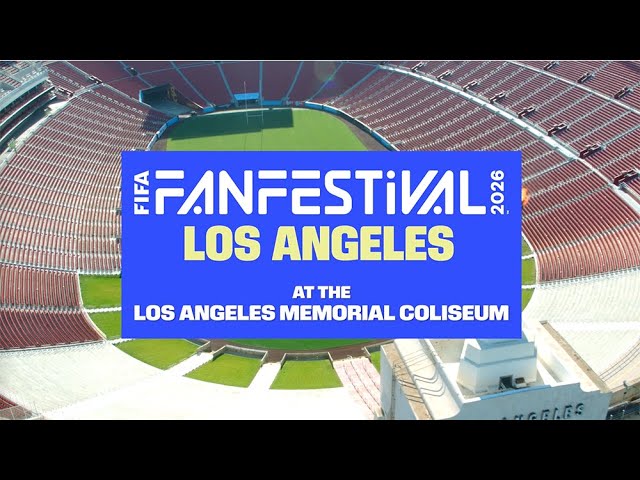
This summer’s World Cup shares its hosting duties across 16 cities in the U.S., Mexico and Canada; here in L.A., all eight locally-staged matches will be held at SoFi Stadium, including the United States men’s national soccer team opener on June 12. But arguably the main hub of activity for the opening weekend of the tournament will be over at the Los Angeles Memorial Coliseum. Held from June 11 to 15, the FIFA Fan Festival there will feature live match broadcasts, concerts and food; we don’t know yet exactly how the ticketing process will work, but expect more details to be released in early March.
If the Coliseum is a trek, there’ll also be a rotating slate of fan zones across L.A. County, with official watch parties held from Venice to Downtown L.A. to Pomona. Organizers tell us that some of these events will be free while others will have a nominal fee; in any case, the objective here is to get as many Angelenos swept up in the World Cup as possible.
The Original Farmers Market (Fairfax): June 18–21
City of Downey: June 20
Union Station & LA Plaza de Cultura y Artes (DTLA): June 25–28
Hansen Dam Lake (Lake View Terrace): July 2–5
Earvin “Magic” Johnson Park (Willowbrook): July 4, 5
Whittier Narrows (South El Monte): July 9–11
Venice Beach: July 11
Fairplex (Pomona): July 14, 15, 18, 19
West Harbor (San Pedro): July 14, 15, 18, 19
“Ultimately, everyone will naturally remember what happens on the pitch, but really where the memories are created—the experiences are shared—is off the pitch where people come together and to celebrate the game,” said Ross McCall, FIFA World Cup’s executive director of commercial operations, at a press conference on Wednesday. “And right here in Los Angeles is going to be the perfect stage for the world to see how incredible hosts they will be.”
In the lead up to the tournament, the host committee will also hold a series of community events, including 26 soccer clinics for kids; a “Kick It With Us” mobile bus tour toting merch and games that kicks off on March 3 and is set to visit various high-foot-traffic locations; and a volunteer-run community beautification event at Gloria Molina Grand Park on March 14 (with a second event to be announced). L.A. Tourism will be keeping tabs on all of these official events on a World Cup section of its website.
It’s been more than three decades since the World Cup has been held in the U.S. (though the FIFA Women’s World Cup took place in the U.S. in 1999 and 2003)—and Cobi Jones, the former national team midfielder and current Los Angeles World Cup 2026 community ambassador, looked back fondly on the eight matches held in Pasadena in 1994. “Those matches at the Rose Bowl did more than fill the stadium: They helped changed the trajectory of soccer in the country… creating leagues and creating a passion for this sport,” Jones said. “That’s why I’m so excited to welcome the world back into the greatest city on the planet, my hometown of Los Angeles.”
The host committee also unveiled on Wednesday that the World Cup is estimated to bring an $892 million increase in spending across L.A. County, and that a projection of $230 million in media value from future tourism will push that total up to $1.1 billion. Of course, this also comes amid mounting fears of a (probably unlikely) World Cup boycott in the U.S. due to aggressive and, most recently, lethal federal immigration enforcement as well as President Trump’s threats to take over Greenland.
Discover Time Out original video