[category]
[title]
This traditional art is beautiful, but its modern succession is threatened


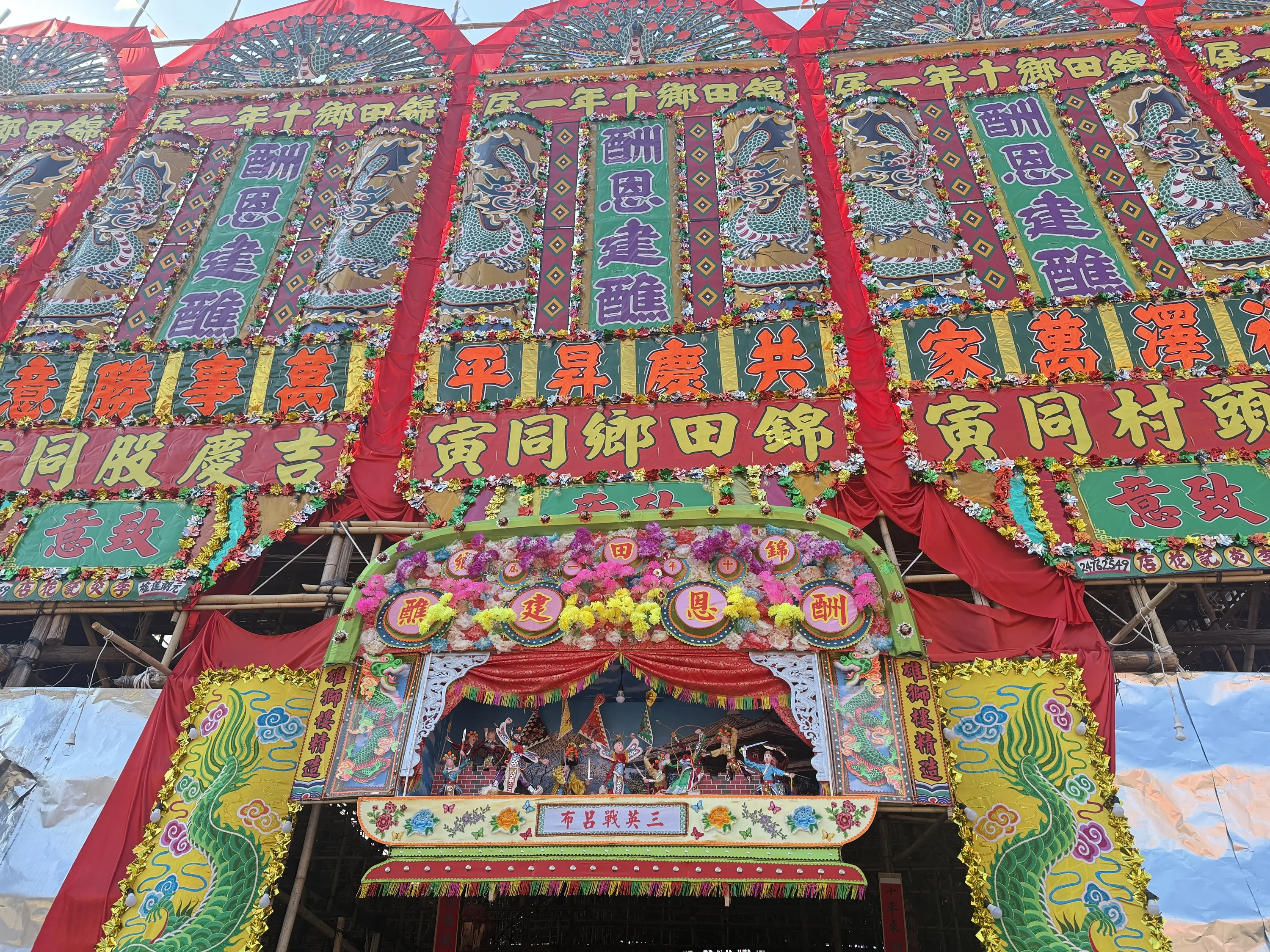
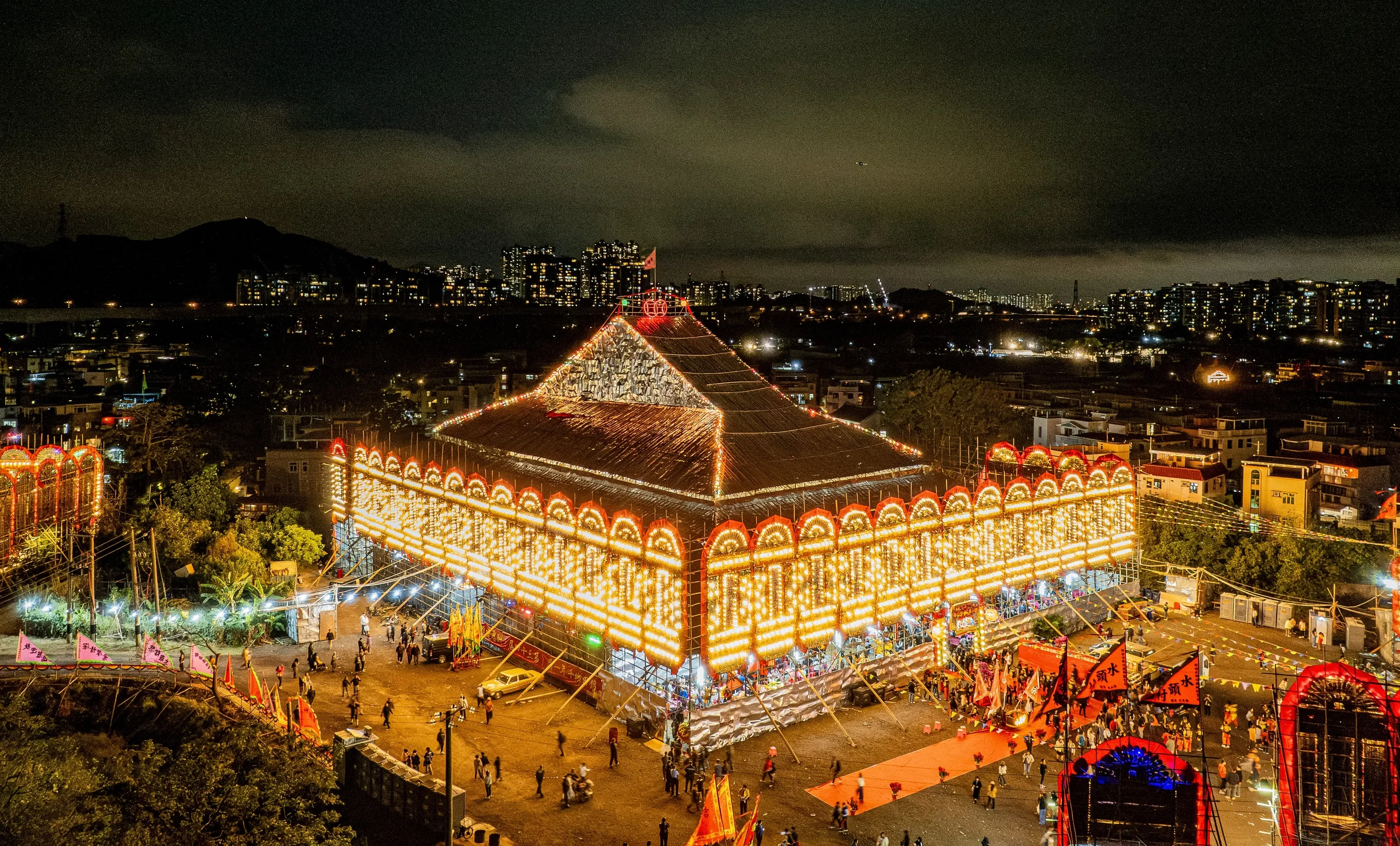
Just last month, Hong Kong’s bamboo scaffolding for the Heung Jiao Festival in Kam Tin – also known as the Da Jiu Festival – garnered international acclaim when it officially got certified by Guinness World Records as the world’s largest temporary bamboo altar structure. Standing at five stories high and over 40,000 sq ft, this massive structure was erected using more than 30,000 bamboo poles, and took a team of 17 craftsmen 60 days to assemble. The man leading this ambitious project was Master Lai Chi-ming, who is now one of approximately 10 theatre scaffolders remaining in Hong Kong.
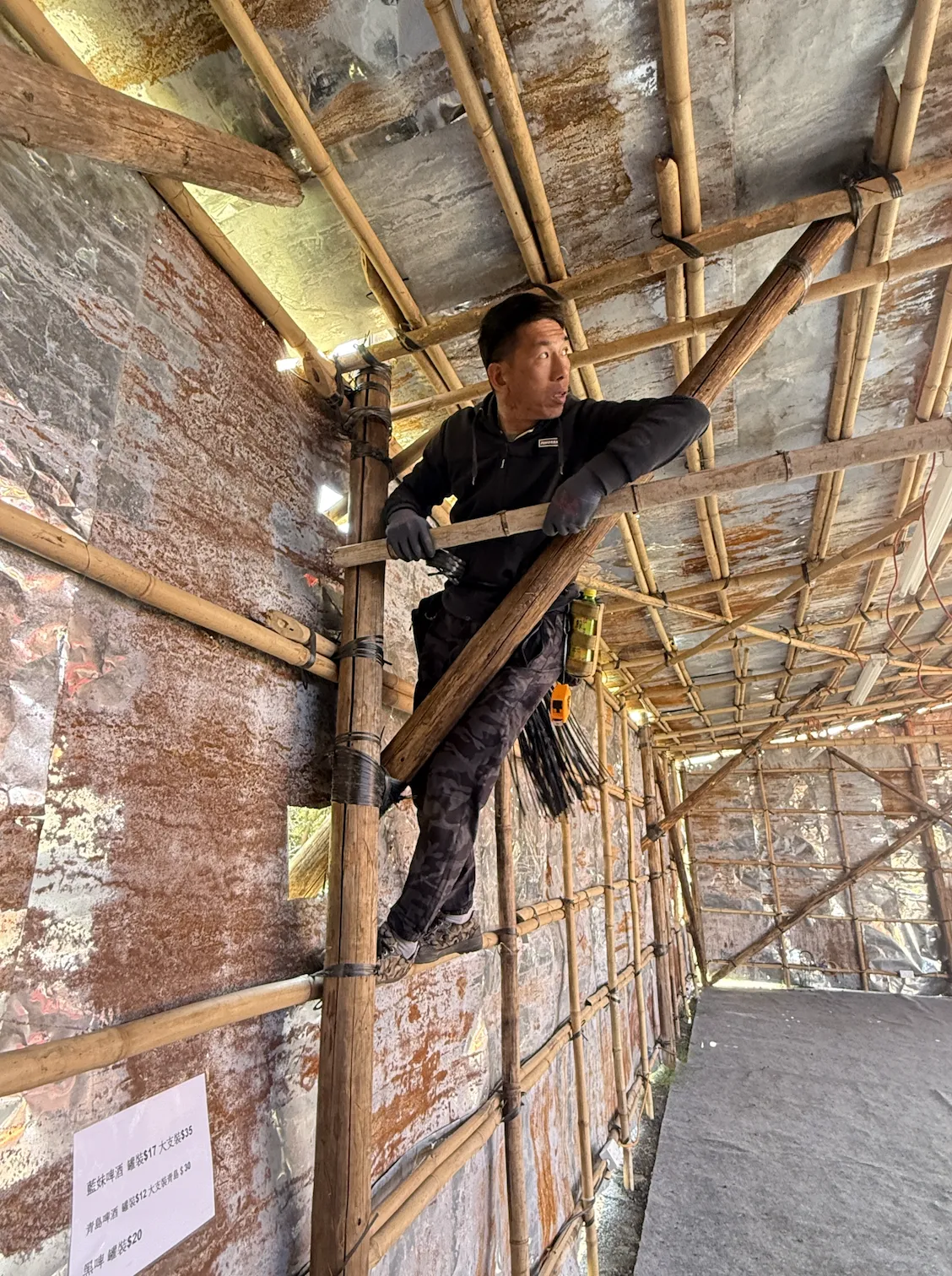
“I don’t need drawings or blueprints; I can start building as soon as I arrive on the site,” Master Lai says with a smile. He fell into the trade in his youth, ‘stealing skills’ by following his father, accumulating experience with hands-on practice before eventually becoming a master craftsman in his own right. Building bamboo theatres is a very different animal than erecting scaffolding for buildings. The latter largely relies on the structure of the building for support, while a theatre scaffold is built from the ground up, essentially forming a ‘castle in the sky’. This process hinges entirely on the craftsman’s visual judgement and ability to picture and design the structure in his mind – this sort of mental gymnastics requires immense experience and is really not something that computer technology can easily replicate.
The theatre houses Chinese opera performances known as Shengongxi and is erected in front of the ‘God’s altar’ on the festival grounds. Its central axis has to align perfectly with the altar to ensure that deities have a front-row seat to the performances. Armed with simple tools like saws, gimlets, and gloves, craftsmen deftly build the frame of structure with bamboo and fir timber then cover it with sheets of galvanised steel to provide shade and shelter. This means that such bamboo theatres look imposing, but are actually highly mobile, designed to be assembled and dismantled – a key characteristic that makes this slice of traditional Hong Kong craftsmanship and folk culture so iconic.
In Hong Kong, there are two main kinds of bamboo theatres, artistically named the ‘Dragon Boat’ and the ‘Great Golden Bell’. The former is lower and flatter, with a simpler structure, and is typically seen in bamboo theatres for the Tin Hau Festival or Hungry Ghost Festival. For Kam Tin’s Da Jiu Festival, the ‘Great Golden Bell’ style was used for flair, comprising an additional layer of scaffolding on top of the basic ‘Dragon Boat’.
Traditional Chinese scaffolding has a long history with records dating back to the Han, Song, and Qing dynasties. Guangdong craftsmen fled war and political turmoil in mainland China and settled in Hong Kong, bringing these traditional skills with them and gradually refining techniques over the years, such as replacing thatch with galvanised steel sheets which decreased the risk of fires. There were once more than 10 companies which specialised in theatre scaffolding, but most of these have since shifted towards construction site work along with economic development in the city. The decline in younger generations entering the manual labour workforce has also meant that there are now only four traditional scaffolding companies in Hong Kong today. It’s worth remembering that this is a vital cultural legacy within this Asian region that’s well worth conserving, but often it is hard swimming against the currents of time.
Kam Tin’s Da Jiu Festival is held once every 10 years, so if you’ve missed the most recent one, you’ll have to wait until 2035. We’ve just held the event’s 34th edition so this is a cultural phenomenon that has already spanned three centuries. In addition to Da Jiu, Master Lai also lends his skill to other celebrations such as the Taiping Qingjiao, the Hungry Ghost Festival, and the birthdays of deities like Hung Shing and Tin Hau – though these projects are usually on a much smaller scale. The next time you pass by such religious and community events, you might also want to stop and admire the bamboo structures that are a quiet testament to Hong Kong’s cultural heritage.
Despite understanding the unique qualities of his craft and its status as an intangible cultural heritage, Master Lai does not plan for his son to inherit the business and carry in his footsteps, nor does he actively recruit apprentices to pass on his knowledge. “It’s not easy to accept an apprentice,” he admits. “They need a determination to learn, a good memory, talent, and a willingness to perform physical labour. Few young people these days are willing to enter the trade.” Fortunately, there are some promising young talents within his team who could be capable of carrying on the craft of bamboo theatre scaffolding. Lai finds himself heartened by the international recognition of his Kam Tin scaffold, expressing that if he were to be invited to teach this art in the future, he would be more than happy to pass the torch on so Hong Kong’s traditional craftsmanship can thrive in another generation.
Stay in the loop: sign up for our free Time Out Hong Kong newsletter for the best of the city, straight to your inbox
Discover Time Out original video