[category]
[title]
CIC Chairman Ir Prof. Thomas Ho on AI Adoption in Hong Kong’s Construction Industry

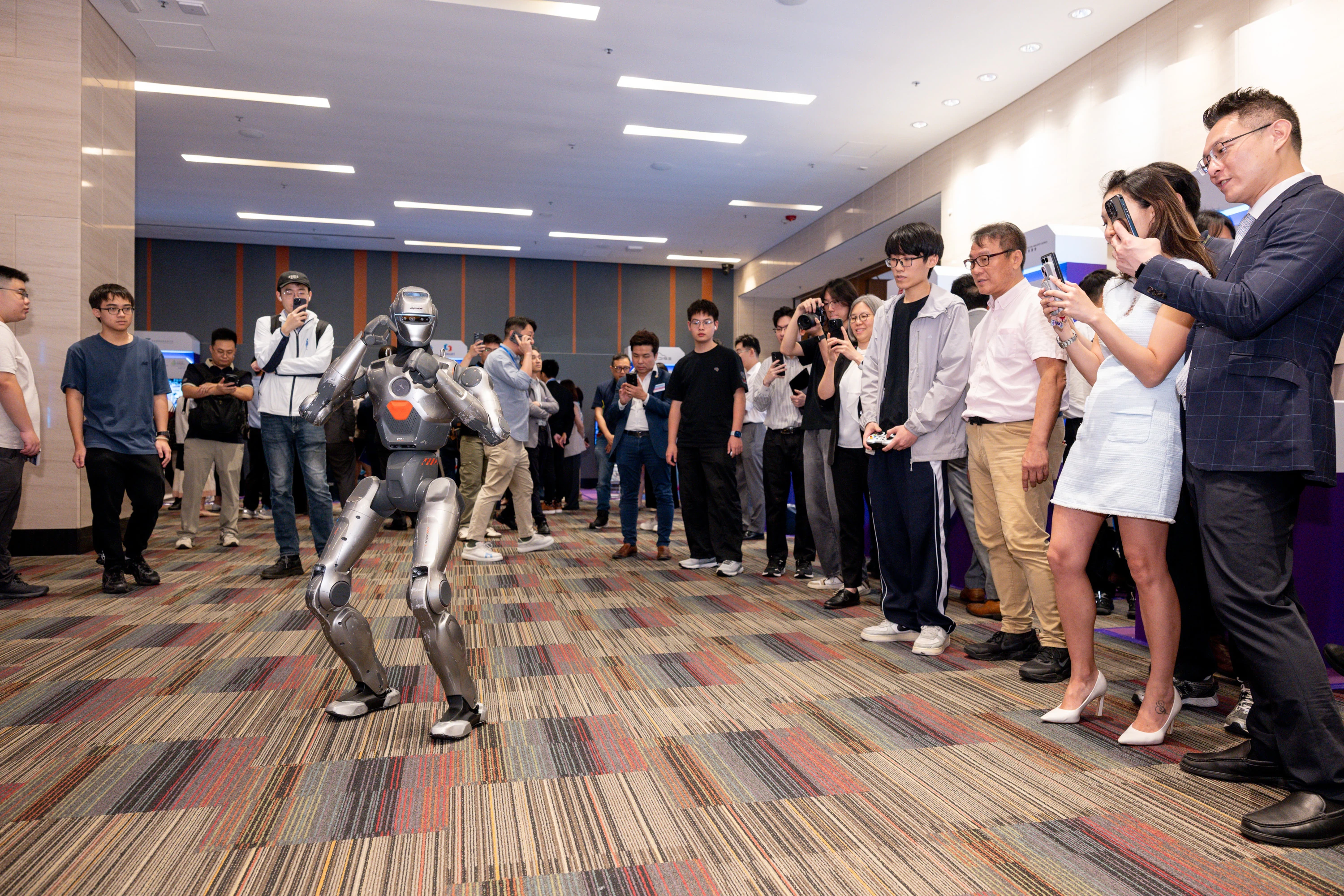
In June, The Construction Industry Council (CIC) hosted the landmark CIC Global AI and Smart Construction Conference and Exhibition (GASCCE) 2026 at the Hong Kong Science Park, bringing together over 40 international expert speakers and more than 50 exhibitors. The event marked a defining moment for the construction industry, showcasing how artificial intelligence (AI), robotics, low‑altitude economy, and smart technologies are transforming workflows, safety, and productivity.
From Strategy to Adoption
Designated by CIC as the Year of AI, 2026 represents a turning point for the construction industry. GASCCE is the bridge from strategy to industry‑wide adoption, moving concepts into real implementation. Moreover, the inaugural CIC AI Award recognises successful, real‑world applications of AI in construction, building confidence and accelerating replication across projects. CIC Chairman Ir Prof. Thomas Ho noted, ‘Currently, 70 to 80% of projects in Hong Kong have adopted 4S (Smart Site Safety System), providing the foundation for AI integration and improving cost control and efficiency.’
Breakthrough technologies
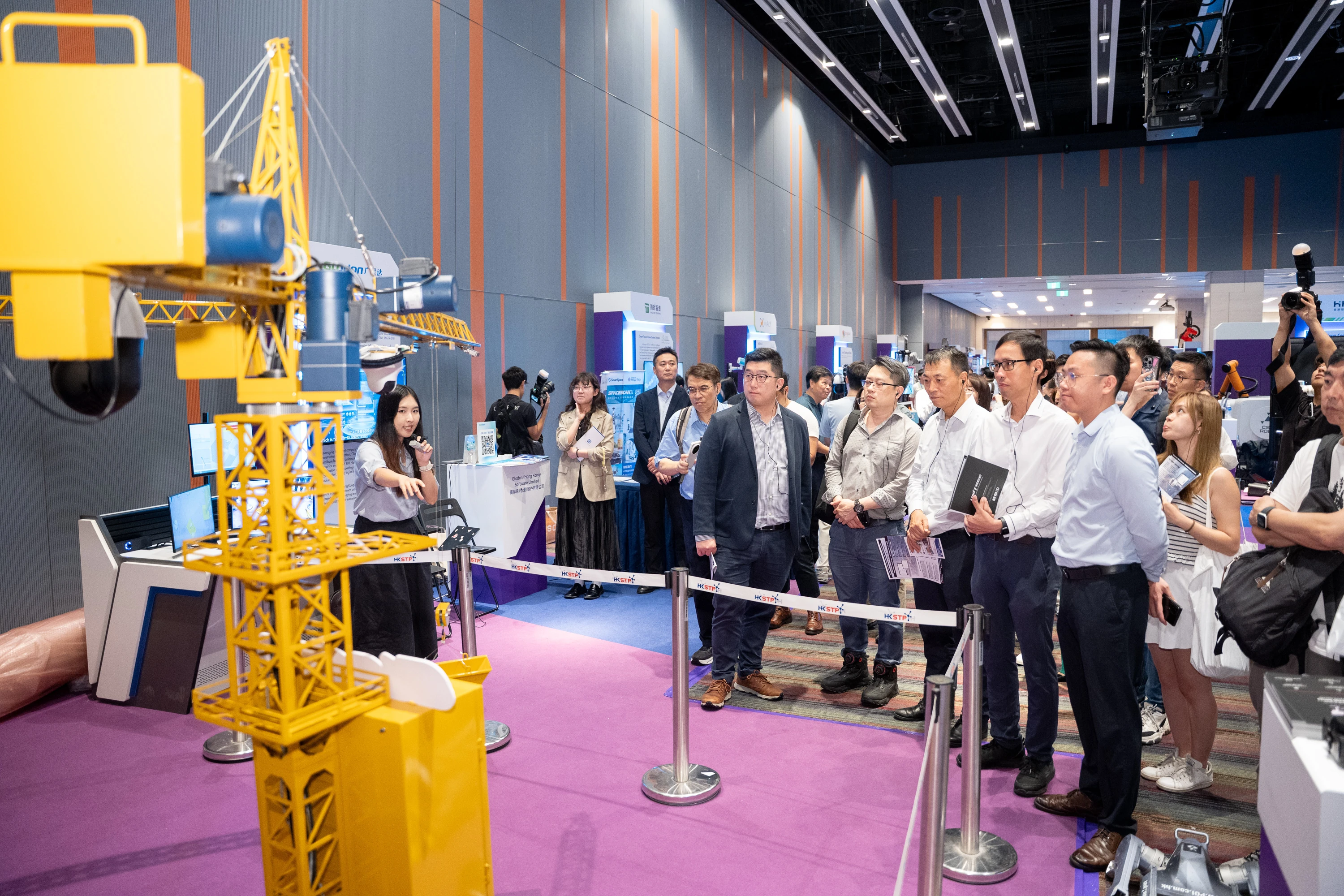
Among the highlights were pioneering solutions demonstrating immediate impact, including S960 High‑Strength Steel Welding Robot, the world’s first robotic welding solution for high‑strength steel S960 with automated path planning and real‑time deviation correction; the Intelligent Tower Crane, an autonomous crane system leveraging LiDAR, sensors, RTK+GPS, and AI to enable unmanned lifting; the GeoAI Building Façade Inspection System, which deploys drones to capture high‑resolution imagery and uses AI to detect over 30 façade defects. In addition, CIC APP, an app developed by the CIC and currently used by 140,000 construction workers, is set to be integrated with AI for enhanced safety risk avoidance.
Hong Kong’s unique strengths
Hong Kong is uniquely positioned to lead in AI‑driven construction. Government support is strong: projects over $30 million must adopt 4S and Building Information Modelling (BIM), creating a robust ecosystem. The Construction Innovation and Technology Fund (CITF) has expanded from HK$1 billion to HK$2.2 billion, with an additional HK$1.4 billion recently injected. As Ir Prof. Ho noted, ‘With the development of the Northern Metropolis, Hong Kong now has the largest testbed for smart construction and AI, serving as a showcase to the world and enabling large-scale expansion.’
Looking Ahead
By 2030, Hong Kong’s construction sites will be AI‑enabled, highly automated, and fully connected across the lifecycle. Ir Prof. Ho envisions the sector becoming safer, greener, and more productive – powered by a new generation of talent. GASCCE 2026 has shown that the future is not just about smart construction, but about building ‘a new quality productive workforce’ where people, AI, and robotics work seamlessly together to deliver better outcomes for Hong Kong.
Discover Time Out original video