[category]
[title]
The busy street is scoring a $5 million glow-up – designed to make the area more pedestrian-friendly (and boost outdoor dining and accessible hospo opportunities)


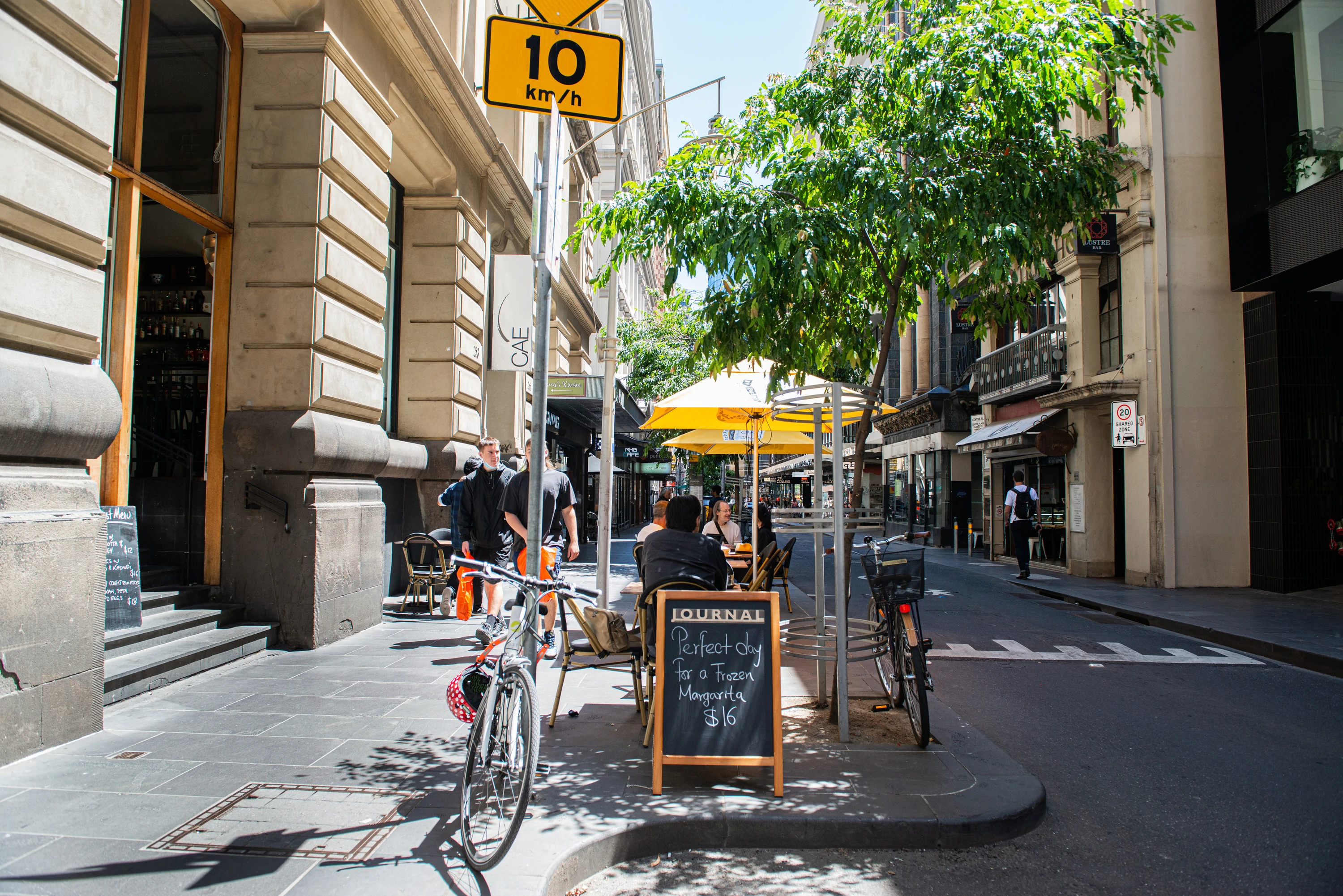
Melbourne’s most iconic ‘little’ street is about to get a glow-up – and if you’ve ever tried to dodge a taxi while strolling down Flinders Lane, you’ll know it’s been a long time coming. As first reported by The Age, the City of Melbourne is pushing ahead with a $5 million plan to transform Flinders Lane into a pedestrian-first zone later this year. Translation: fewer cars, more ice cream-fuelled wanders and a whole lot more room for outdoor dining.
According to The Age, the upgrade will see the road raised to footpath level, alongside the addition of cobblestone traffic-calming features. The aim? Slow vehicles to a crawl and make the space feel like one continuous, walkable strip. And Flinders Lane is just the beginning. Melbourne Council has its eye on the rest of the CBD’s beloved little streets, including Little Collins Street, Little Bourke Street and Little Lonsdale Street, plus laneways like Crossley Street and Liverpool Street. Some changes are already in motion – Little Collins Street, for instance, currently shuts to traffic during weekday lunch hours – but a broader rollout is now firmly on the agenda.
According to Lord Mayor Nick Reece, the shift is about more than just aesthetics. Pedestrian-friendly streets have been shown to boost foot traffic, which in turn fuels retail, hospo and nightlife – aka the lifeblood of Melbourne’s CBD.
There’s also a safety angle. Despite being designated “shared zones” back in 2020, many of these streets still see cars dominating the space, with speed limits often ignored and footpaths overflowing on busy nights. The new approach is expected to tackle those issues head-on, with trial closures at peak times helping the council figure out what works best.
If it all sounds a bit European, that’s kind of the point. Melbourne is following in the footsteps of global heavyweights like George Street in Sydney and Oxford Street in London, both of which have embraced pedestrianisation in recent years – not to mention closer-to-home success stories like Greville Street in Prahran.
The changes won’t happen overnight. Much like the gradual car-free transition of Swanston Street in the ’90s, this will be a staged process of upgrades, trials and tweaks. But if all goes to plan, Melbourne’s famed laneway culture is about to become even more accessible.
Stay in the loop: sign up for our free Time Out Melbourne newsletter for the best of the city, straight to your inbox.
Discover Time Out original video