[category]
[title]
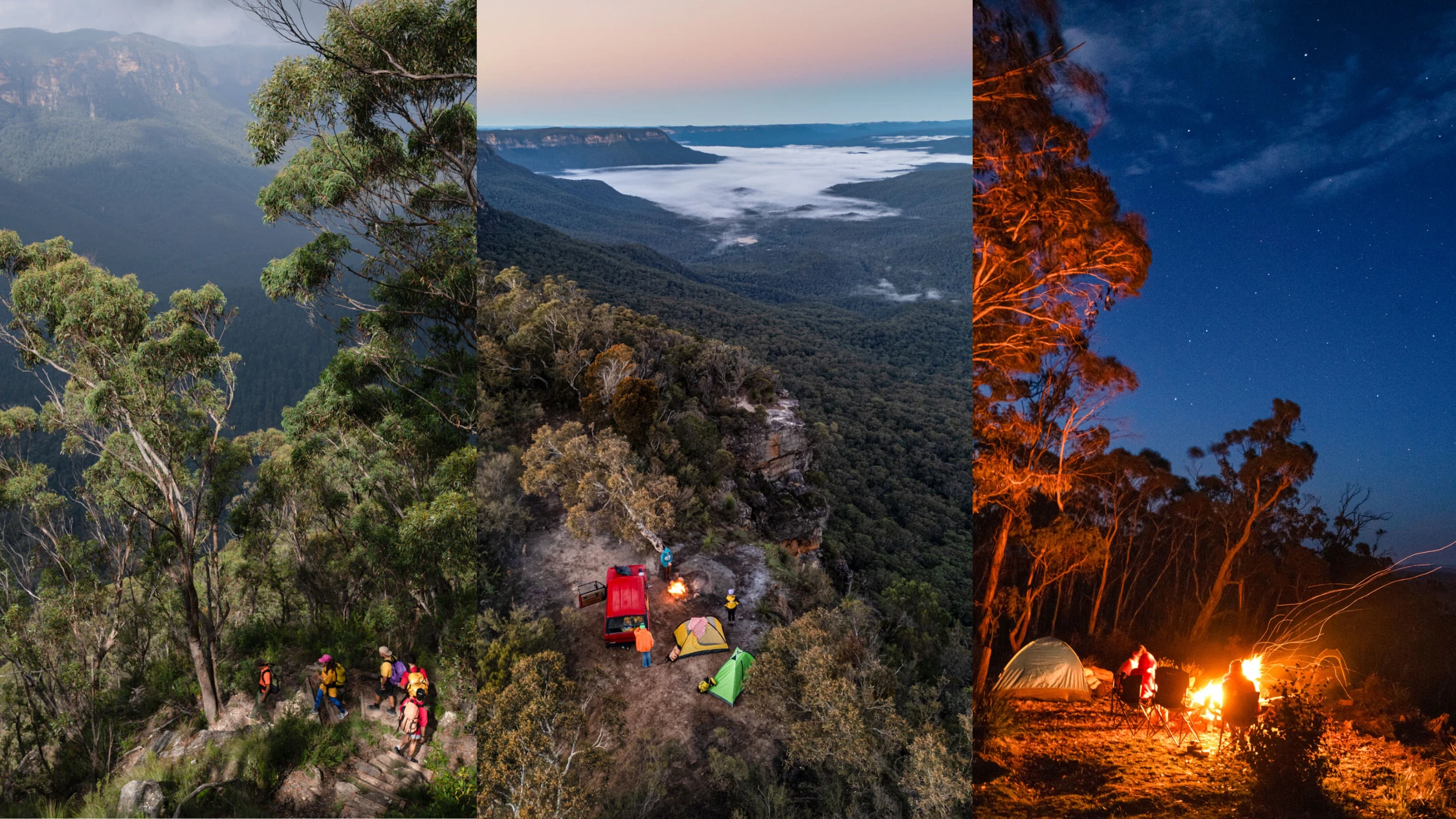
The Blue Mountains-based adventure expert behind LostMtns has shared 5 of their favourite scenic camping spots


The popular purpose-built campsites that punctuate NSW’s national parks and coastlines certainly serve their purpose (and they’re pretty damn beautiful), but if you’re keen to get real deep into nature, we’re here to help. We spoke with the anonymous outdoors adventure expert behind LostMtns to narrow down the top wild camp spots to bookmark for an autumn weekender. Keen? Read on, and you can find more ideas in LostMtns new book Camp.
RELATED READ: These are our favourite hikes in the Blue Mountains
If you’re keen to test the waters with your first overnight hike and camp, Ruined Castle is a brilliant place to start. This lesser-known trail leads to five designated campsites set among dramatic rock formations and sweeping valley outlooks. It offers solitude without the commitment of a multi-day trek, making it ideal for first-time backpackers who want the satisfaction of carrying everything in – without biting off more than they can chew.
A short drive from Katoomba, this epic cliff-top lookout near Wentworth Falls delivers uninterrupted Jamison Valley views without the Echo Point crowds. It’s the kind of place that rewards early risers, as a sunrise coffee here feels cinematic. A 4WD is strongly recommended for the final steep stretch, and from the main clearing, a faint track leads to a quieter lookout tucked behind the ridge.
Mount Solitary is a serious undertaking, but one that pays off. This 34km loop is typically tackled over three days and threads through sandstone escarpments, open ridgelines and historic sites, with ever-changing Blue Mountains vistas. It’s remote enough to feel like a true expedition, yet close enough to Sydney to make it achievable over a long weekend. Expect big climbs, expansive views and a deep immersion in classic Australian bushland.
For a pine-scented escape, Hampton State Forest near Oberon feels worlds away. Access to this wild camping spot is best with a capable vehicle, particularly if you’re aiming for the more secluded campground areas. Surrounded by tall pines and pockets of native bush, it’s quiet, spacious and refreshingly low-key. After a day exploring forest trails, the nearby Hampton Halfway Hotel is a welcome stop for a hearty country meal.
Deep within the Grose Valley Wilderness, Acacia Flat is a walk-in campground reached via Perrys Lookdown or Pierces Pass. The 3 - 4 hour hike guarantees a real back-to-nature experience, with campsites nestled among blue gums, rough-barked apples and stringybarks. There’s no vehicle access here – it’s just birdsong, river flats and towering forest canopy.
What you can and can’t do in NSW National Parks
Rules vary by park, but generally:
Fire safety in shoulder season
Autumn can feel mild, but conditions change quickly. Even outside summer, fire danger ratings apply. Use existing fire pits where permitted, keep fires small, never leave them unattended and extinguish thoroughly with water. When in doubt, skip the fire and use a fuel stove.
Essential autumn gear
Layered clothing, a reliable rain shell, warm sleeping gear rated for colder nights, headlamp, offline maps, at least 3L of water capacity, high-energy food, first aid kit and a fully charged phone. A Personal Locator Beacon (PLB) is strongly recommended for longer or remote hikes.
Leave no trace
Plan ahead. Travel and camp on durable surfaces. Dispose of waste properly. Leave what you find. Minimise campfire impact. Respect wildlife. Be considerate of other visitors. Before heading to any of these locations, LostMtns recommends you always visit nationalparks.nsw.gov.au/alerts to check for closures, and bom.gov.au for weather updates.
Want more? LostMtns’ book Camp showcases hundreds of lesser-known wild camping spots throughout the Blue Mountains, with each location paired with a QR code that connects to live, interactive maps.
Discover Time Out original video